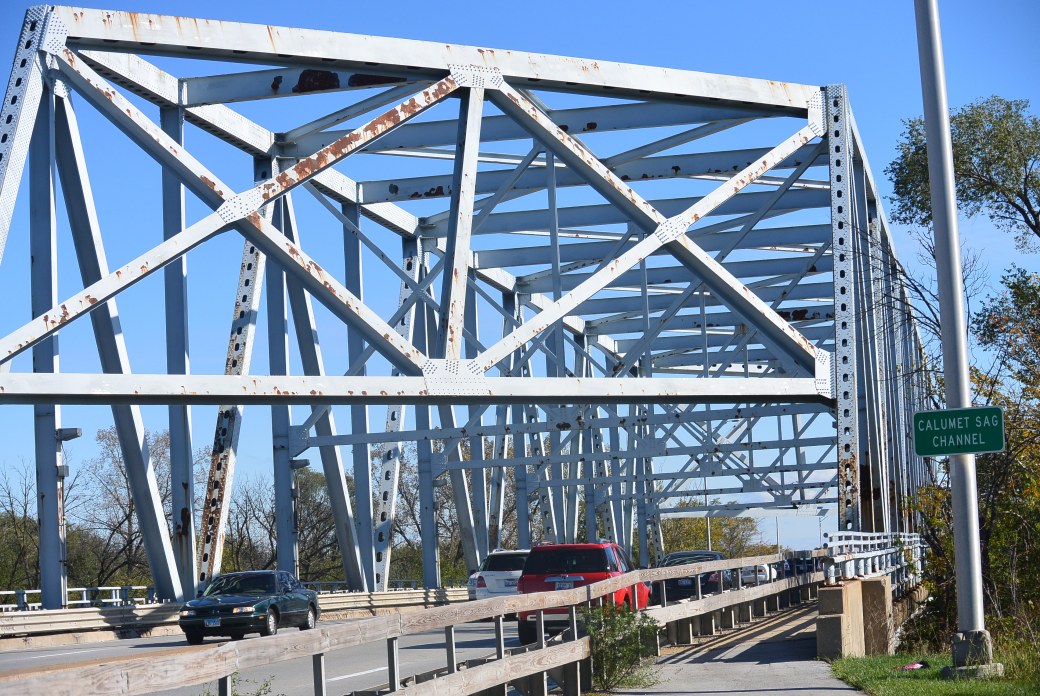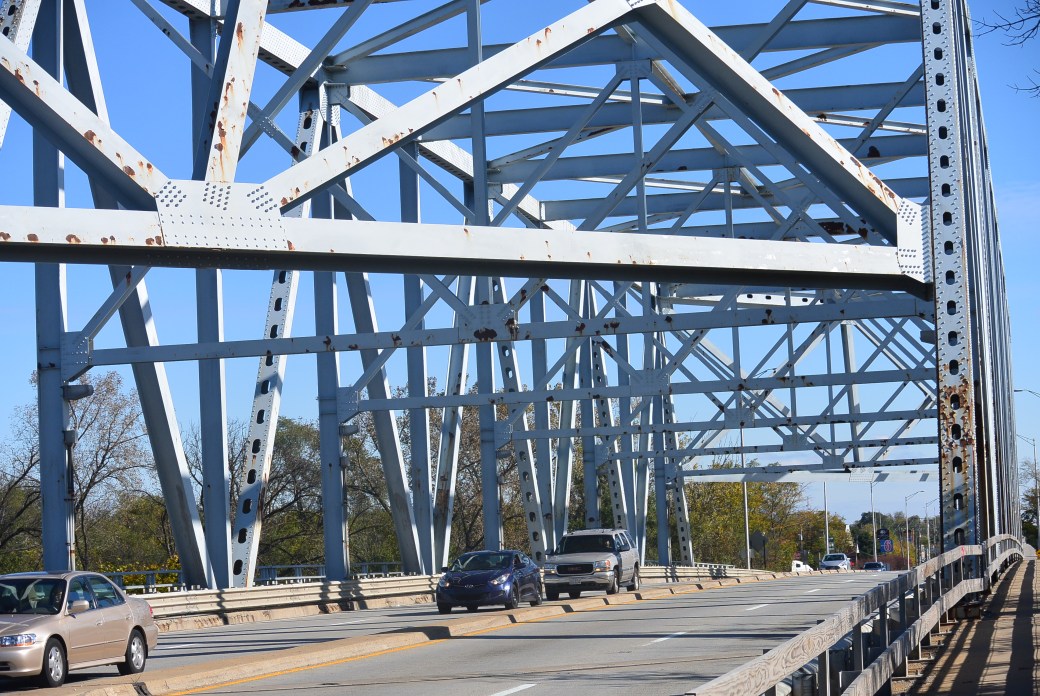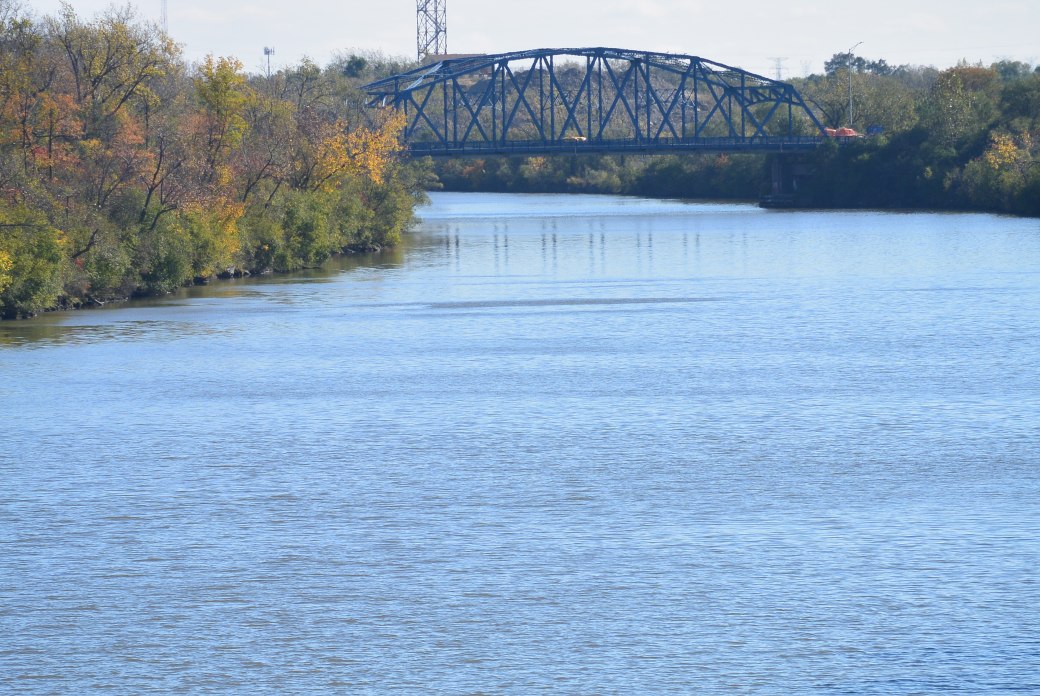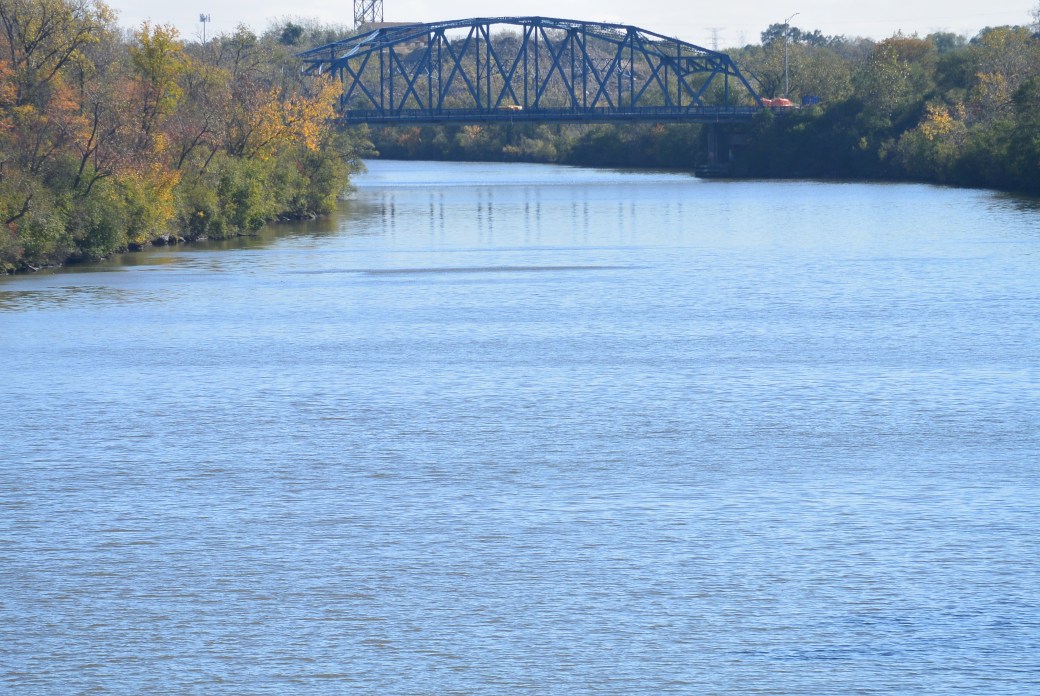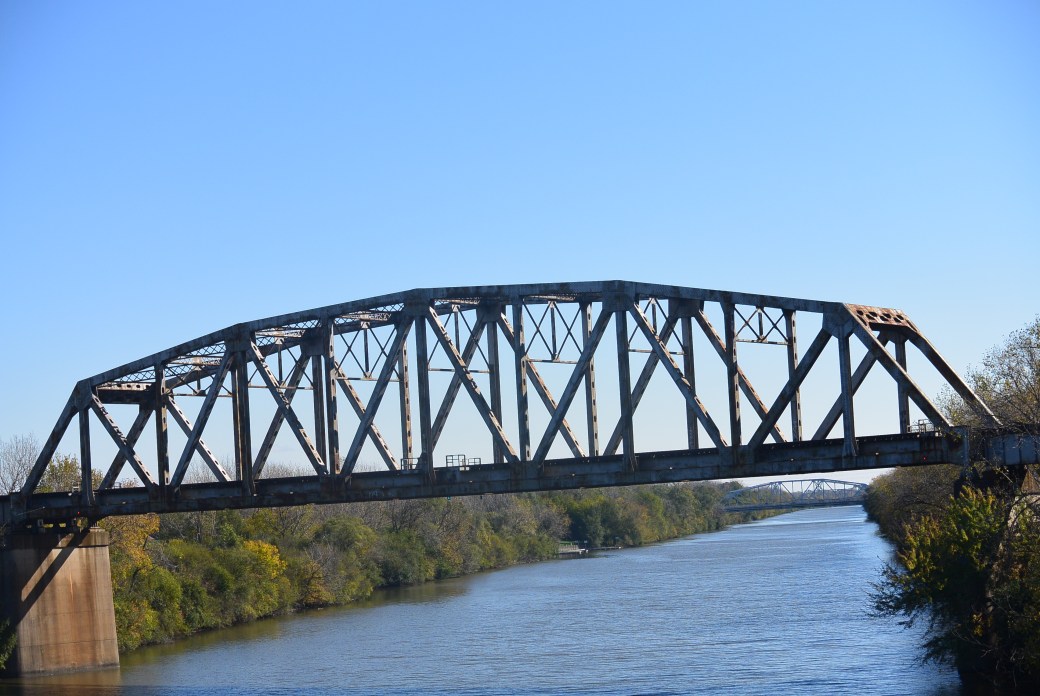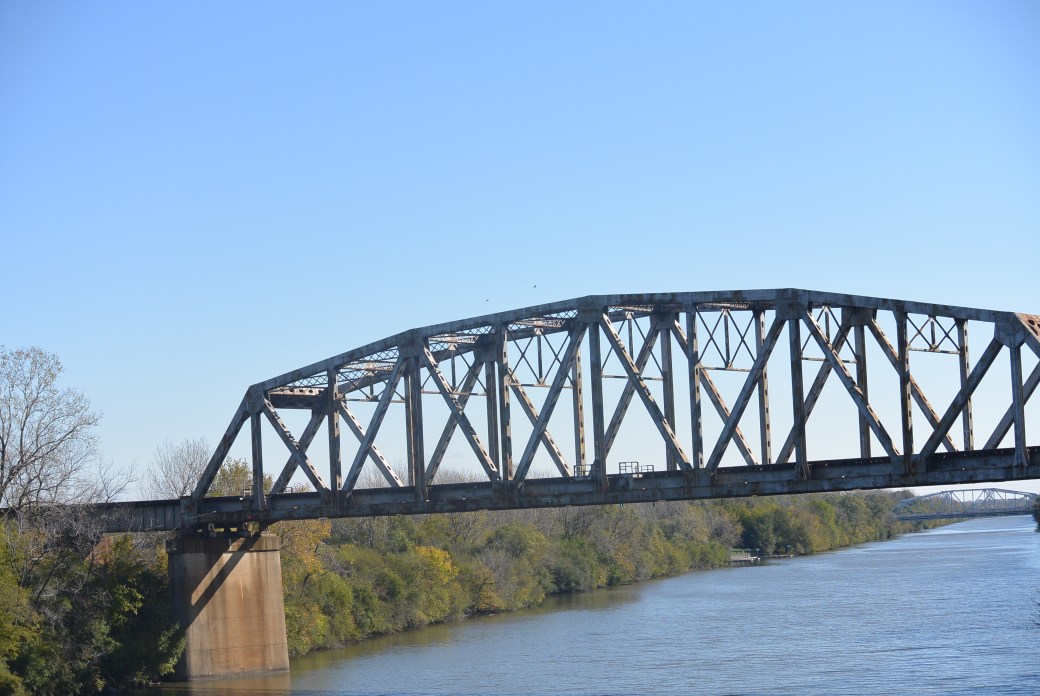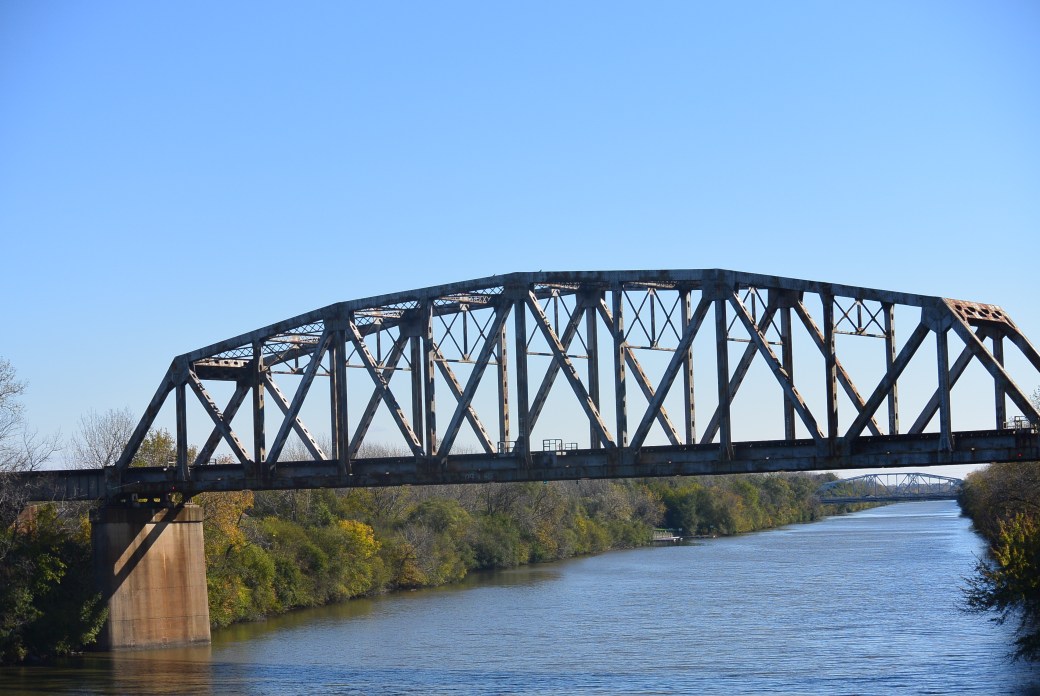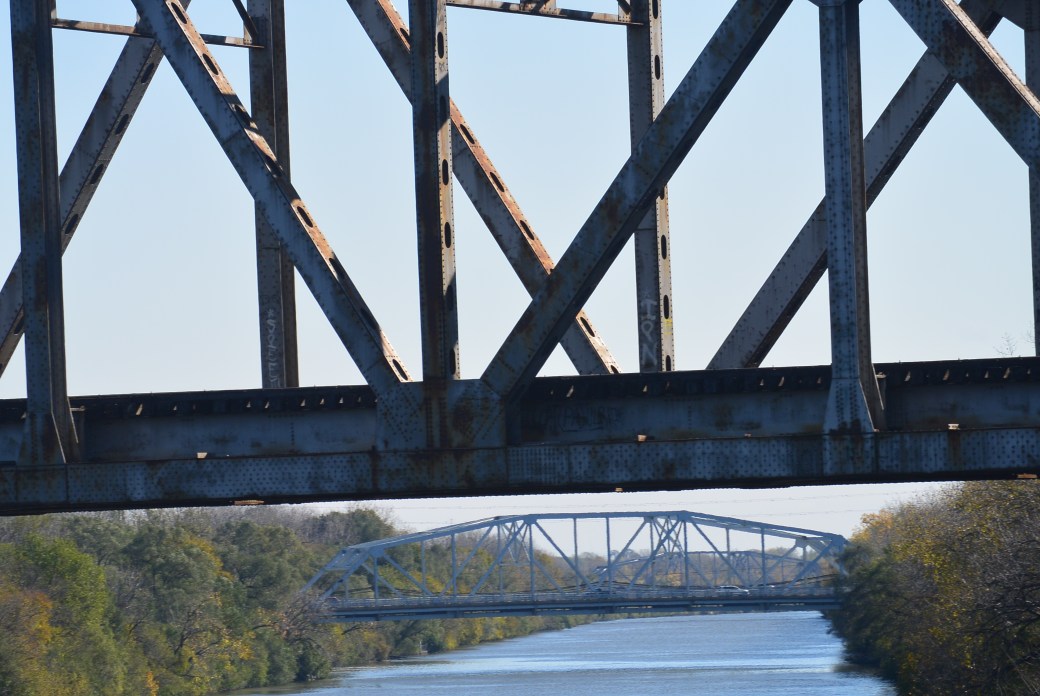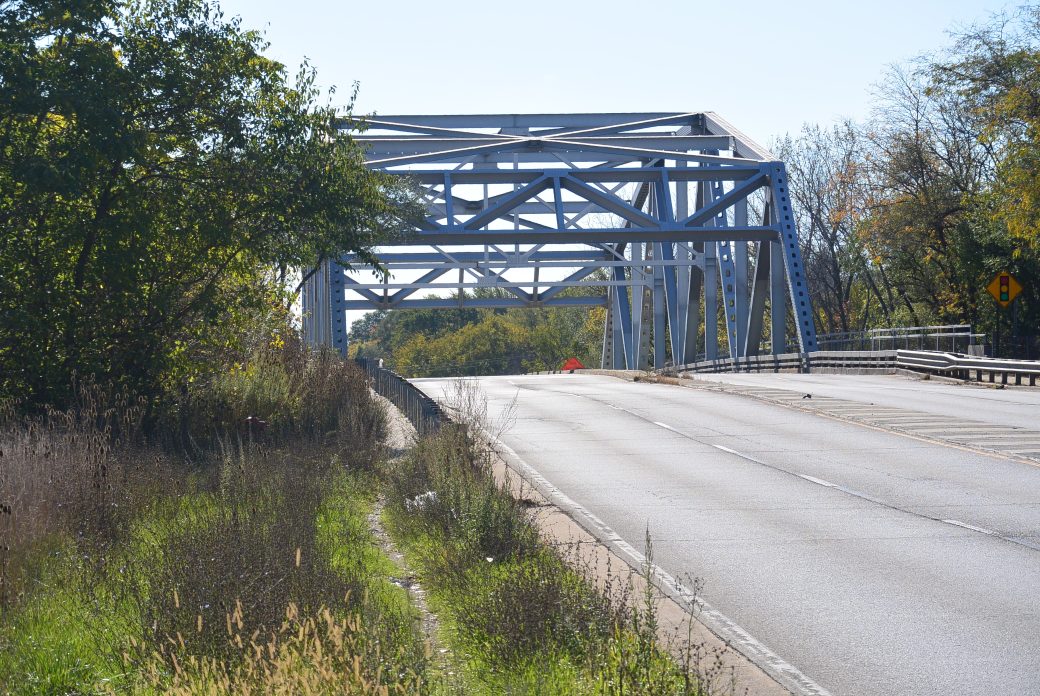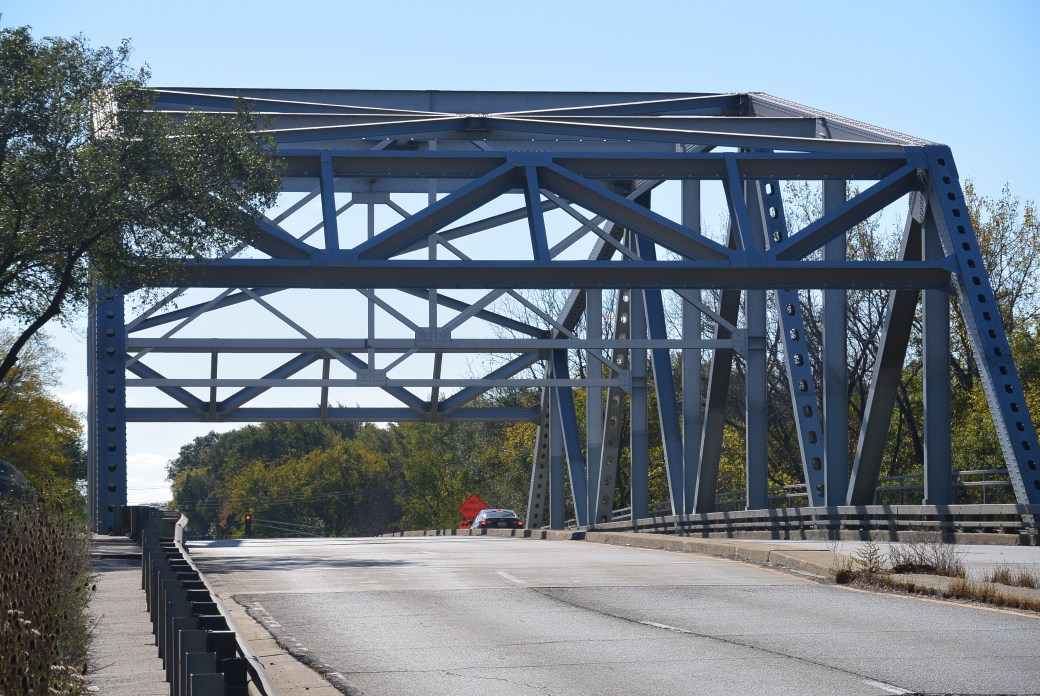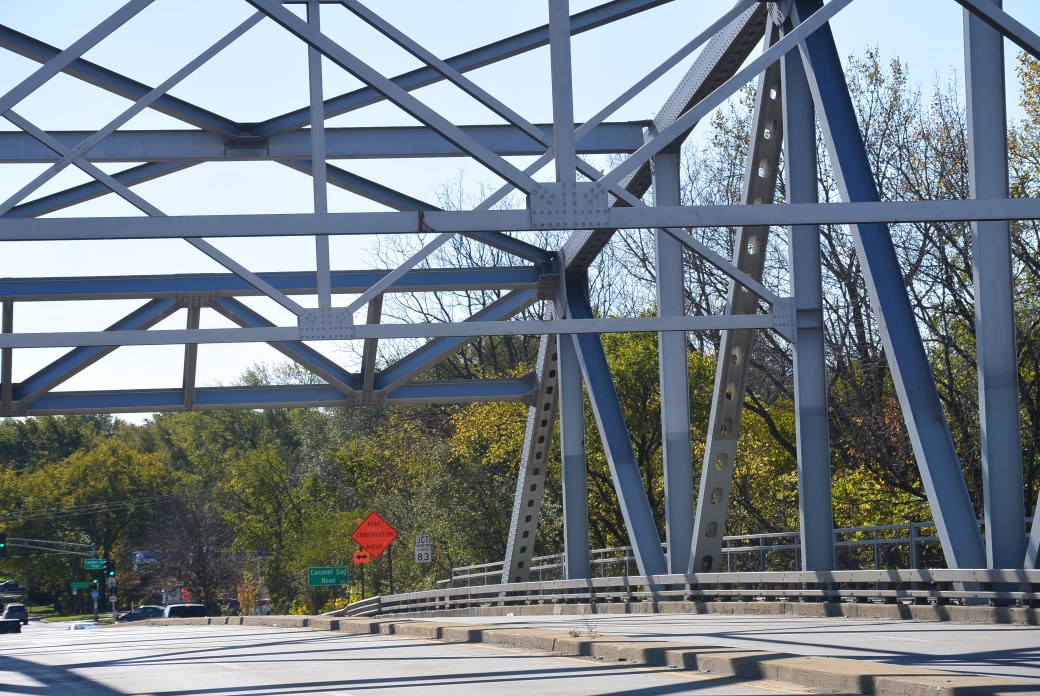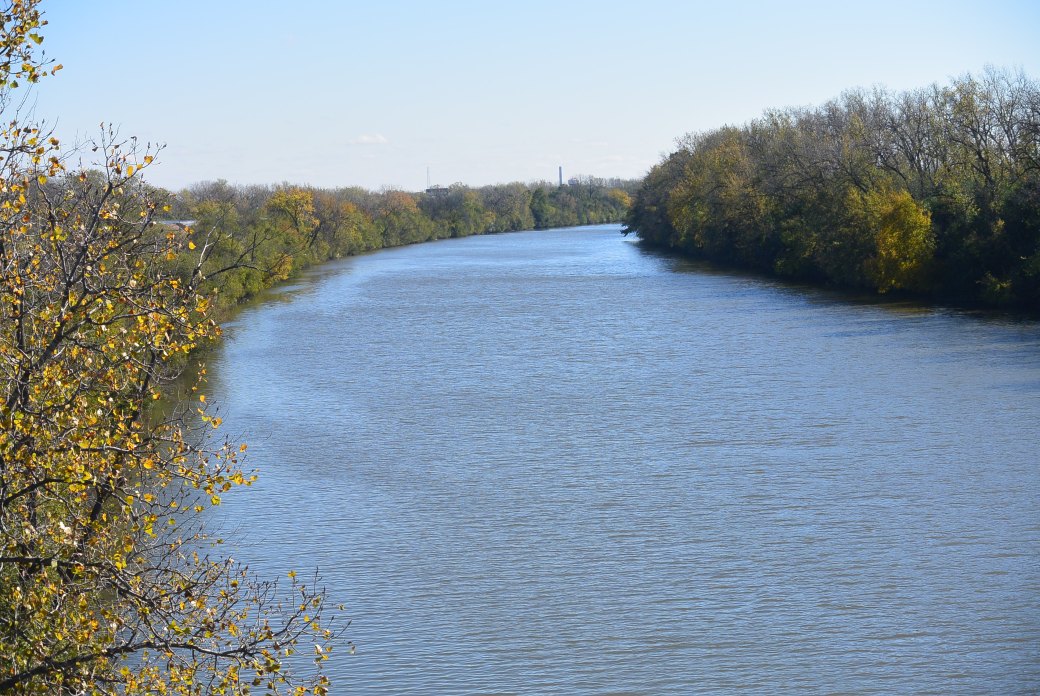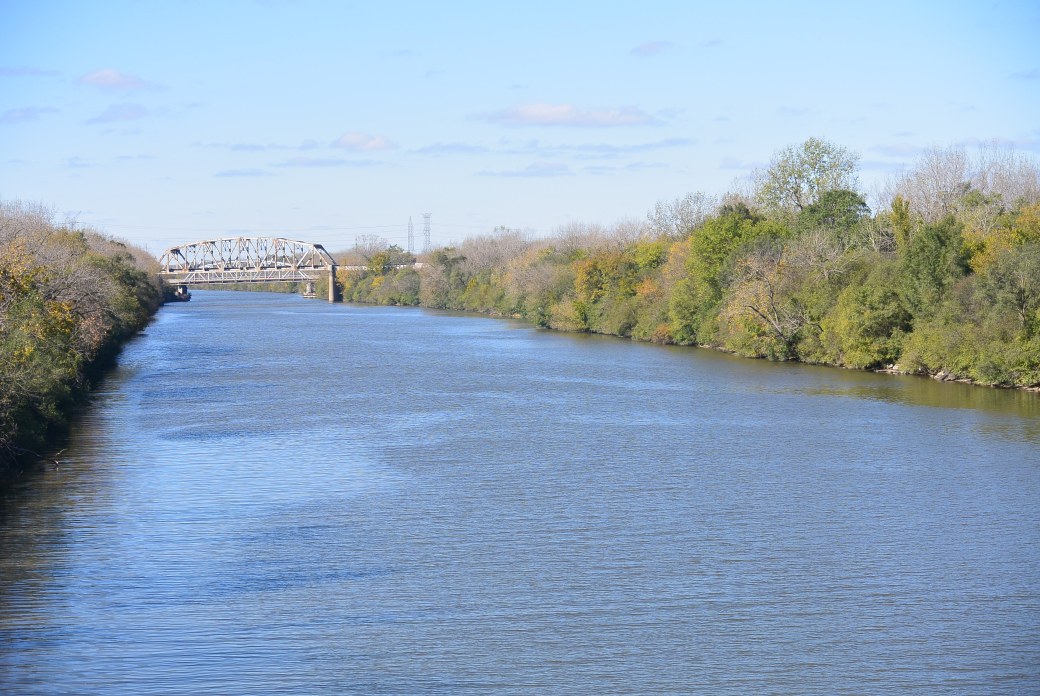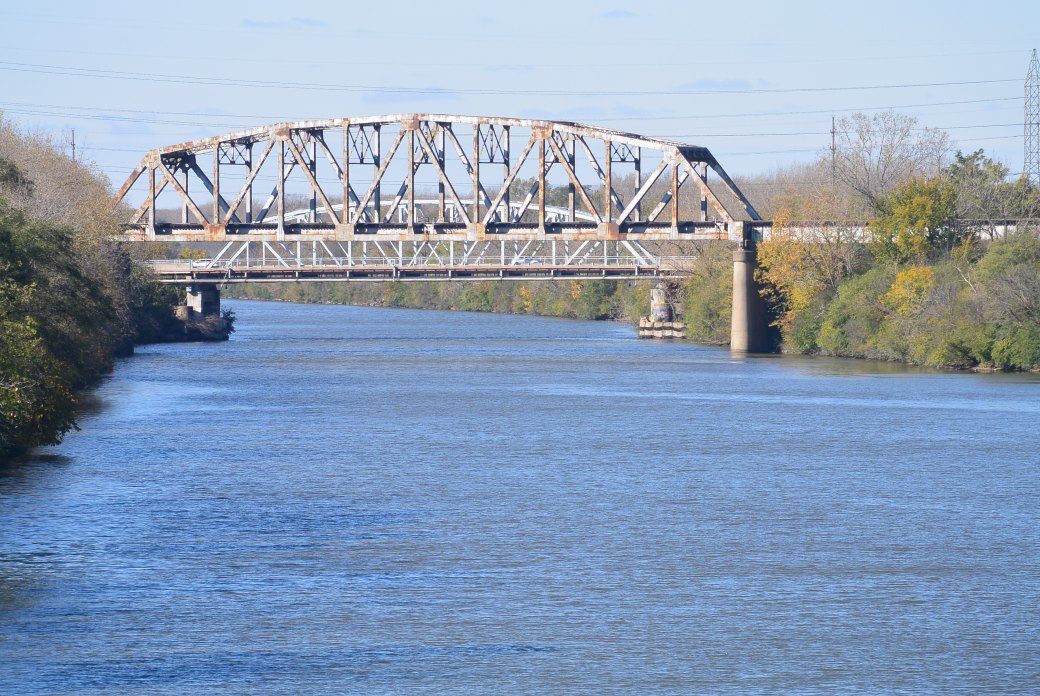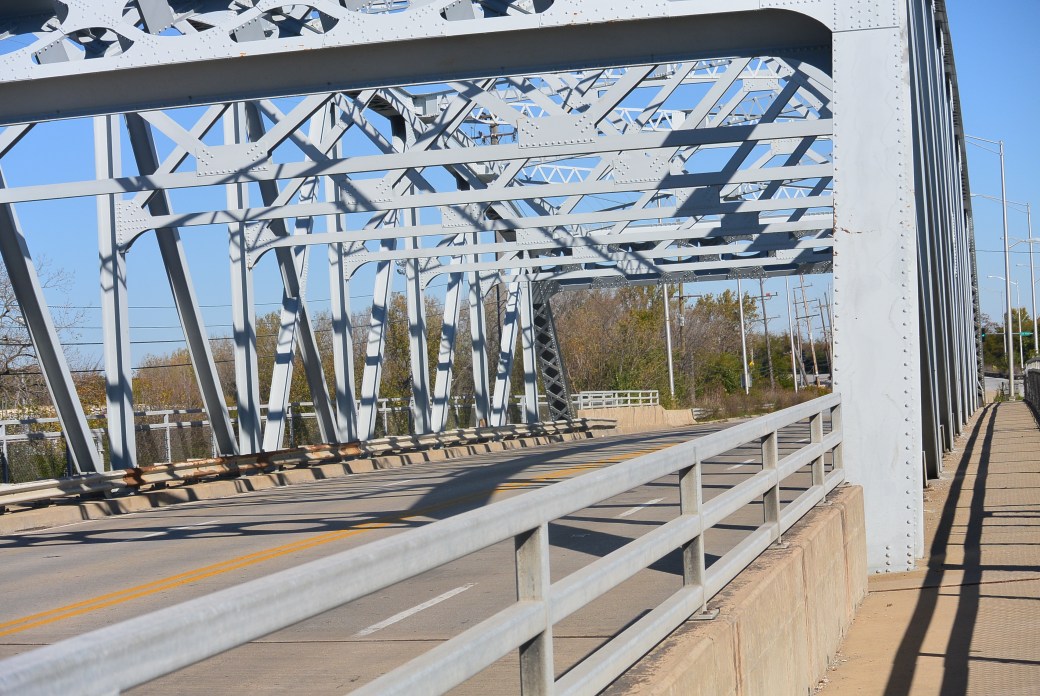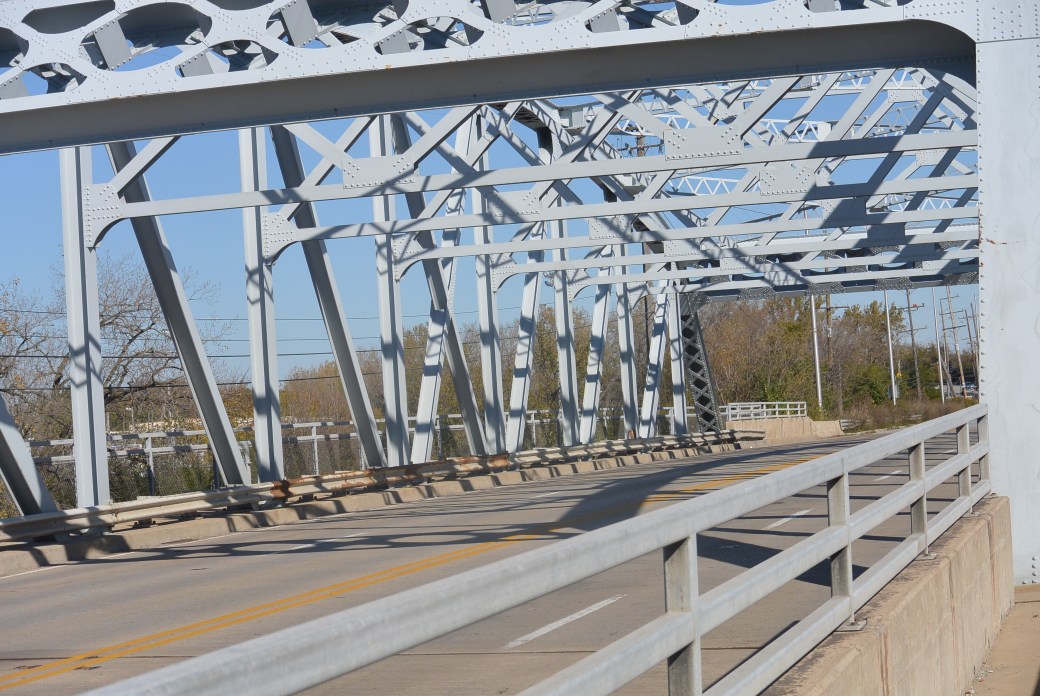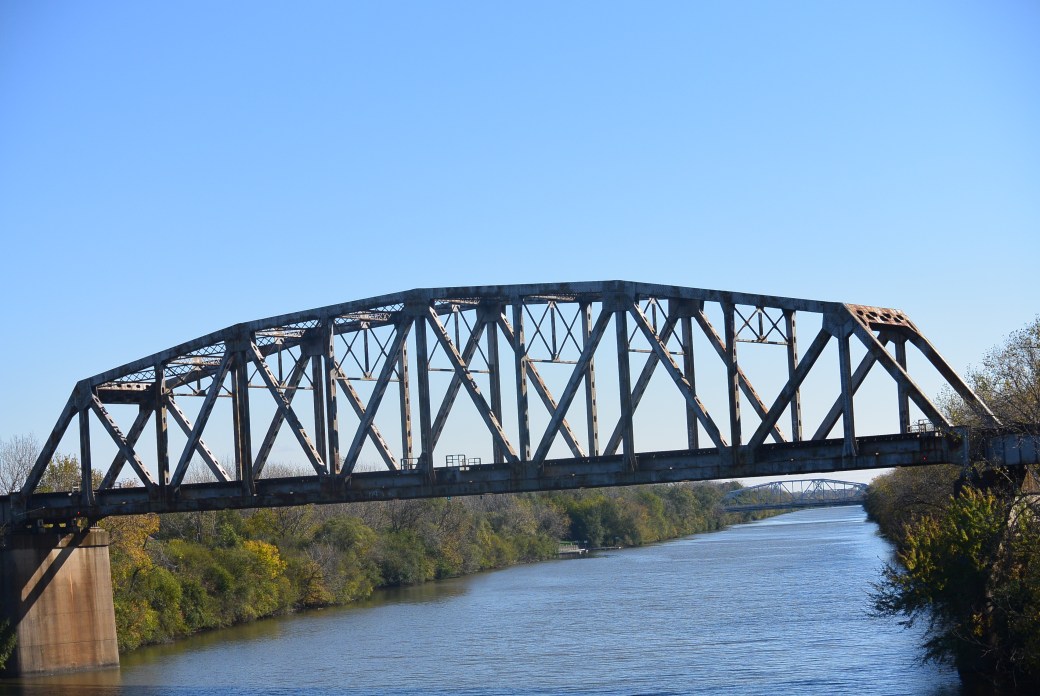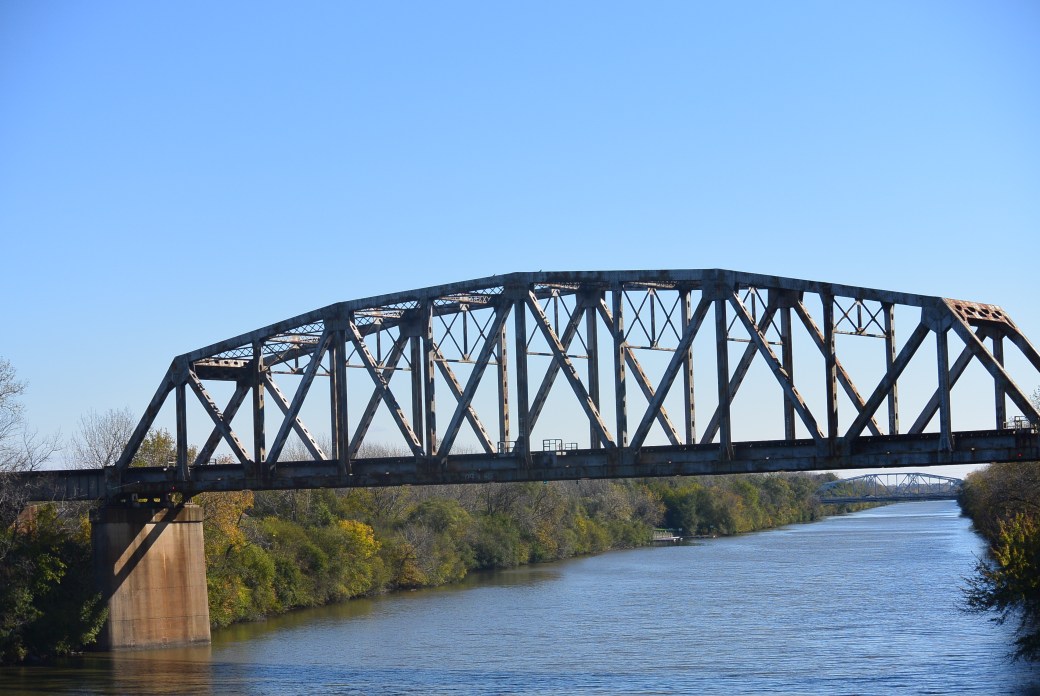
CN Calumet River Bridge

DSC_1819.JPG

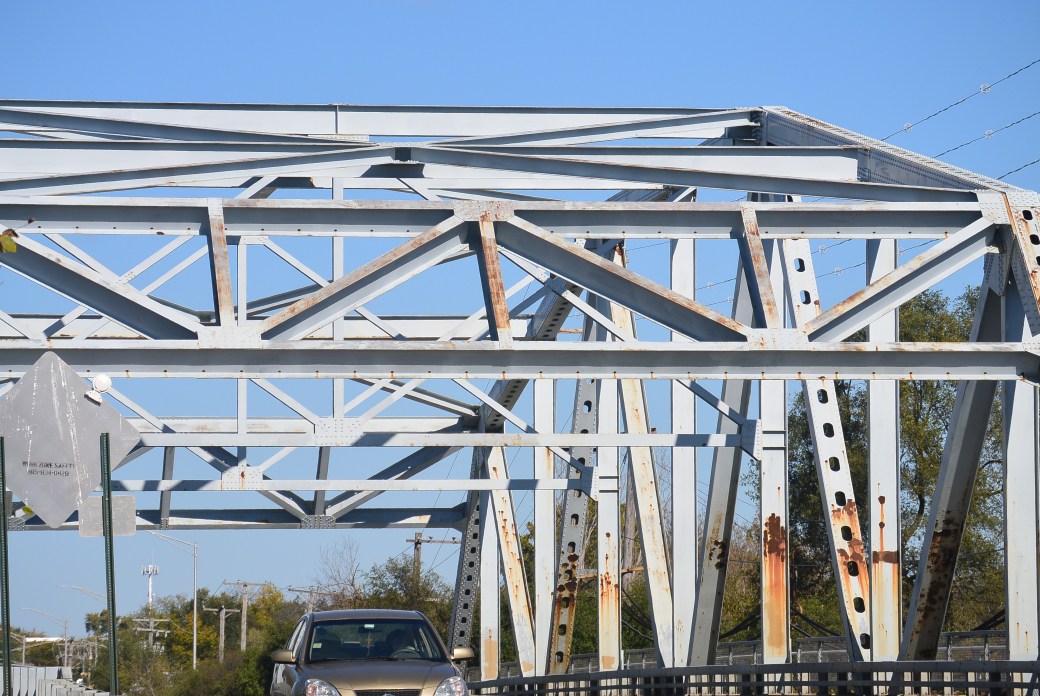
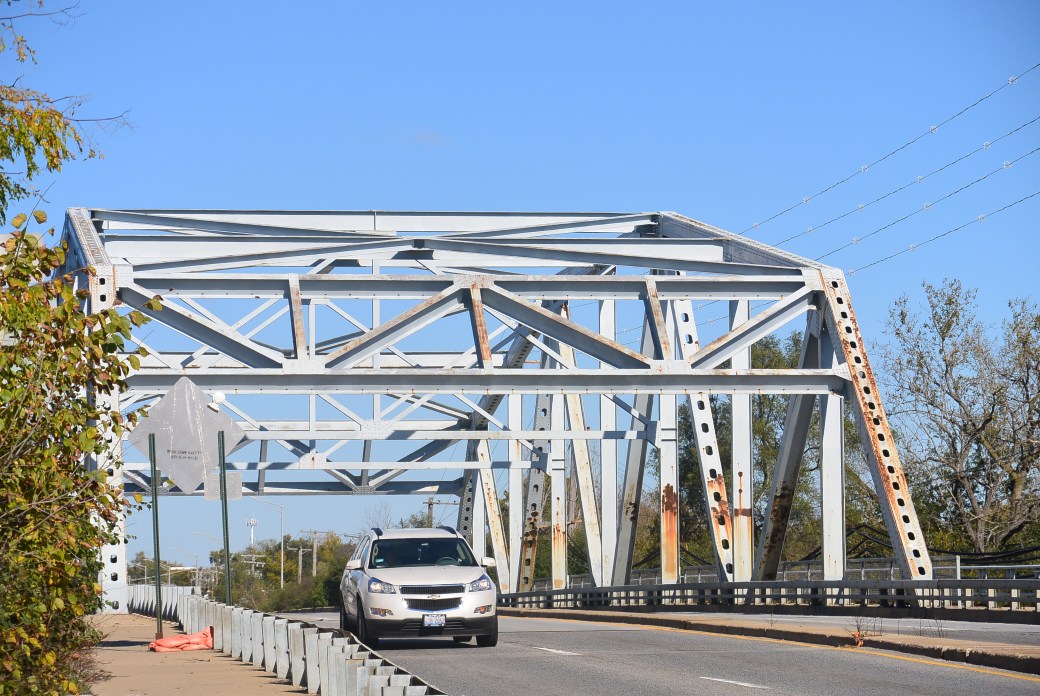
CN Railroad Bridge Calumet River

DSC_1820

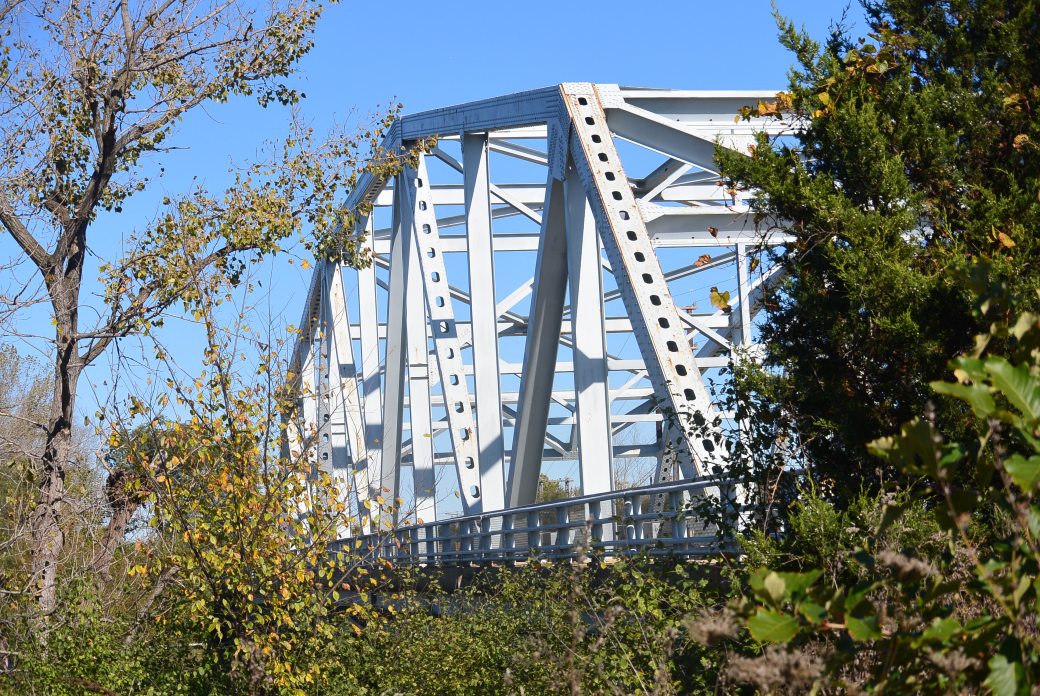
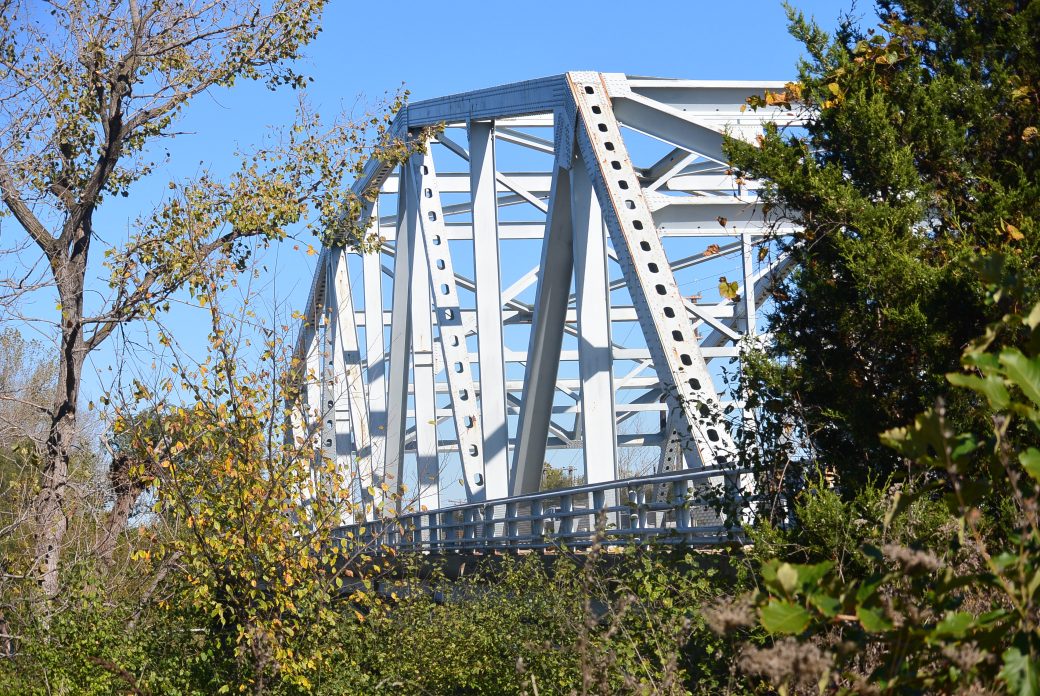
CN Railroad Bridge


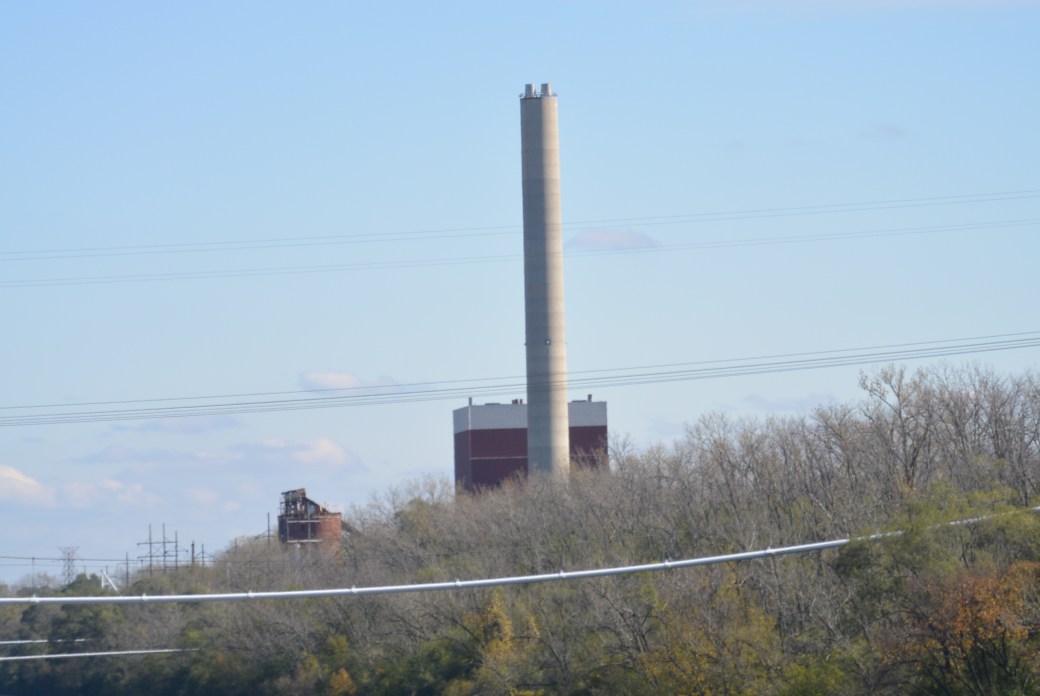
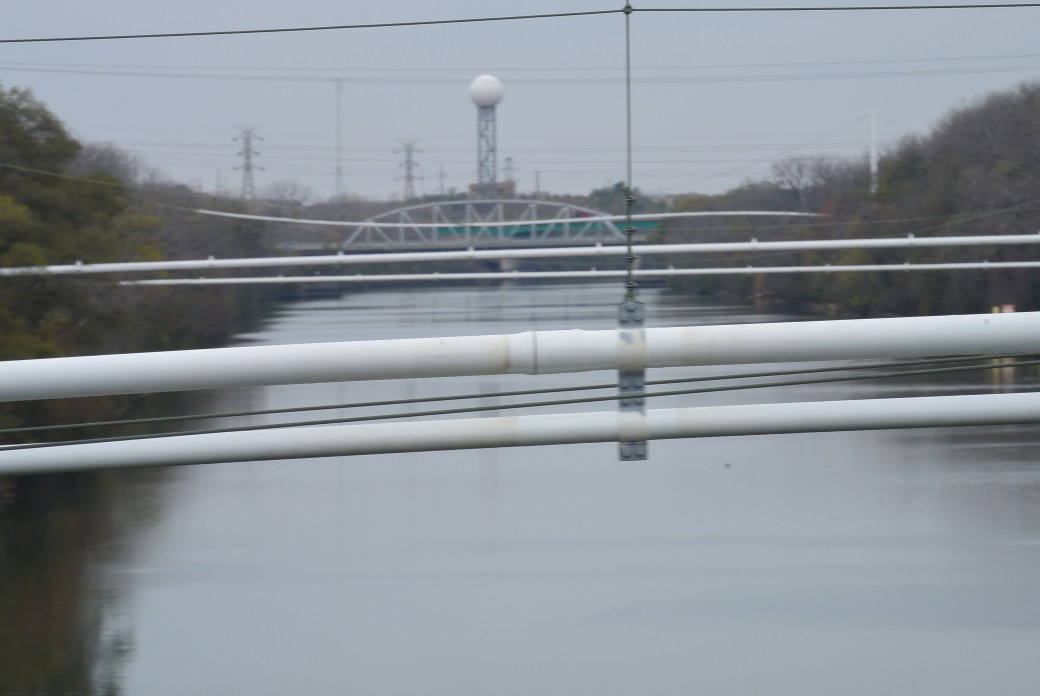
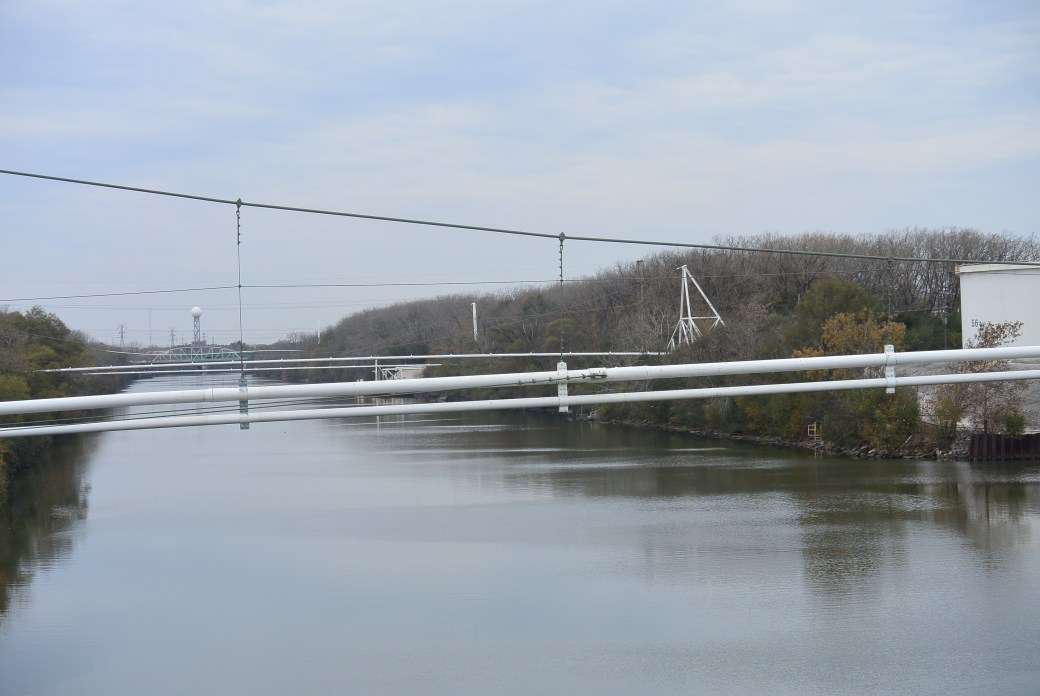
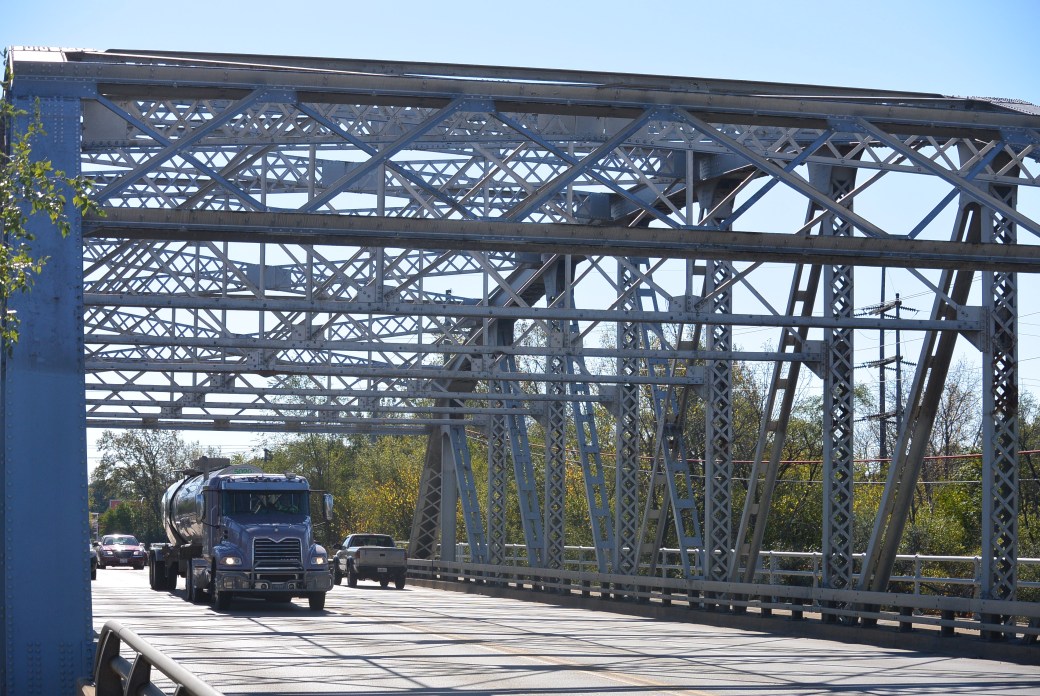
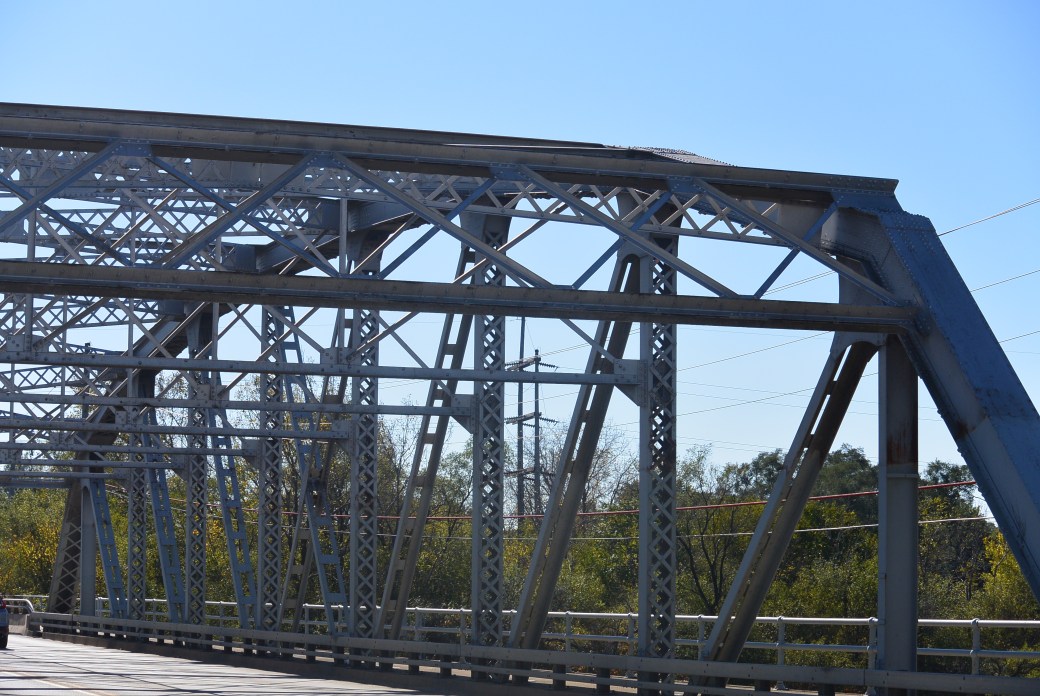
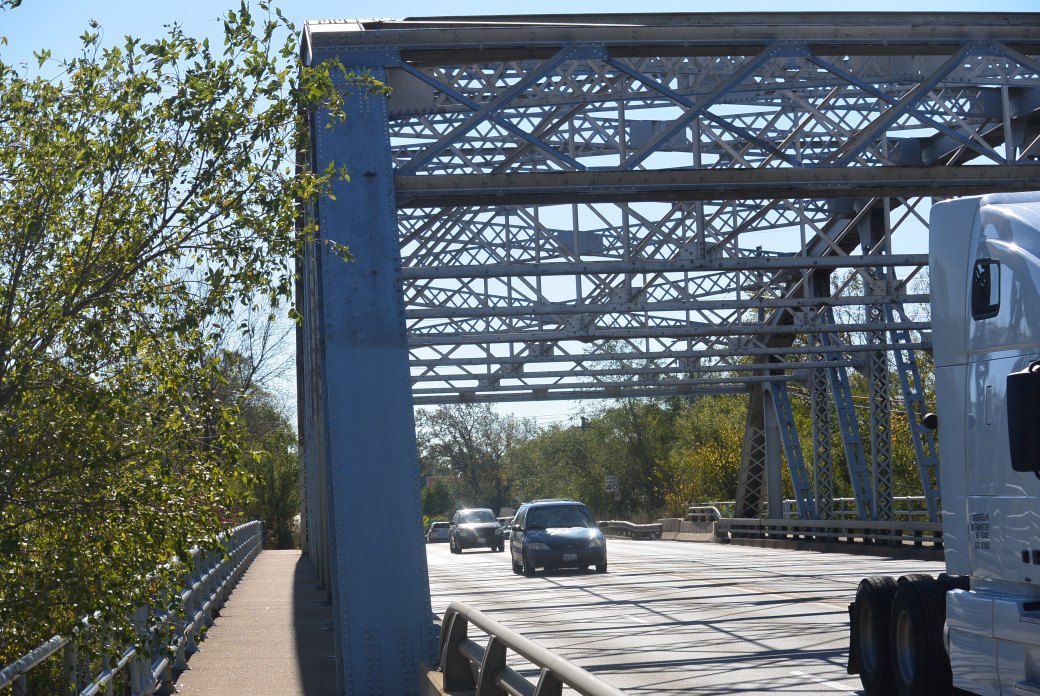
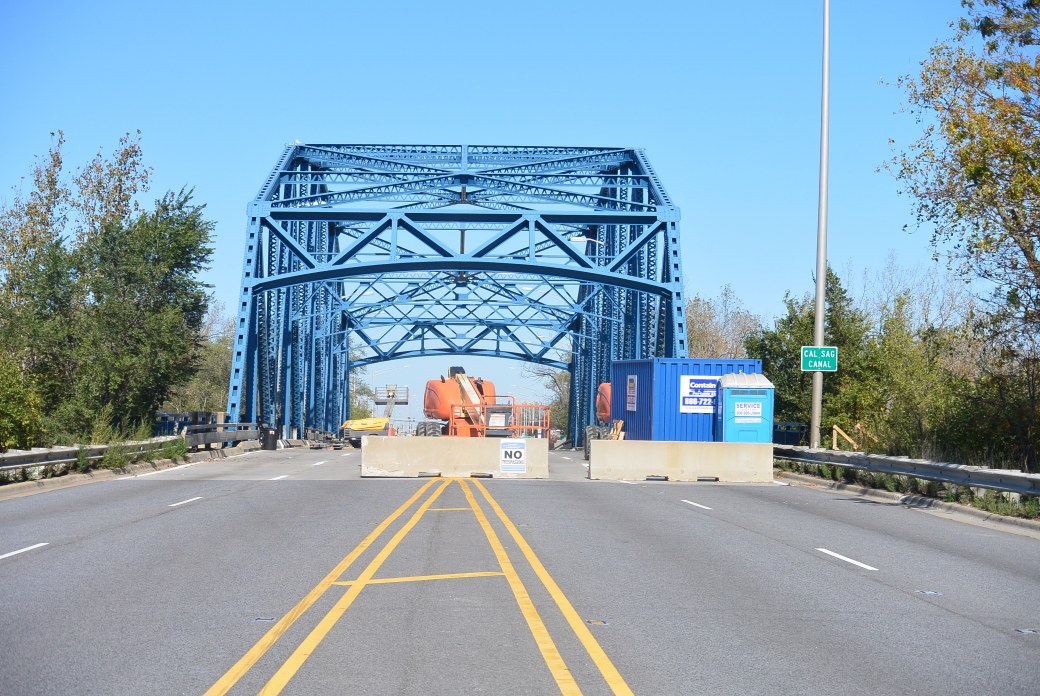
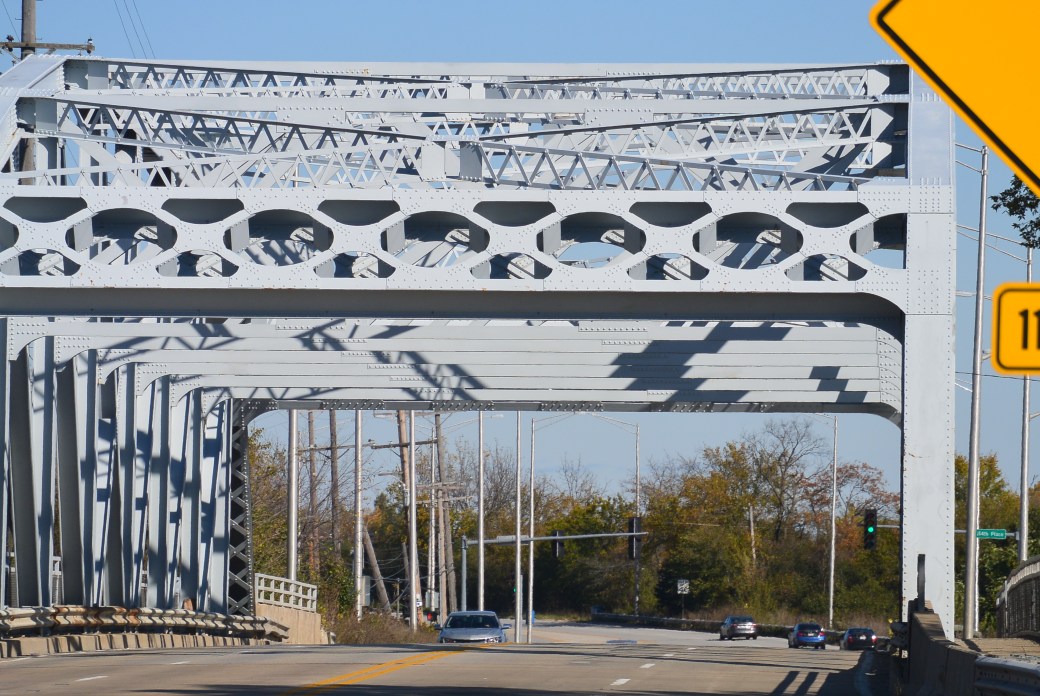
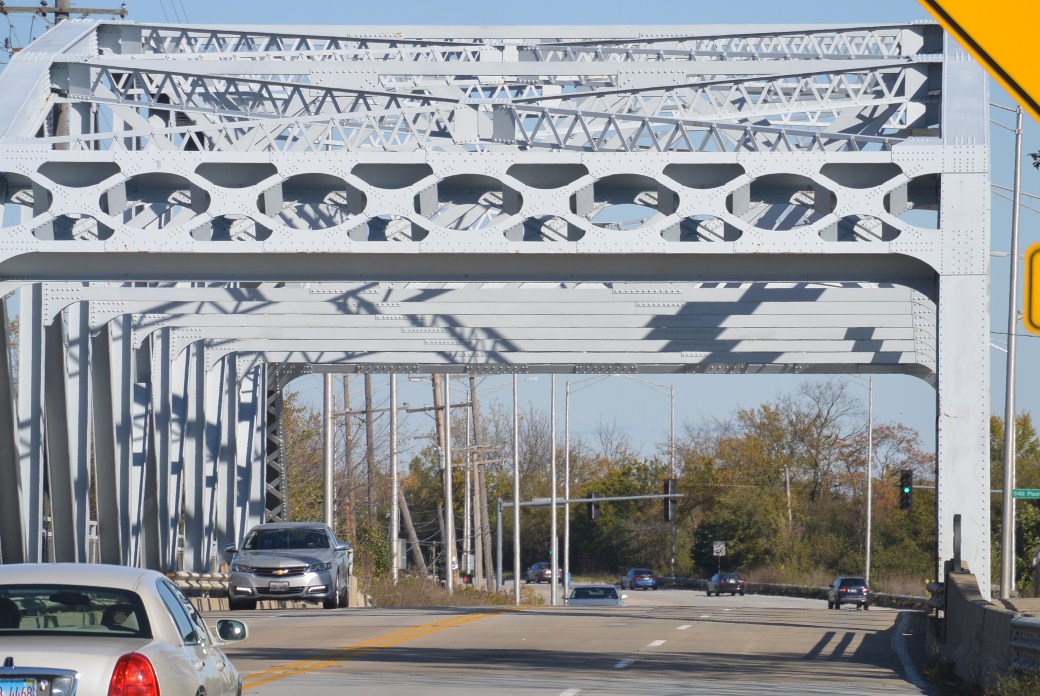
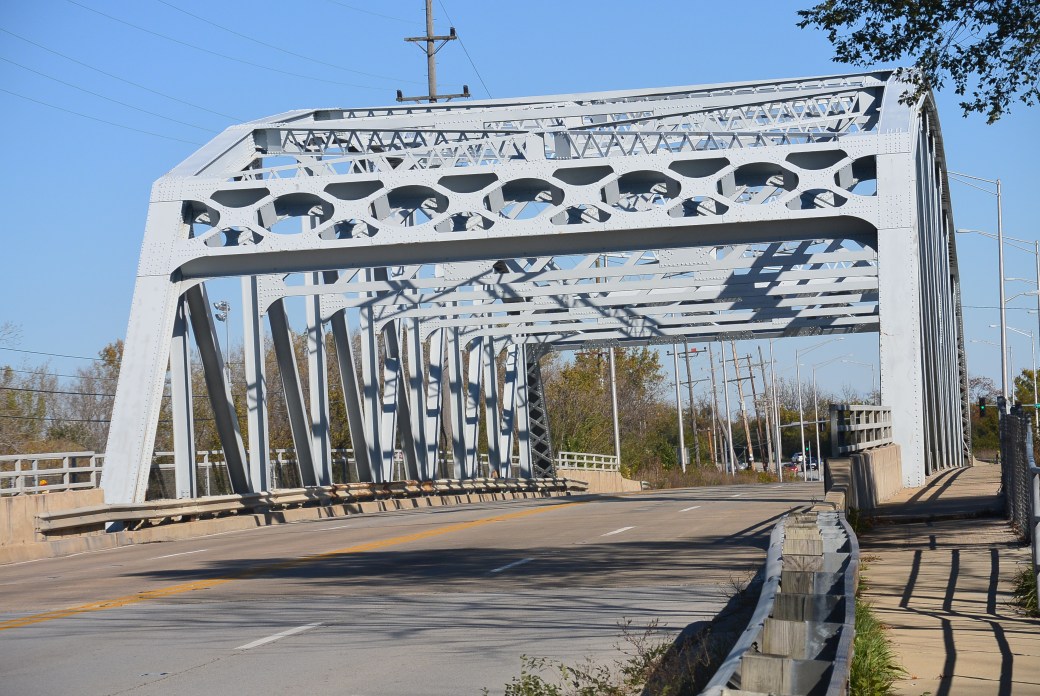
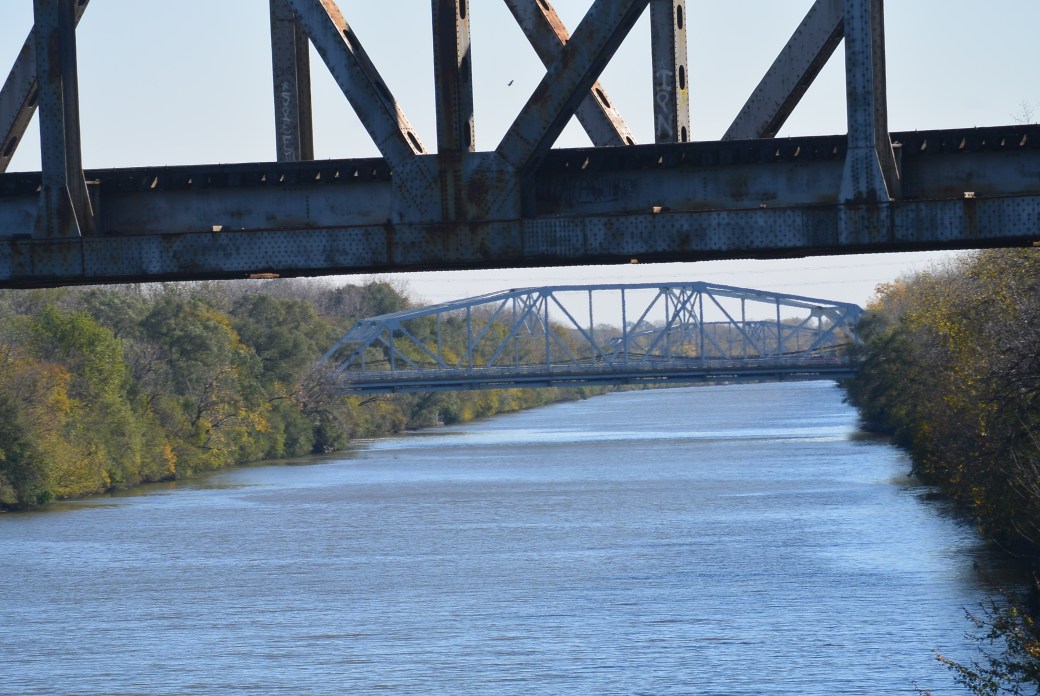
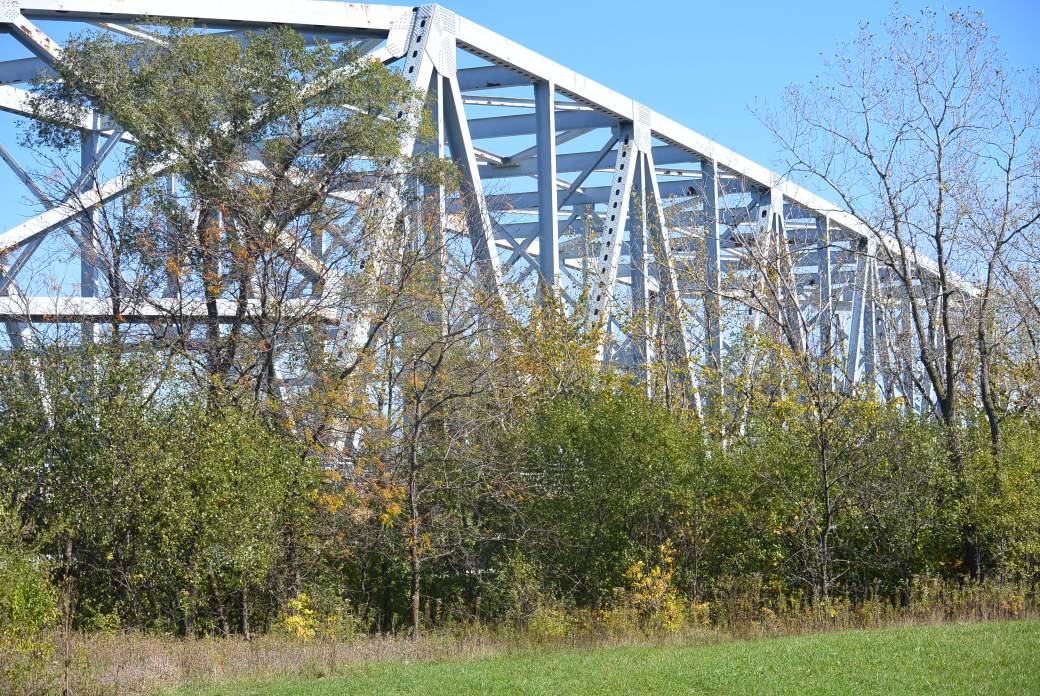
     Travelling from the Calumet Harbor to the Calumet River, the first bridge encountered is an imposing structure known as the Elgin, Joliet and Eastern Railroad Bridge or the CN Bridge.    Prior to this structure there was a swing bridge at this location.

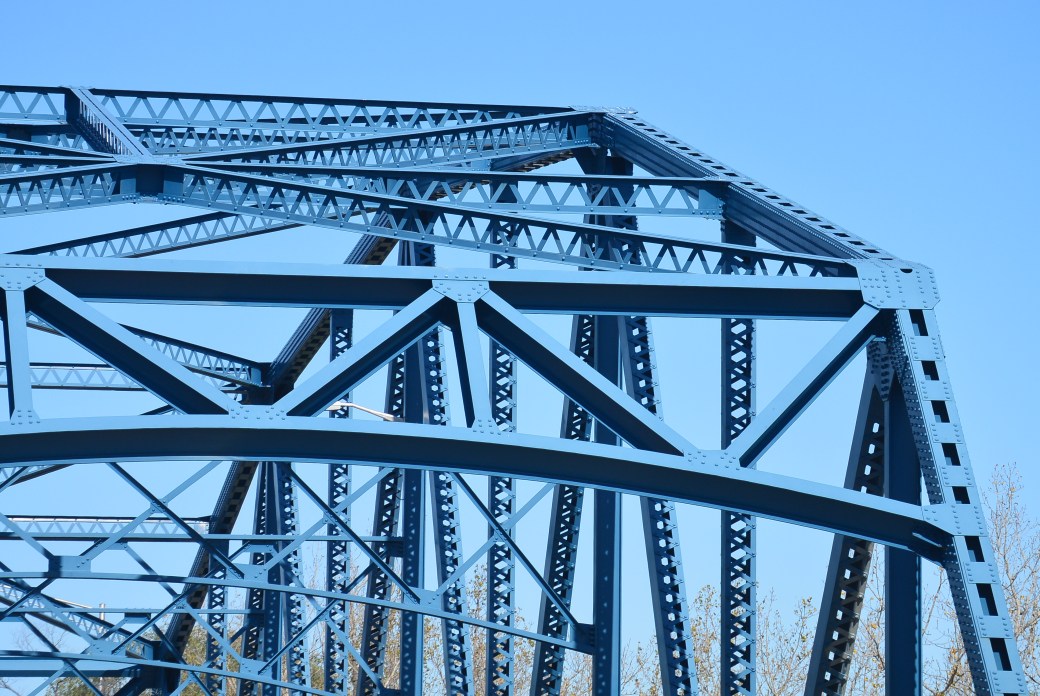
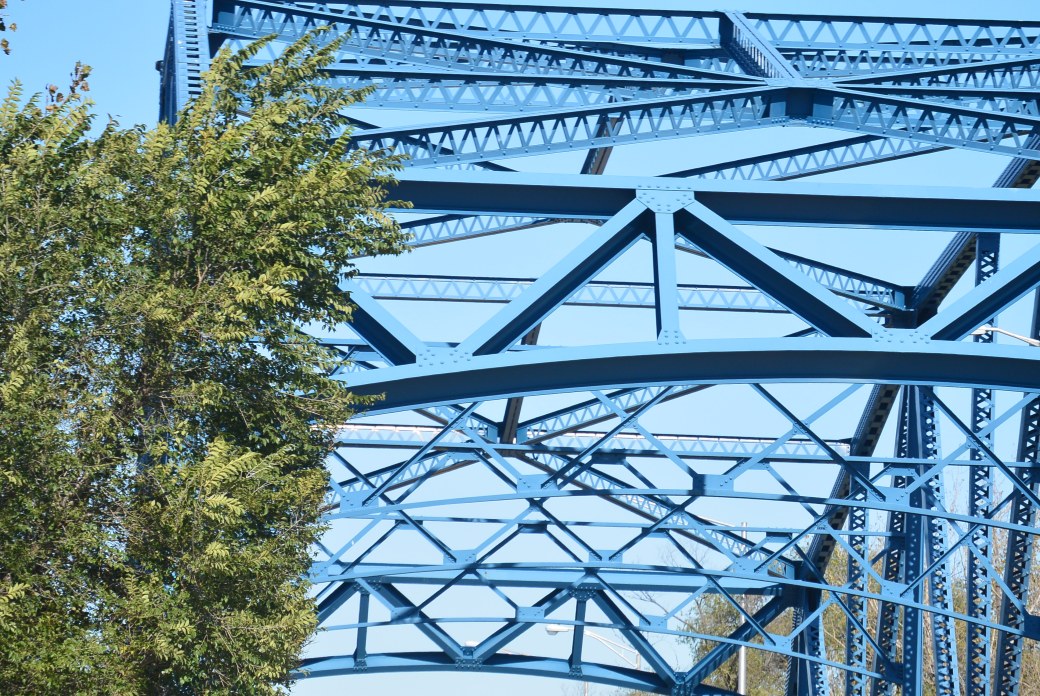
     The current bridge was built in 1974. The builders are listed as the American Bridge Company or United States Steel.   The structure is a Warren truss vertical lift bridge.  Main span is 242 feet.  There is one main span and two approach spans.  The bridge is active.

California Avenue Traffic Bridge over the Sanitary and Ship Canal

This traffic bridge is located between the Eight Track Bascule Bridge to the east and the Chicago, Madison & Northern Railroad Bridge to the west.

DSC_1754

California Avenue Bridge

DSC_1872

California Avenue Traffic Bridge

DSC_1873

Pedestrian Walk California Avenue Traffic Bridge

DSC_1875

East View from the California Ave Bridge.  8 Track  Railroad Bridge in the Distance

DSC_1876

West View from the California Bridge.  Chicago Madison and Northern RR. Bridge in the distance

DSC_1877

Sanitary and Ship Canal near the California Avenue Bridge

DSC_1878

California Avenue Traffic Bridge


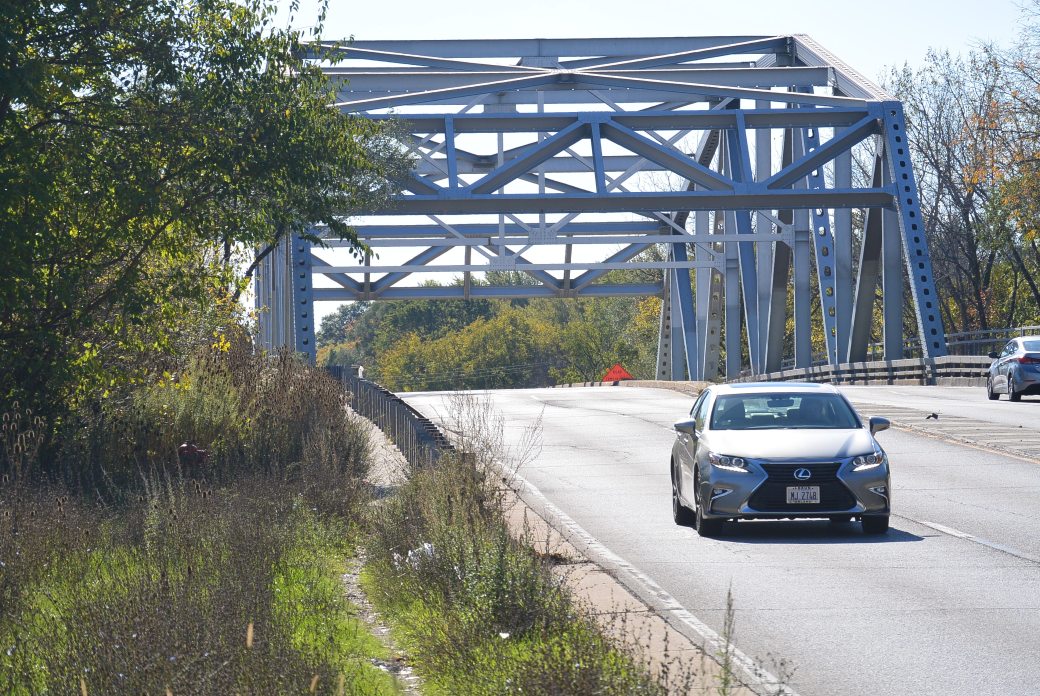
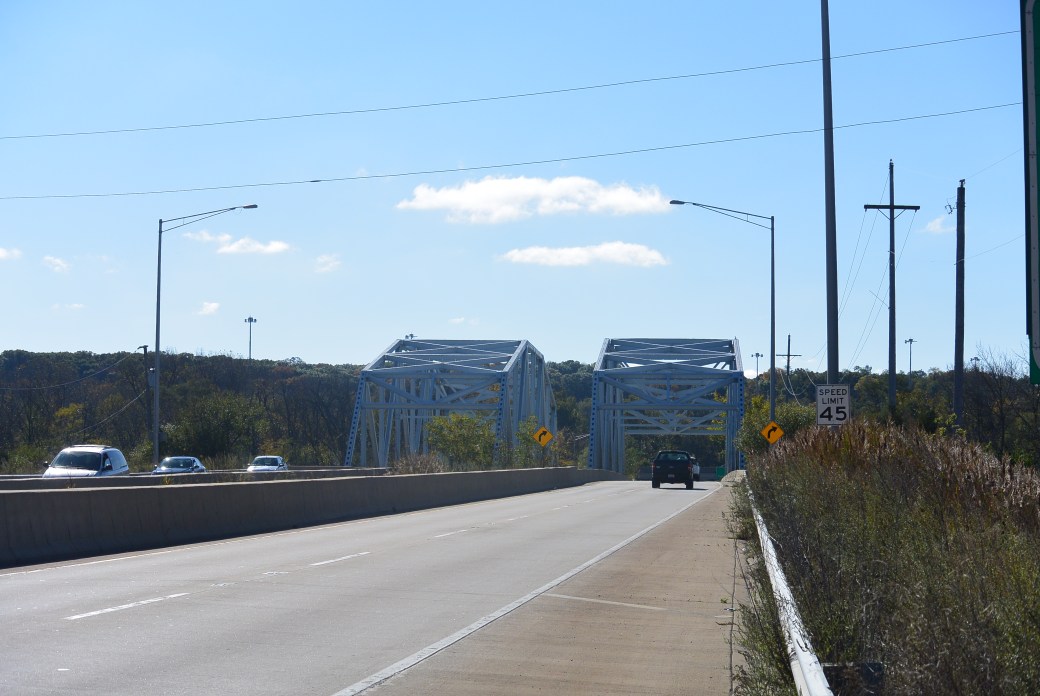
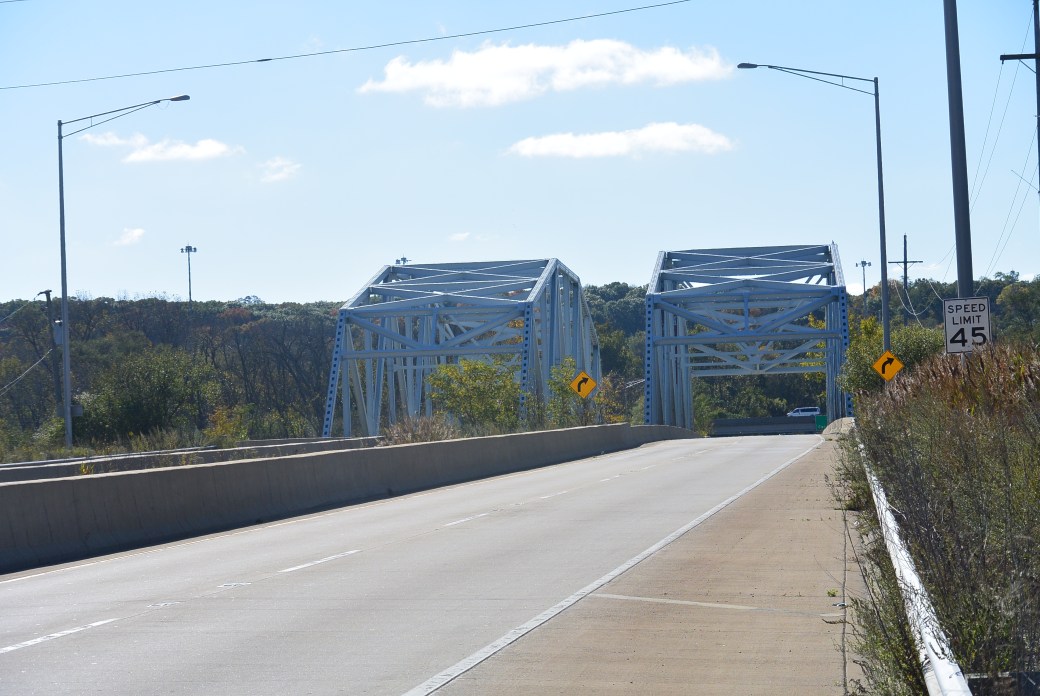
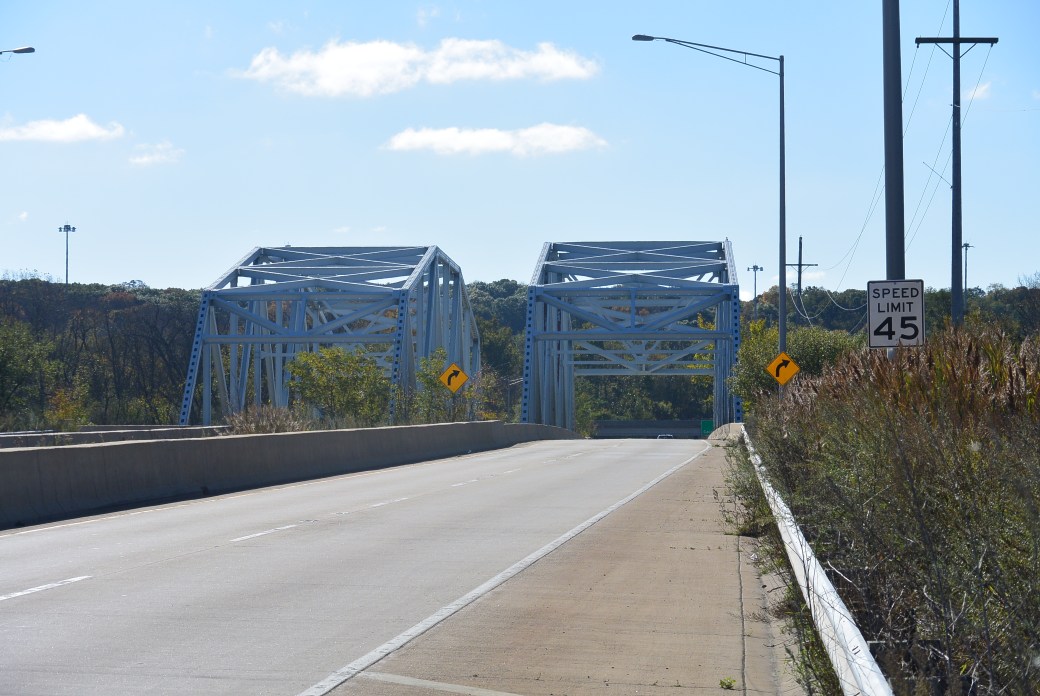
This is a metal rivet connected Pratt Truss,  bascule bridge.  This was a moveable bridge with a counter weight.    However, the bridge is now fixed.  The bridge tender house has been completely removed.    It is a two lane bridge.

This bridge was built in 1926.  Its steel is from the Carnegie Steel Company.  The main span length is 224 feet.  Structure length is 314 feet.    Roadway width is 38 feet.  There is one main span and three approach spans.

Bridge evaluation as of 12/2010

Bridge Deck 7 out of 9  Good

Superstructure 6 out of 9 Satisfactory

Substructure  6 out of 9  Satisfactory

Overall appraisal Functionally Obsolete

Joliet Correctional Center

11736405070-CommerceProduct-7182-7-7

Joliet Correctional Center

11736405070-CommerceProduct-7182-8-8

Joliet Correctional Center

11736405070-CommerceProduct-7182-9-9

Joliet Correctional Center

Recently this facility was known as the Joliet Correctional Center.  Other names included Illinois State Penitentiary, Joliet Prison, Joliet Penitentiary, and the Collins Street Prison.   It is located on Collins Street in Joliet.  In opened in 1858 and closed in 2002.

First 33 prisoners from Alton, Illinois arrived in May 1858.   The facility was completed in 1860.   The prison was constructed with prison labor under the supervision of Lorenzo Sanger and warden Samuel Casey.  The limestone used in the construction was mined locally.  Architect was William Boyington  (also designed the Chicago Water Tower).    The last prisoners were transferred from Alton in 1860.

By the early 1870’s, the prison population had reached 1,239.  This was a record for this time period.    The prison was very slow to modernize.  As late as 1910, there was no running water or toilets in the cells.

From 1896 to 1932, there was a women’s prison across the road.   This building was then used as an annex and later as a male reception facility for Norther Illinois.

Prison population was 1,300  in 1990 and 1,156 in 2002.

More recently there was a fire at the facility on May  30, 2017.  This was found to be an episode of arson.

Kedzie Avenue Bridge over the Sanitary and Ship Canal

DSC_1808

Kedzie Avenue Bridge

DSC_1811

Kedzie Avenue Bridge

DSC_1809

Kedzie Avenue Bridge Bridge facing West

DSC_1810

Kedzie Avenue Bridge facing East.

The first verified bridge  in this area was built in 1879 and was a fixed iron bridge.  The next bridge was built in 1909 and was a through truss center pier swing bridge.   The current bridge was built in 1970.  During construction, a temporary bridge was in place to allow for traffic flow in this location.    The  current bridge  is a riveted through plate girder.  This is a fixed bridge.  The main span length is 148.6 feet.  The structure length is 350 feet.   Roadway width is 48 feet.  There are four main spans.

Inspection report as of 10/2011 rates the deck as 3 out of 9 -serious; superstructure 5 out of 9–fair.  Substructure is rated 5 out of 9–fair.   Overall appraisal is structurally deficient.

South Western Avenue Bridge over the Sanitary and Ship Canal

DSC_1751

South Western Avenue  Bridge

DSC_1804

South Western Avenue Bridge over the Sanitary and Ship Canal

DSC_1805

South Western Avenue Bridge

DSC_1803

Railroad Viaduct near the Western Avenue Bridge

DSC_1806

Railroad Bridge near the South Western Avenue Bridge

jpeg2


The current bridge over the Sanitary and Ship Canal has an interesting history.  It was built in 1940. It replaced a swing bridge built in 1900.    Bridge substructure contractor was M.J. McDermott and Company.  Superstructure contractor was Strobel Construction  Company.  It was a fixed plate girder bridge.  It was a ten lane bridge.   It offered a 21 foot clearance.
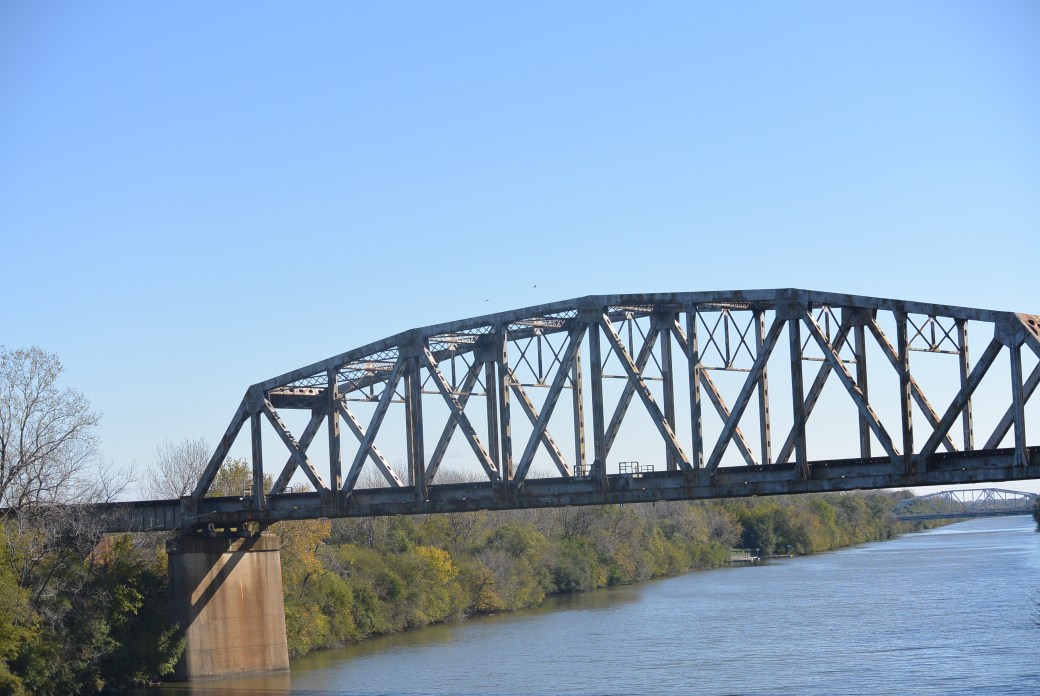
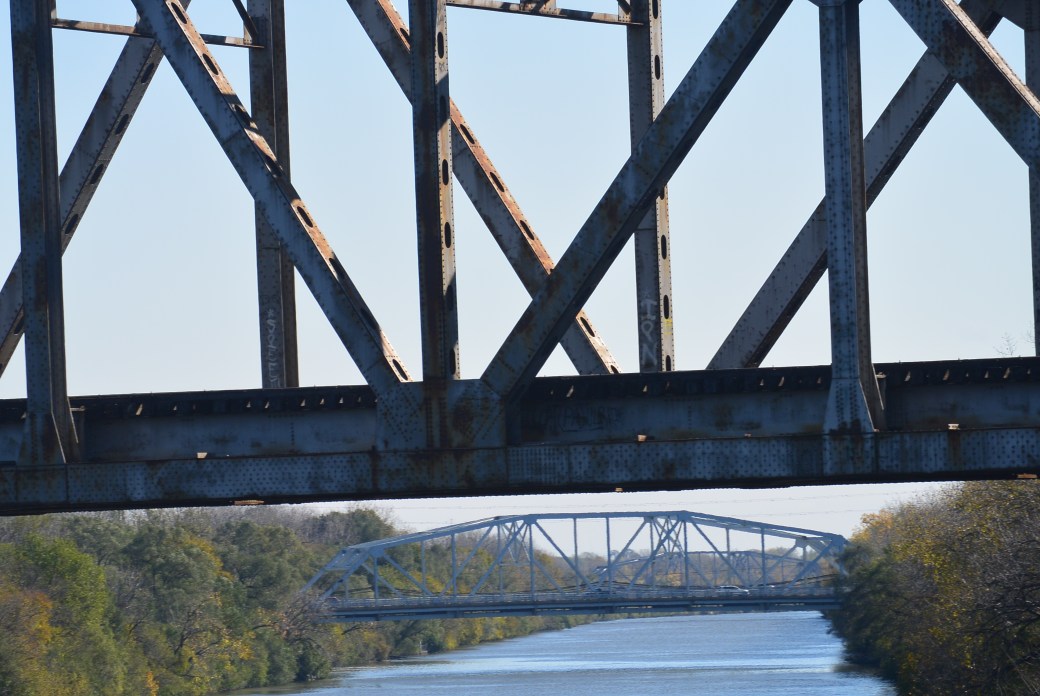
The clearance of the bridge was inadequate for the passage of newly constructed World War II naval ships from Great Lakes Shipyards to the Gulf of Mexico.  In 1942, the city of Chicago signed an agreement with the Naval Department.  The city agreed to convert the bridge from its current configuration to one of the largest vertical lift bridges at the time.  In a few short months, towers were added along with the machinery necessary to operate the bridge.  The bridge was operational April 5, 1943.   One interesting fact was that traffic on the bridge was not seriously affected during the conversion project.

Scan_0001

South Western Avenue Bridge with lift towers in place.


Some time after the 1972 photo was taken the lift towers were removed and the bridge became a fixed one.

The bridge is metal through girder.  It is 295 feet in length.  The road way is 107 feet in width.  Length of maximum spam is 108.9 ft.   The deck width is 145.3 ft.  There are bilateral side walks measuring 9.5 feet.    It consists of one main span and two approach spans.   Vertical clearance is 22.0 feet.

Bridge inspection report as of 10/2011:  Deck condition rating  6 out of  9 Satisfactory. Superstructure rating 5 out of 9 Fair.    Substructure rating 5 out of 9  fair.


DSC_1881

Approach to South Western Avenue Traffic Bridge over the Sanitary and Ship Canal

DSC_1882

Western Avenue Bridge

DSC_1883

Western Avenue Bridge

DSC_1886

Western Avenue Bridge

DSC_1888

Western Avenue Bridge

DSC_1889

Western Avenue Bridge

DSC_1890

Pedestrian Bridge Western Avenue Bridge

DSC_1891

Western Avenue Pedestrian Bridge

DSC_1893

View from the Western Avenue Bridge

DSC_1894

Western Avenue Bridge

Ashland Avenue Bridge over the south Branch of the Chicago River

DSC_1742

Ashland Avenue Bridge

wp-1463785230997.jpeg

Ashland Avenue Bridge


There have been multiple bridges over this site on the south branch of the Chicago River.  The first documented  bridge was a swing type.  It was built by the Detroit Bridge Company in 1883.  It was 160 feet in length and 20.5 feet in width.    The next bridge was built in 1902 by the Chicago Bridge and Iron Company.  This was a rare Page type bascule bridge.  This was replaced by the existing bridge in 1938.   During the replacement project, a temporary bobtail swing bridge was erected adjacent to the construction site.   This was constructed by the Overland Construction Company.   This was done to keep the area open to traffic.

The current bridge was constructed in 1938.  The superstructure contractor was was Ketler–Elliot Company.   Substructure contractor was Fitz Simmons and Connell Dredge and Dock Company.  Depression Age funding was used for the project.   The description of the bridge is  a very wide pony truss bascule bridge.   There are three pony truss lines to carry the wide bridge.

The bridge is still  operational. The main span length is 225 feet.  The total structure length is 312 feet.   The road width is 57 feet.   There is one main span and four approach spans.

Bridge appraisal as of 10/2011:  Deck Condition 7 out of 9   Good;  Superstructure 6 out 9  Fair; Substructure 5 out of 9  Fair

Santa Fe Railroad Sanitary and Ship Canal Bridge

DSC_1770

Santa Fe Railroad Bridge

This is a swing bridge over the Sanitary and Ship Canal.  It is located between the south Central Avenue Bridge and the Harlem Avenue Bridge.  It was built in 1899.  It is a pin connected Pratt through truss fabricated by the the Keystone Bridge Company.  The Carnegie Steel Company erected the superstructure.

It is a center pivot swing bridge.  It measures 372 feet 6 inches in length. It rests on limestone abutments.  The limestone center pier measures 33 feet 8 inches in diameter.  It supports  a 28 foot turntable.  The bridge has two tracks.  It is still operational.

Indiana Harbor Belt Line Bridge Sanitary and Ship Canal

DSC_1775

Indiana Harbor Belt Line Bridge

This is a railroad bridge over the Chicago Sanitary and Ship Canal.  It is located near Bedford Park Cook County, Il.  It is located between the LaGrange Rd and the Archer Avenue traffic bridges.   Railroads using this bridge include the Indiana Harbor Belt Line and the Soo Line.    This was originally a swing bridge.  Date of construction is unknown.  The span between the center pier and the north bank collapsed in  1963.  This was replaced by by a set of short deck girder bridges.   The remaining section between the center pier and the south bank was left in place.    Subsequently this was replaced with  a truss bridge.  This is a double track bridge.  Total length of the bridge is 340 feet.


Illinois Central Swing Bridge

DSC_1760

Kedzie Ave RR Bridge

This is a swing bridge between Kedzie Avenue and Pulaski Road.   Date of construction is estimated to be about 1897.  The substructure contractors were the Mc Arthur Brothers and Winston and Company.  Carnegie Steel Company was the superstructure contractor.  Estimated cost of the bridge was $64,961.97.  Estimated weight of the structure was 1,519, 183 pounds.

This is a singe span bridge.  It has two tracks.   Its length  is 322.7 feet.  The total structure length is 327.7 feet.  The bridge rests on limestone abutments on the ebankments.  Center pier is concrete and limestone. The bridge rotated on the center pier. It is currently fixed and locked in position.

The bridge originally was built for short line Illinois Northern Railroad (part of the Santa Fe System).  It is currently used by the Illinois Central.