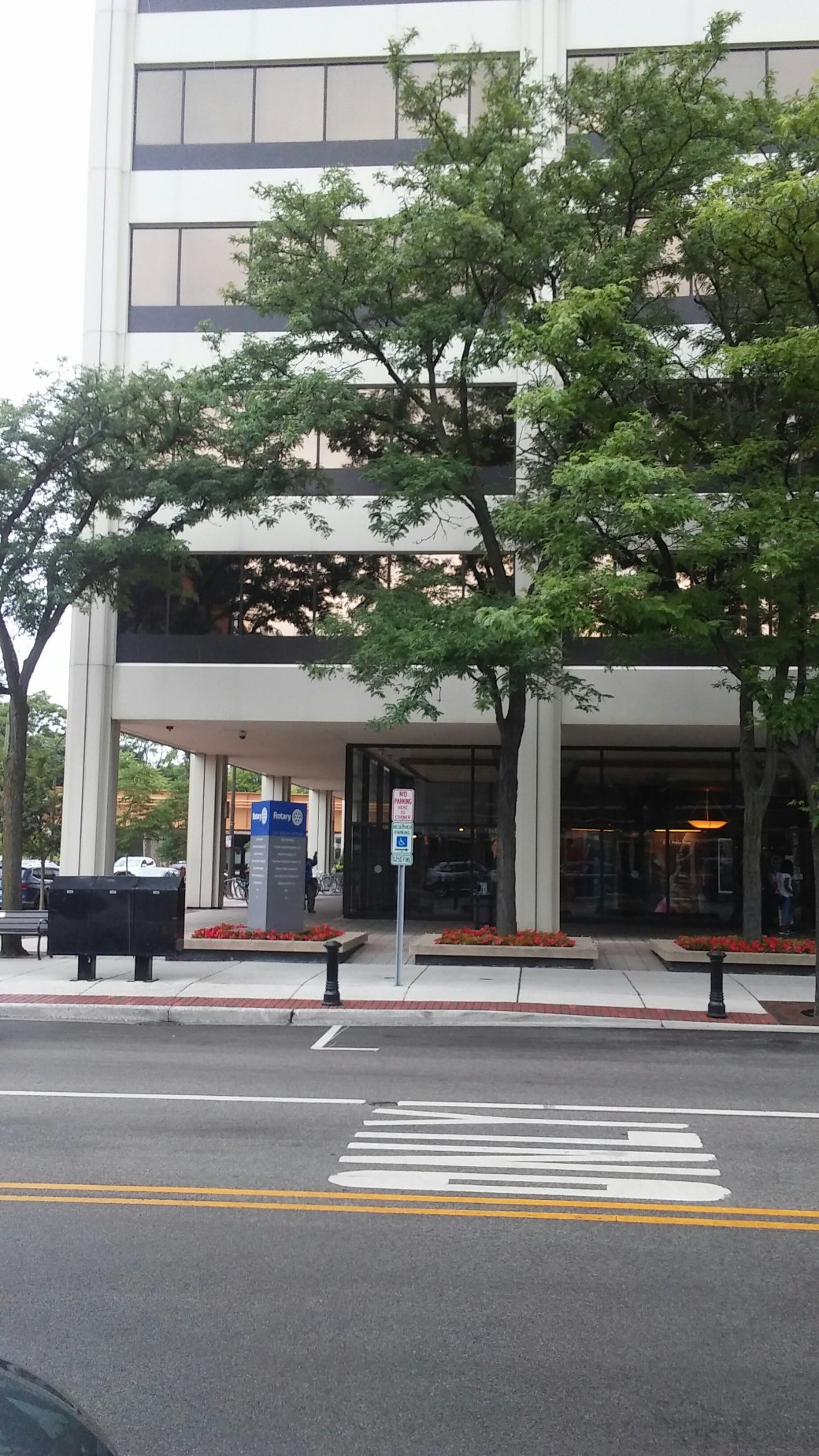
William Ogden

William Ogden

     William Ogden was a well known entrepreneur in the Chicago area in the 1800’s.  He was born in Walton, New York in June of 1805..  He spent his early life in the New York area.  He served one term in the New York State Assembly in 1835.  

     He relocated to Chicago in 1835 and soon was involved in multiple projects.  He was a promoter and an investor in the Illinois Michigan Canal.  He developed the first swing bridge on the Chicago River.  He served one term as Chicago mayor 1837 to 1838.

  As one of the members of the Chicago Land Company, he pushed for purchase of a parcel of land east of the North Branch of the Chicago River near North Avenue in 1853.  Initially, the land was used as a source of clay for brick manufacture.  Ultimately, a channel was dug arising in the North from the Chicago River and extending South to again join the river.  The canal was completed in 1857.  It was 50 feet wide and 10 feet deep.  This project resulted in a man made island called Goose Island.

     As a principle in the Chicago Canal and Dock Company, he was responsible for development of Ogden’s slip.  This is a boat slip paralleling the Chicago River on the north.

     Ogden shifted his interest from water transportation to railroad.  He helped to establish a railroad link to the North Branch Chicago River.  He was instrumental in creating the Galena and Chicago Union Line.  He served on the board of the Missippi and Missouri R.R.  For a time, he was president of the Union Pacific RR.  

     In 1871, he lost most of his property in the Chicago Fire. He relocated to New York.  He died on August 3, 1877.

Blackhawk Street Bridge

Blackhawk Street Bridge

     Posted 1/7/2018

There is no current bridge at this site.   There was only one bridge at Blackhawk Street.   The  bridge crossed the North Branch Canal (1000 West; 1500 North) 3 miles from the Chicago River mouth. It opened in May, 1902.  The bridge superstructure was the old West Division Street Bridge.  It was a lost Pony truss, iron and wood, hand operated swing bridge.  It was 180 feet long and 29 feet wide.  City laborers repaired the sidewalks, fences, roadway, chord coverings; overhauled turntable spider rods,drums and locks;rehabbed the bridge house.  FitzSimons and Connell  built the substructure.  

Contractors were:

Design:                                               Fox and Howard

Superstructure Contractor:         Fox and Howard

Substructure Contractor:             FitzSimons and Connell.

Cost Unknown

     On June 2,1904, steamer Black Rock collided with the bridge.  Bridge was removed and rebuilt.  It was returned to operation on 12/1/1904.  Bridge was permanently removed April 9, 1910.

Area of Blackhawk Street Bridge

Area of Blackhawk Street Bridge

Area of Blackhawk Street Bridge

Area of Blackhawk Street Bridge

Area of Blackhawk Street Bridge


Area of Blackhawk Street Bridge


Area of Blackhawk Street Bridge


Photos added 4/11/2018

Weed Street Bridge

Drawing of the first Weed Street Bridge (from Wikipedia)

Posted 1/6/2017

There is no current bridge at this site. Weed Street (1050 West: 1550 North) crosses east to west over the North Branch Canal 3.2 miles from the river mouth. There have been two bridges at this site.

The first bridge at this site opened on June 24, 1891. The bridge was the first lost Harman folding lift bridge. It was made of iron and steel and was hand operated It was 150 feet long.

This was a bascule type bridge. It has two leaves. Both leaves had two independent areas of rotation. It was also known as a Jack knife bridge. It was plagued with problems because of its multiple moving parts.

Contractors:

Designer: Captain William Hartman

Construction: Shailer and Schniglau

Cost: $8,296

The bridge was closed in 1899. It remained out of service. It was removed in 1905.

The second bridge opened in 1905. It was a reused temporary wood hand operated pontoon swing bridge. It was formerly used at North Western Avenue. The approaches at Wood Street were rebuilt.

Contractors:

Designer: Division of Bridges and Viaducts City of Chicago.

Construction Contractor: Jackson and Corbett.

Costs are unknown.

Removed April, 1910. There has been no bridge since.

Area of Weed Street Bridge


Area of Weed Street Bridge


Photos added on 4/11/2018

Pennsylvania Railroad Bridge

Pennsylvania R.R Bridge  458

    Published 12/8/2017

       Pennsylvania R.R. Bridge 458 crosses the South Branch of the Chicago River near Canal and Lumber Streets.  It crosses from North to south.  It was built in 1915 as a replacement for a swing bridge.

     It is a metal 10 panel rivet-connected Parker through Truss movable vertical lift bridge.   The main span measures 272.8 feet.  Total structure length is 387.8 feet.  Width measures 19.5 feet.  There are two tracks.  There is one main span and two approach spans.  At each end of the bridge are vertical towers 195 feet in height.  The movable span can be moved to provide 130 feet of clearance under the bridge.  This is the only remaining vertical lift bridge on the Chicago River.Bridge Contractors:  Builder/Contractor  Pennsylvania Steel Company of Shelton,PA.

Engineer Design Wadell  and Harrington.

Pennsylvania R.R. Bridge 458.  Original Bridge Tender House is at the top of the center span

     This bridge was originally owned by the Pennsylvania R.R.  It is currently owned by Amtrak.  It is also used by Metra and Norfolk Southern  R.R.

Two Towers of Pennsylvania RR. Bridge 458

     There is a small house at top of the center span.  This functioned as the bridge tender house.  It also protects the operating equipment.   At the present time, the bridge is operated remotely from a R.R. switching tower at 14th and Lumber Streets.

    The bridge was designated as a national landmark on 12/12/2017.

Same as above

Pennsylvania RR. Bridge 458 in lowered position

Pennsylvania RR Bridge

Rush Street Bridges over the Main Branch of the Chicago River.

There is currently no Rush Street Bridge over the Chicago River.    At one time, there were  four different bridges ( 1856–1920) at this site (365 North; 80 East).

First Rush Street Bridge

The first bridge was built in 1856.  This was a replacement to a ferry service.   It was an all iron swing bridge; one of the first.    Type was Pratt Truss.  There were three trusses with two  roadways.  There were also pedestrian walkways.  The bridge was financed with  equal contributions of $18,000 by the city of Chicago and the Illinois Central and Galena and Chicago Union railroads.  The bridge was destroyed in 1863.  Twelve individuals and sixty head of cattle were pushed into the waters of the Chicago River.

Due to the importance of the Rush Street crossing, there was only a short interval between the destruction of bridge 1 and the construction of bridge 2.  The second bridge opened February 3, 1864.  Construction cost was $8,740.  Contractor was Fox and Howard.

The bridge was a wooden pivot bridge 211 feet long and 32 feet wide.  It had two carriage ways.    It was a two truss bridge.  The bridge was destroyed in 1871 during the Great Chicago Fire.

     The replacement bridge was built in 1872.  It was an iron Pratt truss hand operated  swing bridge.  It was the same length as the previous bridge and one foot wider.  It was designed by the Detroit Bridge Company.  Substructure Contractor was E. Sweet, Jr. and Company.  Cost was $54,000.   It was destroyed on November 22, 1883 by a collision involving the Schooner Grainger and a steam barge Business.

Last Rush Street Bridge over Chicago River

     A fourth bridge over the Chicago River at Rush Street was opened on July 22, 1984. Bridge was designed by Rush and Coolidge; they were also the superstructure contractor.   Substructure Contractor was Fitzsimmons and Connell.  Construction cost was $125,000.  

     The 657 ton bridge was an all iron Pratt Through Truss steam powered one. It was the second largest bridge built at this time.  It was the last iron swing bridge built by the city of Chicago.  It was 240 feet long and 59 feet wide.  During its life span, it underwent many updates.  In 1895, the steam power plant was removed and replaced by electric motors.  In 1899, the bridge was replanked. In 1909, 2 new ge motors were installed.  In 1907, danger signals were installed.The

     The 4 Rush Street Bridge was closed on 12/22/1920.


Rush Street at Chicago River Site of Prior Bridge

Rush Street near Chicago River


Chicago River at the site of the Prior Rush Street

Photos added 4/14/2018

I 90 expressway

I 90 Expressway

I 90 Expressway

     Written 12/7/2017

Dan Ryan Expressway (I90/ I94; 700 West; 2400 South) runs North South through Chicago.  It crosses the South Branch Chicago River 4.3 miles from the river mouth.

     The Federal Highway Act of 1956 established the interstate highway system.  One of the roads in this system was the Soutwest highway (Dan Ryan Expressway).  There was a controversy about the nature of the bridge crossing the South Branch Chicago River.  One group wanted a bascule type of structure; the other argued for a fixed bridge.  The U.S. Army corps of engineers, U.S. Bureau of Public Roads, and the Secretary of the Army approved a fixed bridge.  It opened in 1965.

     It is a steel and reinforced concrete bridge.  The bridge length is 517 feet.  It is 174 feet wide.  There are 12 traffic lanes.  There are emergency walks on both both sides measuring 2.2 feet.  Bridge clearance is 60 feet.  The bridge was constructed by the American Bridge Company.  Cost was $1,178,566.

Fisk Generating  Station

Fisk Generating Station in the Distance

The Fisk Generating Station was a medium sized coal fired electric generating plant located at 1111 West Cermak Avenue in the Pilsen Neighborhood.  It is located near the South Branch of the Chicago River which provided water for steam and a route for barge traffic to deliver coal.  The site of the plant is 60 acres.  At its peak, the facility provided power to 381,000 households.

Today, the Fisk site includes multiple large buildings with reinforced concrete foundations, steel frames and common bond brick walls.    The original powerhouse was built in 1903.  The architects were Shepley,  Butan, and Coolidge.  Attached to this, is the boiler building and turbine generator room.  It is a tall one story building measuring 600  X 200 feet.  It was built in 1959.

There is a three story administration building.   It measures 300 X 80 feet.  There are two one story flanking buildings attached to this building.

There is switch house 2 and transmission terminal built in 1940.  It measures 120 X 50 feet.  It consists of brick wall on concrete foundation.

There is a three story maintenance building measuring 200 X 84 feet. There is Switch House N built in 1920.  It measures 250 X 40 feet.  Finally, there is a building known as the frequency changer house.

The Fisk Plant was purchased by Midwest Generation in 1999.

The Fisk Plant closed in 2012.  Causes for the closure included:  competition from natural gas plants and burdensome environmental regulations.

Crawford Avenue Power Plant

DSC_1797

Crawford Power Plant

The Crawford Power Plant is located at 3501 S. Pulaski Avenue near the Sanitary and Ship Canal.  It was built in 1924.  The architects were  Graham, Anderson, Probst, and White.  The architectural style is described as  Industrial Gothic.   It uses red brick and stonework masonry.  It stands on a 72 acre site.  There was storage for 300,000 tons of coal.

Operation started in 1925.  It was the largest of five power plants servicing the Chicago area.  It produced 750,000 kilowatts.   The plant was acquired by  Midwest Generation in 1999.

Plant  reduced sulfur dioxide emissions by 39% and nitrogen oxide emissions by 48 % in 2001 by using lower sulfur coal and new technologies.  Mercury emissions were reduced by 90% by  new technologies.

Controls to reduce nitrogen oxide emissions by 70%  were installed in 2011.

However all of these updates were not enough.  Midwest Generation determined that required retrofits needed to meet federal air standards were not economically feasible. The plant was closed in 2012.


Cermak Road Bridge

     Completed 12/7/2017

     The Cermak Road Bridge (501 West;  2200 South) runs east–west over the South Branch Chicago River four miles from the river’s mouth.  It was built in 1905. It was a metal rivet connected Pratt Through Truss movable double leaf bascule (Scherzer electric powered rolling lift) and approach spans: metal stringer (multibeam) fixed.  Bridge measurements include main span length is 216 feet; structure length is 337 feet; roadway width is 36 feet.  There is one main span.  There are three approach spans. This is the last surviving Scherzer Rolling Lift highway bridge in Chicago.

DSC_2633

Cermak Road Bridge over the south branch of the Chicago River

     The bridge abutments  are reinforced concrete.  There are wooden bridge tender houses at the North East and South West corners.

     The bridge was close from 1997 to October 28, 1998 for a $16 million renovation.   Bridge was rebuilt  and raised to a clearance of 19 feet.  The bridge houses were rebuilt.

     The following are the original bridge contractors:

Designer:  Scherzer Rolling Lift Bridge Company

Superstructure Contractor:  Jackson and Corbet Company.

Substructure Contractor: Great Lakes Dredge and Dock Company.

Construction costs were $277,682.


DSC_2634

Cermak Road Bridge

    The very first bridge was built at this site in 1871.  It was a swing wood and iron Howe Truss bridge.  It was 210 feet in length and 32 feet wide. It was designed and constructed by Fox and Howard.  Total cost was $26,900.  It was removed in 1905.

DSC_2635

Cermak Road Bridge

DSC_2636

Bridge Tender House Cermak Road Bridge

DSC_2637

Cermak Road Bridge

DSC_2638

View from the Cermak Road Bridge   Canal Street Bridge is seen  in distance

DSC_2639

View from the Cermak Road Bridge

DSC_2640.JPG

View from the Cermak Road Bridge

DSC_2641

Cermak Road Bridge

DSC_2642

Bridge Tender House Cermak Road Bridge

DSC_2643

Cermak Road Bridge

DSC_2644

Bridge Tender House  Cermak Road

DSC_2645

Cermak Road Bridge

Bridge Inspection Current Bridge ( 10/2011)

Deck                      Condition      Rating         Very Good.        8 out of 9

Superstructure  Condition.    Rating          Very Good.       8 out of 9

Substructure.     Condition.   Rating.          Satisfactory    6 out of 9

Appraisal functionally obsolete     

Canal Street Bridge over the South Branch of the Chicago River

     Completed 12/10/2017.

The Canal Street Bridge (500 West; 2201 South) runs North South over the South Branch of the Chicago River 3.8 miles from the river mouth.  This is the fourth bridge at this site.  Construction began in 1941.  It was suspended in 1943.  It resumed in 1946 and was completed in 1948.  The bridge is a metal rivet-connected Pratt Pony Truss movable: double leaf bascule (fixed trunnion) and approach spans ; metal stringer (multi beam), fixed.  Main span length is 254 feet.  Structure length measures 350 feet.  Roadway width is 44 feet.  There is one main span and four approach spans.  There is steel grate hardware.  There is electric motor power system.

     Contractors include:

Design  Division of Bridges and Viaducts  City of Chicago

Superstructure Contractor  Mount Vernon Bridge Company Mount Vernon, Ohio

Substructure Contractor Simpson Construction

Bridge cost. $1,455,000.

The bridge was painted white for many years.  In 2010, it was painted maroon.

DSC_2649

Bridge Tender House Canal Street Bridge

     The First bridge at this was built in 1890.  It was a Swing Howe Truss wood and iron hand operated bridge  The bridge was designed by Abraham Gottlieb, civil engineer.  Superstructure Contractor was A. Gottlieb Bridge Company.  Substructure Contractor was Chicago Dredge and Dock Company.

     There were three subscribers to the bridge:

Shoenhofen Brewing Company   $3000

Silver Creek and Morris Coal Company. $2000

Conrad Seipp Brewing Company $1000.

Total construction costs were  $22,362.

     This bridge was plagued with problems from the beginning.  It was condemned as an obstruction to navigation by the U.S. Government.  It was removed and transferred to Belmont Avenue in 1892.

DSC_2648

Both Bridge Tender Houses Canal Street Bridge

DSC_2632

Bridge Plaque Canal Street Bridge

     The second Canal Street Bridge opened in June, 1893.  It was a folding steel electric powered bascule bridge.  The only other bridge of this type was at Weed Street.  It was patented by Captain William Harman on 6/5/1888.  The bridge had a 20 foot wide roadway.  It had two 6 foot sidewalks.  Each bridge leaf had hinges at the rear and the midpoint.  As the midpoint hinge rose, two segments folded together. It was reported that the bridge opened and closed in 15 to 20. seconds.  

     The bridge was designed by William Harman.  It was built by Shalter and Schnigau.  Cost was $46,845.

     Unfortunately, the bridge had mechanical issues.  It was repeatedly out of service.  It suffered two boat collisions in 1900.  It was forced out of service for an extended period.  

     The bridge was removed In 1903

DSC_2631

Canal  Street Bridge

DSC_2630

Bridge Tender House   Canal Street Bridge

     The third Canal Street Bridge was built in 1903.  It was built by the Sanitary District.  The bridge design selected was a Scherzer Rolling Lift Bascule.  The superstructure contractor was the American Bridge Company. Substructure Contractor was Lydon and Drews Company.  Construction cost was $128,000.

     In 1906, the following changes were made: 1) Bridge was redecked; 2) sidewalks were replaced; )  the original Westinghouse electric motors were replaced with GE motors.  

     In 1912, one of the bridge’s leaf moved forward approximately one foot toward the river.  At the time, a temporary solution was developed.   The ultimate solution to this problem was reached in 1935.  It consisted of: 1) sole and track plates were replaced; 2) reinforced concrete slab roadway was installed on the rear of each bridge leaf; 3) rest of the bridge deck was replaced with asphalt planking.The

     The bridge was removed In 1941.

DSC_2629

View from the Canal Street Bridge    Cermak Avenue Bridge is seen

DSC_2628

View from the Canal Street Bridge.  Cermak Avenue Bridge seen

DSC_2627

View from the Canal Street Bridge.    Cermak Avenue Bridge seen

DSC_2626

Canal Street Bridge

DSC_2625

Canal Street Bridge View.   Amtrak Bridge is seen

DSC_2624

Canal Street Bridge

DSC_2623

Canal Street Bridge

DSC_2622

Canal Street Bridge

DSC_2621

Canal Street Bridge

DSC_2638

Canal Street Bridge as seen from the Cermak Avenue Bridge

Bridge Inspection (12/2012)

Deck.                            Condition.                               Rating.                       Good.               7 out of 9

Superstructure.       Condition.                                Rating                         Good.               7 out of 9

Substructure            Condition.                                Rating.                         Satisfactory  6 out of 9

Sufficiency  Rating.       76 out of 100