This is new information obtained from the Illinois State Archives.
Little Vermillion Aqueduct
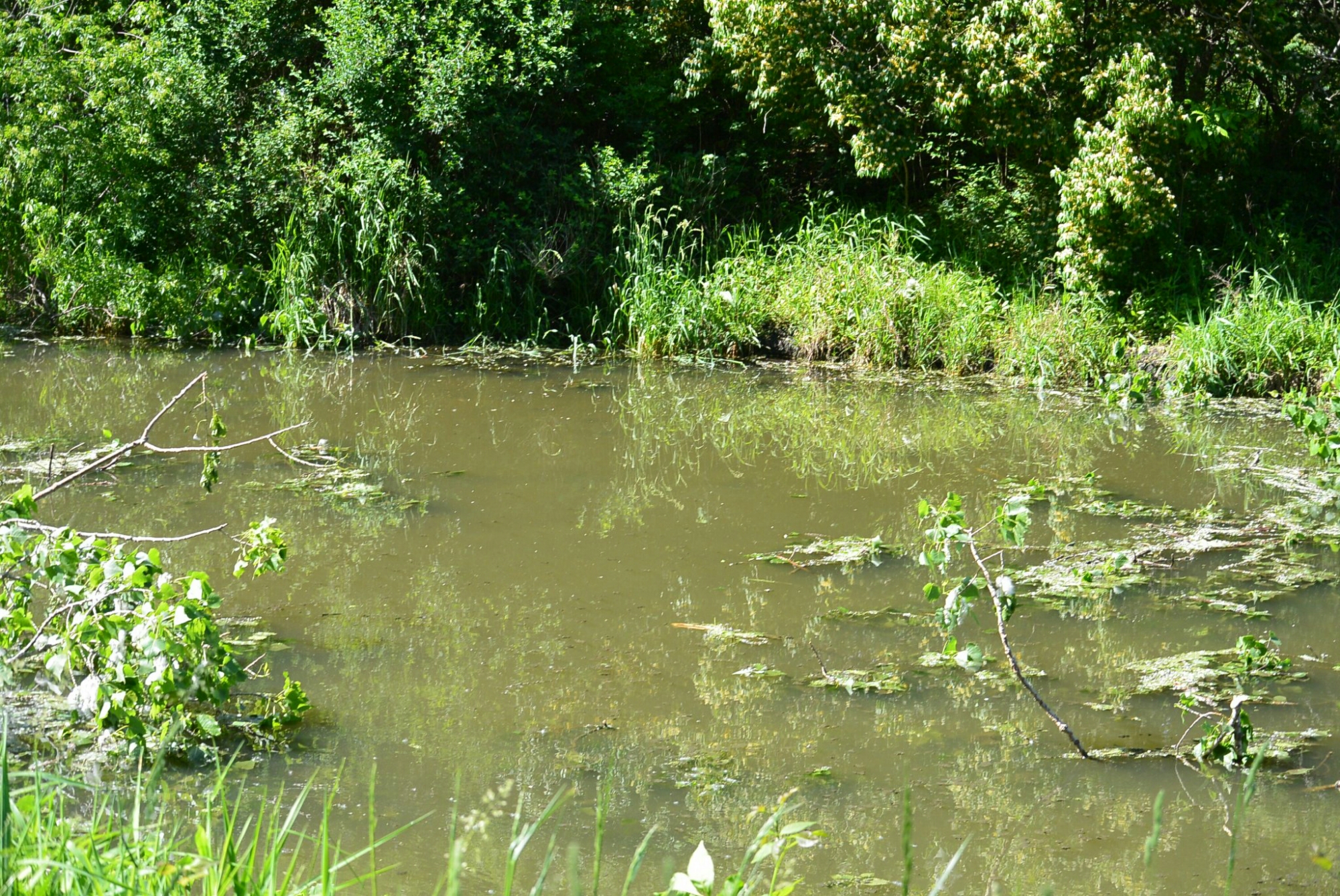
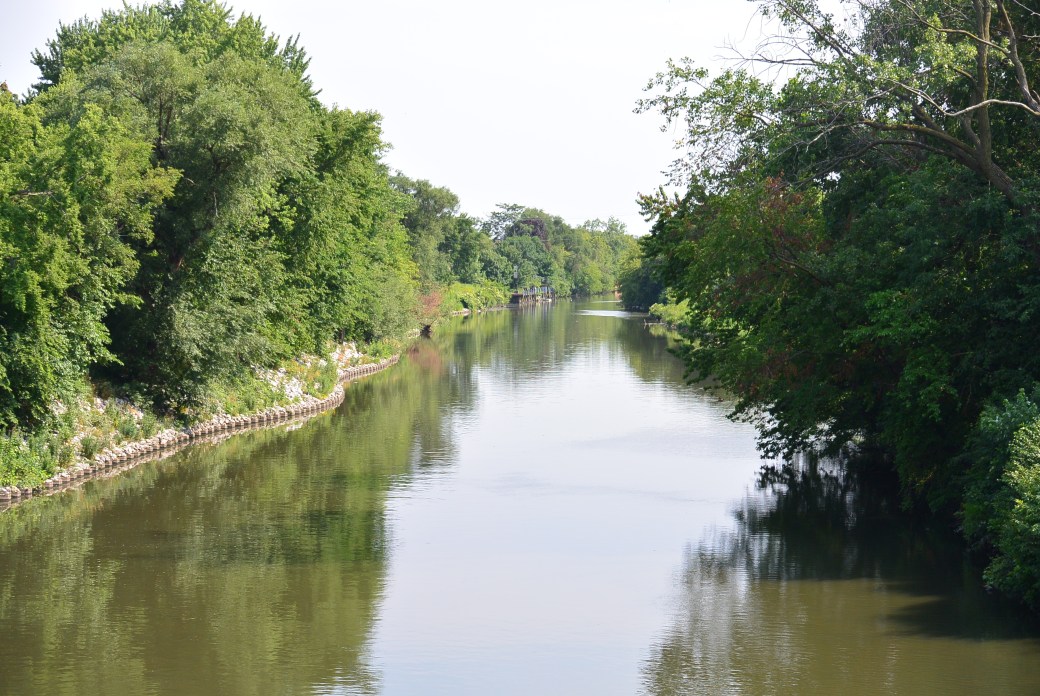
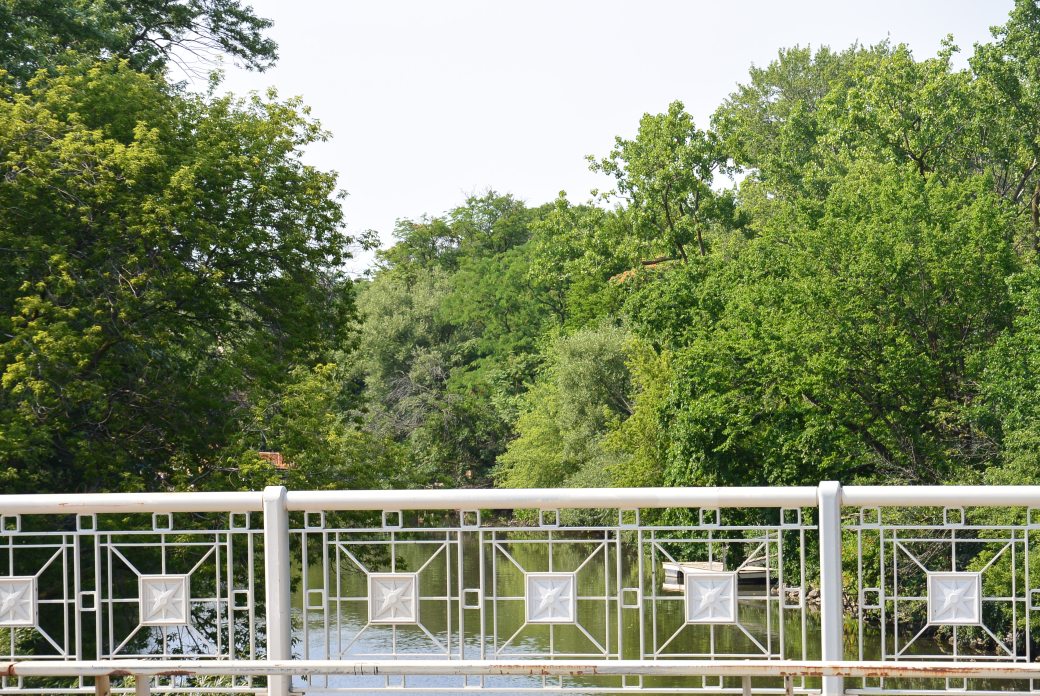
Date of original construction uncertain. Length is 140 feet. Piers were either sandstone or limestone. Superstructure was originally wood later replaced with metal. Following names were listed as contractors working on the aqueduct: Byrne, Cody, Cahill, Fleahill, Howe, Williams Byron.
Canal Origins Park
July 4, 2016 will be an important date in the history of the city of Chicago. 180 years prior to this, the ceremonial first shovel full of dirt was done at the origin of the Illinois Michigan Canal at the south branch of the Chicago River. (Ever since the construction of the Erie Canal, it was customary to begin U.S. canal projects on July 4th.)
It would take another 12 years to complete the canal to LaSalle at the Illinois River. This man made channel would play an important role in the growth and development mainly of Chicago but also the other cities along the Illinois Valley.
Many years have passed since the canal construction. Many changes have occurred. The Illinois Michigan Canal was abandoned. Virtually little remains in the Chicago area. It was replaced by the Chicago Sanitary and Ship Canal, the Cal Sag Channel and later the Illinois Waterway.
In an effort to preserve a historical site of the I and M in the Chicago region, the Canal Corridor Association lobbied for preservation and public use of a 1.8 acre site at the junction of the Bubbly Creek and the south branch of the Chicago River. This is where the Canal originated from the river. Also in this region is the origin of the Chicago Sanitary and Ship Canal.
This parcel of property was used a a dumping site. Previous retail establishments at this site included a gas station and a seafood restaurant.
Eventually, the property was transferred from the state of Illinois to the Chicago Park District. The site was designated as a historic landmark. Native plants were restored in 2004.
Earth artist was retained to help with the design of what would be known as Canal Origin Park.
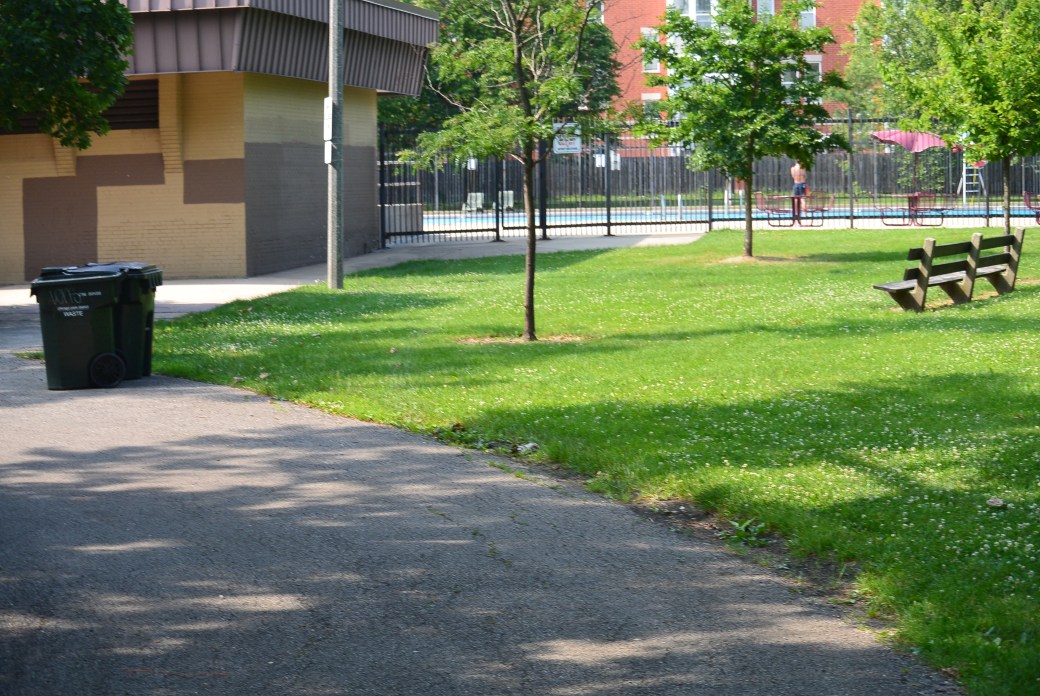
The park is roughly triangular in shape. One side borders Ashland Ave. The other side borders Bubbly Creek and the south branch of the Chicago River. There is a path way along the river and creek. There is a sunken walkway from the park entrance to the water. This is meant to simulate traveling down the canal. On the walls of the walkway are concrete freizes depicting historical events of the canal and canal corridor. These were designed by students supervised by Chicago artist Philip Schuster.
[
In the front of the park, there are many photos and diagrams depicting the history of the area and the park.
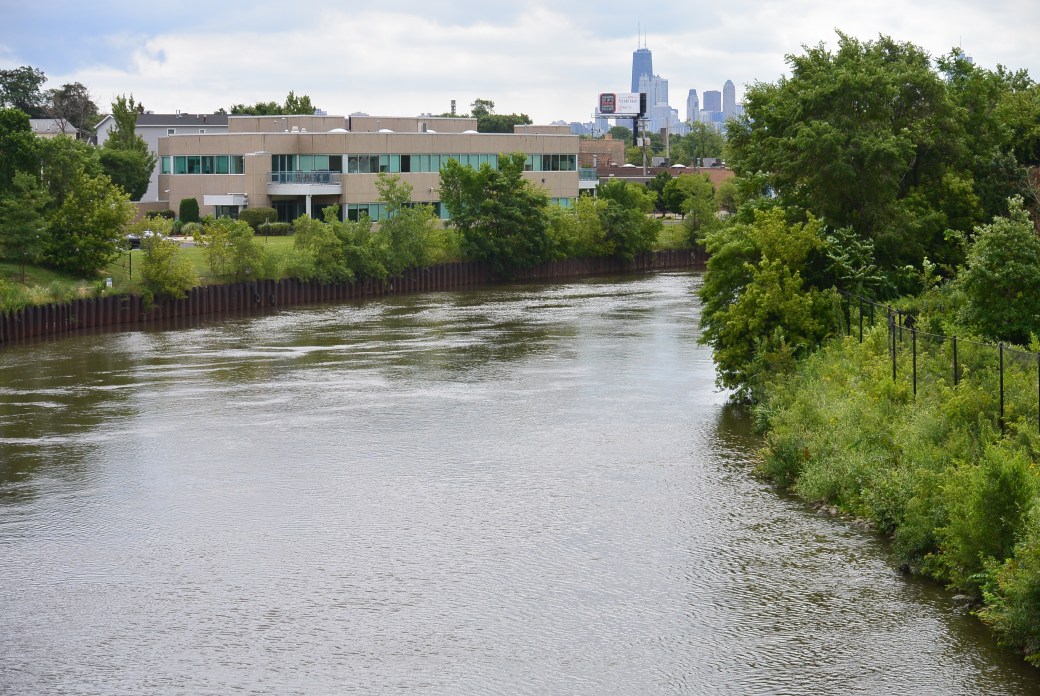
As mentioned previously, the park is bordered on the east by water including the Sanitary and Ship Canal, the south branch of the Chicago River, the canal turning basin, and the Bubbly Creek. The Creek received its name in the following manner. The waste from the Chicago Stock Yard was dumped into Bubbly Creek. The decaying of this garbage created a gas.
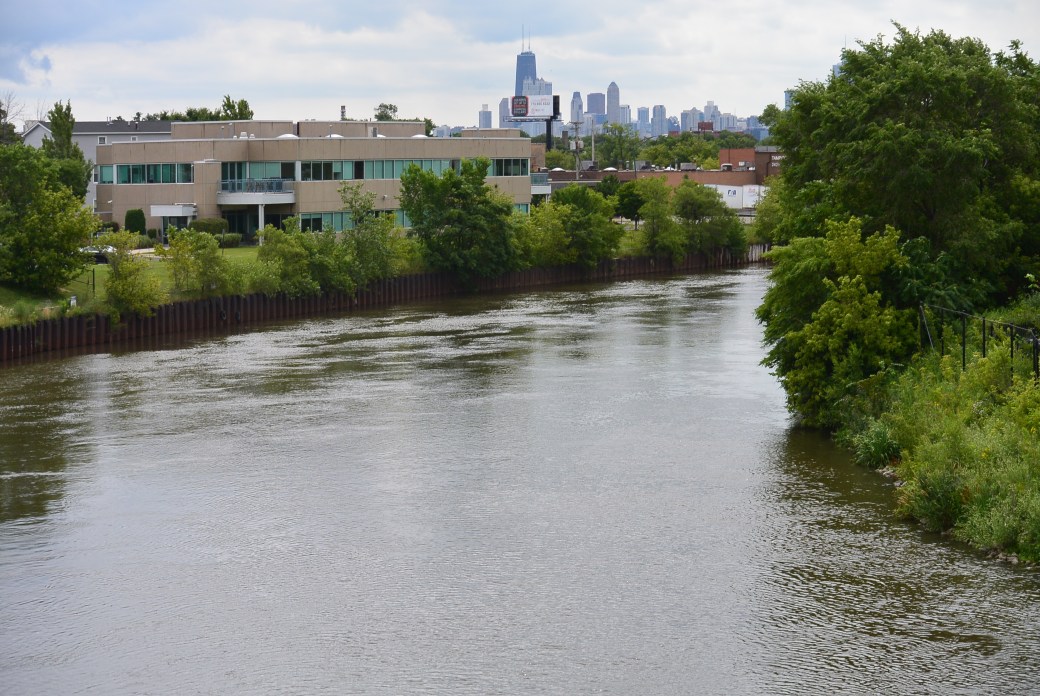
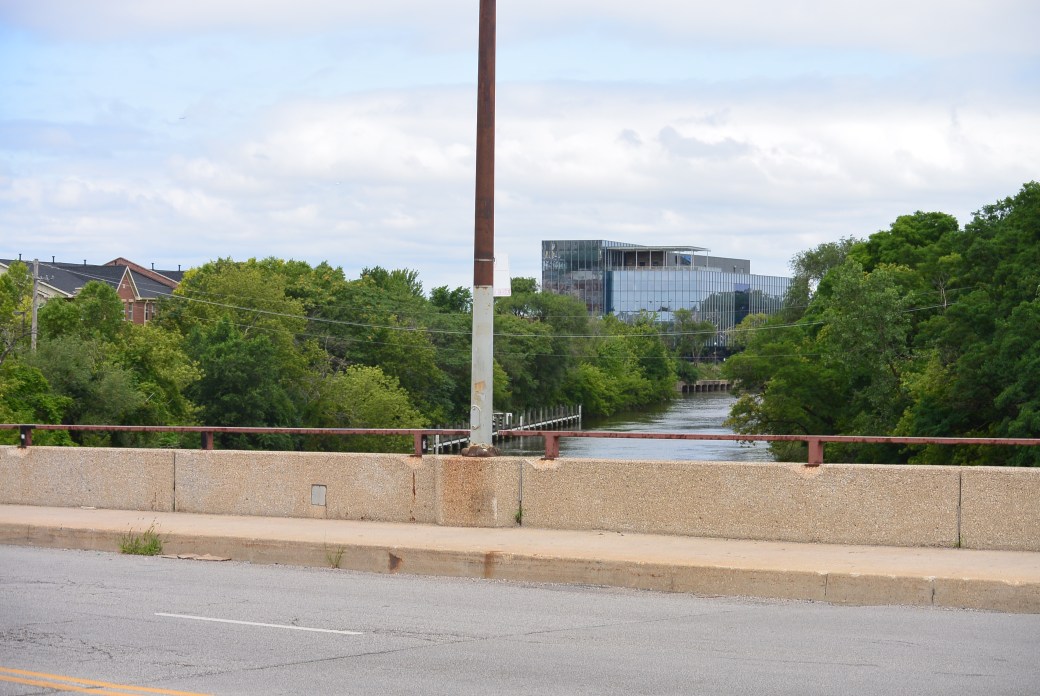
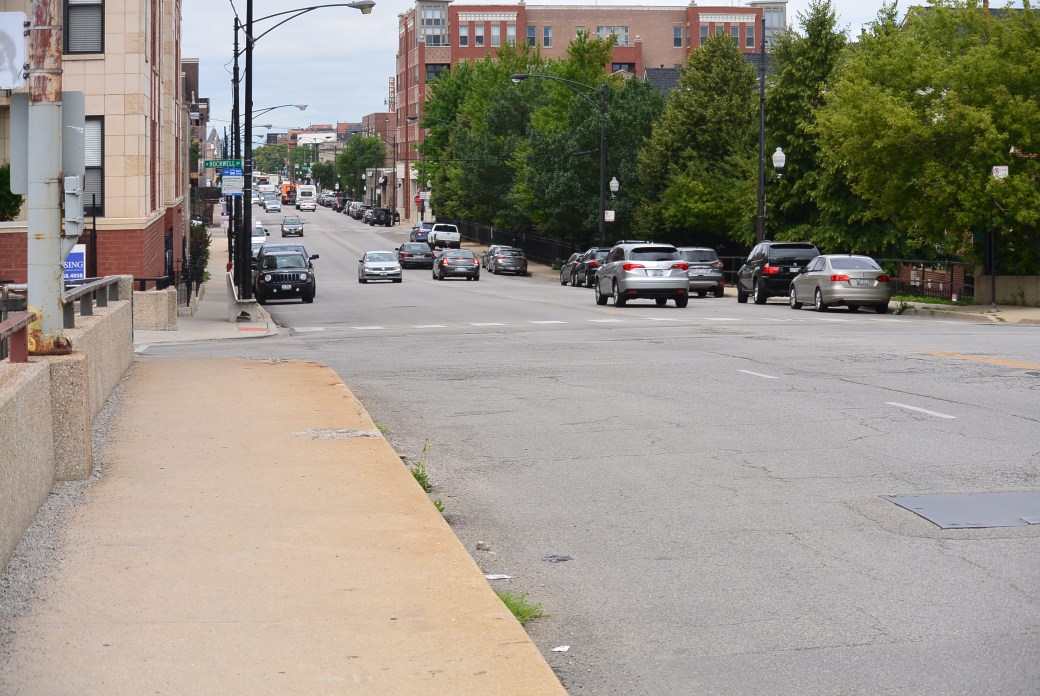
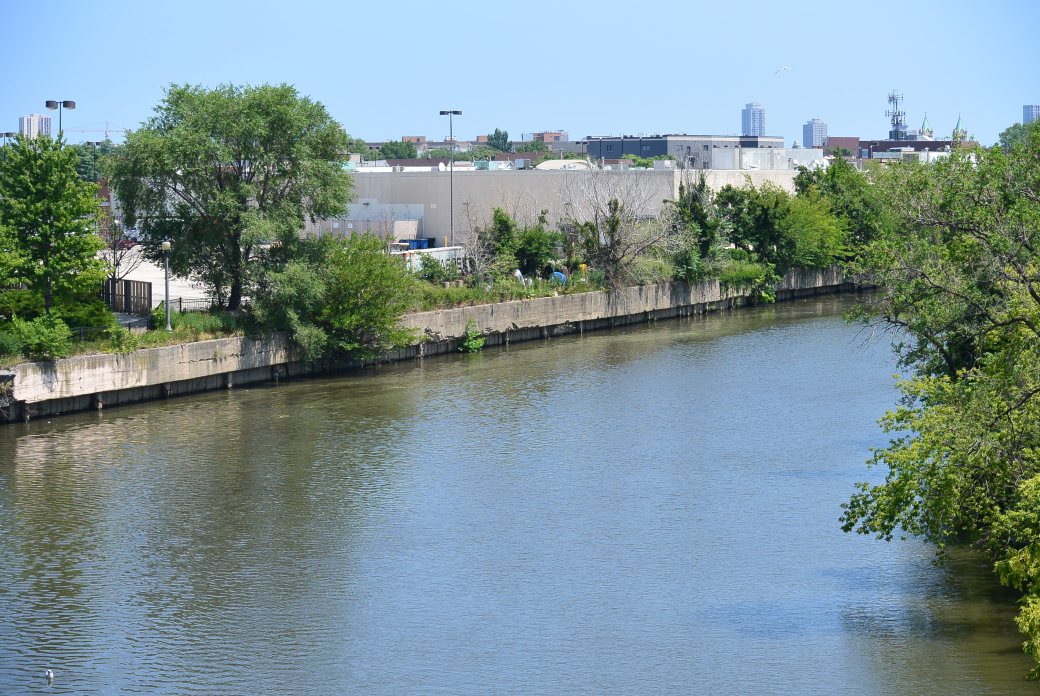
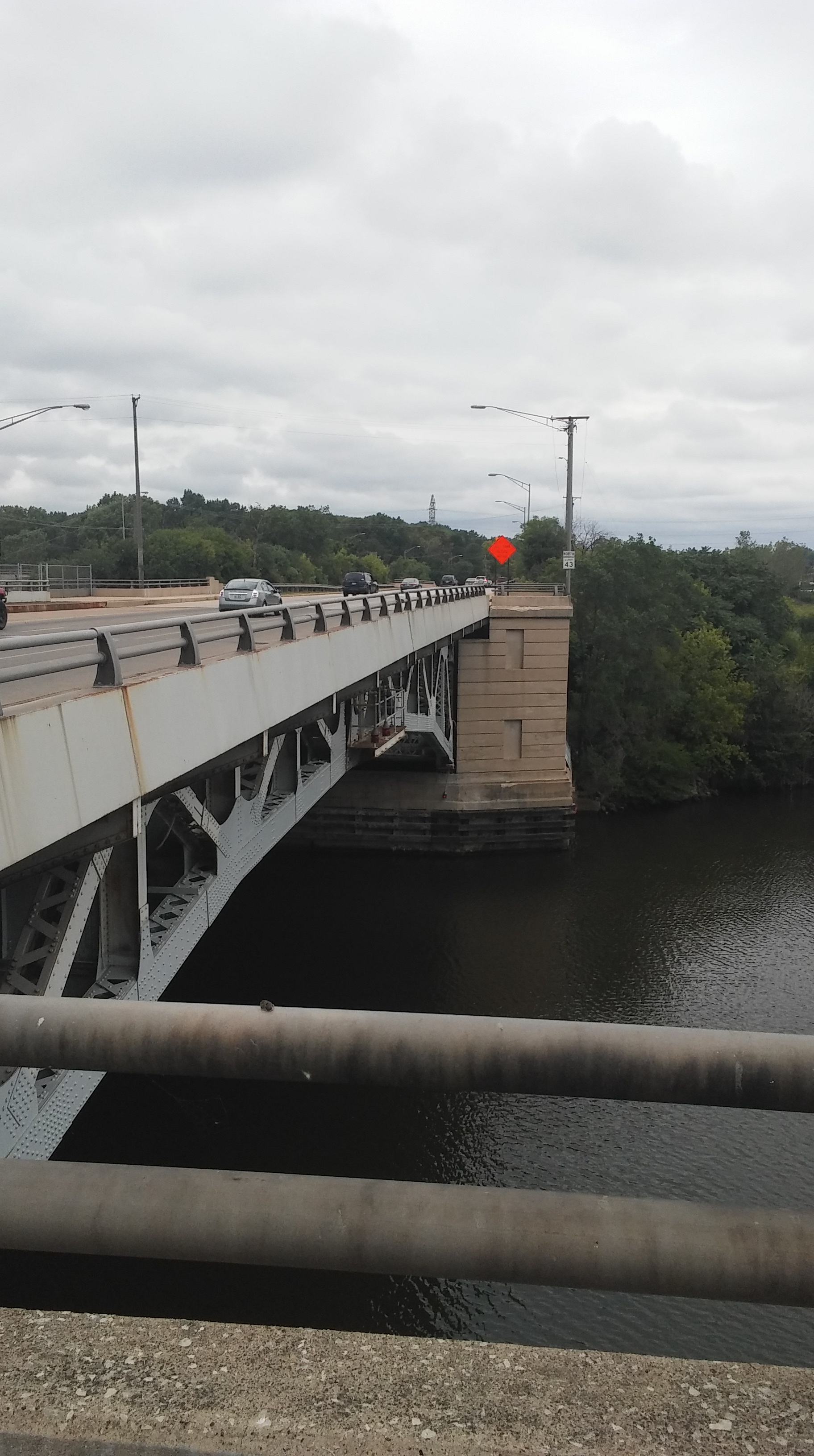
This park is located at 2701 South Ashland Avenue. West of the park is the former Sun Times Building. North of the park on Ashland is the bridge over the Sanitary and Ship Canal.
My personal reflections. I applaud the efforts of the multiple agencies involved in the acquisition and development of this park. They have preserved a site of canal history.
It is disappointing that they have been unable to protect this area from the ravages of vandalism
More photos of Ottawa at the Lateral Canal
The irony of the deep cut.
Along the proposed course of the Illinois Michigan Canal, their was an approximately 140 foot drop from Lake Michigan to LaSalle at the canal junction with the Illinois River. It was because of this drop that multiple locks were planned along the canal route. The eastern section of approximately 10 miles was called the Summit Division. It was several feet higher than the surface of Lake Michigan. Because of this, it was originally proposed that there be a deep cut in this region. This would allow the water of Lake Michigan to flow down the Chicago River into the canal. It was also proposed that there be 15 locks; the first in Lockport and the last in LaSalle.
However, because of financial difficulties, there was a change in the plans for the Summit Division. The deep cut proposal was replaced by the shallow cut. This saved a substantial amount of money. A lock was constructed at Bridgeport on the south branch of the Chicago River. 10 miles west, a second lock was constructed. This was called Jack’s Lock. From here, the canal descended to its originally planned level.
Because this was a shallow cut and it was above the level of the lake, alternative water sources were needed for water sources for the Summit Division. One source was a pumping station near the canal Chicago River junction. This was a steam engine with four cast iron cylinder pumps 54 inches in diameter and seven feet in length. This pump transferred water from the Chicago River into the canal. Other source was a feeder canal from the Little Calumet River to the canal. It roughly parallels the course of the Cal Sag Canal. It was built in 1851.
This then was the canal set up from 1848 to the 1860’s. &nav
However in the 1860’s. the proposal of the deep cut for the Summit Division was revived. This however was given as a solution of the sewage issue in the growing city of Chicago. It was felt that the deep cut would result in a reversal of the course of the Chicago River. Water and sewage would flow from Lake Michigan down the Chicago River and then down the canal and eventually into the Illinois River.
The city of Chicago obtained permission from the state for this project. The contractor for this project was Sanger, Steel and Company. The contract was awarded in 1865. The project took 6 to 7 years. The project required removal of rock 60 feet wide and 10 feet deep for 10 miles. The canal was operated during this excavation. The cost of the project was approximately 3 million dollars. This was financed by the city. Later, the state reimbursed Chicago. After completion of the project, the locks at
at Bridgeport and Jack’s locks were dismantled. The Calumet Feeder canal was closed. The pumping station was shut down.
This project was initially successful. However, it gradually became a failure. As a temporizing measure, the Bridgeport pumps were reactivated.
Ultimately a totally new canal was needed. This was the Sanitary and Ship Canal completed in 1900. It ran from Chicago to Lockport. In 1907, the Cal Sag Canal was constructed from the Calumet River to the Sanitary and Ship Canal. This cut the I and M Canal in half. This resulted in the closure of of the I and M between Chicago and Lockport.
measure,
Canal Trip April, 2016
First stop was in Ottawa at the site of the intersection of the former lateral canal with the Illinois Michigan Canal. At this site, there is a shelter built by the CCC during the depression. Considering its age, it is in fairly good condition.
The only evidence of the lateral canal is a set of masonry abutments. These were for a towpath bridge over the lateral canal. The canal site is now Canal Street.
Next I visited the site of the Reddick Mansion in Ottawa
Next a short trip to Seneca, Il. We took pictures of the old Rock Island railroad station. This is in the process of being renovated. We noted progress in this project from last year. Across the street, there appears to be an abandoned tavern building
Abandons Tavern Building Seneca
[/caption
Mistakes Made During the Canal Construction and Its Life
This is meant to be an opinion piece. The thoughts are mine. Their basis is my research of the Illinois Michigan Canal.
The canal prospect was chronically under-funded. This resulted in many aborted efforts from the beginning. It probably would have be prudent to have arranged for adequate funding from the onset. Instead, funding was inadequate. After the construction began, the project
ran out of money. The was due to multiple factories. One leading factor was the over extension of the day state of Illinois on public works project.
The canal was never built as originally planned.
Originally, the eastern most portion (Summit Division) was meant to be built with a deep cut. The reason for this was that water would flow from Lake Michigan, the Chicago River into the I and M Canal. This would provide a ready supply of water the canal.
During construction, when the project ran out of money, alternative proposals were made. The deep cut became the shallow cut. A lock was placed at the junction of the canal and the Chicago River. Water pumps transferred water from the Chicago River to the canal. Multiple feeder canals were built to provide an adequate water supply to the canal. These were not completely successful in this goal. The Calumet feeder had a poor record in this regard. The other feeder canals were not well maintained. On occasion, the I and M canal had a shortened season due to the low water level.
Aqueducts on the Illinois Michigan Canal
During the construction of the Illinois Michigan Canal, one difficulty that the engineers encountered was crossing creeks and rivers. The solution that used in 4 cases was the use of aqueducts containing the canal water over these natural waterways. The westernmost aqueduct was built over the Little Vermillion River in LaSalle, Illinois.
The current version of this aqueduct is a riveted trough and steel plate. It was a replacement of a rusted structure. The replacement was built in the 1970’s by Lou Mahnic a blacksmith from LaSalle. He was aided by a group of union welders. The aqueduct is 140 feet in length and has 5 spans.
An account by a LaSalle resident shortly after World War 2 describes the aqueduct as a rusting metal structure.
In 1918, the U.S. government provided funds to renovate the western Illinois Michigan Canal. At that time, the wood trough of the Vermillion Aqueduct was replaced with a steel structure.
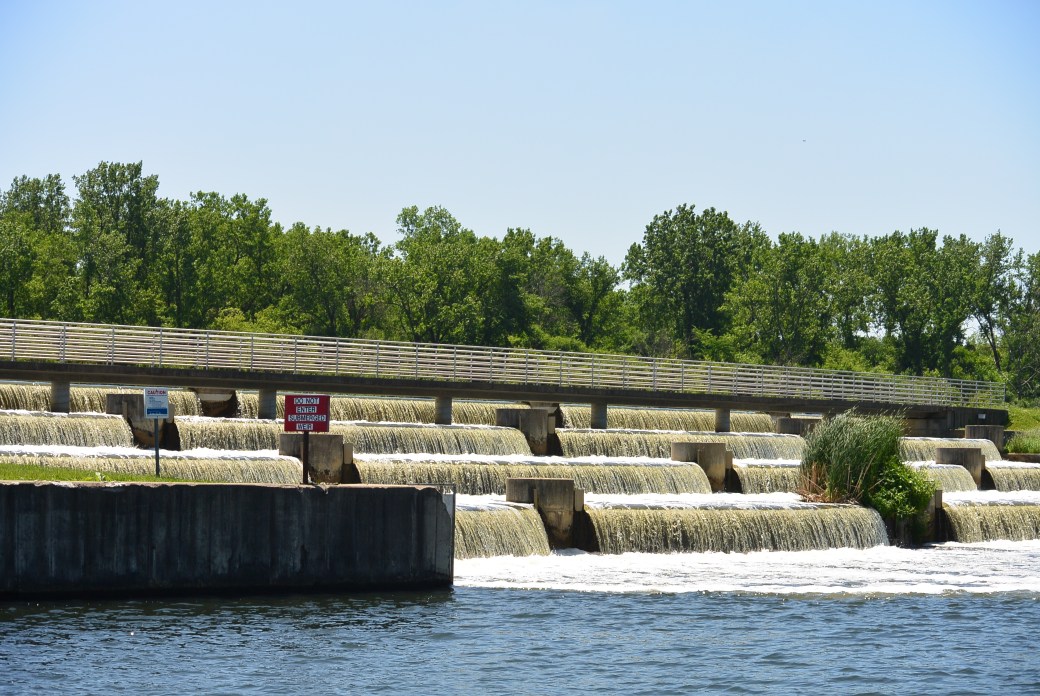
Currently, the aqueduct has sprung a leak. Water is leaking into the Little Vermillion River. dams are present on either side of the structure. The plan is to repair the structure this spring.
Traveling east on the Illinois Michigan Canal, there is no obstruction by rivers until Ottawa is reached. Here the Fox River is encountered. An aqueduct was proposed. The contract for its construction was awarded to David Sanger and Sons in June of 1838. He was an Ottawa resident. Mr. Sanger was no stranger to the business of canal construction. Previously, he had worked on sections of the Erie Canal and the Western Pennsylvania Canal. His son Lorenzo had worked on Lock 15 of the canal and the Joliet Penitentiary.
The original aqueduct consisted of a wooden trough and towpath supported by seven limestone piers. The piers were made with Joliet limestone. The aqueduct was the largest on the I and M Canal. It was 464 feet in length and 17 feet in width. The total construction cost was slightly over $100,000. In 1918, the wooden trough was replaced with a steel trough. Over the years, modifications and repairs were made to the steel trough and the limestone piers.
After 1870 when steam powered boats were used on the canal, the towpath along the aqueduct deteriorated. The area of the towpath was modified in 1903 to create a bridge for the Chicago, Ottawa, and Peoria electric line. This was in use until 1934.
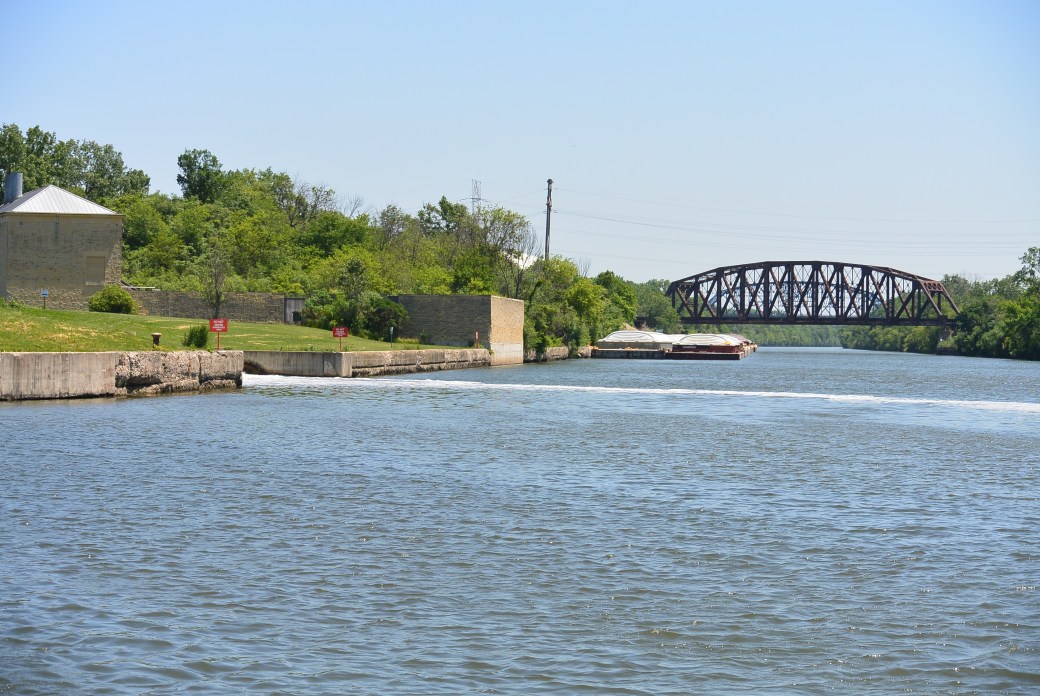
Currently, the aqueduct is dry.
Travelling further east along the I and M Canal, the Nettle Creek Aqueduct is encountered in Morris. It was originally completed in 1847. The contractor was William Perce. The stone for the structure was quarried locally. Unfortunately, the red sandstone used was inferior to other stone used in canal construction. The aqueduct had to be rebuilt. The wooden trough was replaced with a steel structure in 1910. The aqueduct underwent many repairs 1850, 1859, 1868, 1877, 1889, and 1910. It was rebuilt by the CCC in 1937. It’s current appearance a steel plate frame to conduct the water in the canal. It is supported by cut stone blocks.
In 2013, an intense rain storm caused a collapse of aqueduct. As a result, this structure contains no water. The I and M canal is dry distal to the damaged structure. Unfortunately, the aqueduct has not been repaired as of this date (4/6/2016)
As we proceed farther east on the I and M canal path, the Aux Sable Creek and aqueduct is encountered. In the same area, Lock 8 and the lock keeper’s house are located.
The aqueduct over the Aux Sable Creek was completed in 1847. It was 136 feet long by 18 feet wide. The original aqueduct was a wooden structure. It was supported by limestone piers. The wooden structure was replaced in 1927–8. It’s replacement was steel riveted plate girder. The support piers and abutments were repaired in 1948. In 1970, the towpath bridge was rebuilt. The aqueduct was again stabilized in the 1990’s
The feeder canals on the Illinois Michigan Canal.
Any man made canal unlike rivers and streams has no natural drainage system to maintain its water supply. The Illinois Michigan Canal was no different. However, the proposed water supply changed during the construction process. Originally, the proximal or Summit portion was supposed to be a deep cut. The thinking was that a deeper channel would provide for water flow from the south branch of the Chicago River west down the canal. Unfortunately, during the construction, the Canal Commission ran out of money. For a while, work was suspended on the project. Different proposals were discussed to save on costs. One was the shift from a deep cut to a shallow cut on the Summit division. Alternative sources of water supply had to be found. A lock was placed at the junction of the I and M Canal and the south branch of the Chicago River. Two steam powered pumps were placed
at Bridgeport near the original lock 1. These pumped 100 cubic feet per second of water from the Chicago River noto the I and M Canal.
On the eastern end of the canal the Calumet feeder was constructed. This was a 16.7 mile canal. This was first proposed by James Bucklin, chief engineer of the I and M canal in 1830. The final survey for the canal was completed in 1845 by Edward Talcott. The feeder canal was completed in 1848–1849 (other sources put the completion date at 1851 or 1852. It was 4 feet deep. It was 40 feet wide at the surface; 26 feet wide at the base. It extended from the Little Calumet River to to the I and M Canal. This was the last of the feeder canals to be completed.
This was due to the fact that a large section of its course was through a swamp. The ground material had to be dredged by steam excavators. It was too soft to be removed by digging.
In addition to being used as a feeder, it also was used for boat traffic. In 1861–1870, the city of Chicago operated the Bridgeport pumps at the south end of the Chicago River an additional 45 days to flush sewage down the I and M canal canal. Because of this, the feeder canal was no longer used regularly as a water supply to the I and M Canal. The canal was abandoned by the canal commissioners in the 1870’s after the deepening of the Summit division of the Illinois Michigan Canal and subsequent reversal of the flow of the Chicago River.
For several miles, the DuPage River and the I and M Canal parallel each other. Approximately, one mile east of lock 6, the two waterways approach each other. Many references mention the existence of a feeder canal at this site with a lock. In a proceedings of the Canal Commission this feeder is referenced. It was constructed on canal land. It was on a 20 acre site. It was apparently in use for only a short time. This feeder is mentioned in plat book 2, Canal Records
The region of the DuPage River and I and M Canal near locks 6 and 7 is a unique set up unlike any other area in the Illinois Michigan Canal. Originally an aqueduct was proposed for this site. This was abandoned as too expensive.
In the area between Lock 6 and Lock 7, the canal and the DuPage River cross. In other areas of the I and M Canal, when the canal and a river intersect an aqueduct was used. In the area of intersection, a dam was built on the DuPage River. This created an impounded river. This river could be traversed by canal boats. It also could provide a water supply for the canal. The original dam was built in 1840. It was built with timber. In 1877, the dam had to be rebuilt. The canal was abandoned in the 1920’s. The area of Lock 6, Lock 7, and the lock keepers house was rehabilitated by the CCC. A new concrete dam was built. This took place in the 1930’s.
In 1996 a flood damaged the dam, spillway, and the embankment. These areas were all repaired.
Early in the construction of the Illinois Michigan Canal, engineers proposed the need for an additional water source in the Dresden Pool section near Channahon. Their solution was a feeder canal from the Kankakee River near a state dam. It’s origin was in Wilmington. It ran northwest along the north side of the DesPlaines River. It’s total length was 4 and one half miles. It’s original depth was 4 feet. The feeder crosses the DesPlaines River near its mouth by an aqueduct. There were multiple masonry supporting piers. The actual aqueduct was constructed with wood. After crossing the river, the water flowed into the Illinois Michigan Canal.
A report of the chief engineer of the Illinois Michigan Canal dated 1848 placed the cost of the Kankakee Feeder at $84, 513. It is not clear if this includes the cost of the aqueduct over the DesPlaines River
In the 1870’s, the feeder was rebuilt to increase its depth to six feet. This created a navigable waterway between Wilmington and Channahon.
The aqueduct over the DesPlaines River was demolished in the 1930’s
The last feeder canal on the Illinois Michigan Canal was the Fox River Feeder. It began in Dayton and extended south to The Illinois Michigan Canal adjacent to the origin of the lateral canal. It was four miles in length and 40 feet wide. It had its own towpath. Small boats could navigate the channel. During its history, it was plagued with problems. In 1871, it’s channel dried up never to be used again.

The feeder canal crossed the Illinois Michigan Canal and entered the lateral canal. There were multiple mills and grain elevators along this canal. Both the feeder canal and the lateral canal were filled in in the 1930’s. During the same time period, coal was mined in the bed of the feeder canal
Abraham Lincoln and the Illinois and Michigan Canal
Probably one of the staunchest supporters of the Illinois Michigan Canal project was Abraham Lincoln. Both as a Whig and a republican, he ran on a program of internal improvements. This included roads, bridges, canals, and railroads. In his multiple terms in the Illinois Assembly, he consistently was a supporter of the canal and other improvements. This support continued despite the down turn in the economy. When others fought for abandoning these costly projects, he continued to fight for them. Some historians have argued that this policy of Lincoln and his allies was irresponsible placing the state of Illinois in grave fiscal peril. But fortunately because of his steadfastness, the Illinis Michiganal as completed and it had many years of successful service.
Lincoln continued his support for internal improvements in his single term in the U.S. Congress. It is also documented that he travelled on a packet boat on the canal likely twice.
The first canal trip took place in 1848. Lincoln, his wife and sons Rob and Eddie were in New England in the late summer. On September 23rd, they boarded a train bound for Albany. They arrived on the 24th. From Albany, they travelled to Buffalo. They secured passage on a Great Lakes steamer named the Globe. It was a relatively new boat. It was a side wheel steamer. It was one of the largest ships on the Great Lakes. It was scheduled to go from Buffalo to Chicago in seven days. The ship set sail on September 26. Because of heavy seas, it took the Globe eight days to reach Milwaukee on October 4. The boat stayed in port for several hours. This was to load and unload cargo.
Later that day, the Globe left Milwaukee and headed south to Chicago. This city was reached early on the 6th of October. After disembarking from the ship, the Lincoln family checked into the Sherman House. The next day, they arranged for travel on a packet boat on the Illinois Michigan Canal to LaSalle, Illinois. By October 7th, they would have reached the canal basin at LaSalle.
From this site, they walked about one half a block to the steam boat basin. It was here that they secured passage on a steam boat down the Illinois River. The trip was to Peoria. They arrived at their destination on
October 8th. They checked in to the Planter’s House hotel two blocks from the Illinois River.
On October 10, the Lincoln family arose early to board a stage coach heading south Springfield. They arrived in that city in the evening.
In 1852, Mr. Lincoln was named to a commission to investigate claims against the state of Illinois in the matter of the Illinois Michigan Canal. Other members of the panel included Hugh Dickey of Chicago and Noah Johnston of Mount Vernon. The panel published a notice in multiple papers setting the hearings for December 3rd in Ottawa, Illinois. Mr. Lincoln left from Springfield on November 30. He traveled on a railroad (Sangamon and Morgan) west to Naples, Illinois. He boarded a dreamer on the Illinois River to LaSalle. He then boarded a packet boat on the Illinois Michigan Canal for the 15 mile ride to Ottawa arriving on December 3. Johnson and Lincoln began to take testimony on the third of December. Hearings continued on the 4th; the 5th was a Sunday and no hearings took place. The proceedings ended on December 6th.
On December 7th, Lincoln, Johnston, clerk R.E. Goodell, and Nubian Edwards (acting Attorney for the state) boarded a packet boat and headed for Chicago. They arrived on the 8th.
The next day they began to collect evidence. The hearings were held in a room at 177 Lake Street. Contractors and other claimants appeared before Lincoln and Johnston. The hearings lasted for four days and were adjourned. They were to be reconvened in Springfield one week later. The members of the board departed from Chicago. They could not use the canal. It had been closed for the season by the superintendent. The members of the board boarded a Rock Island Train on December 14. They went south to Joliet. They then took a stagecoach to LaSalle. From here, they boarded a steam boat to Naples and next a train to Springfield arriving on December 17.
On December 20th, the hearings were reopened probably in an unused room in the Statehouse. The commission met for two weeks taking testimony and writing their report to the General Assembly. The report was submitted to Governor Augustus French on January 7, 1853. He then sent it to the House.
On his expense account, Lincoln stared that he had spent 21 days on commission business; traveled 650 miles to and from Chicago via Naples. His total charge was $149. Thus ended Lincoln’s work on behalf of the canal.
Joliet Iron and Steel Company
One of the more interesting areas along the I and M Heritage Corridor in Joliet is the Joliet Iron Works Park. This area is approximately 50 acres near the DesPlaines River. The Illinois Michigan Canal can be accessed through this park. The property was acquired between 1991–1997. This was the site of a steel plant active from the late 1880’s to the 1900’s. It contains the foundations of multiple buildings demolished in the 1930’s. Among these buildings were a stock house, 4 blast furnaces, casting bed, skull house,gas washers, four pass stoves, blowing engine house, and gas engine house.
Before it’s closure, the Joliet Works of U.S. Steel covered over 170 acres. The property was bounded by Collins Street to the east and the DesPlaines River to the west. At one time there were over 60 buildings in the complex.
The first factory at this site constructed by Union Coal, Iron, and Transportation Company. They built an iron works near Collins Street. The plant consisted of two coke fired blast furnaces and two rod mills. The business was reorganized in 1873. It’s new name was Joliet Iron and Steel Company. The new firm erected a Bessemer steel plant. This was designed by Alexander Holley.
In 1889, Joliet Iron and Steel Company merged with the much larger Illinois Steel Company. The merged company had plants in Chicago, Cleveland and Joliet. In 1898, the company was absorbed by the newly formed Federal Steel Company. Finally in 1901, the Joliet steel works became part of U.S. Steel, the nation’s largest steel maker.
During, early 1900’s, the Joliet plant had four blast furnaces. These were later torn down. Nothing remains of the blast furnace operation. The Bessemer steel plant was demolished. The Joliet works of U.S. Steel remained in operation in various forms until 1980.
The earliest buildings of Joliet Steel dated to the 1870’s. Included was the machine shop (1872), the blacksmith shop (1873), the pattern shop (1873), and the company office (1873).
All of these structures were erected by Joliet Iron & Steel Company.
The Machine Shop was a 2 and one half story building with limestone wall. It measured 300 x 130 feet. It was originally used as place to repair a wide range of machinery. None of the original machinery in this building still exists.
The Black Smith Shop was constructed in 1873. It was one and one half stories tall. It measured 70 x 60 feet. It had limestone walls. At one time, the building contained a steam power hammer with 1000 pound capacity. This building was abandoned.
The Pattern Shop was built in 1872–1873. It was 2 and one half stories tall. It measured 85 x 45 feet. The walls were made of limestone. Originally, it served as a small pattern and carpenter shop. In this building were a Daniels Plane, arc saw bench, scroll saw, and two lathes. None of this equipment survives.
The Company Office was built in 1873. It was 2 and one half stories tall. It measured 90 X 60 feet. The walls were limestone. There was a large stone arch at the front entrance. This building was erected by Joliet Iron and Steel Works.
In the 1890’s, after the merger of Joliet Iron and Steel with Illinois Steel Company, the following structures were added: the Electric Lighting and Power Plant, Roll Shop, and the Stores Building.
In 1890, Illinois Steel constructed a central power house to provide electricity to all of the plant. This building had brick walls and a steel frame. It measured 120 X 63 feet. An addition was constructed in the mid 1890’s This was along the east end of the original building. It was two and one had stories. In the late 1890’s, there were 3 generators and 6 dynamos. This plant provided power for 10 motors, 133 arc lights, and 957 incandescent lamps. None of the power generating equipment survives.
A roll shop was built in the early 1890’s. It was 3 stories with brick walls. It measured 260 X 70 feet. It contained lathes for manufacture and and repair of rolls used in the rolling mills.
The Stores Building was built on top of the old B Mill. This mill building was built by Joliet Iron and Steel in the 1870’s. It was probably used to produce specially rolled iron products. The Stores Building used the original limestone walls for the first story and red brick for the second. The building measured 140 X 110 feet.
In 1895, Illinois Steel erected a new merchant mill. It had a stone foundation, brick walls, and a steel frame. It measured 115 X 40 feet. This was enlarged over the next 50 years. The building contained a Belgian train with 2 strands of 18 inch roughing rolls and 7 strands of 12 inch finishing rolls. The rolls were driven by a steam engine. This mill also produced bolts and spikes. None of the mill machinery exists.
U. S. Steel erected Rod Mill 1, 2, and 3. These are large steel framed buildings covered with corrugated metal. These were built in 1930’s. Also constructed in the 1950’s was the Fence and Barbed Wire Department. This was a large steel framed building. The Nail Department was built in the 1920–1950’s. It adjoined the Fence and Barbed Wire Building. The Wire Department is a steel frame building. It is steel frame clad with corrugated metal. It was built in the 1930’s. The Annealing and Galvanizing Department was located in 2 adjacent steel frame buildings constructed in the 1930–1950’s.