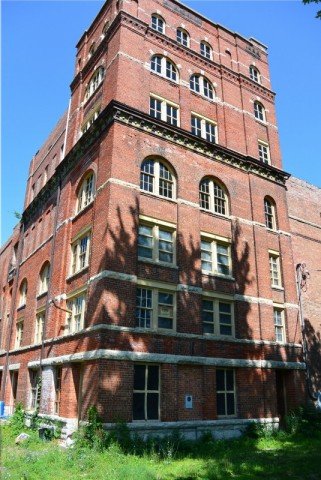
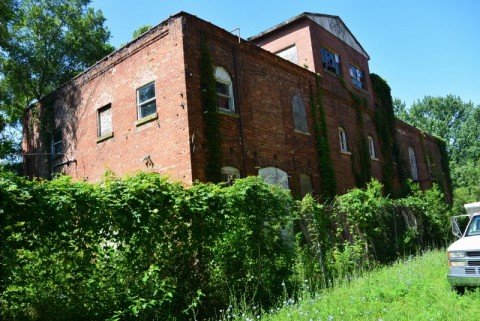
The Joliet Correctional Center (also known as the Joliet Prison) was a prison located in Joliet, Illinois. It was in operation from 1858–2002. The architects were Boyington and Wheelock. Mr. Boyington also designed the Chicago Water Tower. The prison was constructed with convict laborers from the Alton Prison under the supervision of the contractor Lorenzo Sanger and the warden Samuel K. Casey. The first 33 inmates arrived from Alton in May of 1858. The limestone used in the construction was quarried on the site.
The last prisoners from Alton were transferred in 1860. During the Civil War, both criminals and prisoners of war were confined at the facility.
The prison population reached 1,239 in 1872. The inmates were contracted to work at local businesses. There was slow modernization of the facility. Running water and toilets were late in coming.
The number of inmates peaked in 1990 at 1300. It was 1,156 in 2000. The facility closed in 2002 citing budget cuts and the dangerous and obsolete nature of the buildings.
The facility was used in the filming of “The Blues Brothers ” with John Belushi. It was also used in the Oliver Stone movie “Natural Born Killers” as well as the tv series “Prison Break”
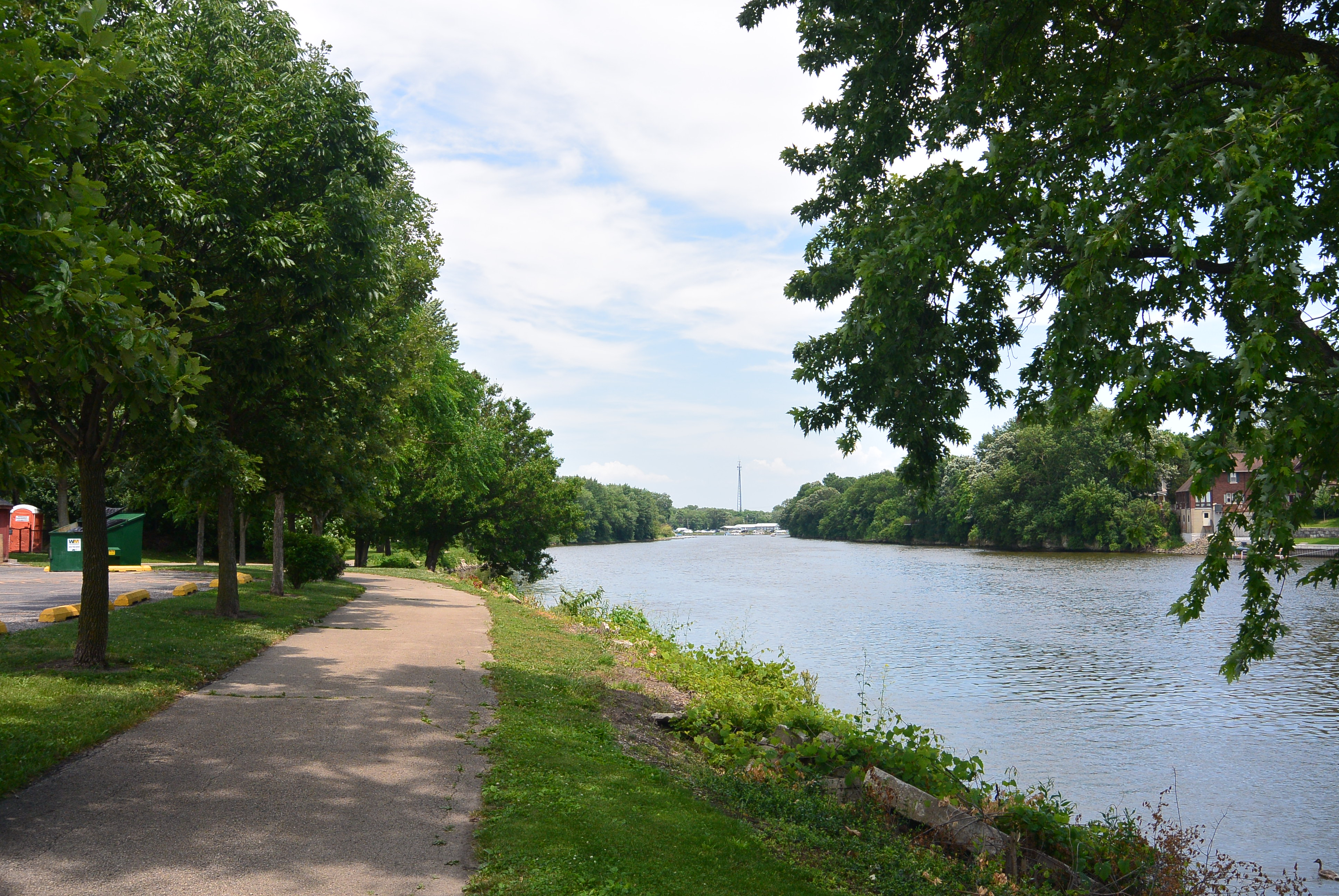
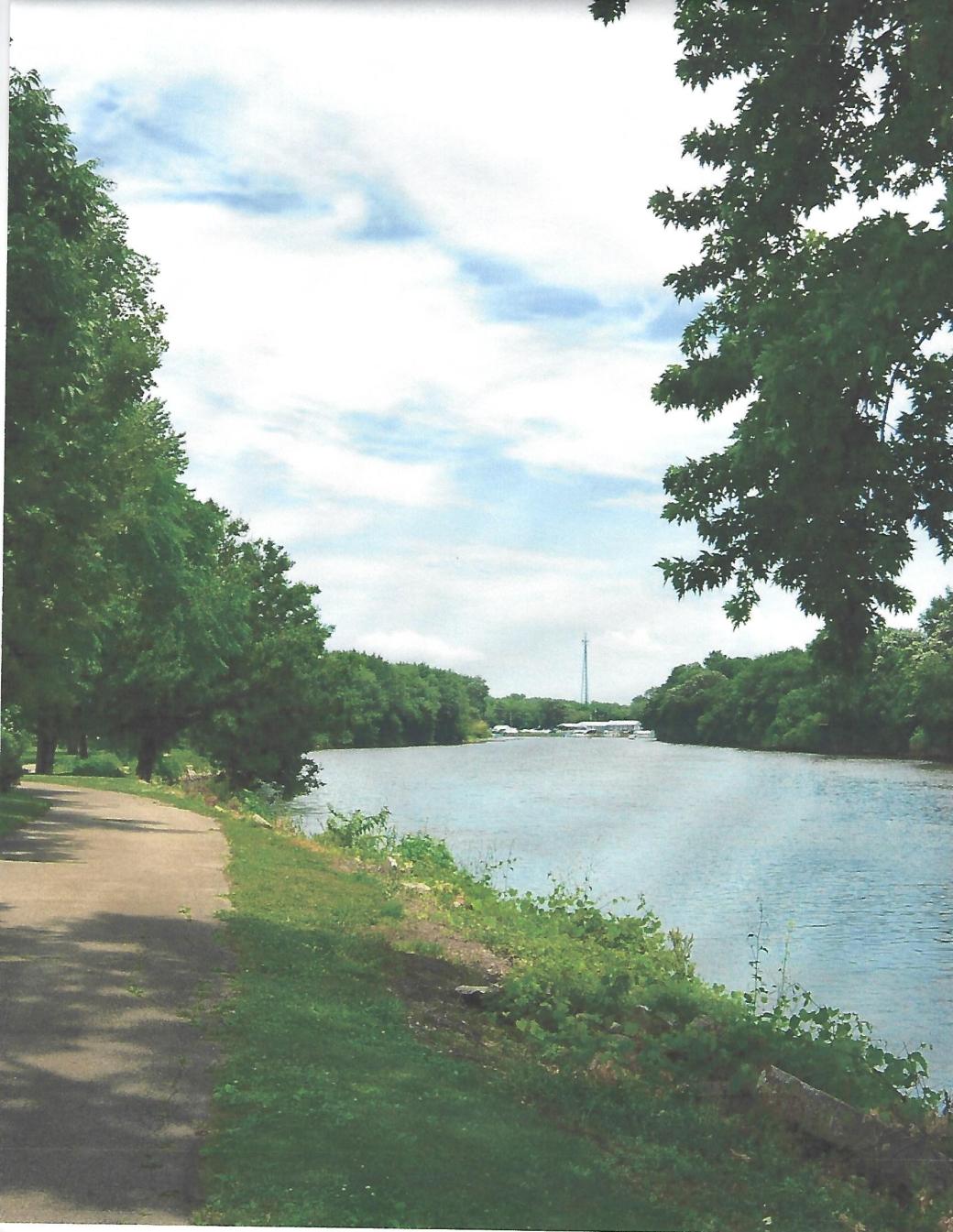
The prison can be seen from the path along the Illinois Michigan Canal in Joliet.
Uncategorized
LaSalle Mission Cemetery.
One of the more fascinating stories of the LaSalle region was the rediscovery and excavation of this region.
LaSalle Mission Cemetery was blessed and dedicated in 1840. It was founded by the Vincentians–a Catholic religious order. It was nominally under the control of the diocese of Saint Louis. It was in use from 1840 to 1857. The majority of the people interred here were Irish immigrants. There were also a far amount of Germany immigrants. Considering the time it was active, it is a fair assumption that many of the people interred here had worked on the Illinois Michigan Canal in one capacity or other.
The last known burial here was in 1857. This cemetery fell in to disrepair and was forgotten. The site was recently to become veterinary office at 24th and Charters Street in LaSalle, Illinois. During excavation, human remains were found. Subsequently, a voluntary effort was begun to excavate the human remains and re-inter them at Saint Vincent Cemetery.
John Hurst-a local funeral director had been helping the effort with volunteers. There was also supervision with an archeologist.
The project was completed in April of 2012. The remains of over one thousand individuals were found. They were relocated to 10 grave vaults at Saint Vincent Cemetery.
In June of 2012, Bishop Daniel Jenky and two local priests presided at a grave Site ceremony.
In March of 2013, a granite memorial was installed at the grave Site. The inscription read: The memorial marks the site where the remains of Irish and German immigrants and pioneers were relocated from the LaSalle Mission Cemetery. The LaSalle Mission Cemetery, located approximately one mile south and west of this memorial, was in use between 1840 and 1857.
Many of those buried here died of cholera. The re-internment took place on April 28, 2012.
.
Final Day Canal Walk.
On the final day of the canal walk, we started out in Ottawa. We walked east and west along the site of the canal. For the most part the canal bed is dry. We passed by the toll house. This is apparently the last surviving one. We made our way to the aqueduct over the Fox River. During its history, this carried the water of the Illinois Michigan Canal, a wagon bridge and an electric railway.
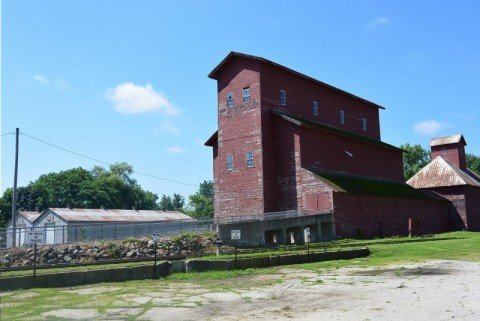
We then traveled to the small town of Seneca. The Canal here is dry. We took pictures of the Hogan Grain Elevator. Thus ended our travels.
Split Rock
There is a 2.4 mile section of the Illinois Michigan Canal west of Utica that is steeped in history. First encountered is a deserted railroad bridge. This was apparently built by the Rock Island and later abandoned.
Approximately one mile west is the Pecumsaugan Creek. There is the creek itself. North of the canal and railroad tracks along the creek is the area of the Blackball Mines. This is a restricted area managed by the DNR. It contains abandoned limestone mines. It is also known for its collection of rare bats.
John Clark, the engineer in charge of the construction of this section of the Illinois Michigan Canal, discovered limestone deposits in the cliffs next to the canal. This was an important discovery because this was used to manufacture hydraulic cement. When limestone is heated it decomposes to a natural cement (hydraulic cement). This hardens under water.
Norton and Steele built a mill in 1838 to supply the I and M canal with hydraulic cement during its construction. This was sold to Mr. Clark it in 1845 and he founded Utica Hydraulic Cement Company. Other mines were established in this area. One was Blackball mine. Utica Hydraulic purchased these mines. The cement company continued in business until to 1947.
On our trip these mines were not readily apparent apparently obscured by trees and foliage.
South of the canal between the canal and the Illinois River is Split Rock Lake
The Split Rock and Lock 13 will be dealt in part 2
Father Marquette
Jacques Marquette was born in Laon, France on 6/1/1637. At the age of 17 he became a Jesuit. For 12 years he studied and taught in Jesuit Colleges in France. He was then sent to Canada to be a missionary to the indigenous native population. He excelled in knowledge of the languages of the Indian peoples. In 1668, he established a mission in the western great lakes region at Saulte Ste. Marie. This was followed by a mission at Saint Ignace in 1671.
In 5/17/1673, he and Louis Jolliet and 5 men were chosen to lead an expedition to the mouth of the Mississippi River. Marquette was the missionary; Jolliet was the lawmaker and explorer.
They traveled west to the area that is now known as Green Bay, Wisconsin.
They navigated the Fox River; portgaged to the Wisconsin River. They reached the Mississippi River at Prairie du Chen. They then navigated southward to the Arkansas River. They stopped their exploration at this site when they received reports of Spanish Settlers in this region.
It was their intention to return back along the Mississippi River route. Native Indians at the Illinois River told them of a shorter route along this river and the DesPlaines River with a portgage to the Chicago River. Jolliet returned to Canada. Marquette and two companions stayed at Green Bay. In the winter, the group camped in Chicago.
In the spring of 1675, Marquette and his party returned to the area near Starved Rock. A bout of dysentery forced him to return home. He died on May 18, 1675.
Marquette and Jolliet were pioneers in the exploration of the Illinois Valley Region. Jolliet was the first to propose a canal to provide for a continuous link between Lake Michigan and the Illinois River.
Day 4
So begins day four of our canal travels. We traveled from Starved Rock to a portion of the canal west of Ottawa. We walked approximately one and a half miles. During our travels, we found large supports for a bridge of unknown significance. From here we reached Lock 12. We walked back and then traveled to Buffalo Rock Stage Park. We had a spectacular panoramic view of the Illinois River. From here we traveled farther east and again accessed the I and M canal. Here after a short walk we reached Lock 11. This is apparently a hybrid lock containing old and newer elements.
We then traveled to LaSalle, Il. where we visited Saint Vincent Cemetery. There is a commerative plaque to the many men who died working on the canal and died of infectious diseases. Their remains were transferred from a poorly kept Cemetary to this current location.
We attempted to view Locks 14 and 15. However, this area was inaccessible due to flooding of the Illinois River.
Day 3
This is day 3 of our canal walk. We started out from Joliet and traveled to Morris. We were able to locate the site of the former Gebhard Brewery. We walked along the canal east and west. We reached the site of the destroyed Nettle Creek Aqueduct. We made a brief circuit of Stratton State Park. We then traveled to Marseilles. We viewed locks 9 and 10. From here it was on to Utica. We traveled to the Split Rock Site. This is also near the site of former Lock 13.
Canal Travel Day 2
The day started with a short commute from Bolingbrook to the Joliet Iron Works. After traveling through the exhibit, we took the Illinois Michigan Canal walk to locks 3 and 4. From Joliet, we travelled to Channahon . Here viewed lock 6 and 7. The lock keepers house was also seen as well as the dam across the dam across the DuPage River. From here, we traveled to Aux Sable; here we visualized Lock 8 and the lockkeeper house. Also seen, was the Aqueduct across the Aux Sable Creek. We then motored to the Dresden area of the canal. We walked along the canal, viewed a mule barn, and observed the Dresden Lock and Dam.
Finally, we went to McKinley Woods Park. Here we observed portions of the Illinois Michigan Canal and the DuPage River.
Canal Trip Day One
On Monday July 13, we began the first day of our canal trip. We started at the commemorative plaque for Pete Marquette. This is located on the Damen Ave. bridge over the Chicago Sanitary and Ship Canal. It commemorates the death of this pioneering explorer. We were also able to take pictures of the canal and a deserted grain elevator.
Next we traveled to Willow Springs and were able to take multiple photographs. From here we went to Lemont and walked several blocks in both directions. From here, we went to Lockport. We visualized Lock 1, (Lock 2 could not be made out), the Norton Building, the Gaylord Building and the former Headquarters of the I and M Canal. This is obviously undergoing extensive renovation. From here we visualized the old Iron Works in Joliet. Thus ends day one of our trip. Photos will follow after we return home.
Managing the Canal
Beginning in 1848 after the canal was completed and until the building debt was paid off, the Illinois Michigan Canal was managed by a board of 3 commissioners. Two were elected by the creditors and one was appointed by the Illinois governor. The commission fixed fines and toll rates. It also established the rules and regulations of the canal.