Sulfur Springs Hotel

     Located on Dee Bennett Road approximately .7 mile west of the Starved Rock Marina and .5 mile south of the Illinois Michigan Canal is a multi-story stone building known by various names.  These names are: Spring Valley House, the Half-way House, the Sulfur Springs Hotel or the Wayside Inn.  It was located midway on a stage coach route between Chicago and Saint Louis.

image

Sulfur Springs Hotel

     The official history is that the hotel was built in 1852 by Joel Smith.  However, from observation of the building it is evident that it was built in stages.

image

Sulfur Springs Hotel

     The walls were made of 30 inch sandstone.  The wood beams were
fastened with wood pegs.   On the ground floor, there was a bar and dining rooms; the next floor had a parlor and reception room; the next floor had 12 guest rooms each with its own fireplace; finally the top floor had a ballroom.
     There were natural springs in the area back of the house.  These had a high concentration of sulfur.  Many guest frequented the hotel for medicinal benefits of these springs. 

image

Sulfur Springs Hotel

     Among the famous guests at this hotel were Abraham Lincoln, Jennifer Lind, and possibly Edward, Prince of Wales
     In 1862, the hotel was converted to a farm house.  Owners included: J. Neil, Henry Zimmerman, Maurice Keating, Lucille Keating, and the state of Illinois. 
     The area surrounding the hotel is also the site of Kaskasia.  This was an Illinois Indian Village from 1673–1700.  It is a National Historic Landmark.  This is also owned by the state of Illinois. 
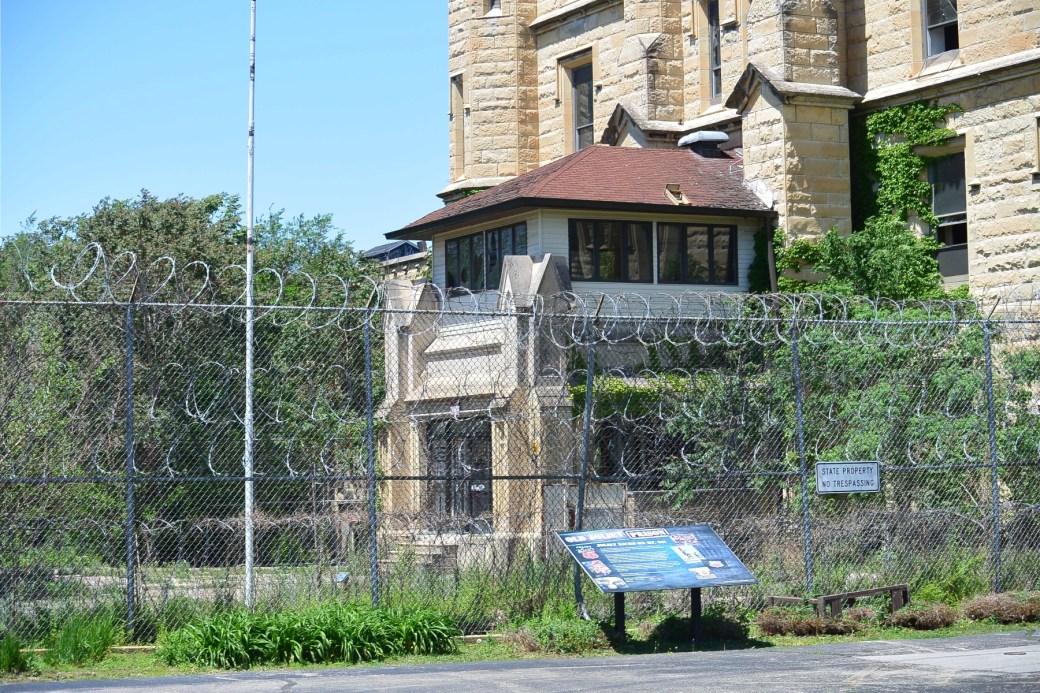
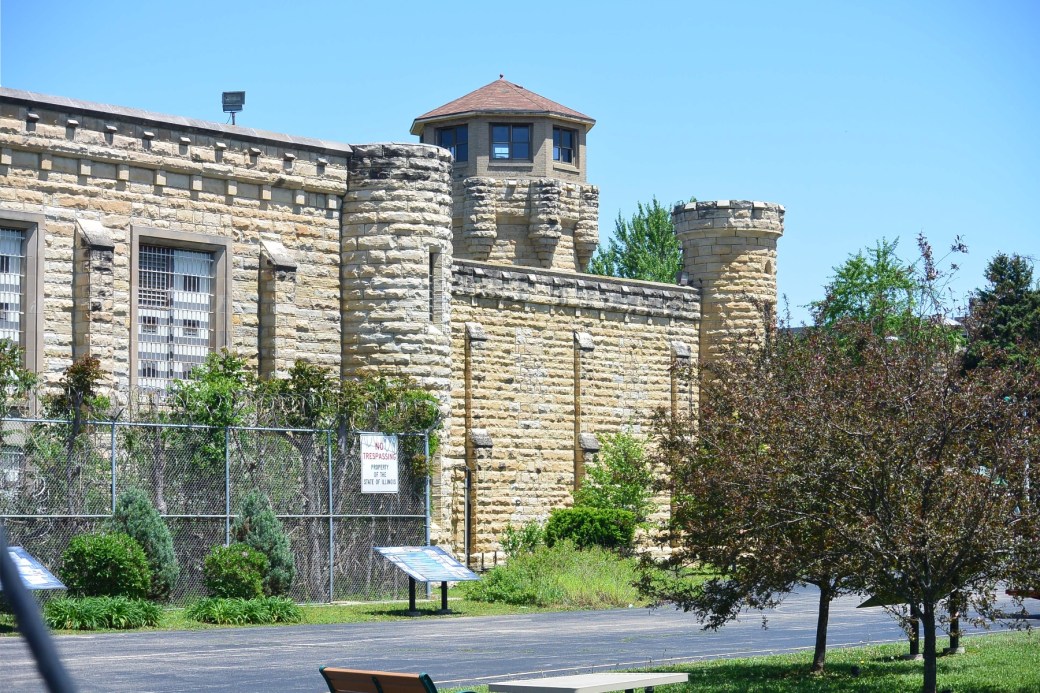
   Both the hotel and the Kaskia sites are kept very private by the state.


Rock Island Depot Ottawa

image

Rock Island Depot Ottawa

image

Rock Island Depot Ottawa

image

Rock Island Depot Ottawa

image

Rock Island Depot Ottawa

image

Rock Island Depot Ottawa

image

Rock Island Depot Ottawa

image

Rock Island Depot Ottawa


The first depot in Ottawa was a wood frame building constructed in the 1850’s. It was in use until the 1880’s. A replacement one story depot was built in 1888. It was in use until the early 1900’s.
In 1910, a replacement depot was built at Marquette and Columbus Streets. It has a similar appearance to Rock Island facilities in Iowa City and Council Bluffs, Iowa. The depot is one story in height. It has a two story turret. It measures 60 X 25 feet. It’s exterior walls are brick. The lower one half is tan and red. The upper one half is tan. Originally, the baggage room was a separate building on the east side. In the 1950’s, the two buildings were joined. The sidewalks and platform are made of brick pavers.
Rail service was ended in the 1970’s. The building and tracks were obtained by CSX.
Modifications were made for conversion of the depot to offices.

Rock Island Depot Utica, Il.

     One of the smallest towns along the Illinois Michigan Canal was Utica.  The Rock Island Railroad ran through this town.  There was a train depot.  It was built in the mid 19th century.  It was located near Clark and Grove Streets.
     The building was one and one half stories tall.  It had a limestone foundation and brick walls.   It measured  50 X 18 feet.  In recent years, the building was abandoned.
     There was a severe tornado in Utica in 2004.  The depot was seriously damaged.  Subsequently, the building was demolished. 


image

Archival Photo Utica Depot Rock Island

image

Post Tornado

image

Rock Island Depot post Tornado

Marseilles Rock Island Depot

     I recently was able to visit Marseilles, Il and take pictures of the Rock Island Rail Road Depot.
     The Rock Island Railroad was completed in the early 1850’s.  It  paralleled the Illinois Michigan Canal over much of its route.  It was responsible for the end of passenger service on the canal.  It provided intense competition for freight service along the Illinois Valley.
     The first Rock Island Depot in Marseilles was constructed in 1867.  This structure was small and constructed of wood.  This became a hub to transport passengers and freight along the rail line.  There was a 40 year court battle to replace the old building with a larger structure.
     Finally, a new depot was constructed in 1917.  This was designed and constructed T.S. Peak from Chicago.  The depot was rectangular in shape.  It measured 90 X 25  feet.  This facility was in operation until 1974.  It was sold to a private business in 1984.  This has been used as a dental office and a family practice office.   It was added to the National Register of Historic Places on November 7, 1995.

image

Marseilles Rock Island Depot

image

Marseilles Rock Island Depot

image

Marseilles Rock Island Depot

image

Marseilles Rock Island Depot

image

Marseilles Rock Island Depot

Armour Warehouse

   In Seneca, Illinois on Williams Street west of Main Street, is a large red wood structure known as the Armour Warehouse or the Hogan Grain Elevator.  It is on the north side of the Illinois Michigan Canal.  This structure is the oldest and largest of the remaining grain elevators on the canal.  This was originally built as storage facility for grain that was shipped on the canal.  Later it was connected to the rail road for shipping by this modality. 
     John Armour purchased the property on which the facility was to be built in 1860.  Construction took place in 1861–1862.  Architect is not known. 
     The Armour family was prominent in the grain business.  John was a grain dealer in Ottawa.  He was Vice President of the First National Bank Ottawa.  His brother George was a member of the Chicago Board of Trade and was a part owner of a grain elevator in Chicago.
     The building construction is heavy timber post and beam with a limestone foundation.  It is 65 feet in height and 40 x 80 feet in length and width.  It has a storage capacity of 75,000 bushels.  It was listed in the National Register of Historic Places in 1997.
     During its history the grain elevator has had many owners.  The original owner was a John Armour 1860.  James Armour in 1868.  Nelson J. Ellison and Michael Byrne in 1873.  Guy Griswold in 1877. Nelson Rulison 1882.  Kankakee and Seneca Railroad 1883.  M.J. Hogan and H. Nelson 1886.  Martin J. Hogan and Howard Neilson 1890.  M. J Hogan Grain Company 1906.  John Dunn 1949.  Dunn Brothers Co-operations 1949.  State of Illinois Department of Conservation 1985.
     The grain elevator was originally built for storage of grain to be shipped on the Illinois and Michigan Canal to Chicago.  Farmer’s disatisfaction with prices for their crops led to the development of railroads with shippage to alternative destinations.
      One such railroad was the Kankakee and Seneca Railroad.  It was built in 1882; spur was built to the Hogan Grain Elevator in 1883.  The line basically carried freight; but did have limited passenger service.  It closed in 1934.  The line was operated by the Cincinnati, Indianapolis, St. Louis and Chicago Railway

image

Hogan Grain Elevator. Note the Kankakee and Seneca Railroad Spur.

Company and later the Cleveland, Cincinnati, Chicago, and Saint Louis Railway Company.

image

Hogan Grain Elevator

image

Hogan Grain Elevator

image

Hogan Grain Elevator

image

Hogan Grain Elevator and the remnants or the I and M Canal

image

Hogan Grain Elevator as seen from the I and M Canal

Rock Island Depot Seneca.

    The Rock Island Depot in Seneca, Il was built in 1912.    It has sat unused since 1980.    The tracks adjacent to the station are owned by CSX.   The depot is currently undergoing a renovation under the sponsorship of of the Seneca Regional Port District.

image

Seneca Rock Island Depot

image

Seneca Rock Island Depot

image

Seneca Rock Island Depot

image

Old Rock Island Tracks now owned by CSX

     The station is located just west of Main Street. 

Seneca, Il.

     Seneca is a small village located in LaSalle and Grundy counties.  The 2010 census puts the population at 2,300. The remains of the Illinois Michigan Canal passes through the village as well as the Illinois River.
     A French missionary Gabriel de la Ribourde is thought to be the first white missionary attempting to bring Catholicism to the indigenous population.  In 1680, he was ambushed and killed by a party of Kickapoo Indians.

image

Looking across the Illinois River towards Seneca

     The first permanent settler was Jeremiah Crotty   He was a successful business man and entrepreneur.  He was born in Cork, Ireland.  Like many of his country men, he fled Ireland to avoid the awful conditions that existed under English rule.  He first lived in New York; later he spent time in Pennsylvania and Maryland.  He eventually ended in Lockport, Il.  He became a successful contractor on the Illinois Michigan Canal.  He was responsible for several sections between Aux Sable and Ottawa.  He also was a contractor for the Rock Island Railroad between Minonk and Ottawa.  He did work for the Northwestern Railroad.
    He had a house built in the area that would later become Seneca in 1849.  In 1857, he laid out a village and sold lots.  This area was known as Crotty Town.  It was incorporated in 1858.
By 1860, Crotty Town had 15 houses and 2 stores.  In March of 1879, the whole town perished in a fire.  It was successfully rebuilt.  Mr. Crotty was involved in many successful business endeavors in the region.
   This area was known a Crotty Village or Seneca.  However, Seneca became the official name in 1957.

image

Illinois Michigan Canal. Seneca

image

Illinois Michigan Canal Seneca

     In 1848, the Illinois Michigan Canal was completed.  Grain elevators were built adjacent to the canal.

image

Armour Grain Elevator

Rock Island Railroad was completed in 1852.  Seneca Depot was built in 1854.

image

Rock Island Depot Seneca undergoing Renovation

     In 1882,  Kankakee and Seneca Railroad was completed.  This was built to provide an alternative route than Chicago for grain shipments.  This line was operated by the Cincinnati, Indianapolis, Saint Louis, and Chicago Railroad.  The line closed in 1933.  During the 1940’s, the Prarie Shipyard operated and was responsible for the construction of hundreds of LST’s used World War 2

image

LST Memorial

Seneca Prairie Shipyard

     At the Seneca Shipyard a total of 157 LST’s were built.  The first ship was completed in 1942; the last in 1945.  They were 327 feet in length.  Because of this, they had to be launched sideways in the Illinois River.  They weighed 5,500 tons. 
     At its peak, the shipyard employed 11,000 workers.  Union workers were paid $1.20/hour.
Laborers received $ . 83/hour.   The massive influx of workers and their families into Seneca required substantial investment in housing and infrastructure. 
     At the end of the war, the shipyard was dismantled.   Housing was abandoned.  Most of the LST’s were scrapped.  Some were modified or given to other countries.  Some saw service in the Korean and Vietnam wars.
     On May 21, 2005, a monument was erected in Crotty Park in Seneca.

image

LST Memorial

image

LST Memorial

This memorial commemorated the shipyard workers that constructed the boats and the members of the navy and coast guard that served on them.

image

List of the LST’S constructed at the Seneca Shipyard