Lock 11 Illinois Michigan Canal

image

Lock 11 I and M Canal

image

Lock 11 I and M Canal

image

Lock 11. I and M Canal

image

Lock 11 I and M Canal

Lock 11 of the I and M Canal can be accessed from William Boyce Memorial Drive in Ottawa, Illinois. Proceeding west along the canal path, a railroad line is visualized. A spur from this line extends out to the U.S. Silica Plant. The plant is seen in the distance.
The original lock had a limestone wall. Hydraulic cement was used as mortar. The walls of the lock now have been substantially rebuilt with cement. Remnants of the original limestone wall are seen. There is water in the lock chamber. No lock gates are currently present.

U.S. Silica

     Silica and sand mining started in the the Ottawa, Illinois region in the 1860’s.  This region had large deposits of Saint Peter sandstone–probably the finest sands in the United States. 
The mining industry grew.  Along with that, glass manufacturing flourished.
     The Ottawa facility was acquired by U.S. Silica in 1987.  The plant produces 2.2 million tons of silica yearly.  This sand is used in a variety of applications including glass production, foundry sand, abrasives, polishes, paint, filtration and frac sand and cement testing sands.


image

U.S. Silica Plant. Ottawa, Illinois.

The Reddick Mansion

One of the more distinctive structures in Washington Park of Ottawa, Illinois is the Reddick Mansion which is located on the corner of Columbus and Lafayette Streets.  It was constructed between 1856-1858.  It was designed by William Olmstead and Peter Nicholson.  It is an Italianate style mansion measuring 50 feet in height.  It has 22 rooms.  It stands out for the use of polygonal bays, ground level basement, Lemont limestone and red brick external walls.

The house was commissioned by William Reddick. Mr. Reddick was born in Ballynahinch, County Downs, Ireland on 10/31/1812.    His parents were James and Bessie.    He received his early education in non demoninational schools in Ireland.  His family migrated to the the United States in 1816 first to the New Jersey area.   His father died in 1821.
The family went to Zainesville, Ohio and Wheeling and Wellsburg ,Virginia in 1825. He learned the art of glass blowing. He met and his wife Eliza Jane Collins (from Brownsville, Pennsylvania)in the early 1830’s.   Their marriage was in 1833.  They both went to Washington, D.C. in 1832. For two years, he continued to practice the art of glass blowing.  He was able to save $1000.
In 1835, he and his wife moved to the Ottawa, Illinois (Bruce Township) region. He was elected sheriff of LaSalle County in 1838, a position he held to 1846. He and his family moved to Ottawa.   He was an Illinois State Senator from 1847 to 1851 and again in 1870. He had a family of one daughter and 5 sons. He was a successful businessman and had large land holdings. His wife died in 1883. He died in 1885.

65b3c9d0-5e1c-4fe2-839e-4450cfb05c09

William Reddick


reddickgrave

Reddick Grave site


The mansion was willed to the city of Ottawa. Upon the death of Mr. Reddick, the building was used as Ottawa’s first public library according to the terms of the will. It served in that capacity from 1888–1975.  The Reddick Mansion Association was formed in 1975 to preserve, restore, and maintain this building.

image

image

image

Washington Park. Ottawa, Illinois

   This park was created by the Illinois Michigan Canal Commission in 1831.  It occupies one block on the edge of downtown Ottawa, Illinois. 
     The park is probably best known as the site of the first Lincoln Douglas Debate in 1858.  The actual debate site is marked by a large boulder with a commemorative plaque.  This was dedicated in 1908.  At the actual debate, there were over 10,000 people present.

image

Commemorative Boulder Lincoln Douglas Debate

    In the center of the park is a fountain and a reflecting pool with bronze statues of Lincoln and Douglas.  The statues were were created by Rebecca Childers Caleel under the guidance of the city’s historic preservation commission.  The statue of Lincoln is 11 feet; Douglas is 9 feet. They were dedicated in September, 2002.

image

Lincoln Douglas Fountain in Washington Park

     The park also contains an 1875 Civil War Memorial and canons from the Civil War, World Wars 1 and 2.
     In 1978, Washington Park and the surrounding area were designated a historical district by the U.S. National Register of Historic Places.

Third District Illinois Appellate Court Building

     On the corner of Columbus and Jefferson Streets in Ottawa, Illinois, there is a distinctive building made of red brick and Joliet Limestone.  The architectural style is Classical Revival.  This structure currently serves as the 3rd District Illinois Appellate Court.    The central portion of the building was constructed between 1857–1860 at a cost of $230,000.  The wings of the structure were added in 1877.  
     For years, the building served as one of the three Illinois Supreme Courts.   The other two were located in Springfield and Mount Vernon.  In 1897, the state consolidated the three courts into one located in Springfield.    Since that time this building served as the 3rd District Illinois Appellate Court.

image

3rd District Illinois Apellate Court

Illinois Cement Company Revised

    There is a Portland cement manufacturing site south of the I and M Canal and near the Little Vermillion River.  It  has been in operation since 1897. It is one of the longest running cement operations in the United States.
     In the late 19th century, Portland Cementfabrik Hemmor of Germany was considering marketing their cement products to the United States. Their directors believed that the U.S was a growing market with upside potential. Rather than exporting their products, they felt it would be more economical to build a plant in America. Their directors evaluated several sites. They decided that LaSalle, Illinois was the best site.
     There were many reasons for this decision. There were large limestone reserves. There were large local coal deposits. The coal was needed to fire the kilns in the manufacture process. Finally, the Rock Island and the Illinois Central Railroads provided access to Chicago and other Midwestern markets.

Hemmor built their plant in the late 1890’s. It was named the German American Portland Cement Works. It’s product was marketed under the name of Owl Cement.

In 1917, after the involvement of the U.S. in World War 1, the plant was seized by U.S. Alien Property Custodian. Production continued. The product was marketed under the name of the LaSalle Portland Cement Company.
 
In 1919, it was purchased by a syndicate and in 1920 they sold it to Alpha Portland Cement Company of Philadelphia.  Alpha ran the plant for 50 years.  They maintained a workforce of 160 employees.  On July 2, 1970, Alpha announced their plan to close the plant.  The closing process was completed in November of this year.

In 1971, All American Industries Delaware expressed an interest in the old Alpha site.
They felt they could perform all types of recycling there. Examples include metal recycling; fish farms in the old silos; mushroom growth on compost piles; filling quarries with solid wastes for commercial and residential development. Unfortunately, they were unable to obtain financing and the project never materialized.

image

Illinois Cement


     In April 1972,   a  group venture between Centex and the Pritzger family of Chicago purchased the Alpha Plant. The transaction included 1) the 340 acre mill site and quarry; 2) 1,000 acre limestone reserves in LaSalle and Dominick Townships. A new plant was built in 1973–74. This included a new state of the art dry process system. The raw materials enter the kiln in a dry powdered form through a 200 foot pre-heat tower.

This new technique is more energy efficient and more environmentally friendly. The new plant opened and the first cement product was shipped under the name Illinois Cement. The main facility was on a 660 acre site with a new quarry 5 miles away. This quarry site has enough reserves of limestone and other raw materials to last 35 years. The plant has the capacity to produce 900,000 tons of finished cement each year.

There is a separate storage capacity terminal in Wisconsin. It is named the Wisconsin Cement Company. It’s capacity is 1,135 tons. Cement Product is shipped from this location to the Milwaukee area.

Illinois Cement plays an important role in the LaSalle area economy. It is estimated to provide employment to 134 individuals. Indirectly it provides employment to 313 individuals. The company provides 2.5 millions dollars in tax revenue yearly.


Illinois Central Bridge

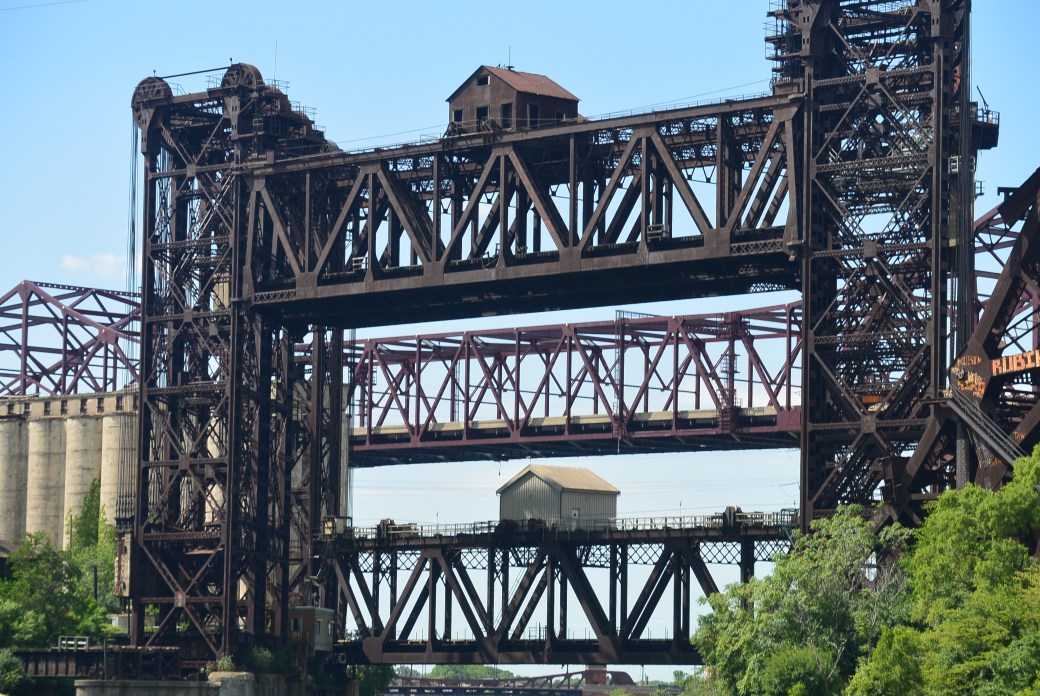
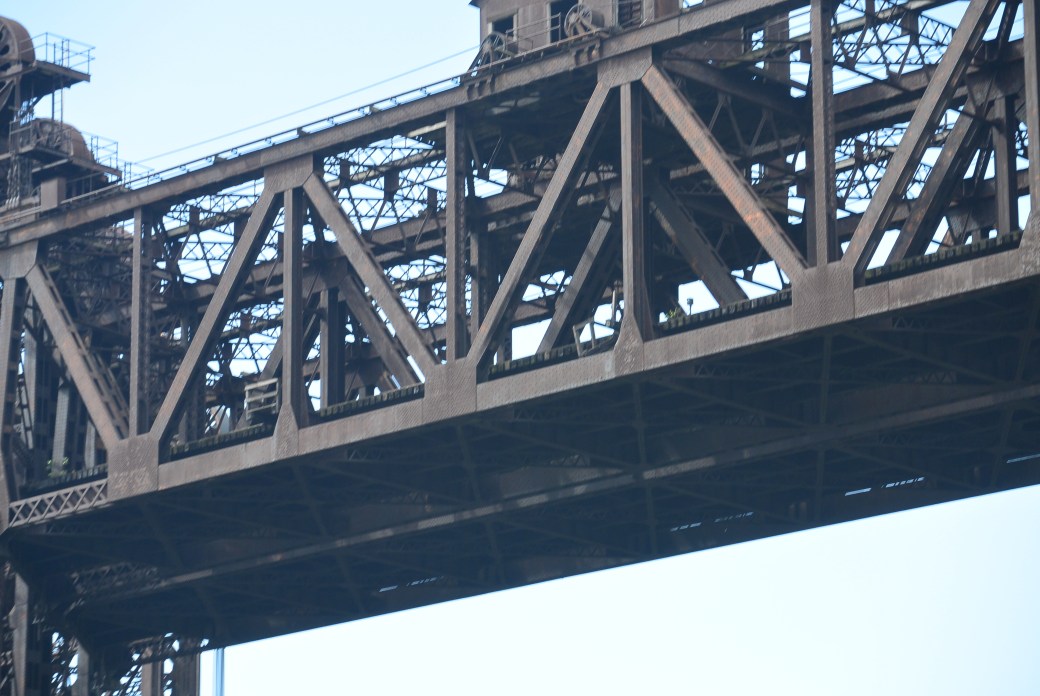
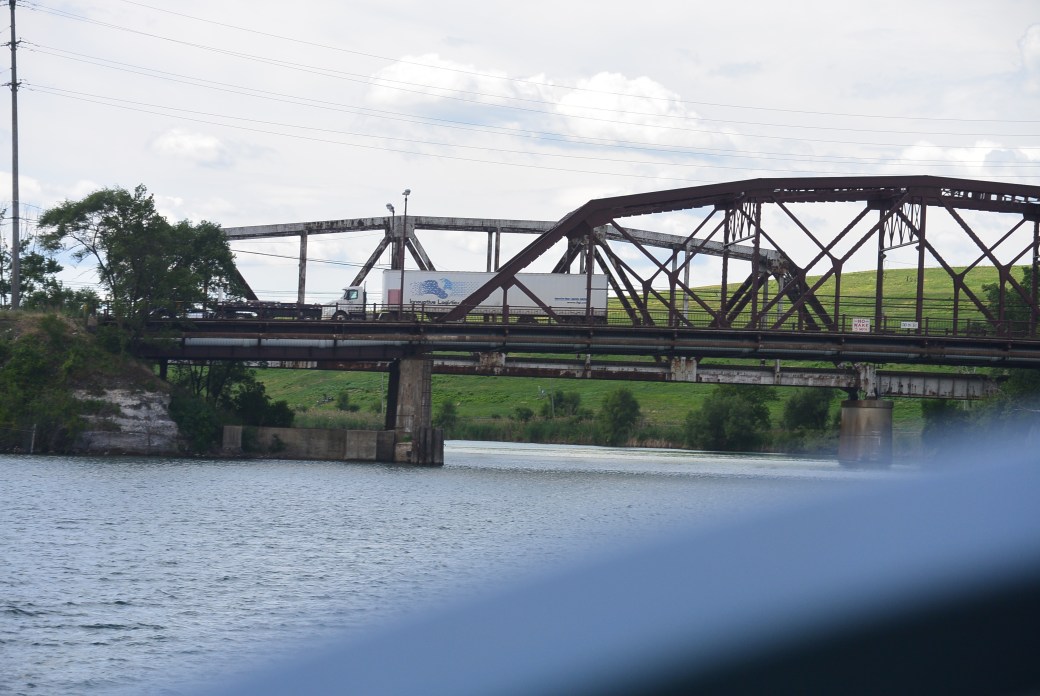
     One of the Railroads that traversed LaSalle, Illinois was the Illinois Central.  This was originally chartered as a line to transverse Illinois  north to south from Chicago to Cairo.  Sadly most of the buildings associated with the IC  in LaSalle are no longer standing.  An exception is the Illinois Central Bridge that traverses the I and M Canal near the aqueduct over the Little Vermillion River.

image

Illinois Central Bridge over the I and M Canal

image

Illinois Central Bridge

image

Illinois Central Bridge

The bridge was built in 1855.  The original contractor was Albert Story.  He had hired workers with a promise to pay them $1.25 per day.  Later, he reneged and changed the reimbursement to $1.00 per day.  The angered workers demonstrated and some were involved with murder of Mr. Story.  Despite these setbacks, the bridge was completed in 1855.
     The bridge was quite a spectacular engineering fete for this time period. 

image

Illinois Central Bridge

image

Illinois Central Bridge


There were 17 sandstone support piers. The super structure was made of iron and truss spans encased in wood. The span of the bridge was 2889 feet. The bridge crossed a half mile wetland, the I and M Canal, the Rock Island Railroad, and the Illinois River. The original bridge served the IC railroad for forty years.
The bridge was renovated in 1893. Deck truss spans sat on the original support piers.
In the 1930’s, after the Illinois Waterway Project, it was found that the low hanging steel on the deck truss spans was too low for boats. The main channel span was replaced by a truss span on new support piers. Subsequently, the rest of the support piers were raised. The IC abandoned the rail line that included the bridge. The last train to cross the bridge was December 21, 1985. The bridge was purchased by a concrete factory on the north side of the river.

Kaskaskia

     Located in LaSalle County off Dee Bennett Road near Utica is a historical site referred variously as the Zimmerman Site, Grand Village of the Kaskaskia, the Old Kaskaskia Village or 11LS13.       This was the home of the Kaskaskia Band of the Illinois Confederacy during most of the 17th century. 
     In 1673, Father Jacques Marquette arrived initially at this site.  Two years later, he returned to establish a Catholic mission.  Later this group of native Americans moved west from this site to the region of the Kaskaskia River.    What is even more interesting is that there is evidence of Indian settlements at this site dating to 800 a.d.  This site has been investigated by archeologists on several occasions.
     In the 1980’s, this site had been purchased by developers seeking to build vacation homes.
Preservationists  organized an effort to save this site.  Governor Jim Thompson sought to have the Illinois Historic Preservation Agency to arrange for the land to come into public ownership.  This was accomplished in April of 1991.