Aqueducts on the Illinois Michigan Canal

     During the construction of the Illinois Michigan Canal, one difficulty that the engineers encountered was crossing creeks and rivers.  The solution that used in 4 cases was the use of aqueducts containing the canal water over these natural waterways.  The westernmost aqueduct was built over the Little Vermillion River in LaSalle, Illinois.

image

Aqueduct over the Little Vermilion River

image

Aqueduct over the Little Vermillion River


The current version of this aqueduct is a riveted trough and steel plate. It was a replacement of a rusted structure. The replacement was built in the 1970’s by Lou Mahnic a blacksmith from LaSalle. He was aided by a group of union welders. The aqueduct is 140 feet in length and has 5 spans.
An account by a LaSalle resident shortly after World War 2 describes the aqueduct as a rusting metal structure.
In 1918, the U.S. government provided funds to renovate the western Illinois Michigan Canal. At that time, the wood trough of the Vermillion Aqueduct was replaced with a steel structure.
Currently, the aqueduct has sprung a leak. Water is leaking into the Little Vermillion River. dams are present on either side of the structure. The plan is to repair the structure this spring.

image

Fox River Aqueduct

image

Fox River Aqueduct

image

Fox River Aqueduct

Traveling east on the Illinois Michigan Canal, there is no obstruction by rivers until Ottawa is reached. Here the Fox River is encountered. An aqueduct was proposed. The contract for its construction was awarded to David Sanger and Sons in June of 1838. He was an Ottawa resident. Mr. Sanger was no stranger to the business of canal construction. Previously, he had worked on sections of the Erie Canal and the Western Pennsylvania Canal. His son Lorenzo had worked on Lock 15 of the canal and the Joliet Penitentiary.
The original aqueduct consisted of a wooden trough and towpath supported by seven limestone piers. The piers were made with Joliet limestone. The aqueduct was the largest on the I and M Canal. It was 464 feet in length and 17 feet in width. The total construction cost was slightly over $100,000. In 1918, the wooden trough was replaced with a steel trough. Over the years, modifications and repairs were made to the steel trough and the limestone piers.
After 1870 when steam powered boats were used on the canal, the towpath along the aqueduct deteriorated. The area of the towpath was modified in 1903 to create a bridge for the Chicago, Ottawa, and Peoria electric line. This was in use until 1934.
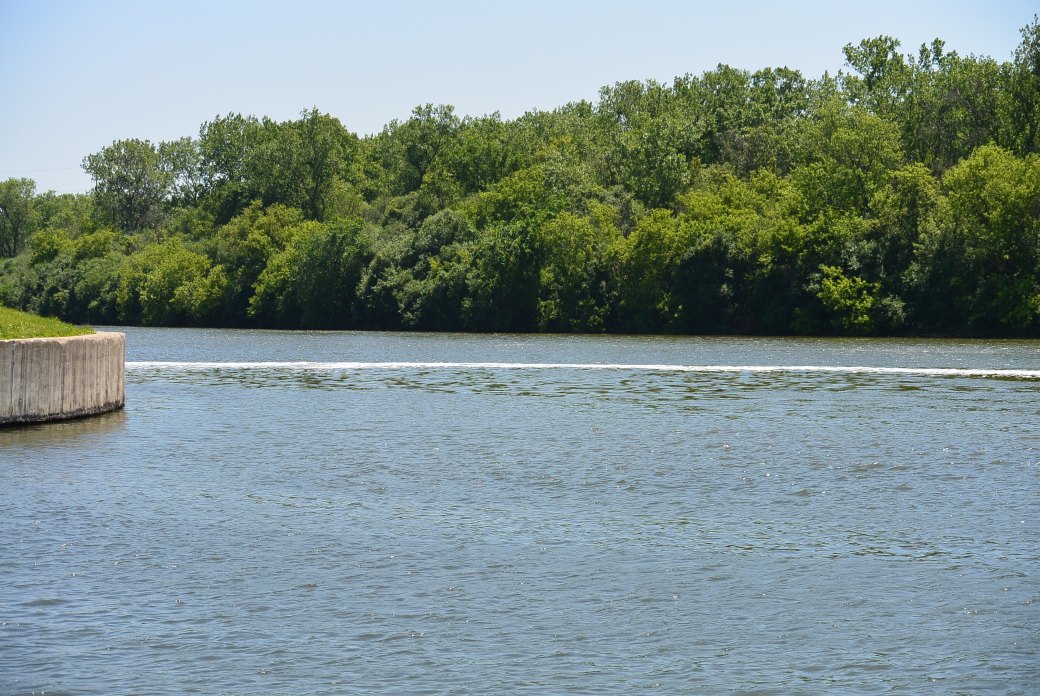
Currently, the aqueduct is dry.

image

Nettle Creek

image

Nettle Creek Aqueduct

image

Nettle Creek Aqueduct

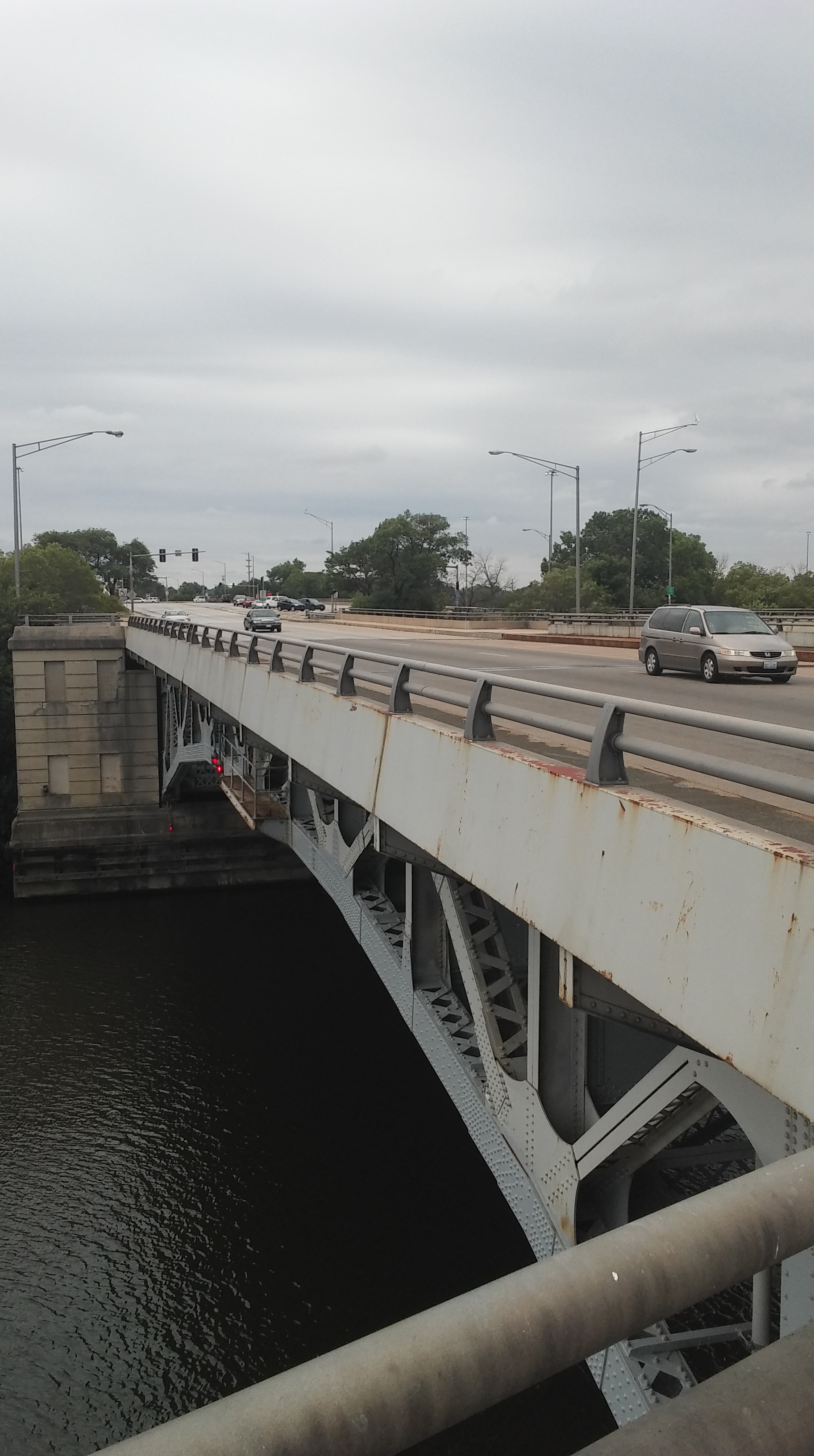
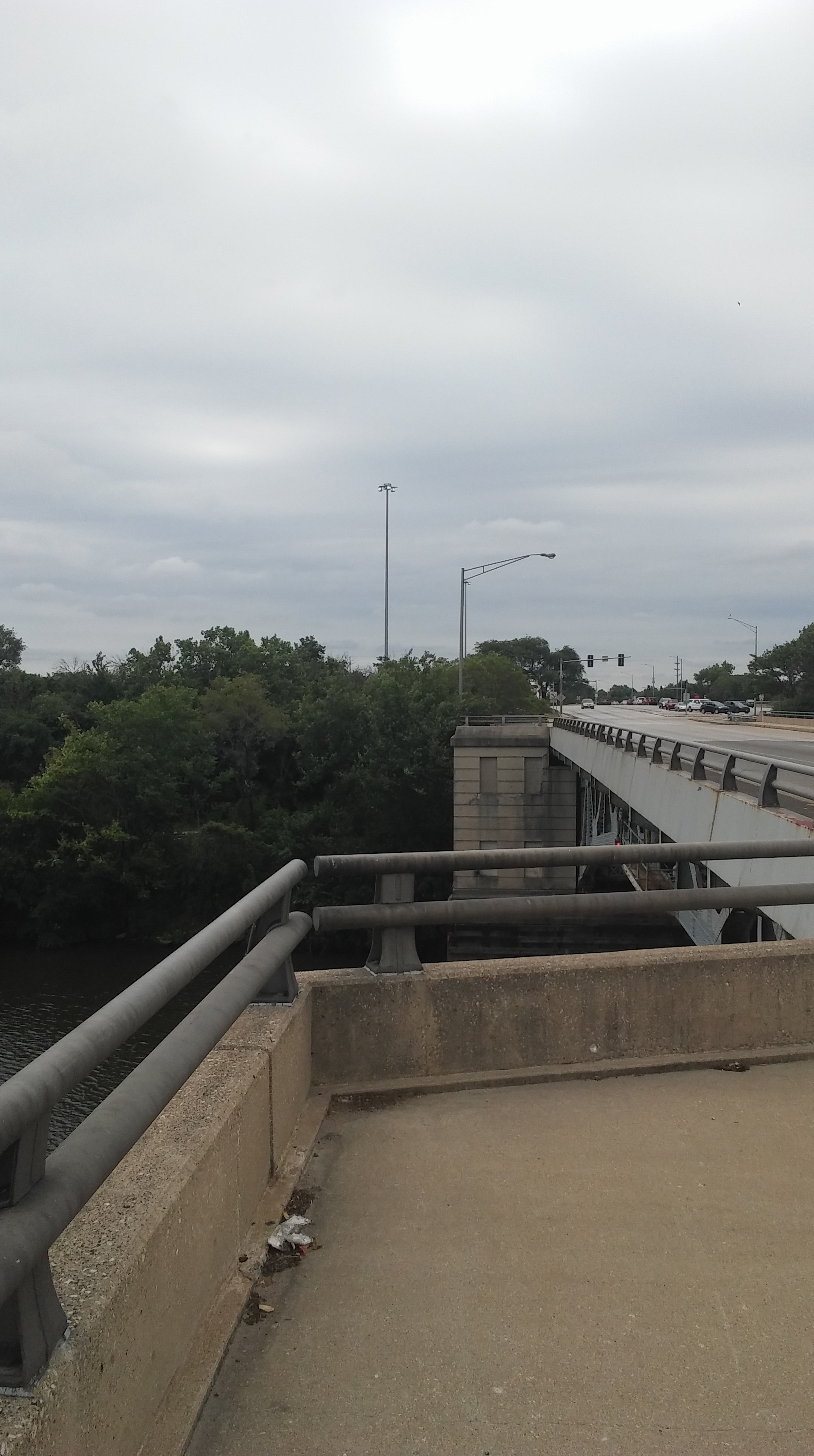
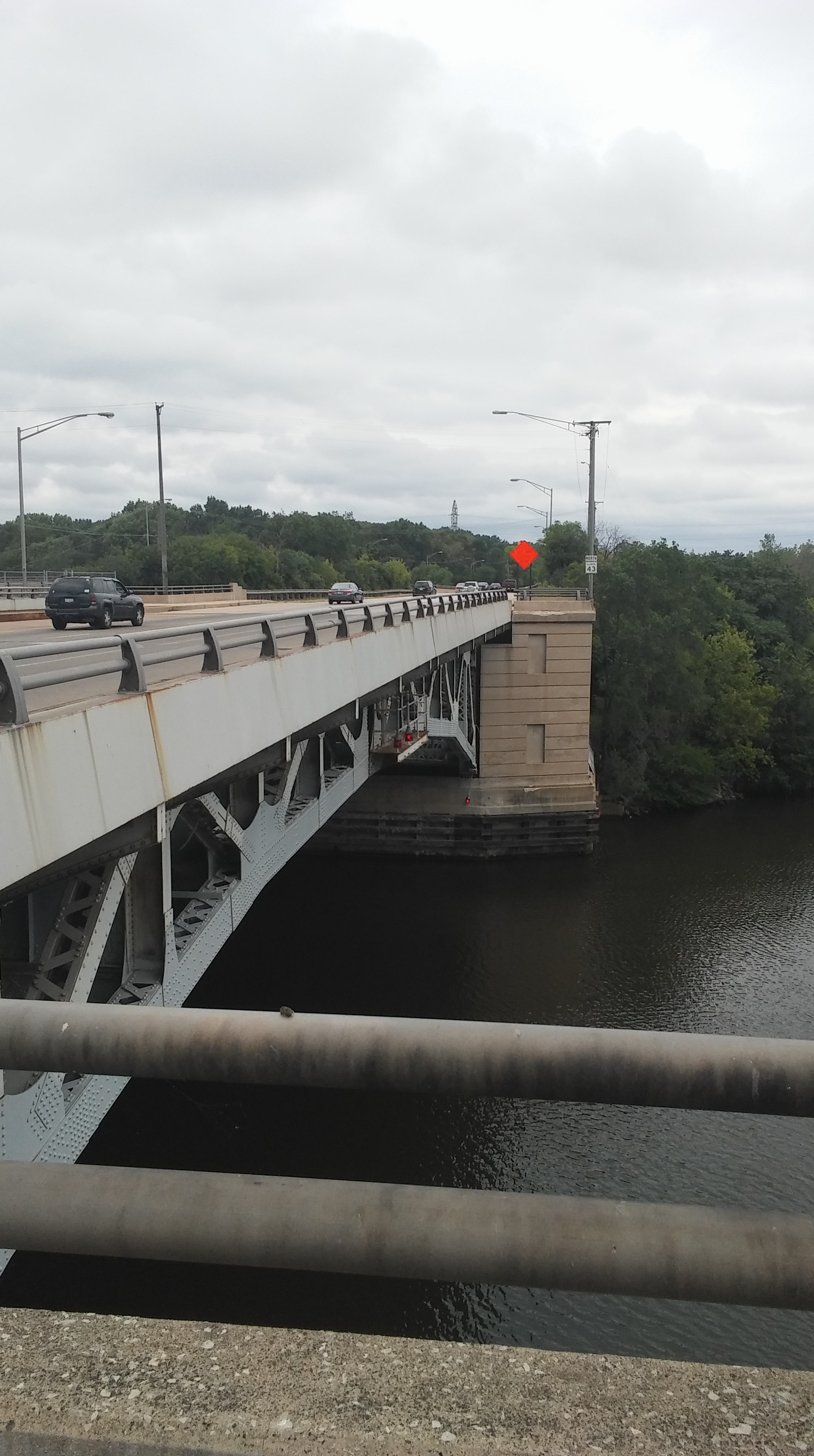
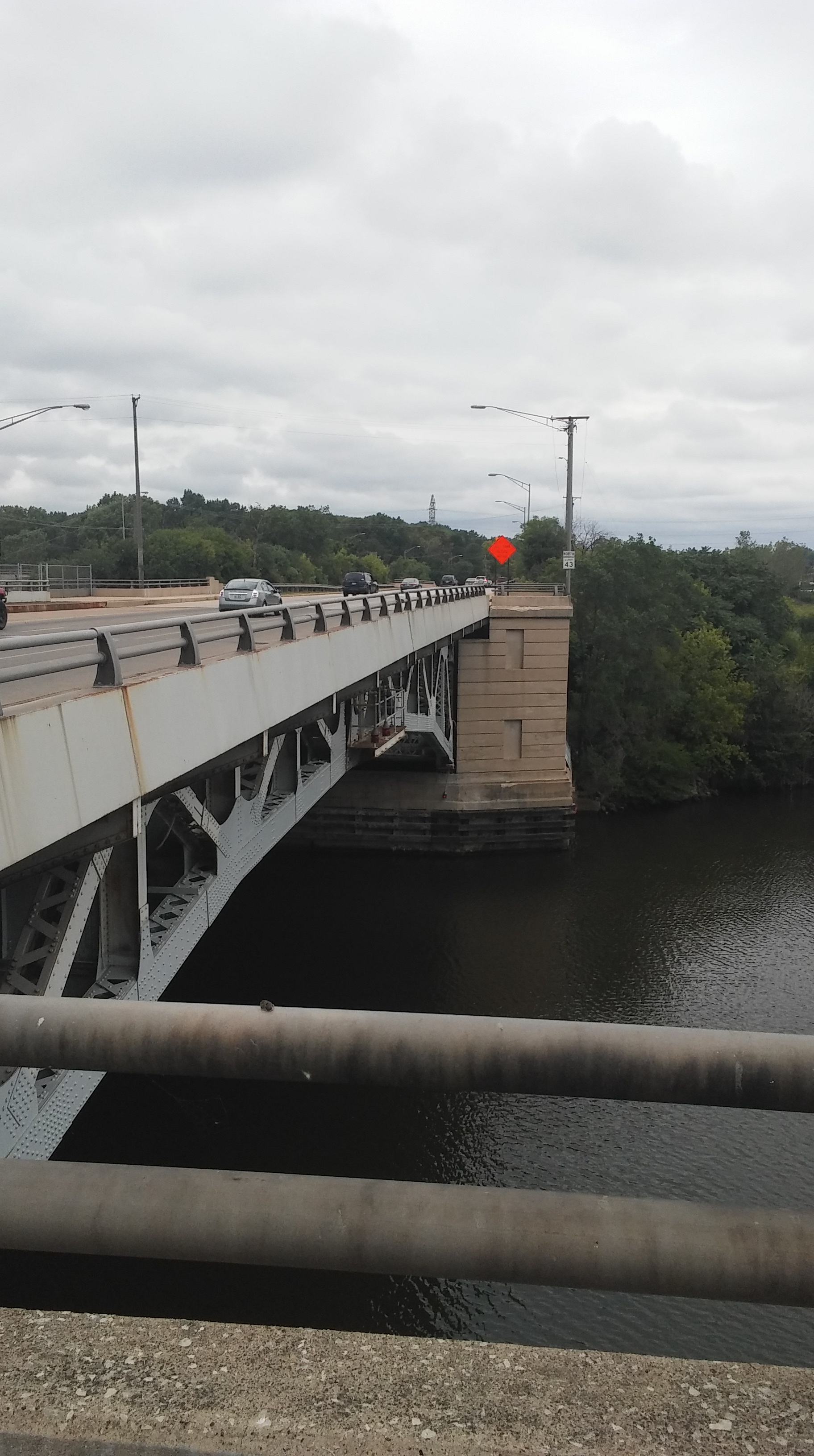
Travelling further east along the I and M Canal, the Nettle Creek Aqueduct is encountered in Morris. It was originally completed in 1847. The contractor was William Perce. The stone for the structure was quarried locally. Unfortunately, the red sandstone used was inferior to other stone used in canal construction. The aqueduct had to be rebuilt. The wooden trough was replaced with a steel structure in 1910. The aqueduct underwent many repairs 1850, 1859, 1868, 1877, 1889, and 1910. It was rebuilt by the CCC in 1937. It’s current appearance a steel plate frame to conduct the water in the canal. It is supported by cut stone blocks.
In 2013, an intense rain storm caused a collapse of aqueduct. As a result, this structure contains no water. The I and M canal is dry distal to the damaged structure. Unfortunately, the aqueduct has not been repaired as of this date (4/6/2016)
As we proceed farther east on the I and M canal path, the Aux Sable Creek and aqueduct is encountered. In the same area, Lock 8 and the lock keeper’s house are located.

image

Aux Sable Aqueduct

image

Aux Sable Aqueduct


image

Aux Sable Lock 8 and Lock keeper's House

The aqueduct over the Aux Sable Creek was completed in 1847. It was 136 feet long by 18 feet wide. The original aqueduct was a wooden structure. It was supported by limestone piers. The wooden structure was replaced in 1927–8. It’s replacement was steel riveted plate girder. The support piers and abutments were repaired in 1948. In 1970, the towpath bridge was rebuilt. The aqueduct was again stabilized in the 1990’s

The feeder canals on the Illinois Michigan Canal.

Any man made canal unlike rivers and streams has no natural drainage system to maintain its water supply.  The Illinois Michigan Canal was no different.  However, the proposed water supply changed during the construction process.  Originally, the proximal or Summit portion was supposed to be a deep cut.  The thinking was that a deeper channel would provide for water flow from the south branch of the Chicago River west down the canal.  Unfortunately, during the construction, the Canal Commission ran out of money.  For a while, work was suspended on the project.  Different proposals were discussed to save on costs.  One was the shift from a deep cut to a shallow cut on the Summit division.  Alternative sources of water supply had to be found. A lock was placed at the junction of the I and M Canal and the south branch of the Chicago River. Two steam powered pumps were placed
at Bridgeport near the original lock 1. These pumped 100 cubic feet per second of water from the Chicago River noto the I and M Canal.
On the eastern end of the canal the Calumet feeder was constructed. This was a 16.7 mile canal. This was first proposed by James Bucklin, chief engineer of the I and M canal in 1830. The final survey for the canal was completed in 1845 by Edward Talcott. The feeder canal was completed in 1848–1849 (other sources put the completion date at 1851 or 1852. It was 4 feet deep.  It was 40 feet wide at the surface; 26 feet wide at the base.  It extended from the Little Calumet River to to the I and M Canal. This was the last of the feeder canals to be completed.
This was due to the fact that a large section of its course was through a swamp. The ground material had to be dredged by steam excavators. It was too soft to be removed by digging.
  In addition to being used as a feeder, it also was used for boat traffic.  In 1861–1870, the city of Chicago operated the Bridgeport pumps at the south end of the Chicago River an additional 45 days to flush sewage down the I and M canal canal. Because of this, the feeder canal was no longer used regularly as a water supply to the I and M Canal. The canal was abandoned by the canal commissioners in the 1870’s after the deepening of the Summit division of the Illinois Michigan Canal and subsequent reversal of the flow of the Chicago River.
For several miles, the DuPage River and the I and M Canal parallel each other. Approximately, one mile east of lock 6, the two waterways approach each other. Many references mention the existence of a feeder canal at this site with a lock. In a proceedings of the Canal Commission this feeder is referenced. It was constructed on canal land. It was on a 20 acre site. It was apparently in use for only a short time. This feeder is mentioned in plat book 2, Canal Records
The region of the DuPage River and I and M Canal near locks 6 and 7 is a unique set up unlike any other area in the Illinois Michigan Canal. Originally an aqueduct was proposed for this site. This was abandoned as too expensive.
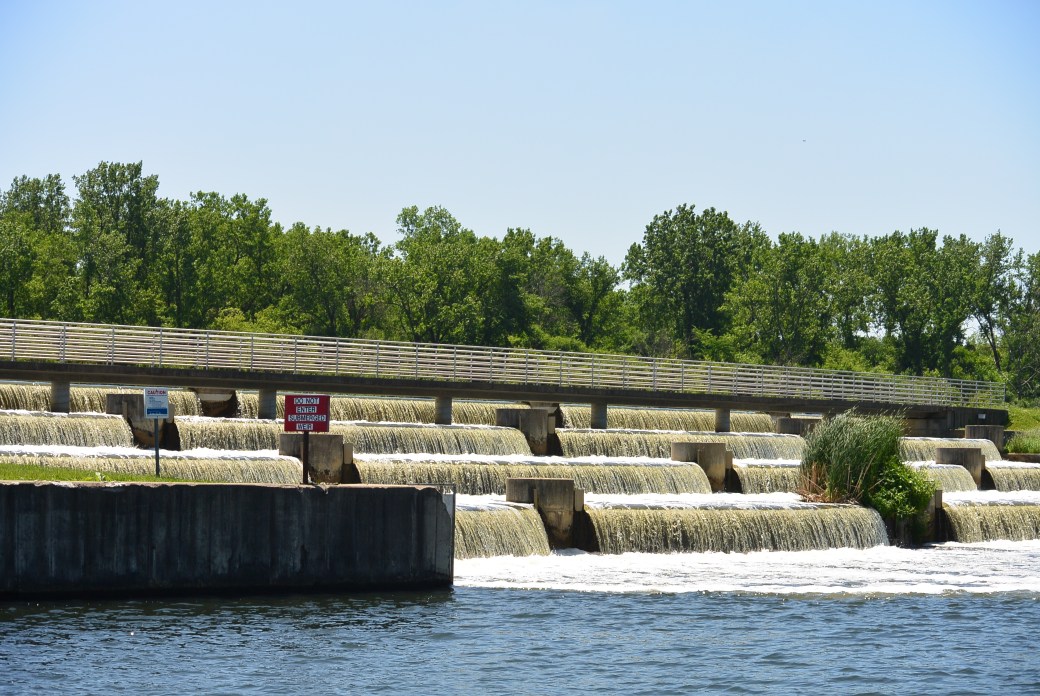
In the area between Lock 6 and Lock 7, the canal and the DuPage River cross. In other areas of the I and M Canal, when the canal and a river intersect an aqueduct was used. In the area of intersection, a dam was built on the DuPage River. This created an impounded river. This river could be traversed by canal boats. It also could provide a water supply for the canal. The original dam was built in 1840. It was built with timber. In 1877, the dam had to be rebuilt. The canal was abandoned in the 1920’s. The area of Lock 6, Lock 7, and the lock keepers house was rehabilitated by the CCC. A new concrete dam was built. This took place in the 1930’s.
In 1996 a flood damaged the dam, spillway, and the embankment. These areas were all repaired.

image

image

image

image

image

Early in the construction of the Illinois Michigan Canal, engineers proposed the need for an additional water source in the Dresden Pool section near Channahon. Their solution was a feeder canal from the Kankakee River near a state dam. It’s origin was in Wilmington. It ran northwest along the north side of the DesPlaines River. It’s total length was 4 and one half miles. It’s original depth was 4 feet. The feeder crosses the DesPlaines River near its mouth by an aqueduct. There were multiple masonry supporting piers. The actual aqueduct was constructed with wood. After crossing the river, the water flowed into the Illinois Michigan Canal.
A report of the chief engineer of the Illinois Michigan Canal dated 1848 placed the cost of the Kankakee Feeder at $84, 513. It is not clear if this includes the cost of the aqueduct over the DesPlaines River
In the 1870’s, the feeder was rebuilt to increase its depth to six feet. This created a navigable waterway between Wilmington and Channahon.
The aqueduct over the DesPlaines River was demolished in the 1930’s

image

Contract for lock keeper on the Kankakee Feeder Canal

The last feeder canal on the Illinois Michigan Canal was the Fox River Feeder. It began in Dayton and extended south to The Illinois Michigan Canal adjacent to the origin of the lateral canal. It was four miles in length and 40 feet wide. It had its own towpath. Small boats could navigate the channel. During its history, it was plagued with problems. In 1871, it’s channel dried up never to be used again.

image
The feeder canal crossed the Illinois Michigan Canal and entered the lateral canal. There were multiple mills and grain elevators along this canal. Both the feeder canal and the lateral canal were filled in in the 1930’s. During the same time period, coal was mined in the bed of the feeder canal

image

Stone abutments for a towpath bridge crossing the lateral canal
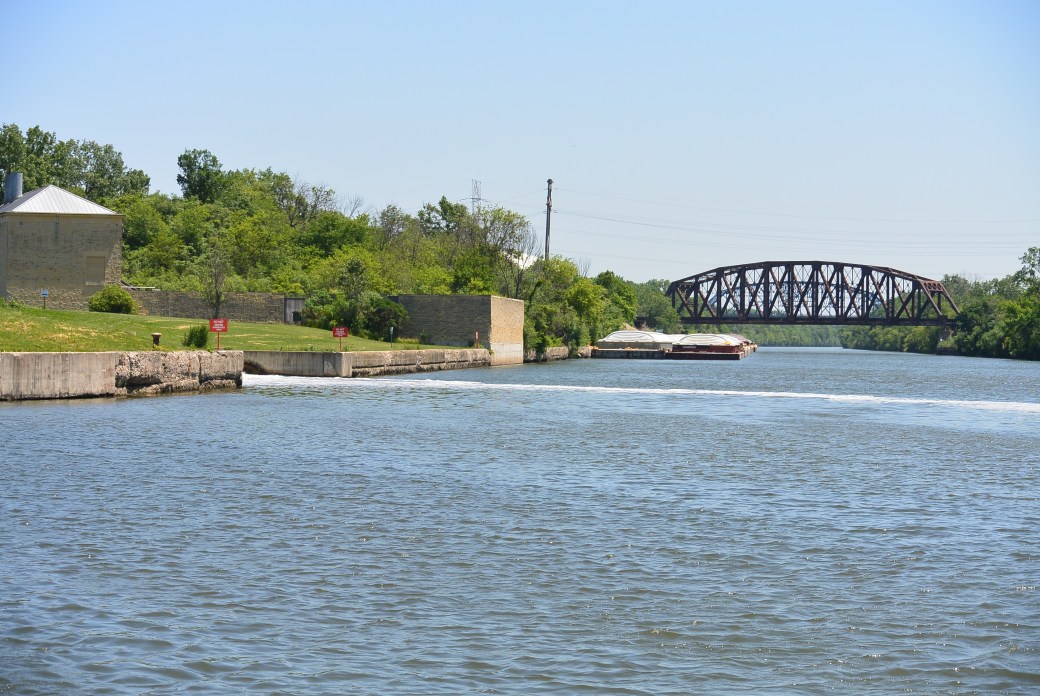
image
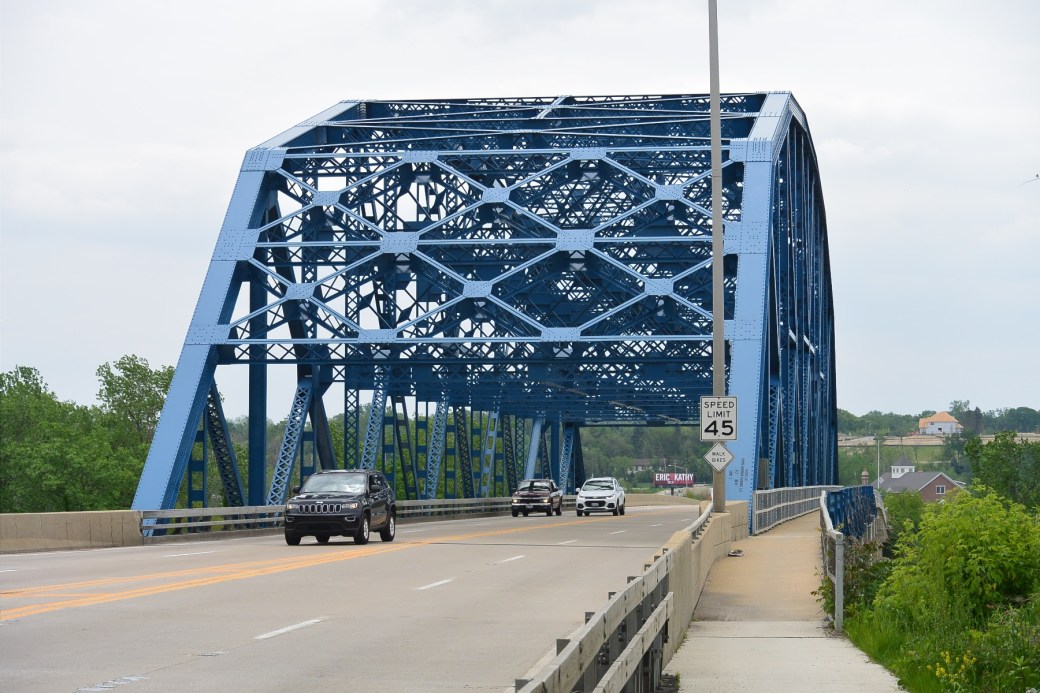
Abutments for towpath bridge crossing the lateral canal
image

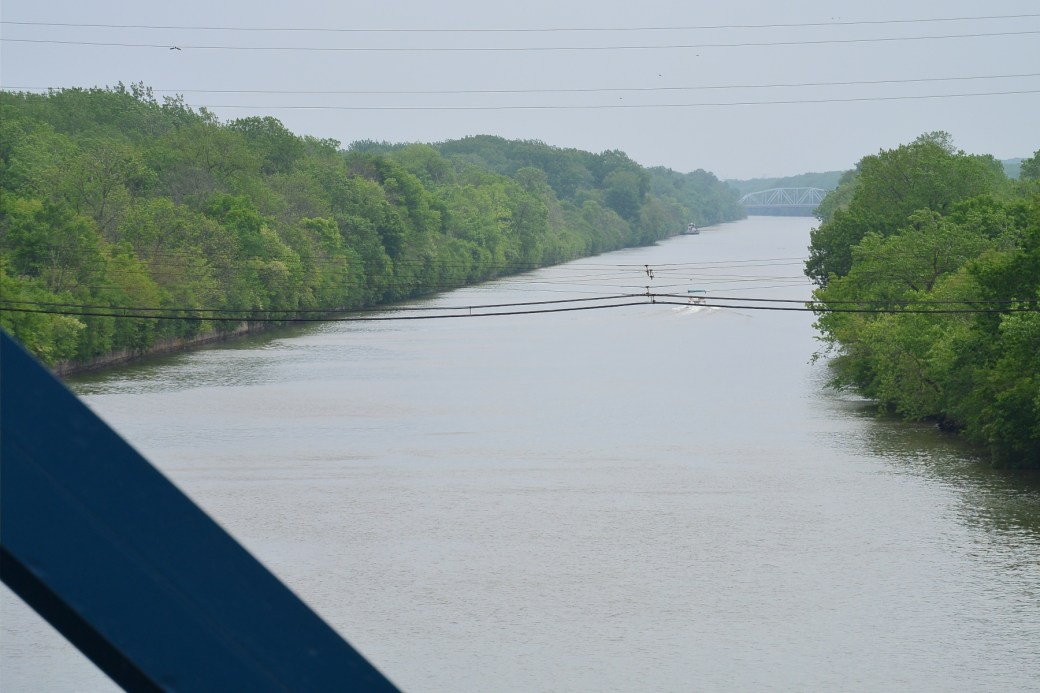
Abutment for towpath bridge over the lateral canal

Abraham Lincoln and the Illinois and Michigan Canal

     Probably one of the staunchest supporters of the Illinois Michigan Canal project was Abraham Lincoln.  Both as a Whig and a republican, he ran on a program of internal improvements.  This included roads, bridges, canals, and railroads.  In his multiple terms in the Illinois Assembly, he consistently was a supporter of the canal and other improvements.  This support continued despite the down turn in the economy.  When others fought for abandoning these costly projects, he continued to fight for them.  Some historians have argued that this policy of Lincoln and his allies was irresponsible placing the state of Illinois in grave fiscal peril.  But fortunately because of his steadfastness, the Illinis Michiganal as completed and it had many years of successful service.
   Lincoln continued his support for internal improvements in his single term in the U.S. Congress.  It is also documented that he travelled on a packet boat on the canal likely twice.
The first canal trip took place in 1848. Lincoln, his wife and sons Rob and Eddie were in New England in the late summer. On September 23rd, they boarded a train bound for Albany. They arrived on the 24th. From Albany, they travelled to Buffalo. They secured passage on a Great Lakes steamer named the Globe. It was a relatively new boat. It was a side wheel steamer. It was one of the largest ships on the Great Lakes. It was scheduled to go from Buffalo to Chicago in seven days. The ship set sail on September 26. Because of heavy seas, it took the Globe eight days to reach Milwaukee on October 4. The boat stayed in port for several hours. This was to load and unload cargo.
Later that day, the Globe left Milwaukee and headed south to Chicago. This city was reached early on the 6th of October. After disembarking from the ship, the Lincoln family checked into the Sherman House. The next day, they arranged for travel on a packet boat on the Illinois Michigan Canal to LaSalle, Illinois. By October 7th, they would have reached the canal basin at LaSalle.

image

Canal Boat Basin

From this site, they walked about one half a block to the steam boat basin. It was here that they secured passage on a steam boat down the Illinois River. The trip was to Peoria. They arrived at their destination on

image

Steam boat Basin.

October 8th. They checked in to the Planter’s House hotel two blocks from the Illinois River.
On October 10, the Lincoln family arose early to board a stage coach heading south Springfield. They arrived in that city in the evening.
In 1852, Mr. Lincoln was named to a commission to investigate claims against the state of Illinois in the matter of the Illinois Michigan Canal. Other members of the panel included Hugh Dickey of Chicago and Noah Johnston of Mount Vernon. The panel published a notice in multiple papers setting the hearings for December 3rd in Ottawa, Illinois. Mr. Lincoln left from Springfield on November 30. He traveled on a railroad (Sangamon and Morgan) west to Naples, Illinois. He boarded a dreamer on the Illinois River to LaSalle. He then boarded a packet boat on the Illinois Michigan Canal for the 15 mile ride to Ottawa arriving on December 3. Johnson and Lincoln began to take testimony on the third of December. Hearings continued on the 4th; the 5th was a Sunday and no hearings took place. The proceedings ended on December 6th.
On December 7th, Lincoln, Johnston, clerk R.E. Goodell, and Nubian Edwards (acting Attorney for the state) boarded a packet boat and headed for Chicago. They arrived on the 8th.
The next day they began to collect evidence. The hearings were held in a room at 177 Lake Street. Contractors and other claimants appeared before Lincoln and Johnston. The hearings lasted for four days and were adjourned. They were to be reconvened in Springfield one week later. The members of the board departed from Chicago. They could not use the canal. It had been closed for the season by the superintendent. The members of the board boarded a Rock Island Train on December 14. They went south to Joliet. They then took a stagecoach to LaSalle. From here, they boarded a steam boat to Naples and next a train to Springfield arriving on December 17.
On December 20th, the hearings were reopened probably in an unused room in the Statehouse. The commission met for two weeks taking testimony and writing their report to the General Assembly. The report was submitted to Governor Augustus French on January 7, 1853. He then sent it to the House.
On his expense account, Lincoln stared that he had spent 21 days on commission business; traveled 650 miles to and from Chicago via Naples. His total charge was $149. Thus ended Lincoln’s work on behalf of the canal.

Joliet Iron and Steel Company

image

Joliet Iron and Steel Company

image

Joliet Iron and Steel Company

image

Joliet Iron and Steel Company

image

Joliet Iron and Steel Company

image

Joliet Iron and Steel Company. Machine Shop

image

Joliet and Iron Company. Company Office

image

Joliet Iron and Steel Company. Storage Building

image

Joliet Iron and Steel Company. Machine Shop

image

Joliet Iron and Steel Company. General View

One of the more interesting areas along the I and M Heritage Corridor in Joliet is the Joliet Iron Works Park. This area is approximately 50 acres near the DesPlaines River. The Illinois Michigan Canal can be accessed through this park. The property was acquired between 1991–1997. This was the site of a steel plant active from the late 1880’s to the 1900’s. It contains the foundations of multiple buildings demolished in the 1930’s. Among these buildings were a stock house, 4 blast furnaces, casting bed, skull house,gas washers, four pass stoves, blowing engine house, and gas engine house.
Before it’s closure, the Joliet Works of U.S. Steel covered over 170 acres. The property was bounded by Collins Street to the east and the DesPlaines River to the west. At one time there were over 60 buildings in the complex.
The first factory at this site constructed by Union Coal, Iron, and Transportation Company. They built an iron works near Collins Street. The plant consisted of two coke fired blast furnaces and two rod mills. The business was reorganized in 1873. It’s new name was Joliet Iron and Steel Company. The new firm erected a Bessemer steel plant. This was designed by Alexander Holley.
In 1889, Joliet Iron and Steel Company merged with the much larger Illinois Steel Company. The merged company had plants in Chicago, Cleveland and Joliet. In 1898, the company was absorbed by the newly formed Federal Steel Company. Finally in 1901, the Joliet steel works became part of U.S. Steel, the nation’s largest steel maker.

During, early 1900’s, the Joliet plant had four blast furnaces. These were later torn down. Nothing remains of the blast furnace operation. The Bessemer steel plant was demolished. The Joliet works of U.S. Steel remained in operation in various forms until 1980.
The earliest buildings of Joliet Steel dated to the 1870’s. Included was the machine shop (1872), the blacksmith shop (1873), the pattern shop (1873), and the company office (1873).
All of these structures were erected by Joliet Iron & Steel Company.
The Machine Shop was a 2 and one half story building with limestone wall. It measured 300 x 130 feet. It was originally used as place to repair a wide range of machinery. None of the original machinery in this building still exists.
The Black Smith Shop was constructed in 1873. It was one and one half stories tall. It measured 70 x 60 feet. It had limestone walls. At one time, the building contained a steam power hammer with 1000 pound capacity. This building was abandoned.
The Pattern Shop was built in 1872–1873. It was 2 and one half stories tall. It measured 85 x 45 feet. The walls were made of limestone. Originally, it served as a small pattern and carpenter shop. In this building were a Daniels Plane, arc saw bench, scroll saw, and two lathes. None of this equipment survives.
The Company Office was built in 1873. It was 2 and one half stories tall. It measured 90 X 60 feet. The walls were limestone. There was a large stone arch at the front entrance. This building was erected by Joliet Iron and Steel Works.
In the 1890’s, after the merger of Joliet Iron and Steel with Illinois Steel Company, the following structures were added: the Electric Lighting and Power Plant, Roll Shop, and the Stores Building.
In 1890, Illinois Steel constructed a central power house to provide electricity to all of the plant. This building had brick walls and a steel frame. It measured 120 X 63 feet. An addition was constructed in the mid 1890’s This was along the east end of the original building. It was two and one had stories. In the late 1890’s, there were 3 generators and 6 dynamos. This plant provided power for 10 motors, 133 arc lights, and 957 incandescent lamps. None of the power generating equipment survives.
A roll shop was built in the early 1890’s. It was 3 stories with brick walls. It measured 260 X 70 feet. It contained lathes for manufacture and and repair of rolls used in the rolling mills.
The Stores Building was built on top of the old B Mill. This mill building was built by Joliet Iron and Steel in the 1870’s. It was probably used to produce specially rolled iron products. The Stores Building used the original limestone walls for the first story and red brick for the second. The building measured 140 X 110 feet.
In 1895, Illinois Steel erected a new merchant mill. It had a stone foundation, brick walls, and a steel frame. It measured 115 X 40 feet. This was enlarged over the next 50 years. The building contained a Belgian train with 2 strands of 18 inch roughing rolls and 7 strands of 12 inch finishing rolls. The rolls were driven by a steam engine. This mill also produced bolts and spikes. None of the mill machinery exists.
U. S. Steel erected Rod Mill 1, 2, and 3. These are large steel framed buildings covered with corrugated metal. These were built in 1930’s. Also constructed in the 1950’s was the Fence and Barbed Wire Department. This was a large steel framed building. The Nail Department was built in the 1920–1950’s. It adjoined the Fence and Barbed Wire Building. The Wire Department is a steel frame building. It is steel frame clad with corrugated metal. It was built in the 1930’s. The Annealing and Galvanizing Department was located in 2 adjacent steel frame buildings constructed in the 1930–1950’s.

The C.C.C. and the Illinois Michigan Canal

image

Restored Lock Keeper House Channahon.

image

C.C.C. Shelter


image

Highpoint Shelter Gebhard Woods

image

Gebhard Woods Fireplace

image

C.C.C. Shelter Lockport. (1934)


image

Restored Lock C.C.C


image

C.C.C. Shelter Aux Sable Creek Area

image

C.C.C. Camp Starved Rock

image

C.C.C. Working along the Canal.

Civilian Conversation Corps was a public relief program operational from 1933–1942. It was similar to a program that Franklin Roosevelt instituted while governor in New York State.
It provided employment to unemployed single men between the ages of 17–28. The program was organized in camps of 200 men under the charge of army reserve officers. The attendees wore uniforms. They were paid $30/month. The majority of this money was sent home. They were provided with food, clothing and shelter.
During its nine years of operation, the C.C.C.had over 9 million participants. There were a total of 50 camps in Illinois. There were 8 along the I and M Canal and the Illinois Waterway.
There were 3 camps in the Starved Rock region (614, 1609, and 2601).
The three Starved Rock Camps were responsible for the construction of the large lodge as well as developing the extensive trail system in the state park.
There were 5 camps along the I and M Canal. –612, 631; Willow Springs to Romeoville; 630 Morris to Marseilles; 628 Buffalo Rock State Park. Various projects were undertaken in these areas. Canal was improved and cleared; Locks and other structures were refurbished. The canal path was improved. Bridle paths were constructed. Trail side structures were constructed. Parks along the canal were improved. These included: Fox River Picnic Region, Gebhard Woods State Park, Illinois State Park, Buffalo Rock State Park, McKinley Park in Will County.

Star Union Brewery

image

Star Union Brewery. Remaining Building

image

Star Union Brewery. Remaining Building

In the towns along the Illinois Michigan Canal, breweries were established in the mid and later 1800’s. These businesses had variable success. Early on competition was virtually non existent due to the lack of refrigeration and pasteurization. A few of these breweries were successful and prospered for years. One of these was located in Peru, Illinois. It’s name was the Star Union Brewery.
The predecessor of Star Union was called Fred Kaiser Brewery. It was established by Mr. Kaiser. It’s location was on Pike Street in Peru, Illinois. In 1860, Kaiser sold the business to Benjamin Ream. For a number of years, the plant was run by Anton Hall, Mr. Grasmick, Mr. Eck, and Mr. Winheim during the Civil War. Subsequently, the company was purchased by Phil Link, Charles Bereiter, William Meyer, Fred Schulte, and Fred Seepe. It was incorporated under the name Union Beer Company in 1868. In 1880, Henry Hoerner bought the interests of Mr. Meyer, Mr. Schulte, and Mr. Seepe. He changed the company name to Star Union Beer Company. He served as president of the company until 1930. Mr. Link was a minority owner. The company ran as a brewery until prohibition in the 1920’s
The company converted to ice making and the manufacture of sodas and ginger ale. During this time, it was known it was known as Star Union Beverage. In the late 1930’s, the name was changed again to Star Union Products Company. After the repeal of Prohibition, the company resumed its brewing business. It became one of the largest breweries in Illinois. It had over 100 employees.
The bottling works was constructed some time in the interval between 1892 to 1909. It was expanded to the west in 1909 and 1916. It remained unchanged for many years. East of Pike Street the limestone walls of the brewery deteriorated and were torn down. There was an 80 foot red brick chimney. This was torn down in 1978
In 1931, Mr. Hoerner retired from the business. His son and daughter ran the business.
2 of the more well-known brands were Sepp’l Beau and Star Beau.
In 1963, Star Union was sold to Canadian Ace Brewery of Chicago. Canadian Ace had a long and somewhat checkered history. It was founded in 1893. It’s original name was the Manhattan Brewing Company. In 1919, Johnny Torrio (a known mobster) and Joseph Stenson ( a brewing magnate) bought the brewery. Later, Louis Greenberg ( the finance man for the Al Capone gang) gained control of significant stock in the brewery and assumed its management. During Prohibition, Greenberg and other underworld elements reorganized under the name Malt Maid and in 1925 Fort Dearborn Products. Beer was illegally produced on the premise. In 1932, Greenberg and well known mob boss Frank Nitti purchased the brewery. After the repeal of Prohibition, the company returned to regular beer production.
In 1933, the name was changed back to Manhattan Brewery. Until the mid 1936, beer distribution was confined to states adjacent to Illinois.
This changed with the introduction of the keglined beer can (metal coated to prevent contact of beer with it). This allowed for a more widespread distribution. The flag ship brand was Old Manhattan.
The brewery had business relations with other firms. It owned stock in Prima–Bismarck Brewery; it loaned money to Flood City, Whitewater, and Ann Arbor. Manhattan canned and bottled brands for these breweries.
In 1941, Frank Nitti committed suicide. At the time of his death, he owned 85% stock in Manhattan and an interest in Prima–Bismarck. In order to change the image of the brewery,
The name was changed to Canadian Ace in 1947. They also discontinued brewing Manhattan brands.
Canadian Ace ran the Peru Brewery brewery until 1966. It was closed because of the competition and costs of running the business. It remained a distribution center for Canadian Ace until 1868. The general manager at the time of the brewery closing was William Dresbach. He purchased the former bottling plant in 1968 and set up Dresbach Distribution Center.
In 2011, a Interesting event occurred in the area related to the old beer company.
One block from the Illinois River, an old limestone wall crumbled. This was part of the old brewery which sprawled over several acres. The ground opened up across from the Dresbach Distributing Company (part of the former bottling plant). This revealed a series of tunnels extending in all directions and connecting to the many buildings in the plant. It is believed that these served to remove beer by products dumping them in the Illinois River. It is also thought that ice and beer might have been stored in these tunnels at one time.

Carus Chemical Company

     The Carus– Hegeler families left their mark in the LaSalle region.  They were successful entrepreneurs.  Doctor Edward Carus founded the Carus Chemical Company in 1915.  This was located on 1500 8th Street in LaSalle.  Initially the company specialized in manganese products– permanganates and manganese oxides.  It was difficult to make permanganates commercially, of good quality and economically.  Dr. Carus was able to accomplish this task.  By 1928, Carus Chemical was established and profitable.  Other products added to their line included hydroquinone in 1935.  This was a photographic developer.  Also, manganese sulfate in 1928.  This was used in fertilizers in the citrus industry.  Both of the products were discontinued in 1977 due to economic and technological issues.
     In the late 1950’s, Doctor Carus two sons Blouke and Paul succeeded him in the business. 
They instituted a new market driven strategy.  They were very successful.  Since 1966, the company was the permanganate market leader in the U.S.  The company grew by acquisitions : Technical Products Corporation, Kjell Corporation, Industrial Quimica del Nalon in Spain. 
  The Carus family still plays an active role in managing the company.
     On the company web site, the organization is described in detail.  The umbrella organization is the Carus Group.  The subdivisions include: 1) Carus Corporation.  Products include water treatment products, drinking water treatment, waste water treatment, industrial products, oil and gas, phamaceuticals. 2) Alexander Chemicals.  Products includes acids and bases, gases, anhydrous HCL ) ; Sierra Chemical . It distributes environmental chemicals for municipal,agricultural, mining and industrial applications.