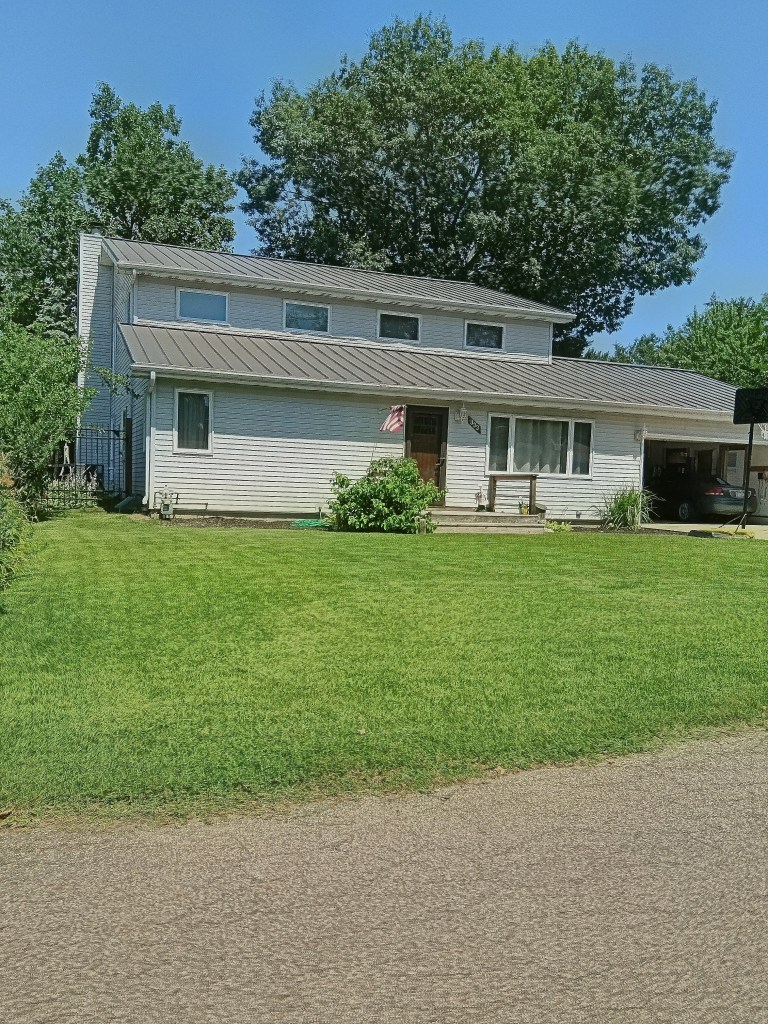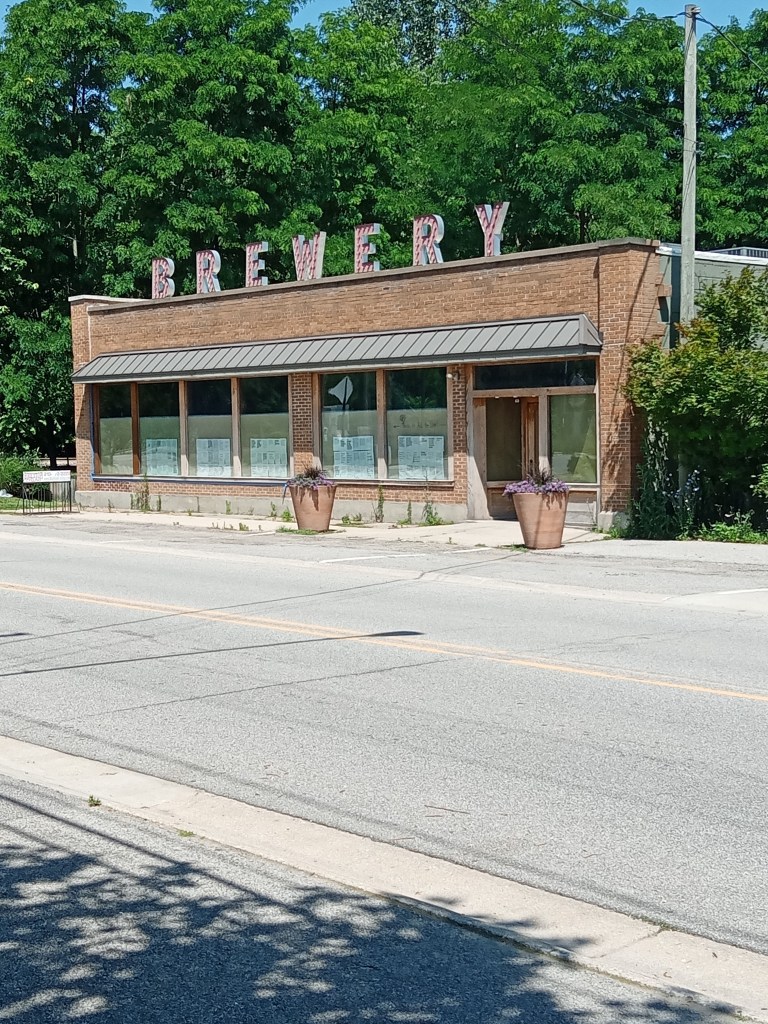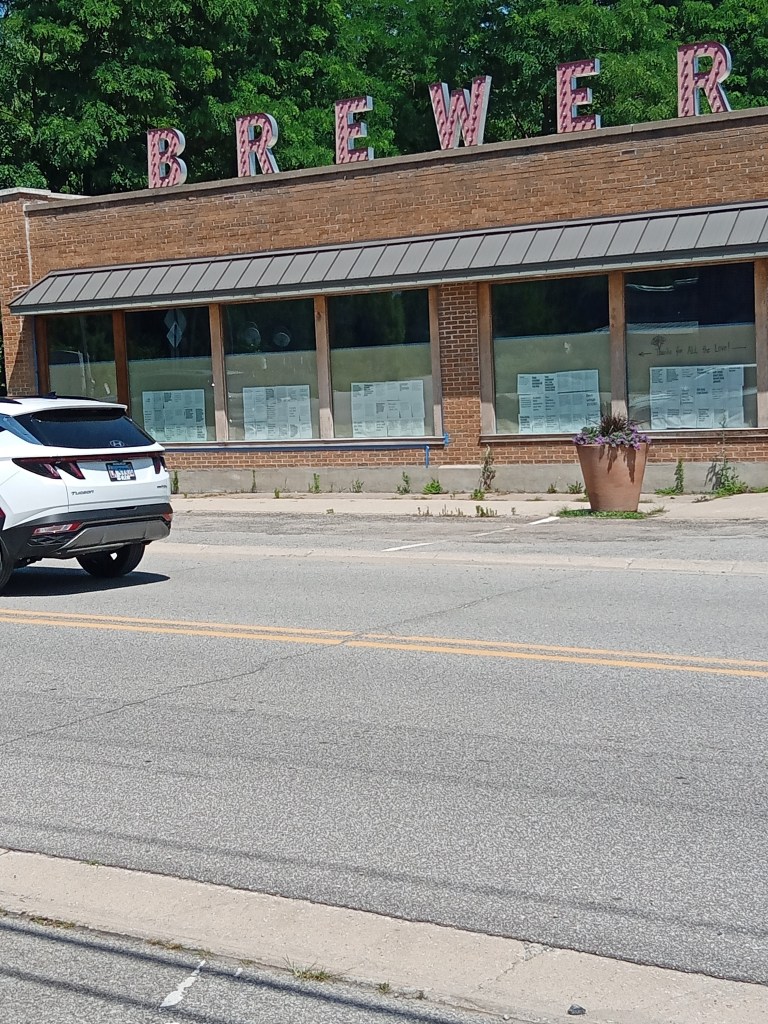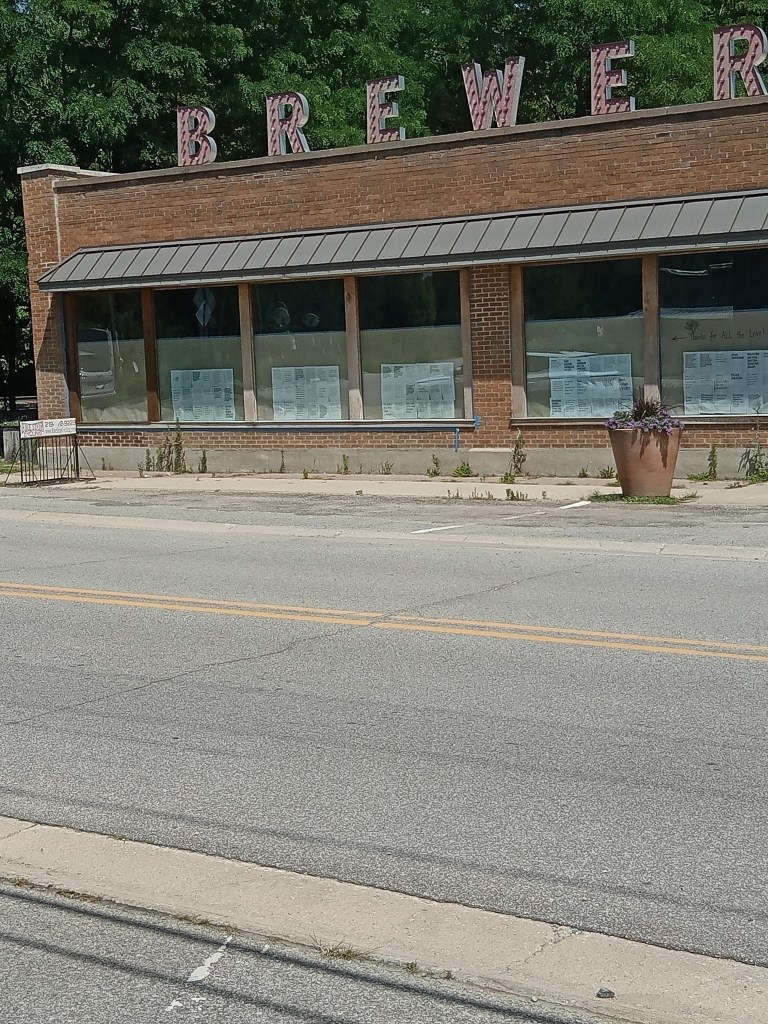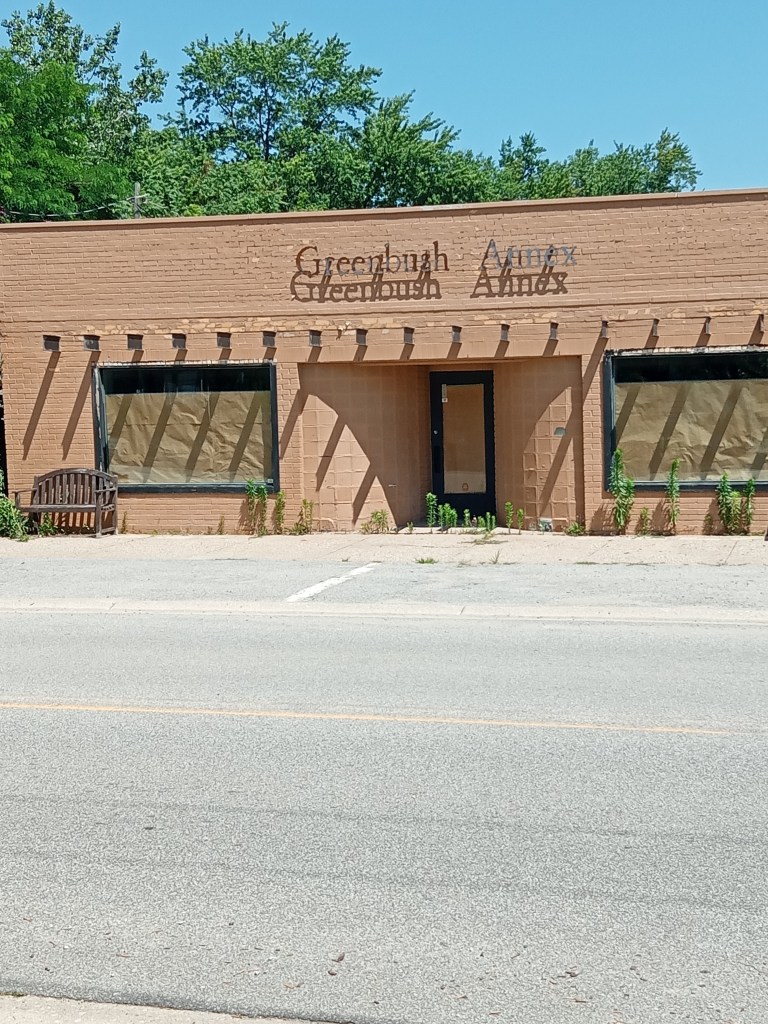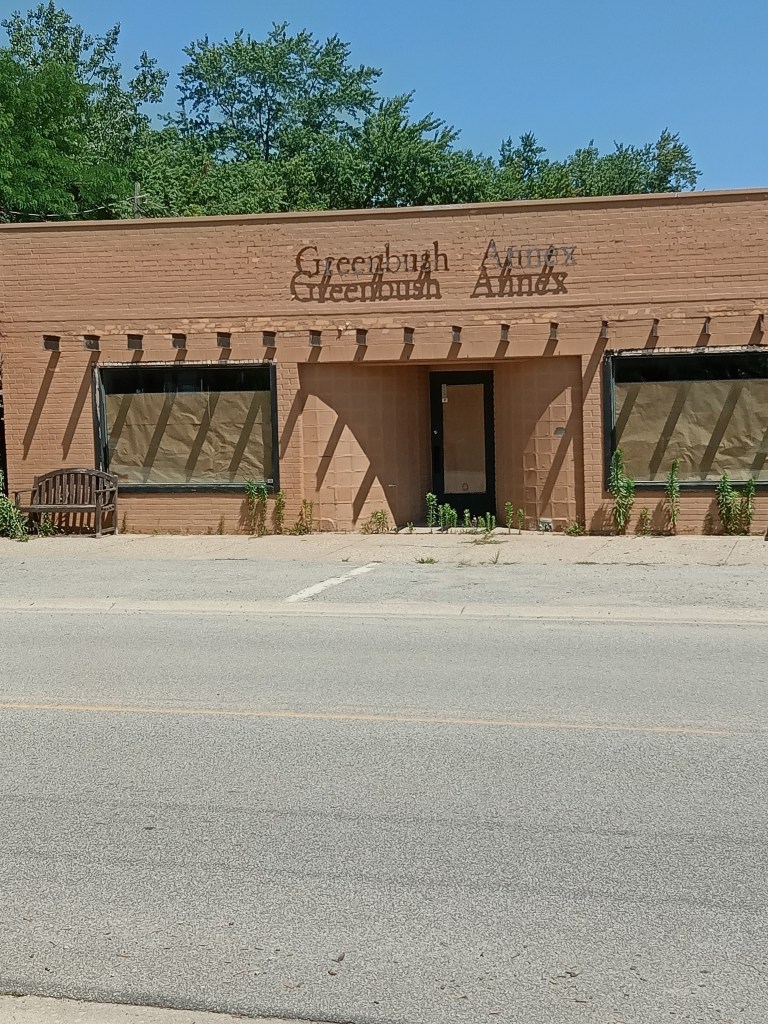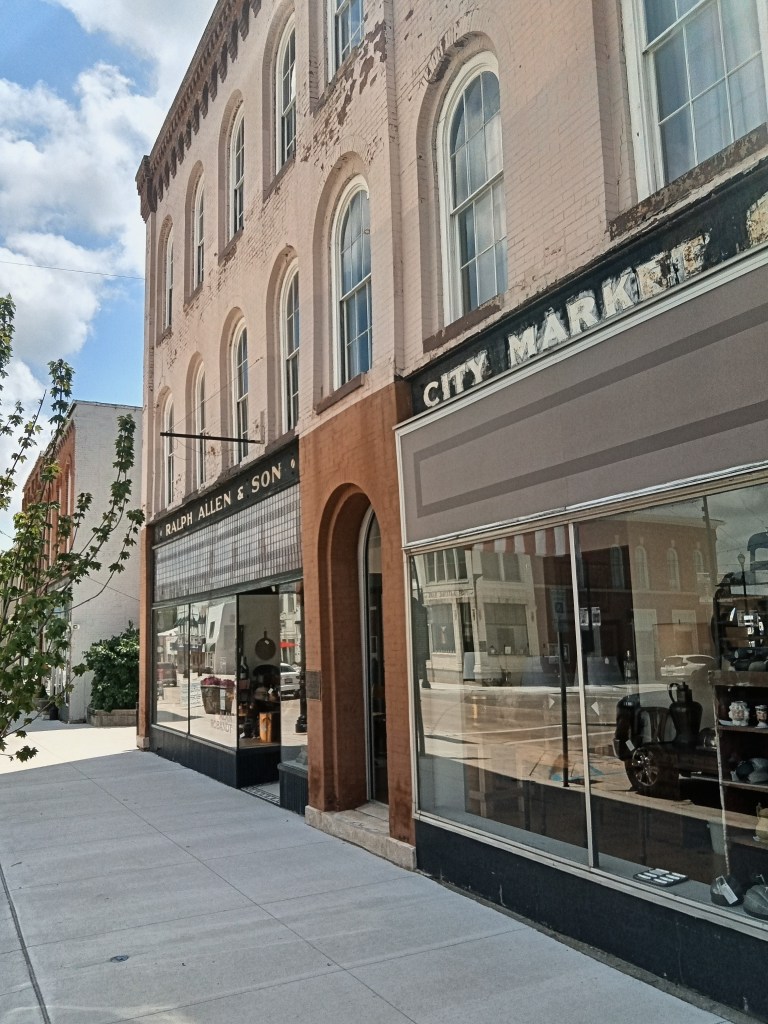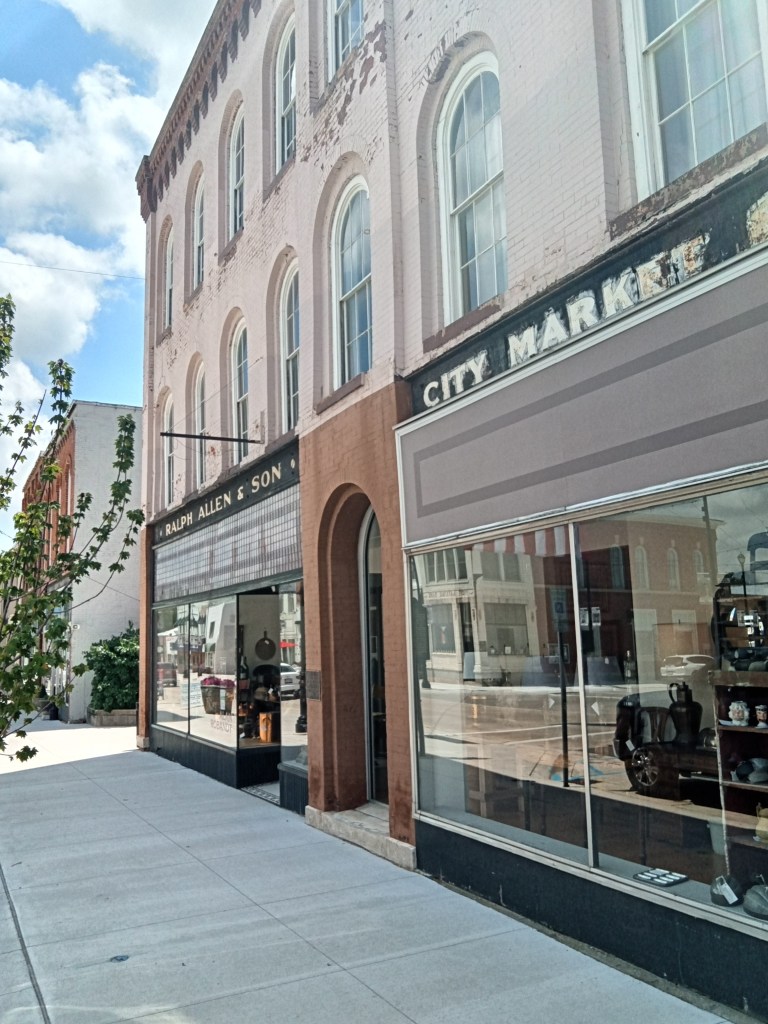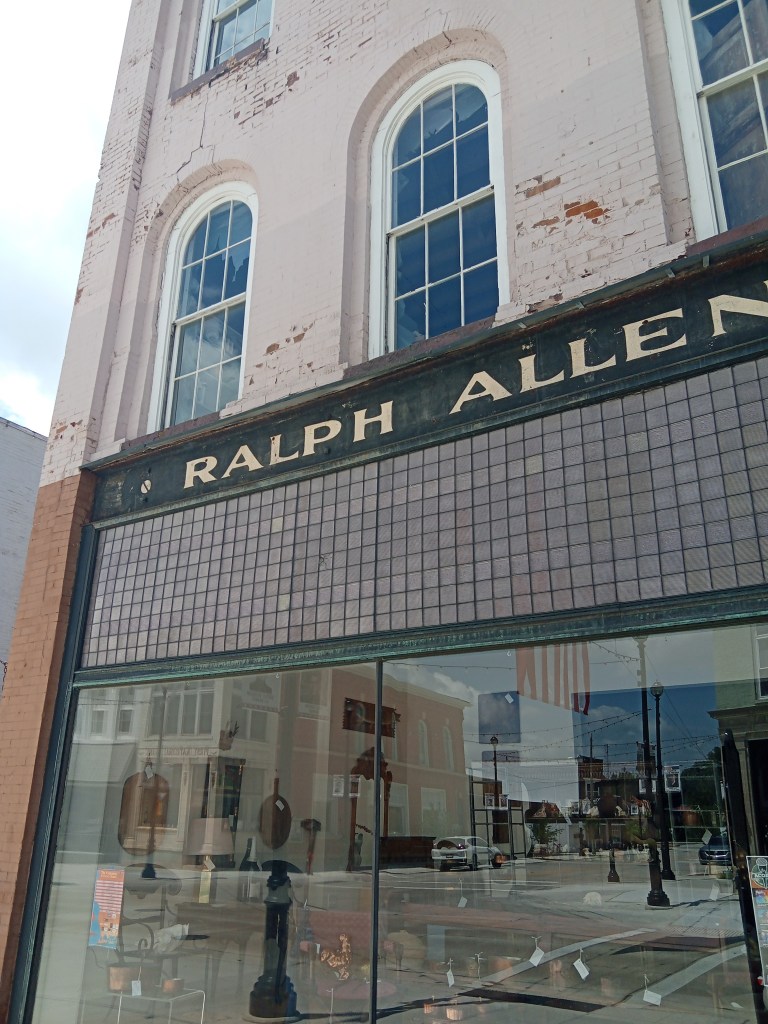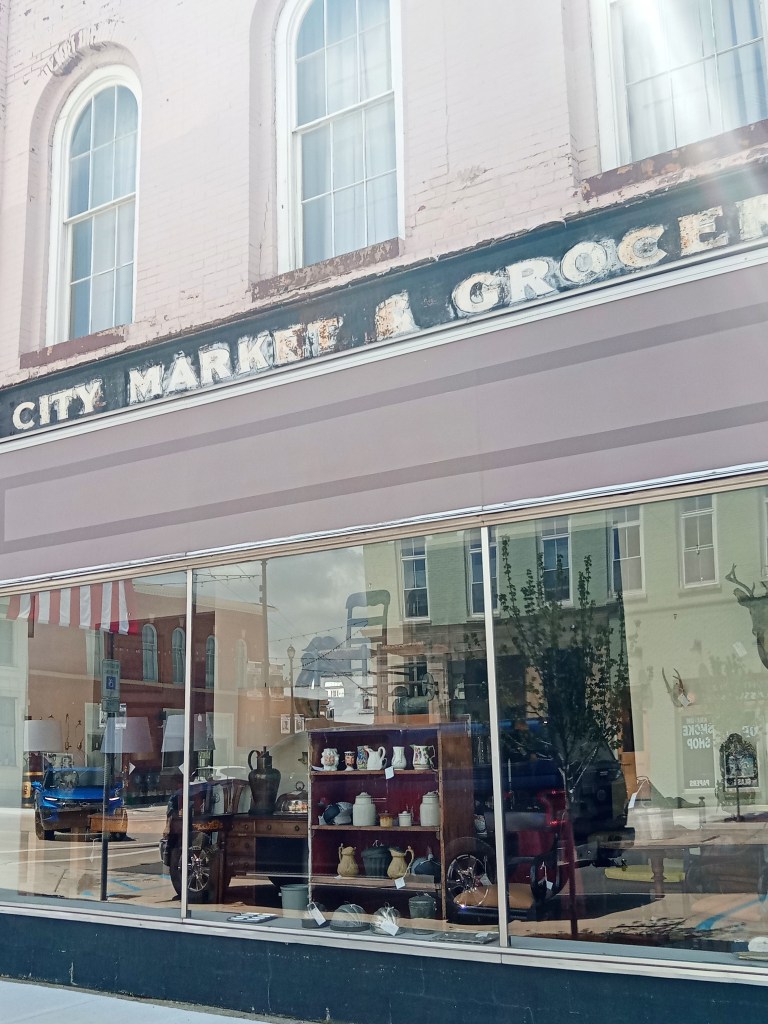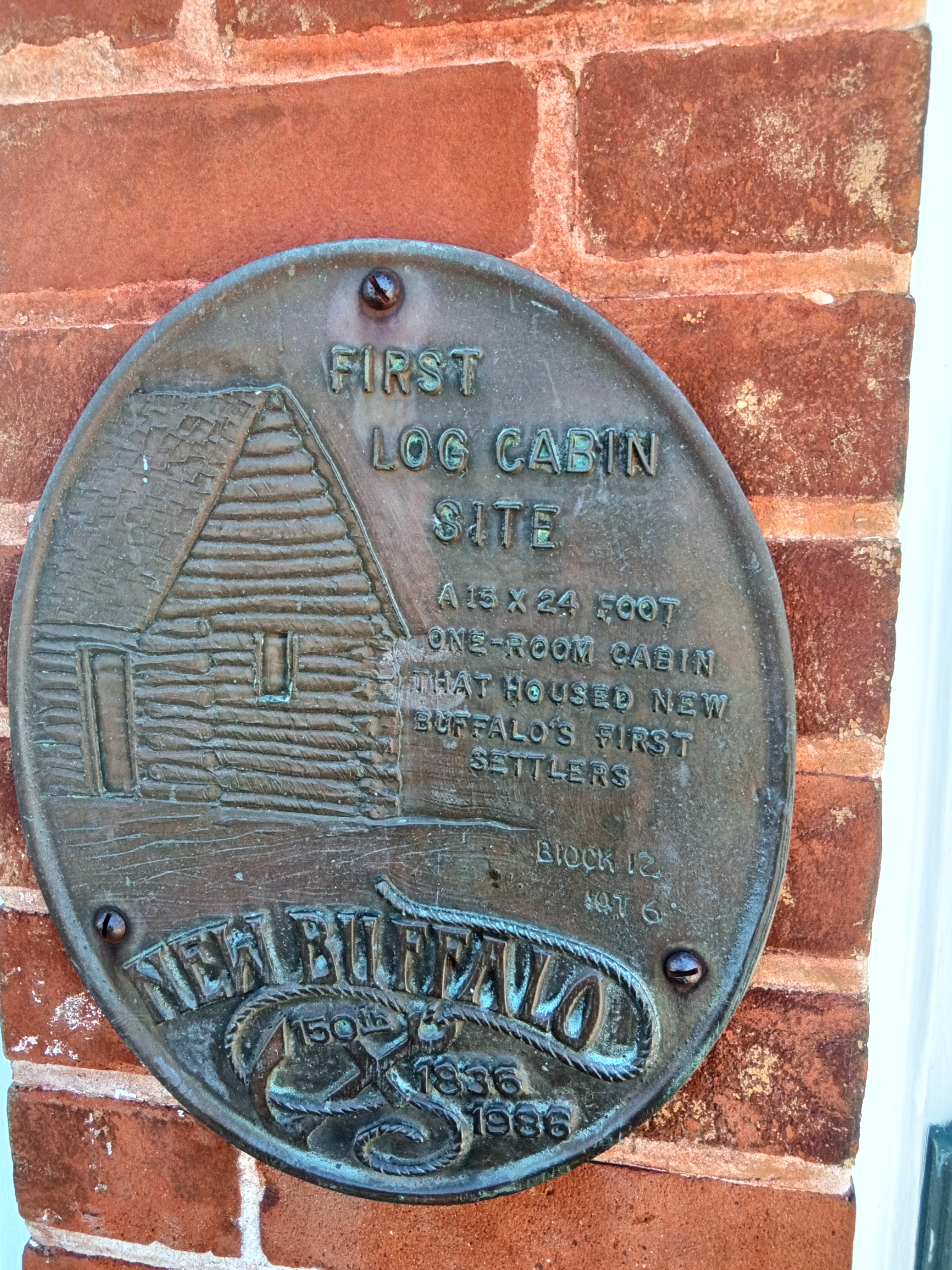
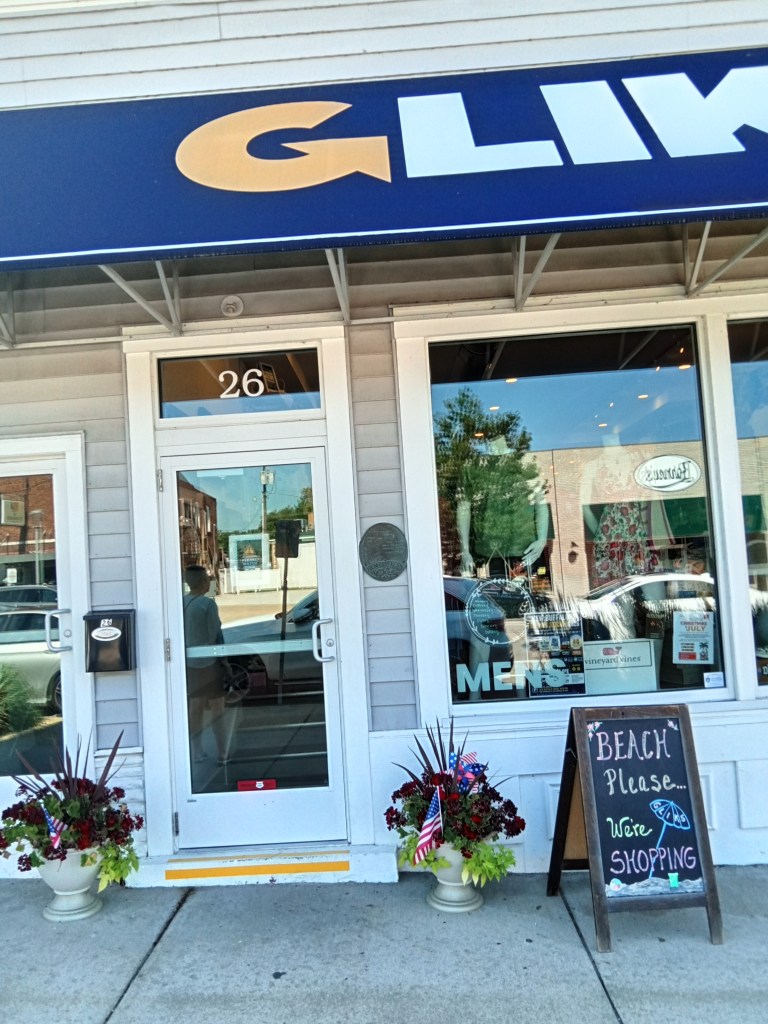
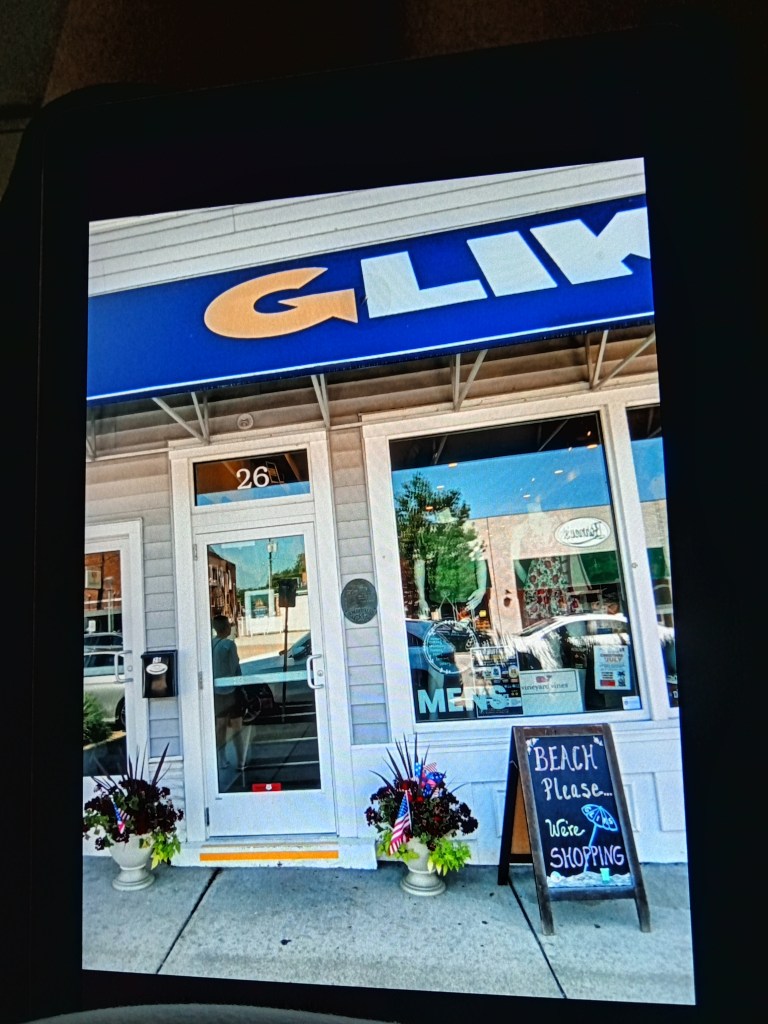
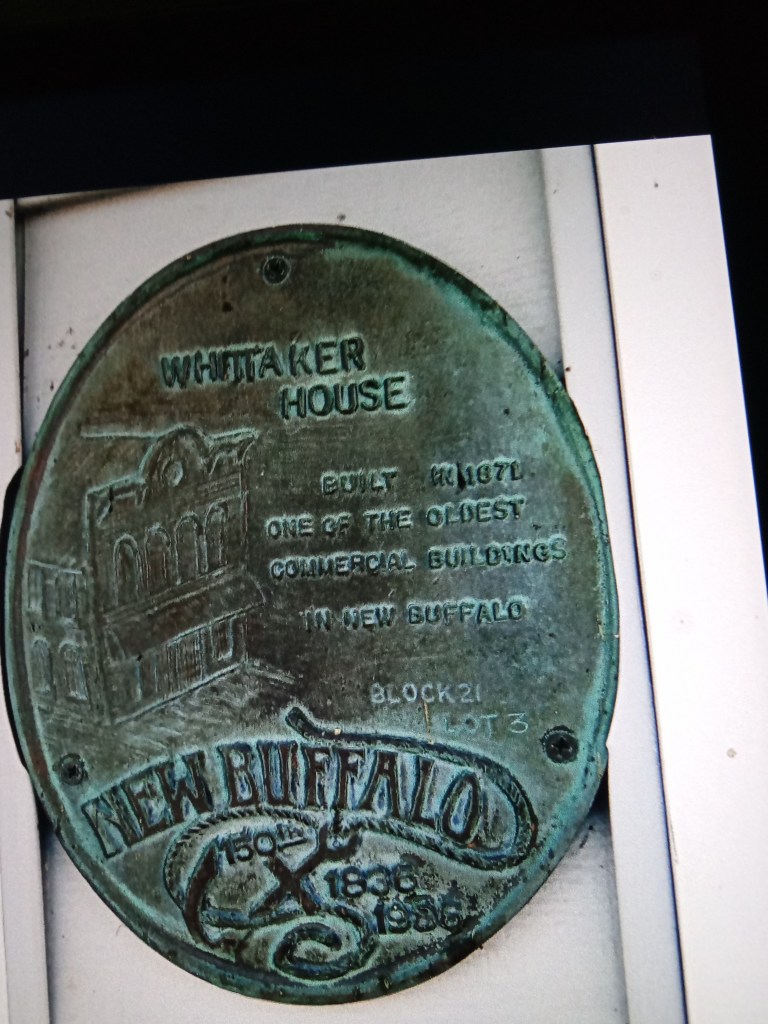
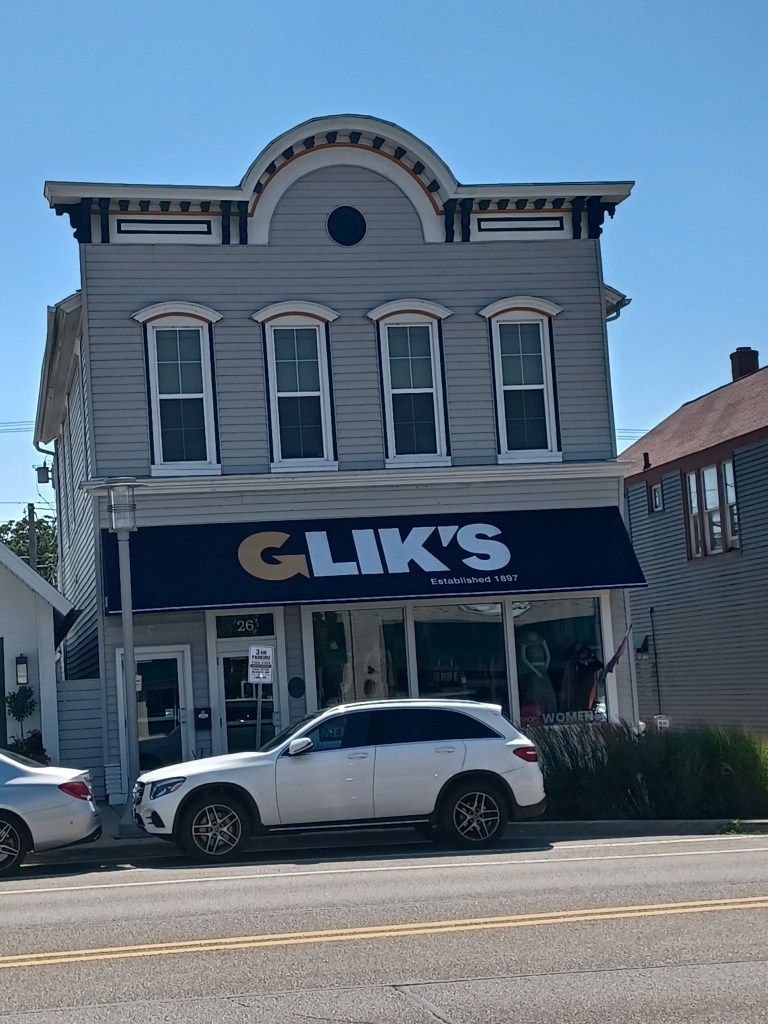
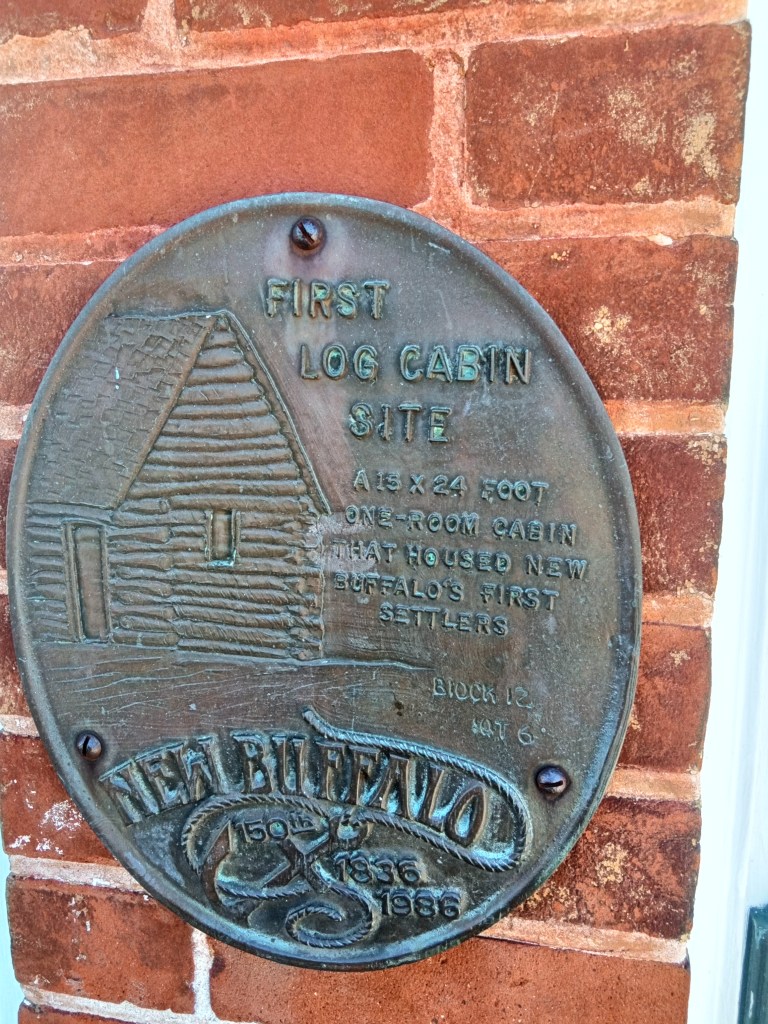
100 N. Whittaker New Buffalo Mi

This building is listed as commercial. It was built in 1855.. The lot that it sits on is 4536 square feet.. The first business at this site was the areas first hardware and supply store. From the 1993 to to 2023, the business was the Villager. This was a home decor and gift boutique. The building style was early 20th century commercial of Vernacular brick. Architectural Features Red brick masonry. It was built with locally sourced load bearing brick Segmental Arch Windows. The upper story windows feature slight brick arches on the top. Corner lot presence. Large front display window

Poppy Hill Antique 225 North Elm Street Three Oaks, MI

J.W. Spinning A novelty and dry good store at this location in the late 1800’s and the early 1900’s. In April of 1946 Clayton and Wilde

DeWaters purchased the business from Francis Goble and in the early 1950’s purchased the building. They soon expanded it to include the area behind the building to the immediate south. At the time the building was Chuck Convert’s Barber shop. The DeWaters family served Three Oaks with the prototypical dry good store appropriately named “the Dime Store” until 1979. Preteen kids always wondered if they kept the penny candy near the door so school kids could help themselves or it was a trap so Mr. DeWaters could call their parents when he caught them. Clayton served his fellow residents on the Village Council and later as Village President.

Kim Pruitt purchased the building in early 2004 and led the artist migration to Three Oaks with Art the Dawning. Colleen and Dan Altman purchased the building in 2008 and Martha Franklin operated Refund until the fall of 2015 when Poppy Hill Vintage opened their doors

New Buffalo Mi. Coaling Tower

.The New Buffalo Michigan Coaling Tower is located at 214 Washington Street New Buffalo, Michigan. It stands as a prominent physical monument to sw Michigan’s rich heritage as a massive 20th century rail hub. History and Operational Specfications It was built in 1942 by the Pere Marquette Railroad. It has a capacity of 250 tons of coal. Mechanics an electric bucket elevator hoisted coal up into a massive storage bin. Train firemen pulled levers to gravity feed coal into steam locomotive tender Tracks straddled. The coaling Tower was built directly over main track. The tower was capable simultaneously refueling 2 main line trains and servicing side tracks . Life span was 14 years. The rapid rise of diesel locomotives in the 1950’s made steam coaling facilities obsolete. This coaling tower is intact and standing physically straddling the tracks. The tracks are owned and operated by CSX

Pere Marquette Railroad Round House, New Buffalo, Mi

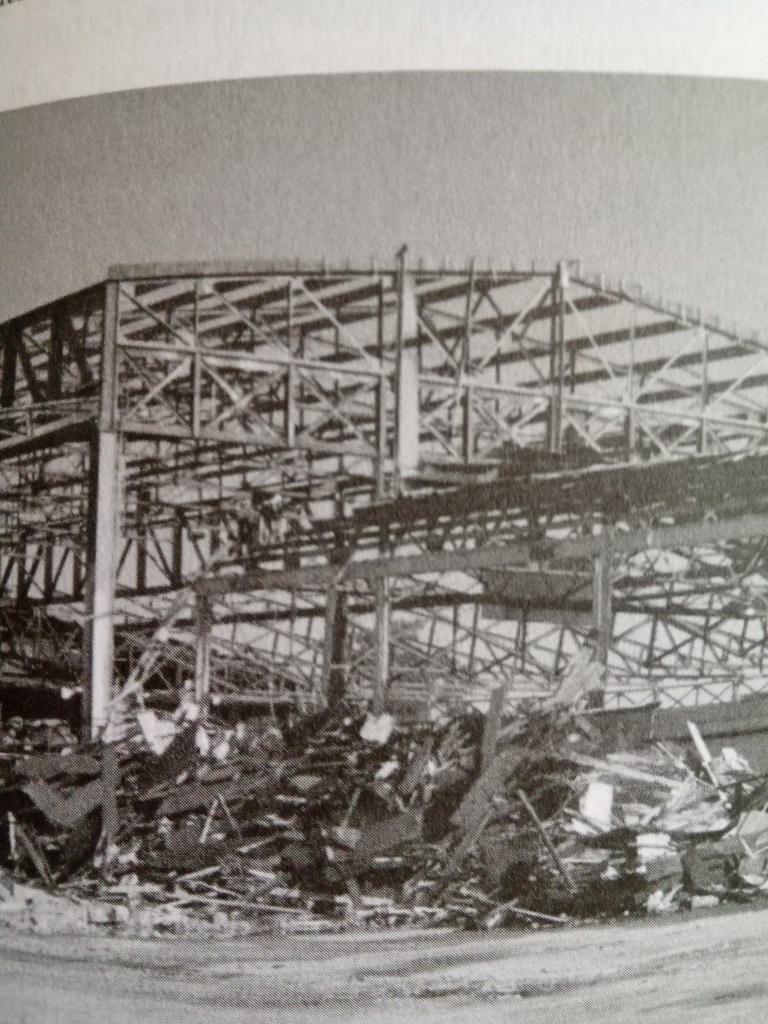
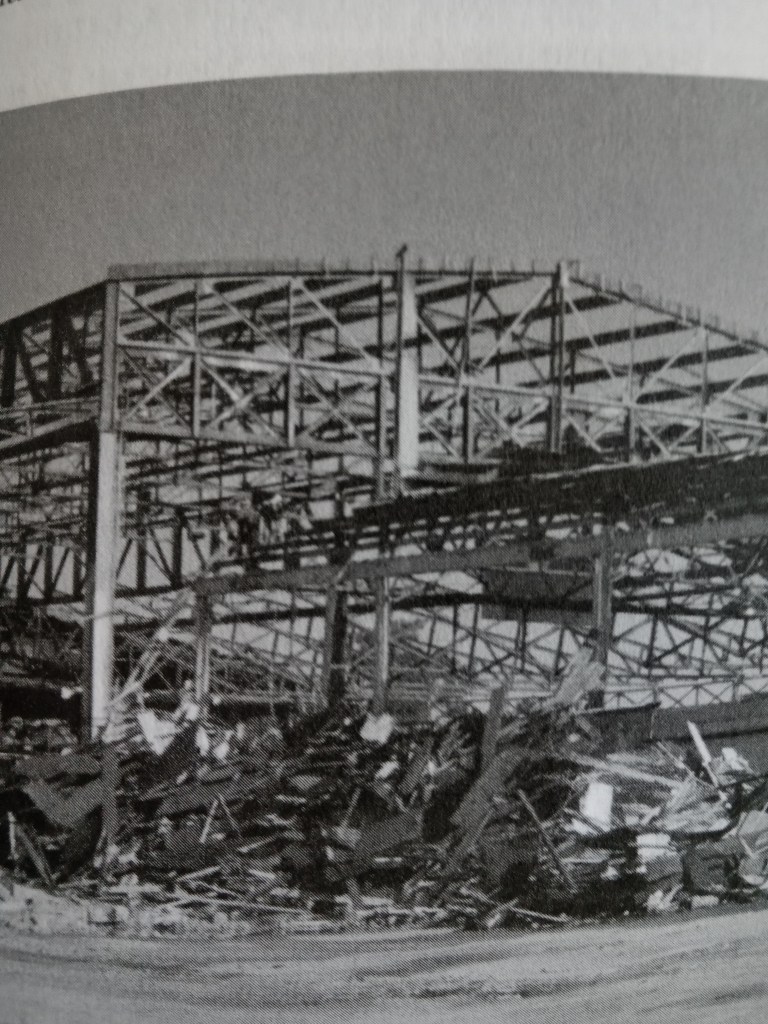
The deserted building next to the New Buffalo Railroad Museum is a roundhouse for the Pete Marquette Railroad. It was built between 1919 and 1920.. It was originally a 16 stall semi circular facility used to service, repair and turn steam locomotives.

The massive train yard in New Buffalo closed in 1947. The round house was abandoned in 1984. Today only 3 of the brick stalls survive. Briefly commercial businesses rented these.

The original turntable mechanism that spun train engines was relocated to a different site.

Lehmans Brewery and Farmhouse 204 Red Trail North, Buchanan, MI

Lehmans is an active tap room, winery, and restaurant in Buchanan, MI It is a historically designated 12,000 square feet facility that originally functioned as a core engineering ard testing laboratory for the Clark equipment Company.. In 2023, it was listed in the National Register of Historic Places

The building was designed for functionality. There were wide single pain glass windows on both sides to provide lighting for the workers.

Steve Lecklider purchased the building in 2016 to expand his his family’s farm business (Lehman as Orchard)

3 Oaks Public Library 3 N. Elm 3 Oaks, MI

The Historic E.K. Warren building was originally in 1905 as the headquarters of of the E.K. Warren

Featherbone Company from 1905 to 1926. The building style was Romanesque Reviva. The architect was George Maher.

Features of the building

Arched Entrances

Heavy round arch doorways

Coarsely finished contrasting stone blocks

Massive structures

Thick looking walls give the builder a permanent feel

Towers and turrets frame the main facade

Prominent conical

l

Starbucks Coffee building is located at 116 North Whittaker New Buffalo, MI

This building was constructed in 1935. It is a 2 story commercial property. Early Commercial History 1940’s to 196o’s A and P grocery moved in the building in 1941 It served as the town grocery hub until 1946 when it closed. Northlland Hardware Store.in Januaery, 1946. Lewis Siegel bought the property. By November, 1946, he operated the hardware with his partner Atkinson. Siegel sold the business in 1952. The business continued operating until the 1960’s!

Mural on wall of Starbucks

Zinc Collar Pad Company 304 Oak Street, Buchanan, Michigan

This was a notable 19th Century manufacturing business formed in 1870 to produce an innovative zinc lined pads for horse harnesses that prevents neck and shoulder chaffing. History and Invention The Invention. Dexter Curtis invented the zinc lined horse collar pad in 1870 to solve the common issue of draft hose neck and shoulder chaffing. Early Partnership Curtis teamed up with George Richards and Henry Gilman to form the firm Curtis, Gilman, and Richards to release the the first popular horse pad Company Growth The firm was renamed the Zinc Collar Pad Company in 1871. The booming business used over 400,000 pound of zinc in 2 years. The original factory burned down in 1874. The partners rebuilt the brick structure at the South Oak Street location. It was built as a 2 story red brick structure. The 1875 Zinc Collar Pad Company never experienced a permanent closure of its physical doors all at one.,but rather transitioned through distinct stages of industrial relocation, residential use, and ultimate vacancy. Timeline of Buildings Transitions 1913 (Factory Relocation) The Zinc Collar Pad Company outgrew the Oak Street facility and moved its operations to a larger on Main Street. ( The company itself went defunct by 1927 due to declining post World War Ireland for horse collars) 1914 to late 1990s (Apartment conversions). After the factory relocated, the building was sold to local business partners who converted the building into 4 residential apartments. It served as an apartment building for 80 years. 1998 (Final Vacancy). The building officially became vacant around 1998. It has empty ever since

Pears Mill 115 S. Oak Street Buchanan, Michigan

This mill was built between 1857 and 1858. It is a wood framed structure. It is the only surviving mill of the thirteen water powered mills that operated on McCoy Creek. Pears Mill was originally built and used as a water powered flour mill to grind wheat and grain for local farmers. It was in continuous commercial operation for 126 years running from its construction in 1857 until it closed in 1983. Over its active life it passed through several individual owners, business partnerships, and agriculture cooperatives. The early pioneers (1857–1864) William Beach owned the initial plot of land where construction started William Haunting built the mil!. He operated it during its most profitable early years turning it into the largest industry in Beaten County by 1860 Ross, Pears and Clark. Beach sold the Mill to this investment trio in 1863. The namesake era (1864-1933) Rough and Pears in 1864 purchased the mill Rough Brothers an L.P. Fox taken over by David’s brothers in partnership with local operator L.P. Fox Woomer and House/J.M. Sheldon The Mill went through minor transitional owners and experienced a six year shut down due to an estate and title dispute. Pears-East Grain Company The Pears family legacy line  acquired corporate interest in the mill running it up until the Great Depression