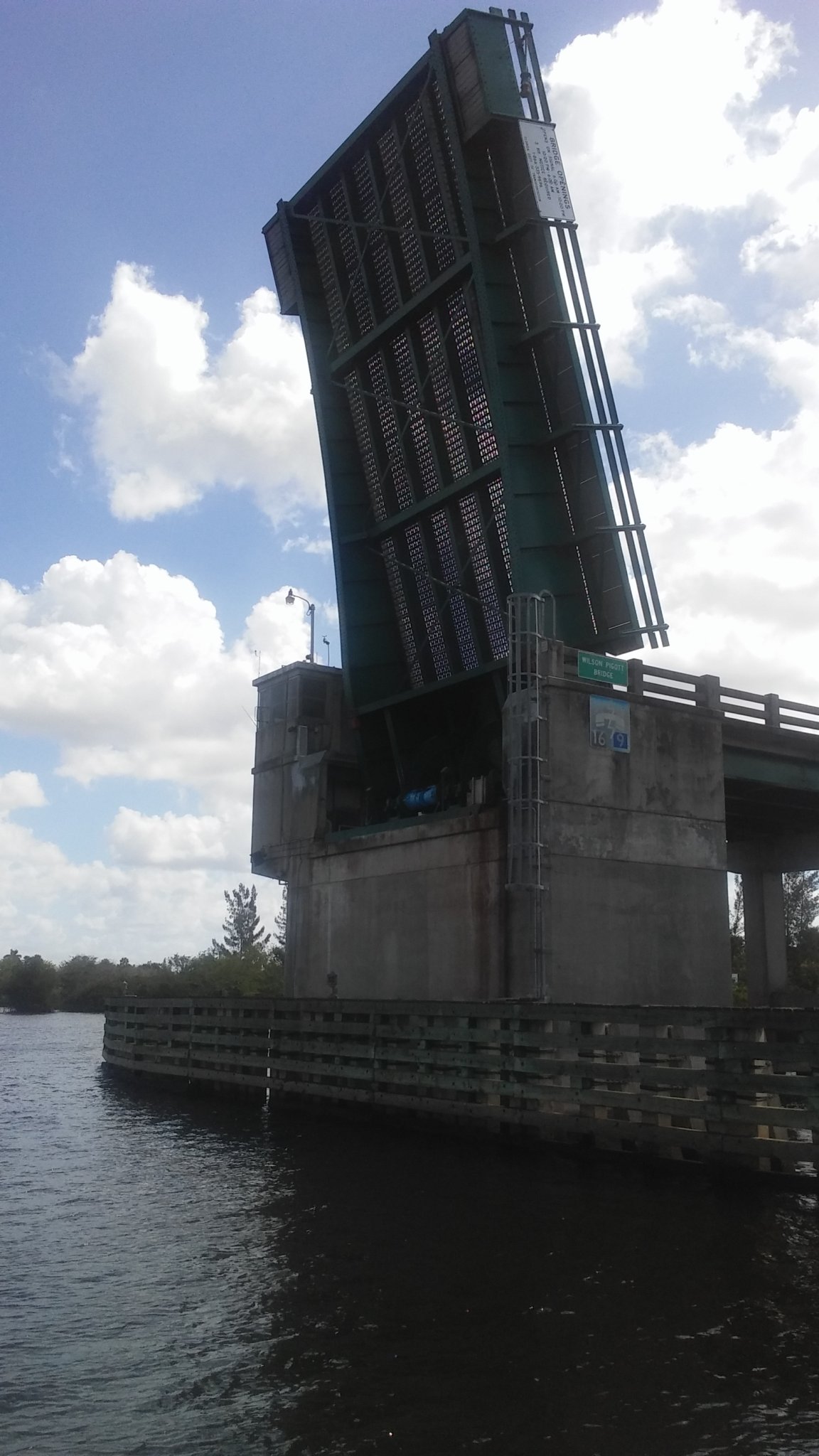
Bascule Bridge

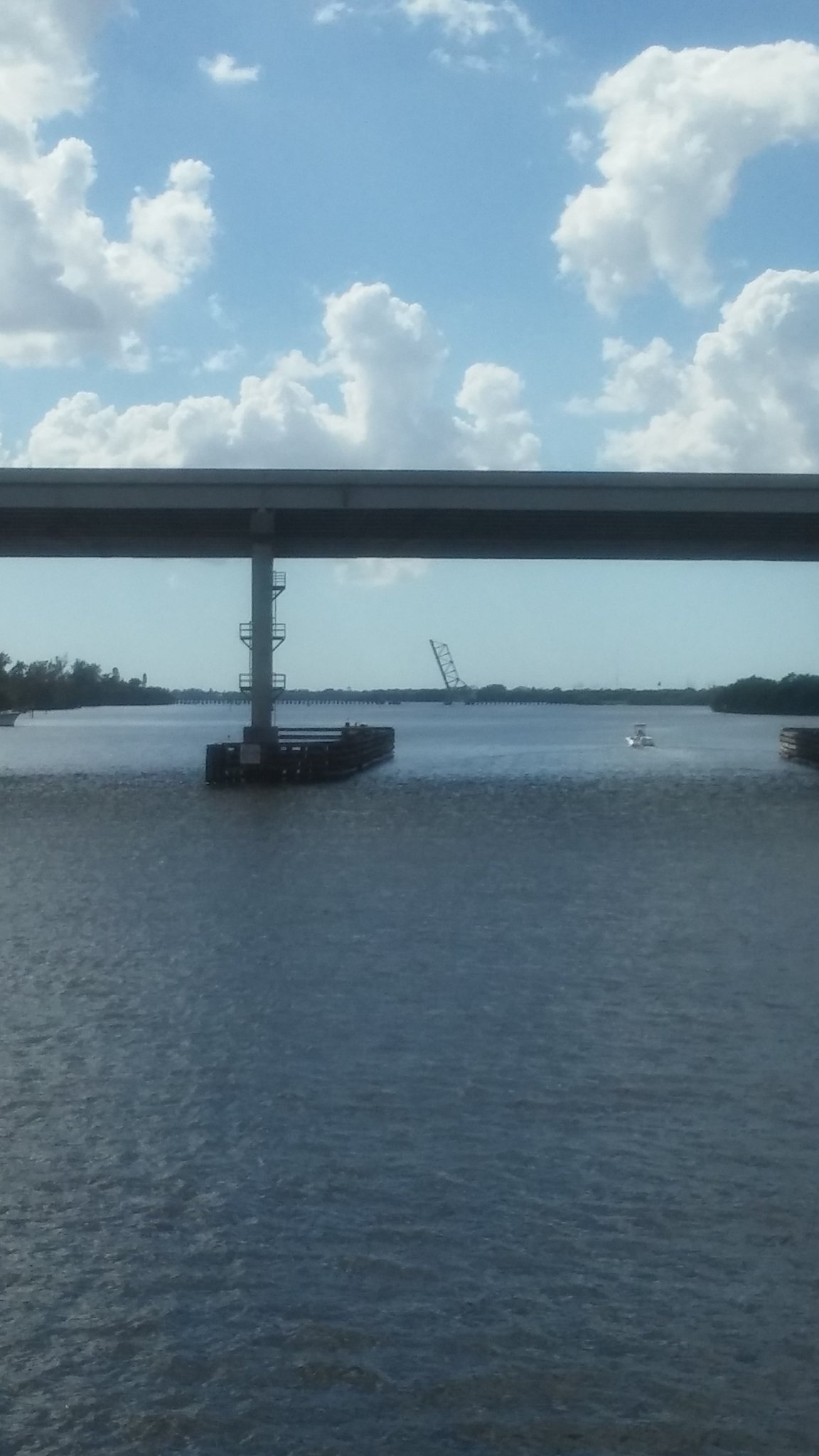
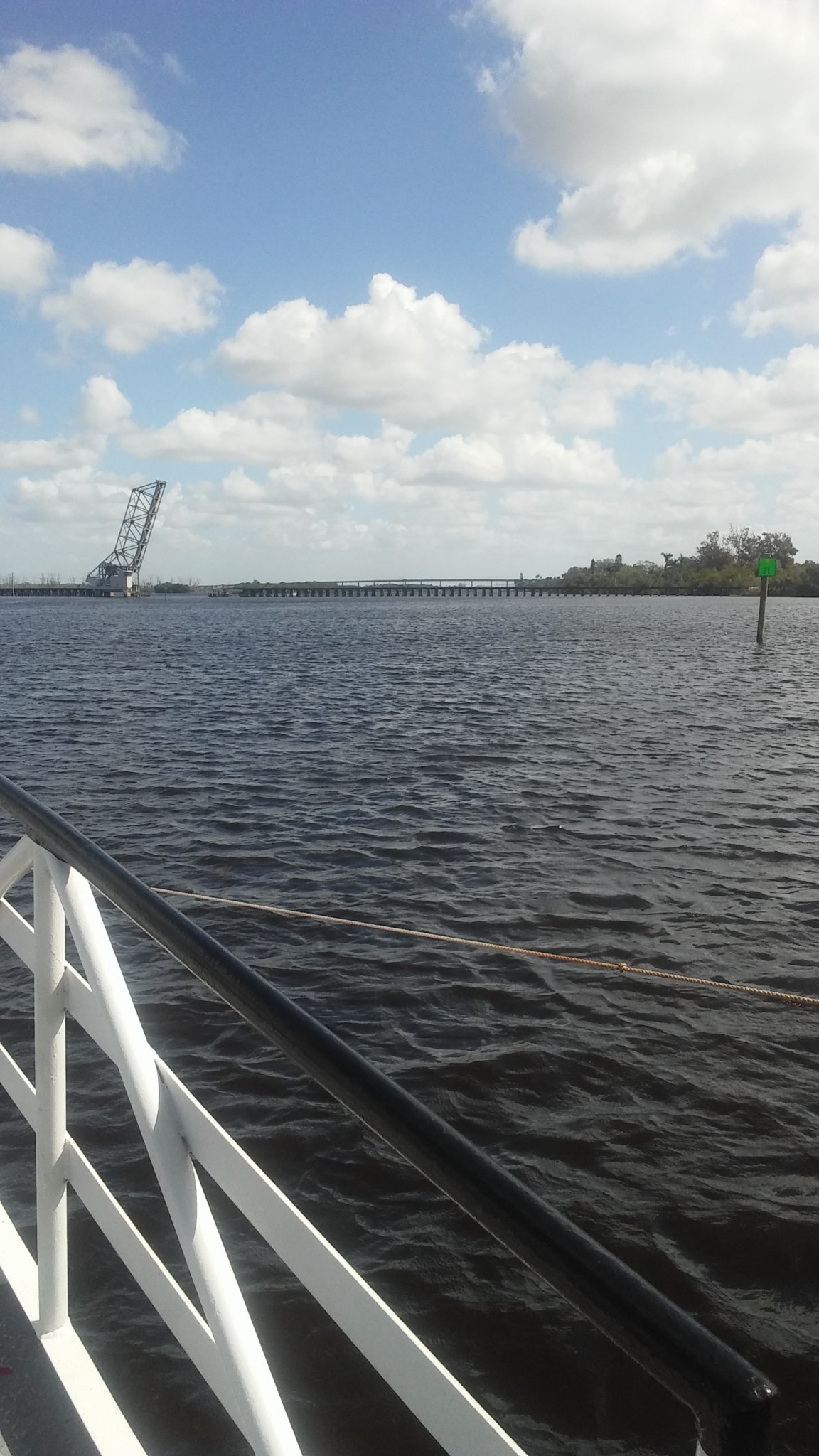
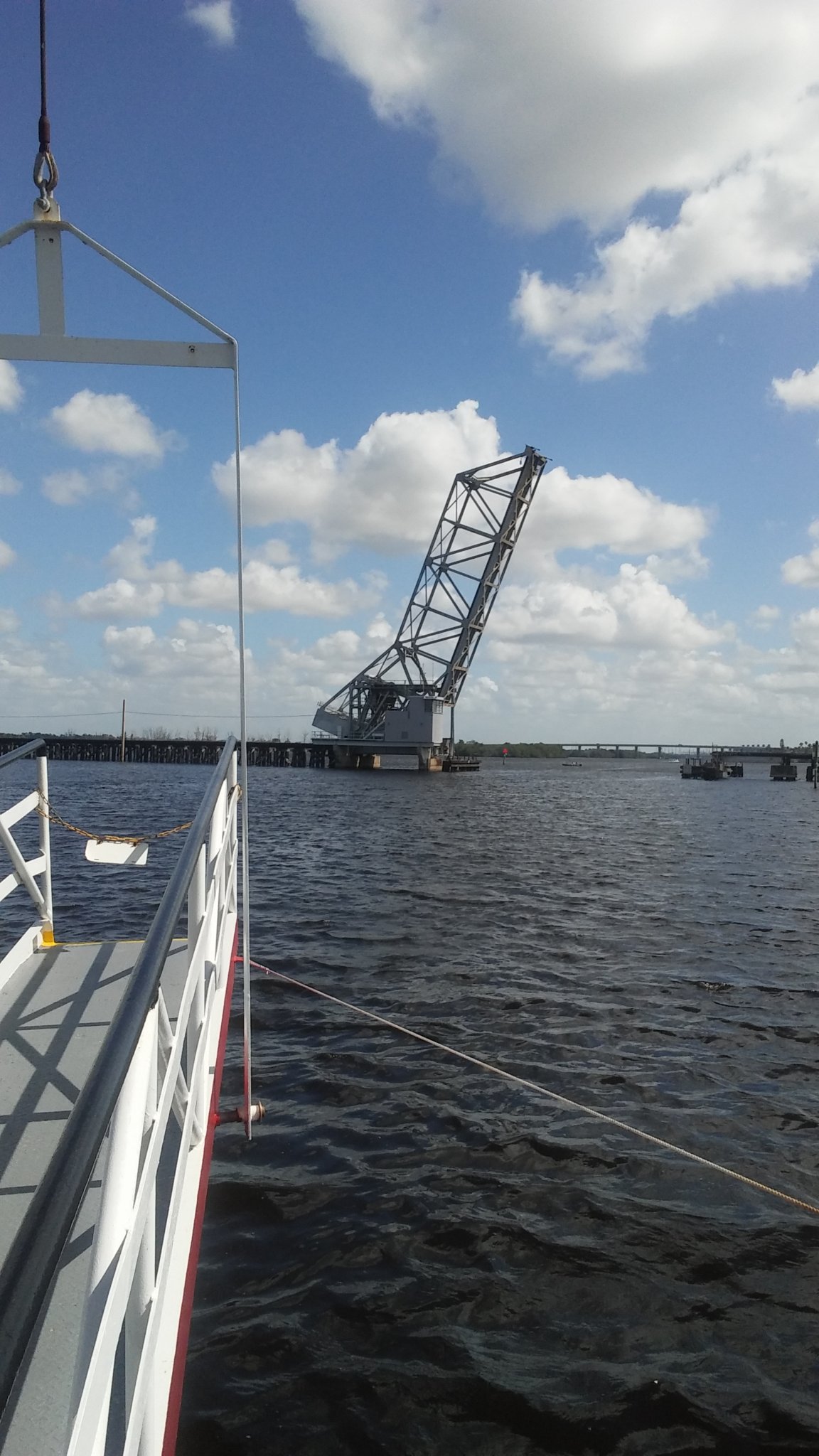
Along the Chicago River, the Calumet River, and the Sanitary and Ship Canal.  There are many examples of the so called bascule bridge.  The word bascule is derived from the French name for a balance scale.

These bridges are a type of draw bridge with a counterweight that balances a span throughout its upper course.  There are multiple types but they all share common features.  They have either one or two spans or leafs.  They have counter weights.  On the single leaf bascule these are above the bridge.  On the double leaf bascule bridges the counter weights are located beneath the bridge on the bank of the river.

There are three types:

The rarest in the Rall type.  It combines rolling lift with longitudinal motion on trunnions during opening.  It was developed and patented by Theodore Rall in 1901.  There are no examples in the Chicago area.

Rolling lift trunnion.   It raises the span by rolling on a track resembling a rocking chair. Scherzer rolling lift was a refinement developed and patented by William Scherzer in 1893.  The eight track bascule bridge on the Sanitary Ship Canal uses this type on some of its spans.

DSC_1753

Eight track bascule bridge

Another  type of bascule bridge is a fixed-trunnion.  It rotates around a large axle that raises the span.    This is also known as the Chicago type. This was developed by the Chicago Bridge Department.    The trunnions of these bridges are on the river bank.  These bridges uses two leaves to cross the river.   These bridge also use counterweights.

DSC_1821

Chicago style bascule bridge

DSC_1822

Same as above

DSC_1838

Chicago style bascule bridge

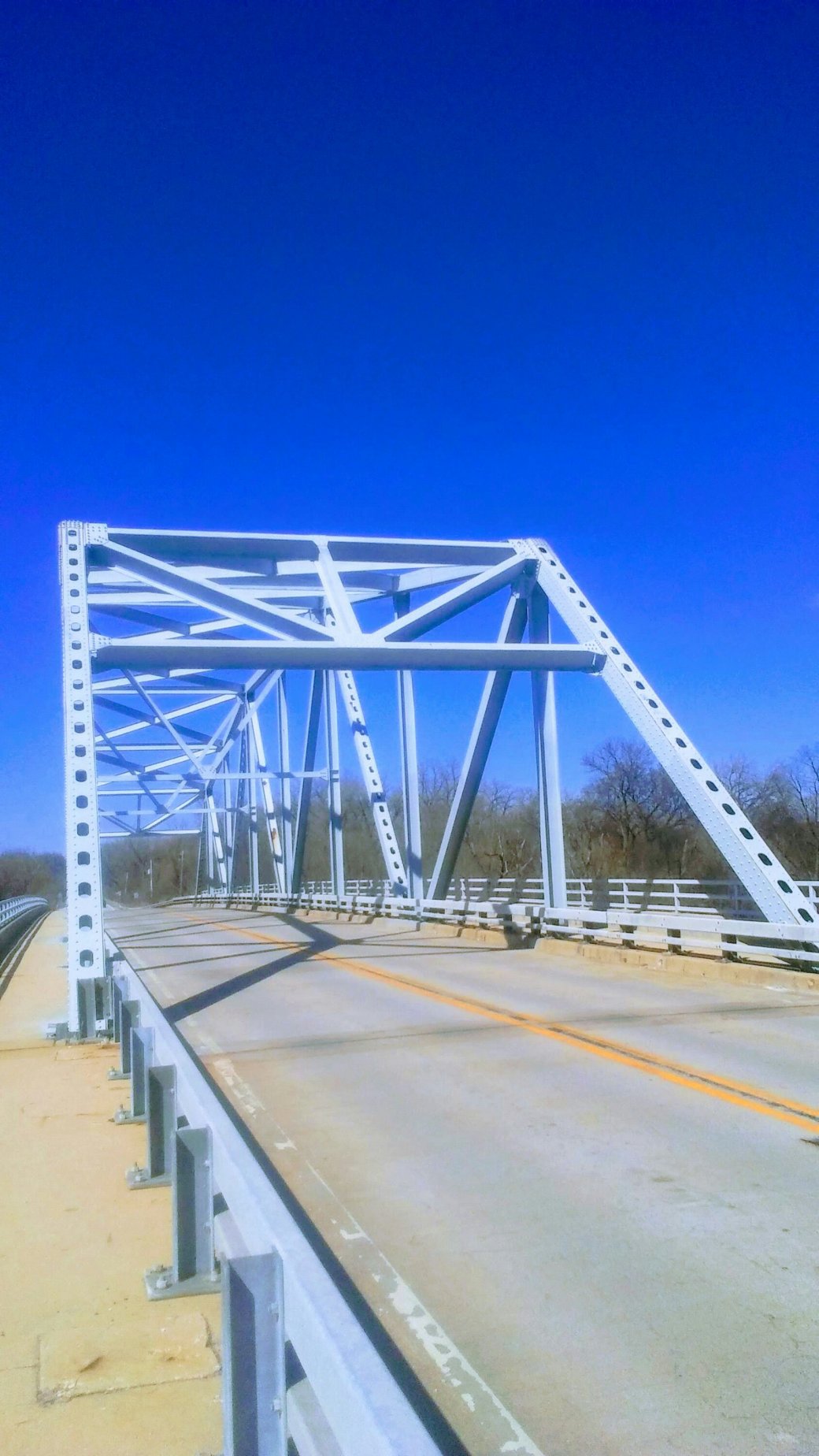
Another rare type bridge is a Page bascule bridge.  There were  only 4 of these type bridges.   There is one in the Chicago area.  It is a single leaf Warren truss.  It was designed by William  Hughes.   The gearing and motors are supported on longitudingal girders.  The counter weights are cast iron blocks attaches to steel plates on the approach structures.   This bridge design was patented by Page and Schable.

DSC_1865

Page type bascule bridge over the South Branch of the Chicago River

Diversey Parkway Bridge over North Branch of the Chicago River

DSC_1964

Diversey Parkway Bridge over north branch Chicago River

Posted 12/31/2017

There have been two bridges over the North Branch Chicago at Diversey Parkway (2150 West; 2800 North). The current bridge runs east-west 6 miles from the river mouth. It is a steel and concrete bridge. It opened in 1968. It was designed by Division of Bridges and Viaducts City of Chicago. It was built by J.M. Corbett Company. Construction costs were $1,654,712.

The first bridge opened September 11, 1896. It was 184 feet long and 35 feet wide. It was a steel hand operated swing bridge. It was a Pratt through truss. Designer was unknown. Superstructure Contractor was Lassing Bridge and Iron Company. Substructure Contractor was Lydon and Drews Company. Cost was $31,345.

In 1909, bridge house was moved from North East to South West Corner due to a fire in 1921.

In September, 1929, roadway was renovated.

In 1928, crash with a steamer caused extensive damage

In 1963, there were extensive renovation costing $150,000.

Bridge was removed in February, 1967.

DSC_1965

View from the Diversey Parkway Bridge

DSC_1967

Diversey ParkwayBridge over north branch Chicago River

Diversey Parkway Bridge over north branch Chicago. River

Diversey Parkway Bridge over north branch Chicago River.

View from Diversey Parkway Bridge over north branch Chicago River

View from Diversey Parkway Bridge over north branch

North Avenue Bridge over the north branch of the Chicago River.

Revised and expanded on 1/5/2018

This is the first hybrid suspension/cable-stay bridge in the Chicago area. It is a replacement of a bascule bridge built in 1907. The bridge ( 1150 West; 11600 North) runs east to west crossing the North Branch Chicago River 3.9 miles from the river mouth. This is the fifth bridge at this site. The northern half of the bridge opened in January, 2008; southern half opened in May,2008. There are two lanes of traffic in each direction.

Contractors are:

Design: City of Chicago and architect Muller and Muller, Ltd.

Construction: McHugh

Cost $21.4 million

DSC_1969

North Avenue Bridge over the North Branch of the Chicago River

DSC_1970

View from North Avenue Bridge of the North Branch of the Chicago River looking north

DSC_1971

North Avenue Bridge

DSC_1972

Same as above

DSC_1974

View of North Branch of the Chicago River from the North Avenue Bridge Looking North

DSC_2044

North Avenue Bridge Plaque

DSC_2043

Bridge Plaque

DSC_2042

North Avenue Bridge

DSC_2040

Goose Island

DSC_2039

View from the North Avenue Bridge

DSC_2034

View from the North Avenue Bridge

DSC_2033

Same as above

DSC_2030

North Avenue Bridge

DSC_2029

North Avenue Bridge

DSC_1975.JPG

Railroad Bridge on the south side

Railroad Bridge on the south side of North Avenue Bridge

The structure measures 420 feet from anchor block to anchor block. It consists of three segments. There is one main span measuring 252 feet and two 84 feet a approach spans. There are two traffic lanes in both directions. There is a complex system of supporting cables. There are impressive 67 foot pylons. These each weigh 97,000 pounds.

In the 1850’s, residents around North Avenue lobbied for a bridge across the North Branch Chicago River. They raised $1000 for the project. They promised to pay for maintenance for 2 years. The bridge opened in 1858. It was a wood hand operated pontoon swing bridge.

Contractors:

Designers: unknown.

Construction: Department of Public Works City of Chicago

Construction Costs were $3000.

The bridge failed in the winter of 1864–5

The second bridge at North Avenue was a 145 foot long and 19 foot wide all wood hand operated swing bridge. It opened in 1866.

Contractors:

Designers: Unknown

Construction: Newton Chapinn

Costs $2700.

It was removed In 1877.

The third bridge at this site was a wood and iron swing hand operated bridge. It opened in 1877. It was 150 foot long by 29 foot wide.

Contractors were:

Design: Unknown

Construction: Conro and Carkin Company

Costs were $7,149.

Removed in 1906.

The fourth bridge at this site opened on September 21, 1907. It was a Chicago style bascule bridge. It was electric powered and made of steel. There were fixed steel girder approaches. There were three 115 foot riveted steel trusses. The bridge was 260 feet in length. It was 42 feet wide. There were two lanes of street traffic.

Contractors were:

Designers: Thomas G. Pihlfeldt and Alexander von Babo.

Superstructure contractor: Roemheld and Gallery

Substructure contractor: Jackson and Corbett

Costs were $196,964

Closed on 2006.

Damen Avenue Traffic Bridge over the North Branch Chicago River

    Blog revised and expanded on 1/2/2018.

    The  current North Damen Avenue  Bridge  (2560 North; 2000 West) runs North South over the North Branch of the Chicago River 5.6 miles from the river mouth.   It is the second bridge at this location.  It opened in 1999.It is a fixed arch suspension bridge.  There are twin arches.

Damen Avenue Bridge

 Total length is 313 feet.  Not surprisingly, an inspection from 2011 found the deck condition, superstructure condition, and sub structure condition all to be very good.

     The bridge was designed by Muller + Muller, Limited.

     Engineer was J. Muller International.

     Engineering Support was provided by Transystems.

     Construction was by Walsh Construction.

     Cost was $12.8 million.

Damen Avenue Bridge

     The first bridge at this site was a single leaf bascule Chicago style bridge. It had a Pratt truss superstructure. It had 44 feet wide roadway.  It had 9 feet wide sidewalks.  There were two ramped approaches.   There were two octagonal bridge houses in the Beaux Arts style.  It opened on January 24, 1929. 

     It was designed by the Division of Bridges and Viaducts City of Chicago.

    Bridge was constructed by Great Lakes Dredge and Dock Company.  Construction costs were $1.65 million.  Bridge was removed January, 1998.
     

Damen Avenue Bridge

Damen Avenue Bridge

DSC_2046

Damen Avenue Bridge over the North Branch Chicago River

DSC_2047

Same as above

DSC_2052

Coned down view of the bridge

DSC_2050

South view from the Damen Avenue Bridge

DSC_2048

View from the Damen Avenue Bridge

South Harlem Avenue Bridge over the Sanitary and Ship Canal

     The south Harlem Avenue Bridge is a pair of bascule bridges over the Sanitary and Ship Canal located in Chicago between the Stevenson Expressway Bridge and the Santa Fe Railroad Bridge over the Sanitary and Ship Canal. The northbound span was built in 1931; southbound in 1966.  The spans appear similar.  The main differences are the lack of V lacing on the built up beams of the newer structure and the oval cut outs on the newer structure.

     The bridge design is unique in that it is a Warren deck truss.  Total length is 456 feet.  Roadway width is 56 feet.  Bridge is open but it is fixed.    Inspection as of 7/2012.  Deck Condition 6 out of 9 Satisfactory; Superstructure Condition 5 out of 9 Fair; Sub structure Condition 6 out of 9 Satisfactory.

Sanitary and Ship Canal from Harlem Avenue Bridge

Sanitary and Ship Canal from Western Ave Bridge. Santa Fe RR Bridge in the distance

Same

Same Santa Fe Bridge is well seen

Harlem Avenue Bridge northbound span

Harlem Avenue Bridge northbound span

Same as above

Same as above

Northbound span

Same as above
Bridge Plaque South bound span


Southbound Span


South bound Span


View of Sanitary and Ship Canal from southbound Harlem Avenue


Same as above


Same as above
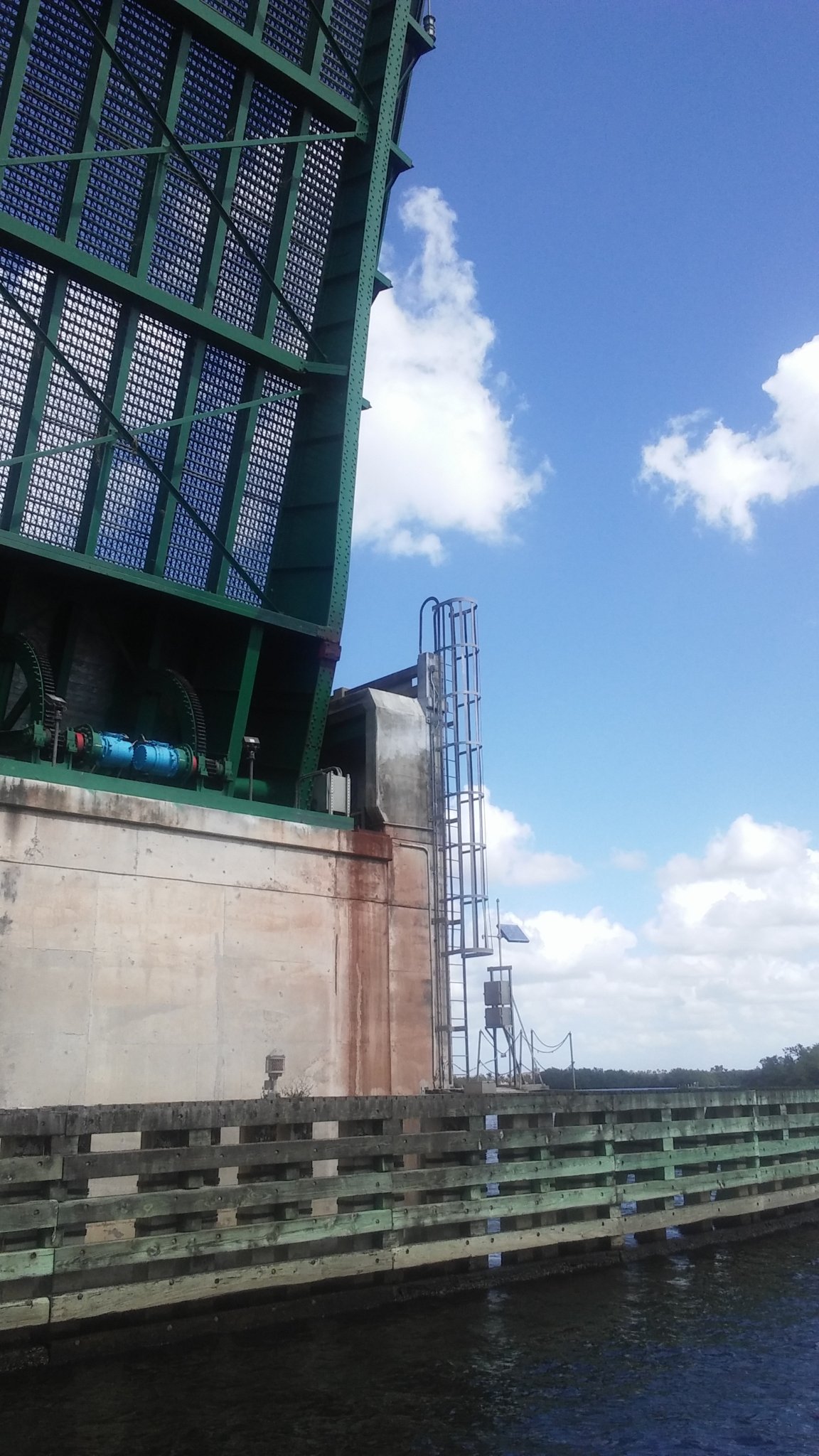
North Branch of the Chicago River at Belmont Avenue

DSC_1950

North Branch of the Chicago River looking towards downtown from the Belmont Avenue Bridge

These images were recently taken at the Belmont Avenue Bridge over the North Branch of the Chicago River.

DSC_1951

Same as above
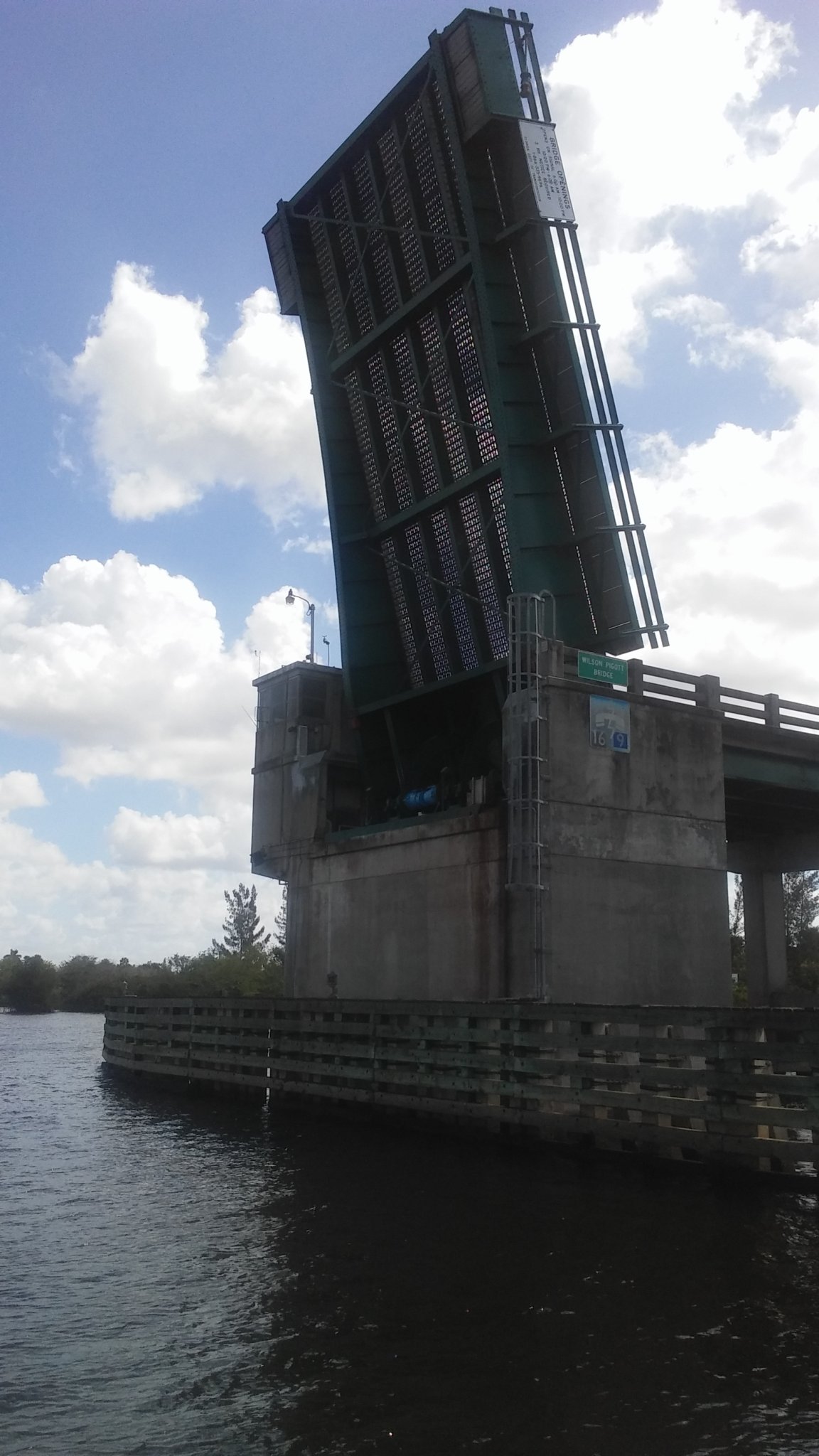
     The Belmont Avenue Bridge (2600 West; 3200 North) runs east west across the North Branch Chicago River 6.8 miles from the river mouth.  This bridge opened in 1976. This is the fourth bridge at this site.    This bridge was a replacement for a prior bascule bridge.

     The current bridge is a fixed steel and concrete bridge. It is a four lane with a 21 foot river clearance.  It was designed by the Division of Viaduct and Bridges City of Chicago.  The building contractors are unknown.  The construction costs are unknown.

     In 1875, when the first Belmont Avenue Bridge was built,  the northern border of Chicago was at Fulterton Avenue.  On both sides of the North Branch of the Chicago River at Belmont were the communities of Lake View on the east and Jefferson on the west.   The Belmont Avenue Bridge was an iron fixed bridge.  It was 77 feet long and 17 feet wide.  It was designed and constructed by the King Bridge Company.

     Total constructed costs were $3290.   Three  government entities shared in the costs–Jefferson ($1,491), Lake View ($1,097), and Cook County ( $694).  This bridge was a 77 foot long and 19 feet wide bridge. 

     In 1889, the city of Chicago annexed Lakeview and Jefferson and took over ownership of the bridge.

     The bridge was removed In 1893

    The second Belmont Avenue Bridge was another example of bridge recycling.  It was the former Canal Street Bridge.  This bridge was removed in June,1892.  It was floated to Belmont Avenue.  It was then placed on the east bank.  Construction began in October, 1892 on a new bridge foundation.  However, the work was soon halted and did not resume until  June 10, 1893.  It was completed in August.  

     In October, 1893, the bridge from Canal Street was installed on the new foundation.

     The bridge was a Howe through truss swing bridge (hand operated). It was  200 feet long and 35 feet wide.

     It was designed by Abraham Gottlieb.   Superstructure Contractor was Abraham Gottlieb.   Substructure Contractor was Chicago Dredge and Dock Company.  Construction costs were $24,759.

     Bridge moved to area near North Avenue turning basin on June 17, 1911.

     From 1911 to 1916, there were a series of three temporary bridges at the Belmont Avenue Site.  The first was built in June 16, 2011 and the last was dismantled on on October 17, 1916

DSC_1952

View of the North Branch of the Chicago River from the Belmont Avenue Bridge

     Work on construction of the third permanent bridge began in 1912.  Project was prolonged by work stoppages from labor strikes.  Leaves of the bridge were installed May 10, 2016.  Street car rails, pavement and sidewalks followed.  The bridge was opened to pedestrians and single street car on October 17, 1916.  Work on the superstructure was completed February 6, 2017.  It officially opened on July 12, 1917.

     The bridge was a Chicago style double leaf bascule.  It was made of steel.  It was electric powered.  It was designed by the Division of Bridges and Viaducts City of Chicago.   Contractor was Great Lakes Dredge and Dock Company.   Cost was $268,033.  The bridge was removed 1976.

DSC_1953

Belmont Avenue Bridge

     The area north of the bridge was the site of two iconic businesses.  Northeast)  River Amusement Park in business from 1903–1967.  Northwest)  Henry Grebe and Company Ship Yard.  In business from 1926–1993.  It produced pleasure craft and warships.

DSC_1954

Same as above
DSC_1955

View from the Belmont Avenue Bridge.  North Branch of the Chicago River

Belmont Avenue Bridge


Belmont Avenue Bridge


Belmont Avenue Bridge

BSNF Bridge over the Sanitary and Ship Canal Lemont

This is a bridge over the Sanitary  and Ship Canal in Lemont.  It is located between the Lemont Avenue Traffic Bridge and the Cal Sag Sanitary Ship Canal Confluence.

BNSF RR Bridge over the Sanitary Ship Canal Lemont

BNSF RR Bridge over the Sanitary Ship Canal Lemont

BNSF RR Bridge over the Sanitary Ship Canal Lemont

BNSF Railroad Bridge over Sanitary Ship Canal Lemont

It is a Pratt through Truss swing bridge.  It features v-lacing and lattice on various built up beams.   It was built in 1898.  The builder was the Keystone Bridge Company in Pittsburgh, Pennsylvania.  Substructure contractor was McArthur Brothers and Winston Company.    Railroads using the bridge included ATSF and BNSF.  Total cost was $84,391.45  Total weight of iron and steel was 2,315,656 pounds.  Counterweight is 858,645 pounds.  It consists of one main span.  Its length is 259.6 feet.  The structure length is 398.5 feet.

Sanitary and Ship Canal Lemont

The follow images are of the Sanitary and Ship Canal Lemont.

11736405070-CommerceProduct-7182-36-36

BNSF Bridge over the Sanitary and Ship Canal Lemont

11736405070-CommerceProduct-7182-37-37

BNSF Bridge over the Sanitary and Ship Canal Lemont

11736405070-CommerceProduct-7182-38-38

Sanitary and Ship Canal Lemont

11736405070-CommerceProduct-7182-39-39

Sanitary and Ship Canal Lemont

Lemony Avenue Bridge over the Sanitary and Ship Canal


Lemony Avenue Bridge over the Sanitary and Ship Canal

Cal Sag Canal

This is a man made channel from the Calumet River to the Sanitary and Ship Canal.

DSC_1785

Near the Junction of the Sanitary and Ship Canal and the Cal Sag Canal

DSC_1786

Junction Site

Old Photo of Junction of S.S Canal and Cal Sag Canal

DSC_1787

Junction Site   Archer Avenue Bridge and CN Bridge in the distance.

11736405070-CommerceProduct-7182-83-83

Archer Avenue Bridge over the Cal Sag Canal

11736405070-CommerceProduct-7182-84-84

Cal Sag Canal view from the Archer Avenue Bridge

Scan_0008

Cal Sag Canal   CN bridge

Pecumsaugen Creek–Blackball Mines

This is a restricted nature preserve managed by the Illinois Department of Natural Resources.
Pecumsaugan Creek Nature Preserve

Pecumsaugan Creek Nature Preserve

Pecumsaugan Creek Nature Preserve

Pecumsaugan Creek Nature Preserve

Percumsaugan Creek Nature Preserve

Percumsaugan Creek Nature Preserve

Pecmsaugan Creek Nature Preserve