
Wilson Pigott Bridge

Wilson Pigott Bridge

Wilson Pigott Bridge

Wilson Pigott Bridge

Wilson Pigott Bridge

Wilson Pigott Bridge
Wilson Pigott Bridge
Wilson Pigott Bridge
Wilson Pigott Bridge
Wilson Pigott Bridge
Wilson Pigott Bridge
Wilson Pigott Bridge

Fort Denaud Bridge
The Fort Denaud Bridge crosses the Caloosahatchee Waterway on Fort Denaud Bridgeway which is a turn off of Florida State Route 78A. The Fort Denaud area lies between Alva and LaBelle. It is the site of a fort from the Seminole War and a long abandoned village. The bridge is a metal rivet connected Warren (no verticals)pony truss, movable: swing (rim bearing center pier bridge and approach spans. The trough is of steel construction. Piers are made of concrete. This bridge was previously used on the Intracoastal Waterway at Pompano Beach. It was erected in Fort Denaud in 1963. Bridge was constructed by Powell Brothers, Fort Lauderdale, Florida
Bridge statistics are main span length 191 feet; structure length 435 feet. Roadway width is 18 feet. There is one main span and 5 approach spans.

Fort Denaud Bridge

Fort Denaud Bridge

Fort Denaud Bridge

Fort Denaud Bridge

Photo Old Fort Denaud Bridge
The current bridge Was a replacement of a prior bridge that was located upstream. This was demolished in the early 1960’s.

Biggs Residence Delray Beach Florida

Sketch of the original house
This house is located at 212 Seabreeze Drive Delray Beach, Florida. The architect was Paul Rudolph. The house as originally built was 2 bedrooms and baths. It was 1600 square feet. The home is elevated on 4 exposed steel columns and beams. On the main floor there is a central living room with a bedroom and bath on one end, A gallery kitchen with a wall of closets and stair to the entrance below. There is a bedroom and bath at the other end.
Biggs lived in the house from 1955 to 1961. In 1970 Biggs sold the house to Richard and Alice McAvoy. In 1973, Virginia and Erskine Courtenay bought the house.
In 2007, Architect Robert Currie adds a two story addition of 1926 square feet to the south. The addition includes master bedroom, and bath, guest bed and bath and elevator access.
In 2014, Courtenay yes sell the house for 1.1 million.
In 2016, the house is listed for sale for $1,895,000. House sold for $1,100,000 to Henry Ferrino.
Residence is sold in February 28, 2018 for $1,395,000 to Michael and Antonia Marco.
The Marcos proposed a plan to restore the house to Rudolph’s original vision. In what can only be described as a project going awry, the house was demolished to its frame in August, 2020. The Marcos now face legal trouble for the results of the project.

Rogers Park Hospital
In the Chicago Tribune of May 2, 1926, there was an article.about the new Rogers Park Hospital. Work was scheduled to start on May.3rd. This would be the first large medical facility in Rogers Park. The location was to be at 6970 North Clark Street. The hospital building was to be 6 stories. There would be 2 operating rooms, one labor room and one delivery room. There was to be an X-Ray department, and a lab. There were one hundred patients rooms. The Architect was Dwight G. Wallace. Projected cost was $402,500.
The president of the new hospital was Dr. F. Patrick Machler. The Doctor had a distinguished career in the Spanish American War and World.War 1. He was the former superintendent of Iroquois Hospital.
During 1938-1939 period, there were two bizarre incidents concerning the hospital. Firstly, the name of the Hospital was changed to Will Rogers Memorial Hospital apparently without the consent of Mr. Rogers and his estate. The case eventually ended in the court of federal judge William Holly. On February 11, 1939, the judge signed a consent decree enjoining Will Rogers Memorial Hospital from using Mr. Roger’s name. The decree was issued on the complaint of the Will Rogers Commission and Will Rogers Memorial Fund of New York.

Memorial Plaque
This plaque is located at the intersection of Taylor Street and Olympia Avenue Punta Gorda, Florida.
The plaque reads: On December 3, 1887, 34 men in the town of Trabue met here in a two story building, built in 1887, owned by Tom Hector. The diverse group of landlords, tenants, merchants and workers, some white and some black were all qualified voters. At the time of the meeting, the ground floor was the location of a drug store and the second story was was Hector’s billiards hall. Above the drug store, at a pool table, the men passed.the articles of incorporation by a 2/3 majority. They selected a city seal, a council, and the corporate name of Punta Gorda. Although politically active locally and in his native Kentucky, town founder Col. Isaac Trabue had not registered to vote on this issue and was barred from the balloting. Trabue had begun acquiring land in early 1883. He had the land plated, reserving the shoreline for public use and naming streets for family members. Having given up half his holdings for rail service, a depot, and a luxury hotel, he was angered by the settlers’ ingratitude. The documents were filed at Pine Level , the county seat on December 7, 1887. Trabue sued to dissolve the municipality and regain.title to the public lands. 10 years later he gave up. Hector Home was demolished in 1988.
This multi story Brownstone building located at 2309 Geneva Terrace Chicago in the East Lincoln Park area has just been listed for sale for 4.2 million. The house was originally built in 1893. It currently features 6 bedrooms and 6.5 bathrooms.
The building was renovated in 1991 by architects Phil Casagrande and Marcel Freides.
The building just completed a 3 year 1,000,000 + full renovation by Casagrandes Architecture and Christina Draft Interiors and Bluthe

Historic Sign
This historical marker is located at the intersection of West Marion Avenue and Harvey Street in Punta Gorda, Florida.
Gilchrist was a founder of Punta Gorda and was a resident until his death. He served as a member of the Florida House of Representatives in 1893, 1895, and 1903. He was speaker of the house in 1905. He served as governor in Florida in 1909–1913. He served in the Florida militia.

Signage about Railway Express Agency

Door Way to REA Office

Black Waiting Room
Black Waiting Room

Informational Sign re Black Waiting Room

Last Station master Naples Railroad Station

Artifacts from Atlantic Coastal Line and Seaboard Air Line Railroad

Artifacts Atlantic Coastal Line

Dinner Ware Atlantic Coastal Line and Seaboard Airline Railroad

History of the rail line between Naples and Fort Myers

History of trains in S.W. Florida

History Seaboard Airline Railroad

Florida Railroads

Atlantic Coast Line Caboose

Interior Caboose

Interior Caboose

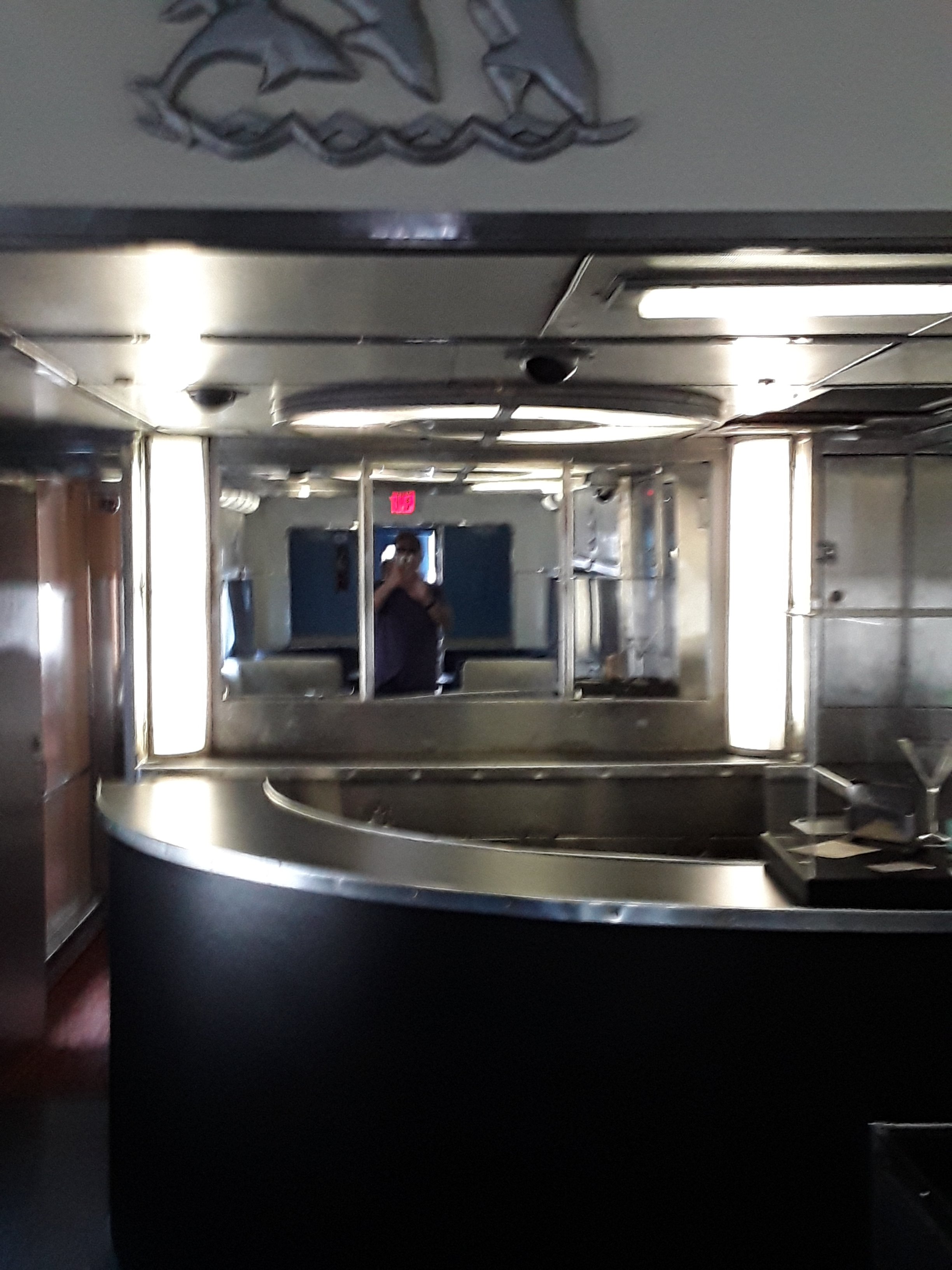
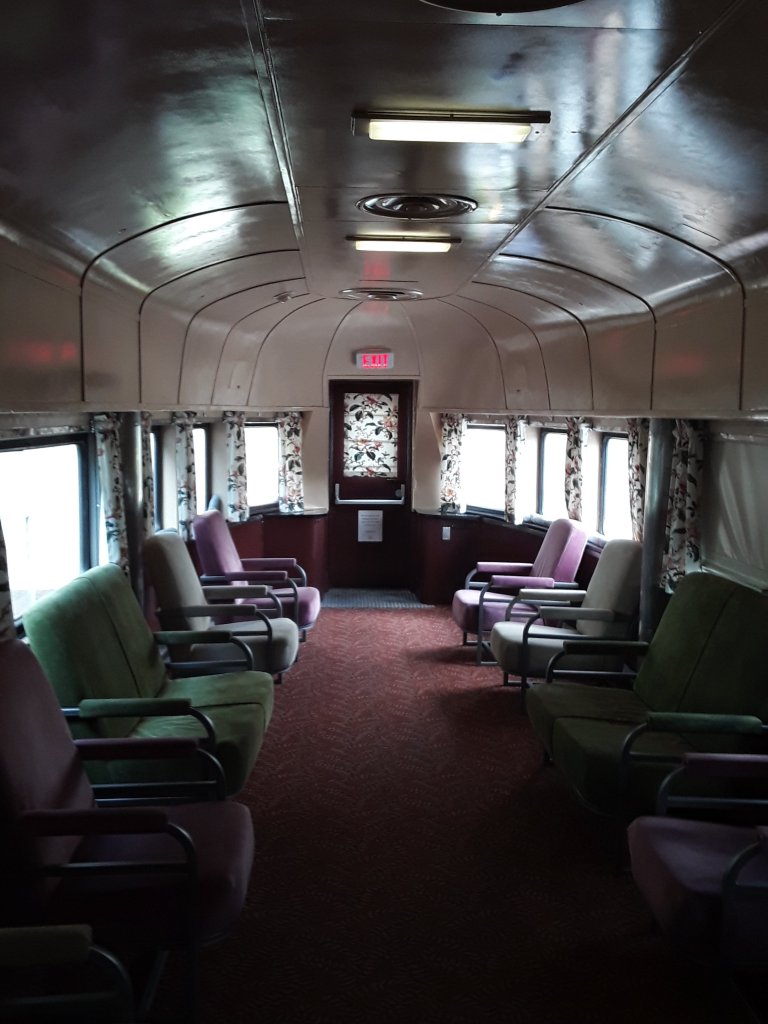

Seaboard Air Line Railroad Observation Car 1947

1947 Observation Car

 raddoc1947