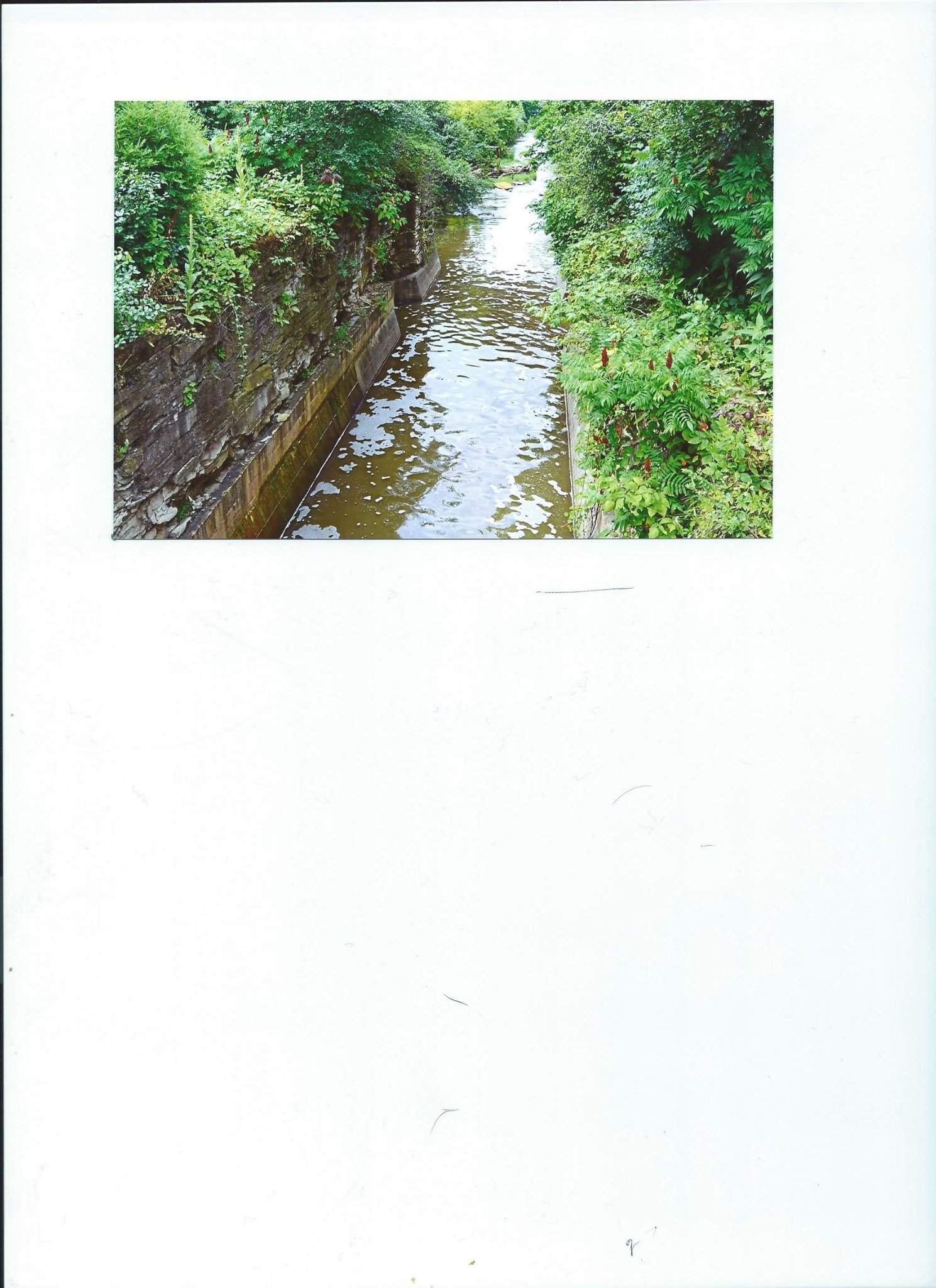
July 4, 2016 will be an important date in the history of the city of Chicago. 180 years prior to this, the ceremonial first shovel full of dirt was done at the origin of the Illinois Michigan Canal at the south branch of the Chicago River. (Ever since the construction of the Erie Canal, it was customary to begin U.S. canal projects on July 4th.)
It would take another 12 years to complete the canal to LaSalle at the Illinois River. This man made channel would play an important role in the growth and development mainly of Chicago but also the other cities along the Illinois Valley.
Many years have passed since the canal construction. Many changes have occurred. The Illinois Michigan Canal was abandoned. Virtually little remains in the Chicago area. It was replaced by the Chicago Sanitary and Ship Canal, the Cal Sag Channel and later the Illinois Waterway.
In an effort to preserve a historical site of the I and M in the Chicago region, the Canal Corridor Association lobbied for preservation and public use of a 1.8 acre site at the junction of the Bubbly Creek and the south branch of the Chicago River. This is where the Canal originated from the river. Also in this region is the origin of the Chicago Sanitary and Ship Canal.
This parcel of property was used a a dumping site. Previous retail establishments at this site included a gas station and a seafood restaurant.
Eventually, the property was transferred from the state of Illinois to the Chicago Park District. The site was designated as a historic landmark. Native plants were restored in 2004.
Earth artist was retained to help with the design of what would be known as Canal Origin Park.
The park is roughly triangular in shape. One side borders Ashland Ave. The other side borders Bubbly Creek and the south branch of the Chicago River. There is a path way along the river and creek. There is a sunken walkway from the park entrance to the water. This is meant to simulate traveling down the canal. On the walls of the walkway are concrete freizes depicting historical events of the canal and canal corridor. These were designed by students supervised by Chicago artist Philip Schuster.
[
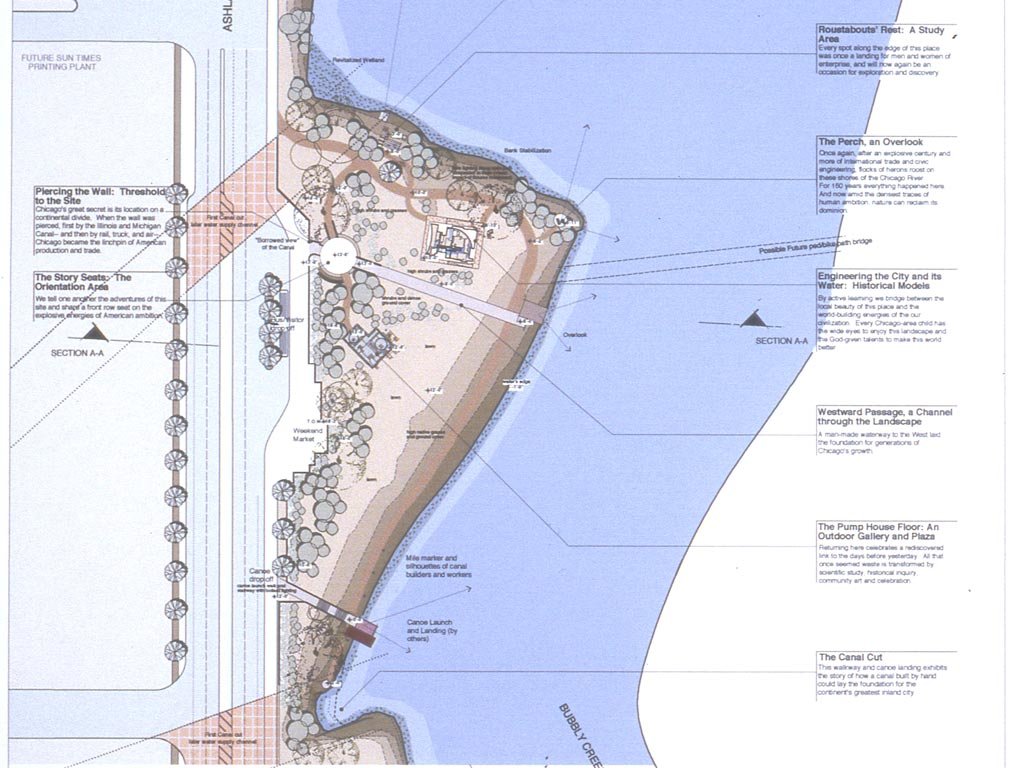
Architect plans for the park
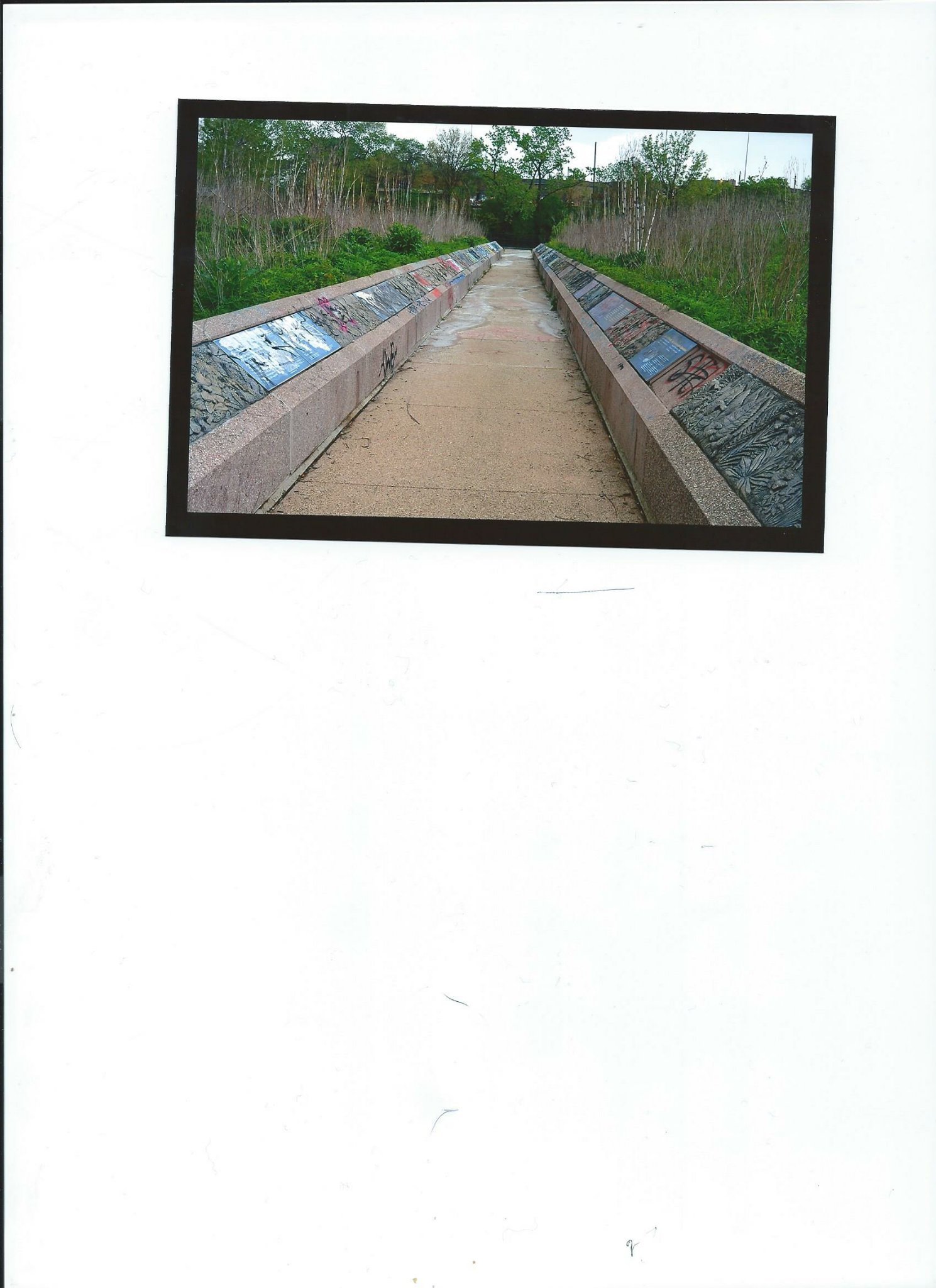
Sunken walkway. Note the concrete friezes along the wall
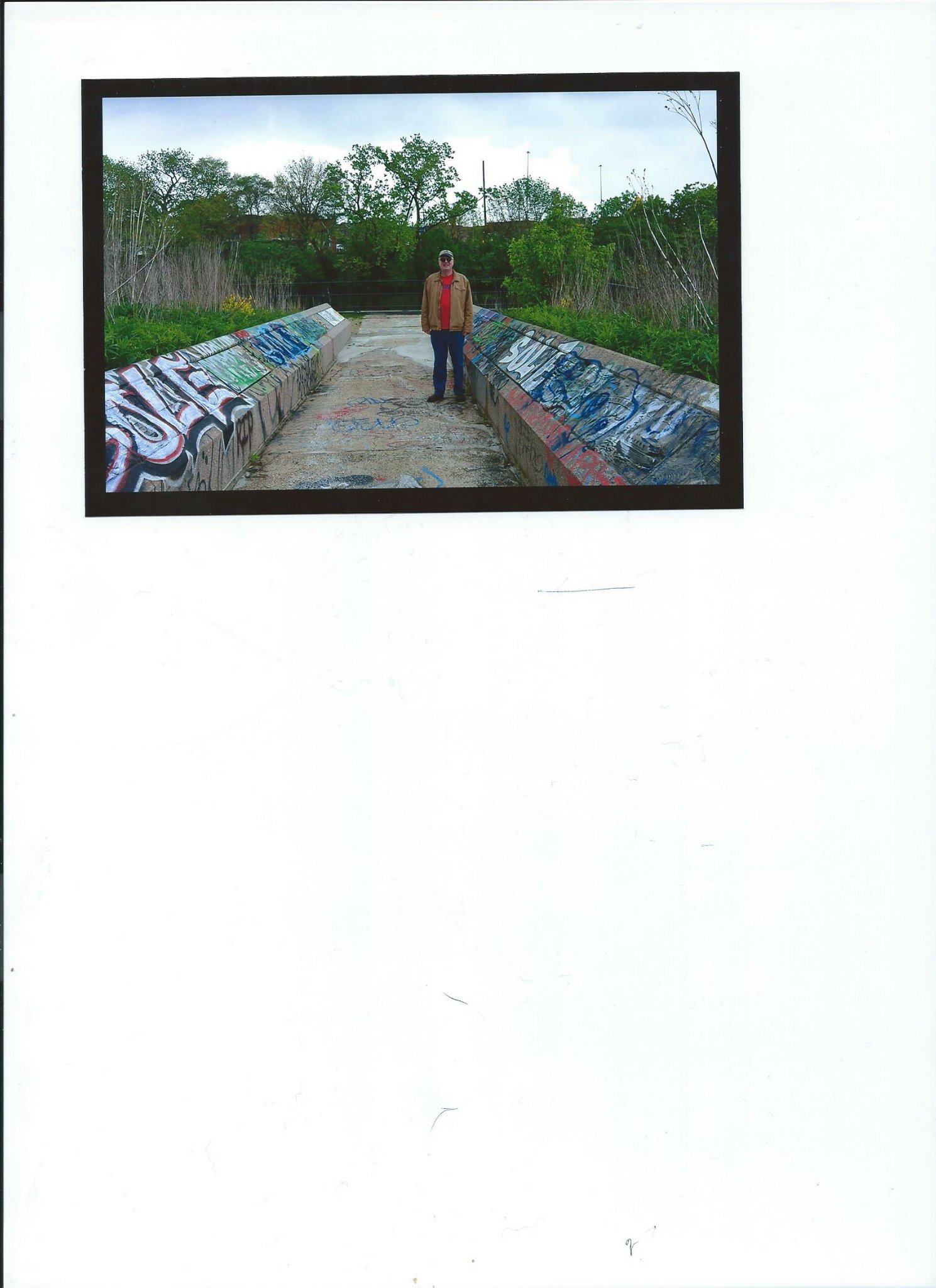
Sunken walkway. Note the graffiti damaged friezes
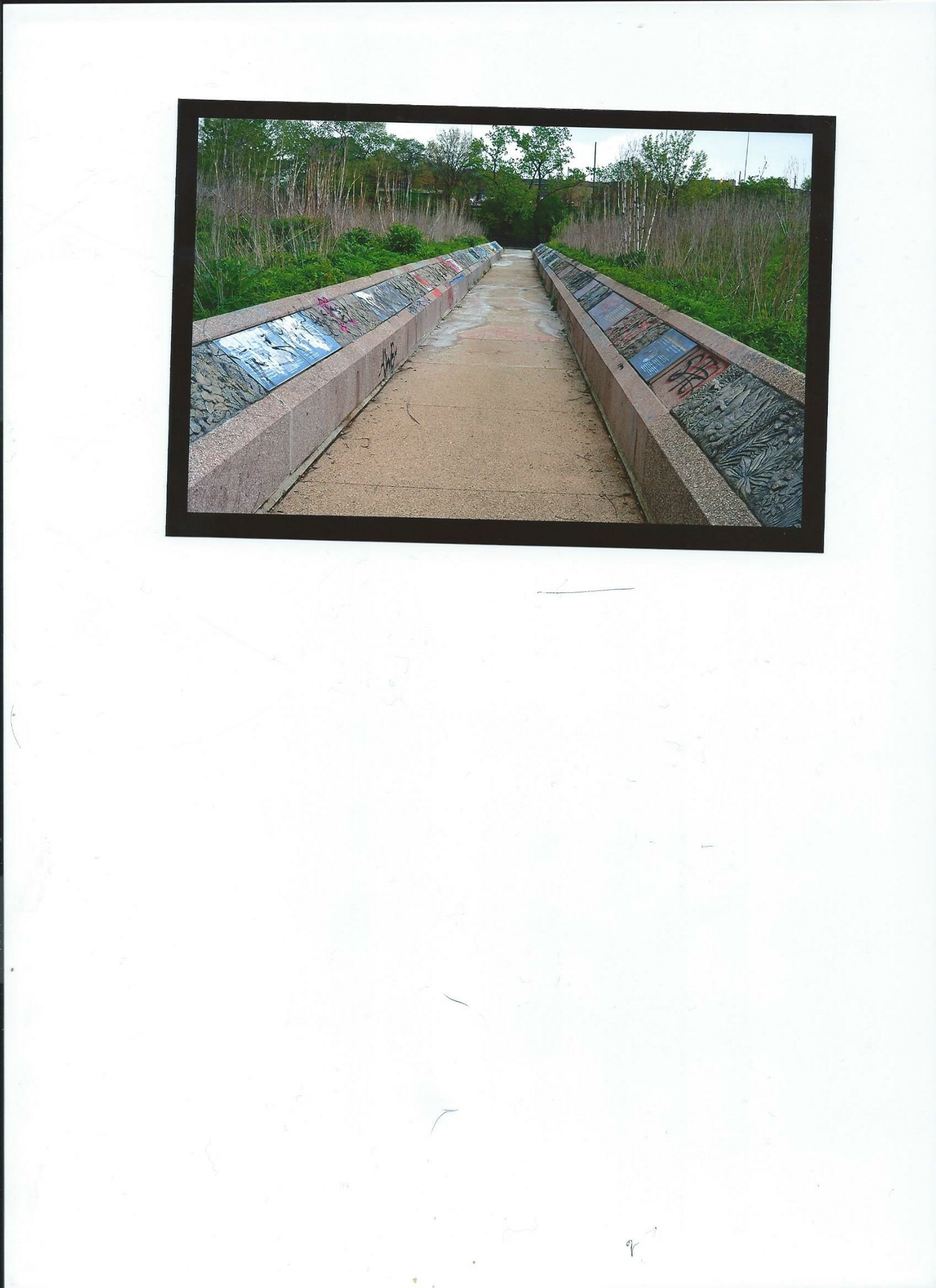
Sunken walkway
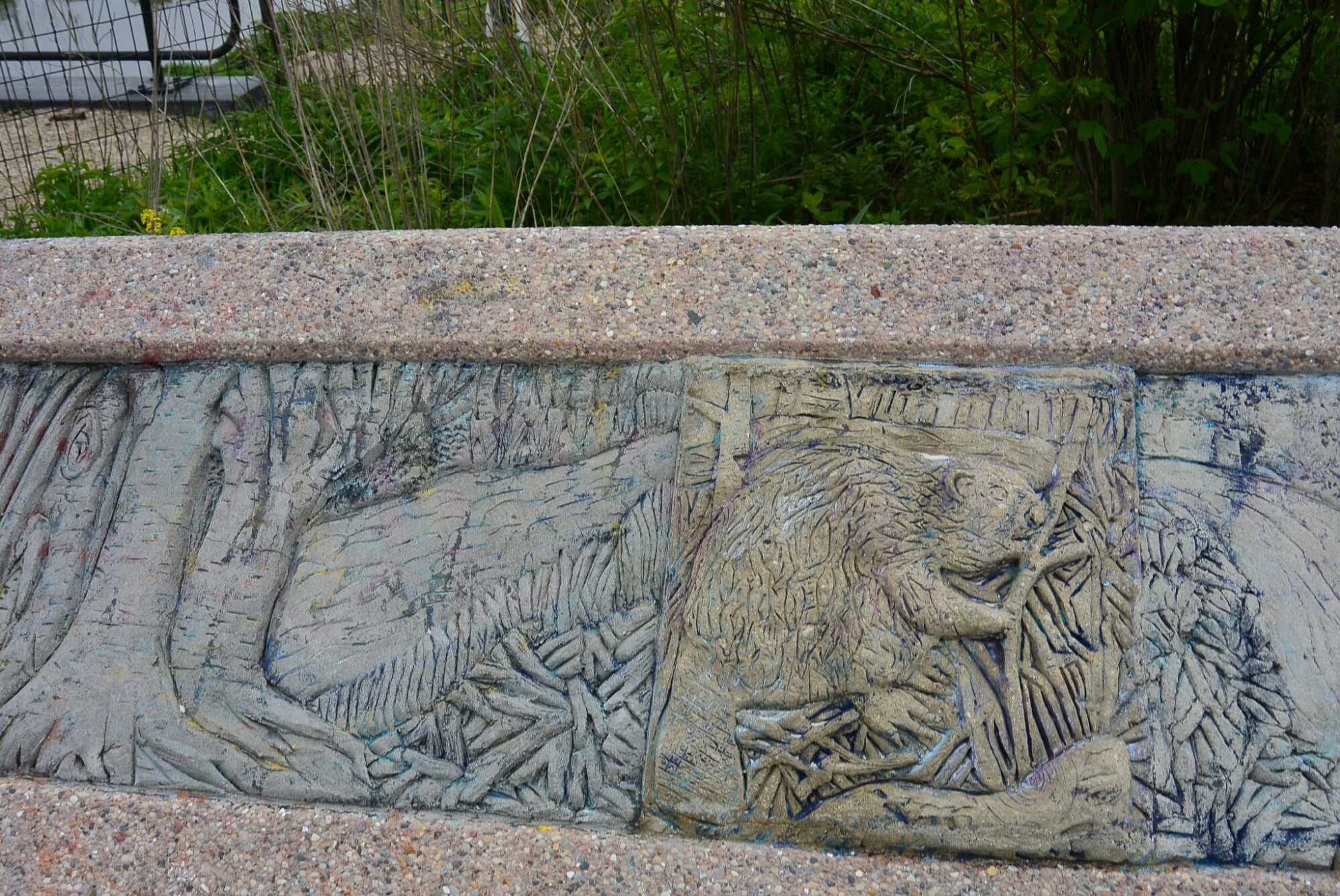
Concert frieze beaver
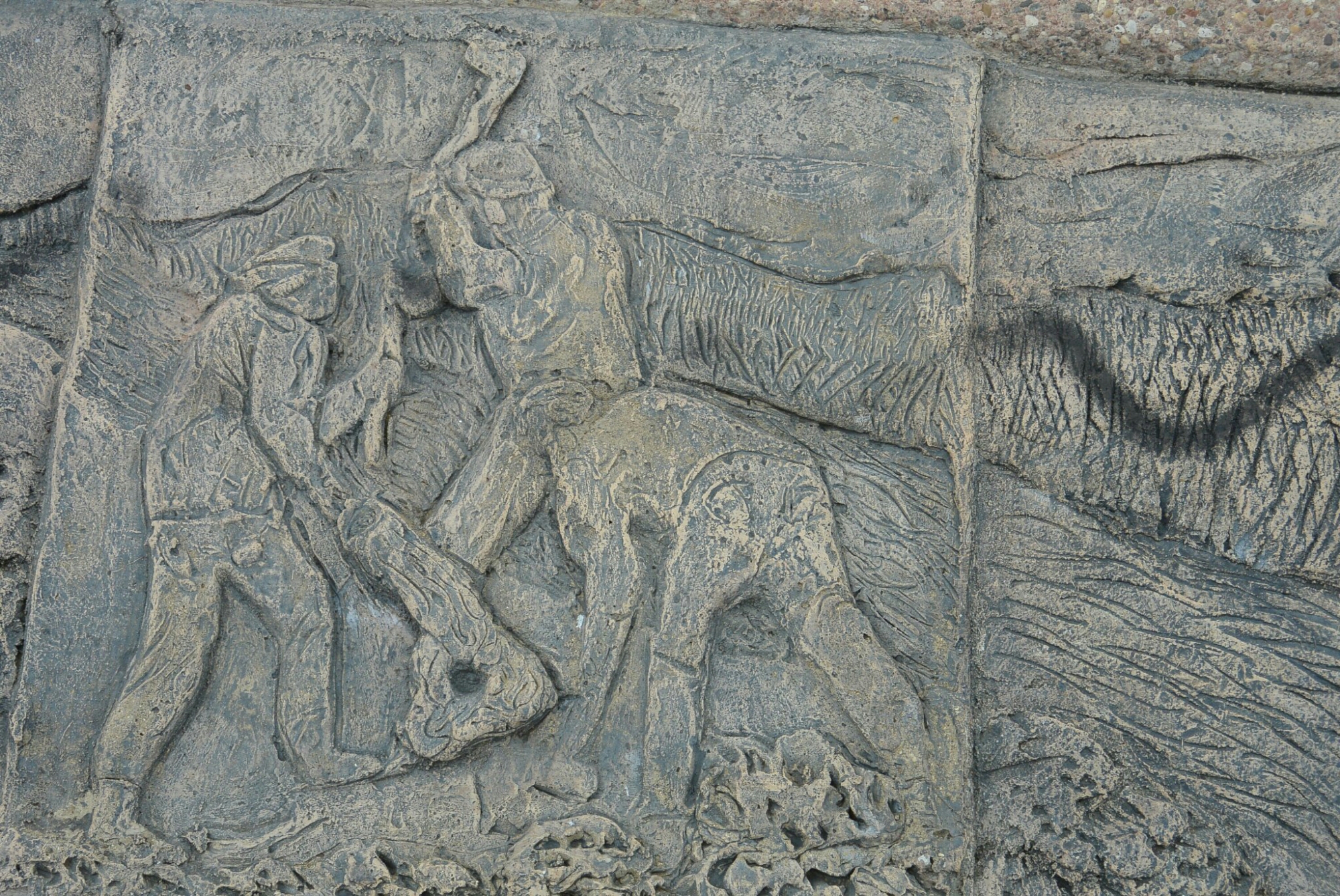
Concert Frieze Canal workers
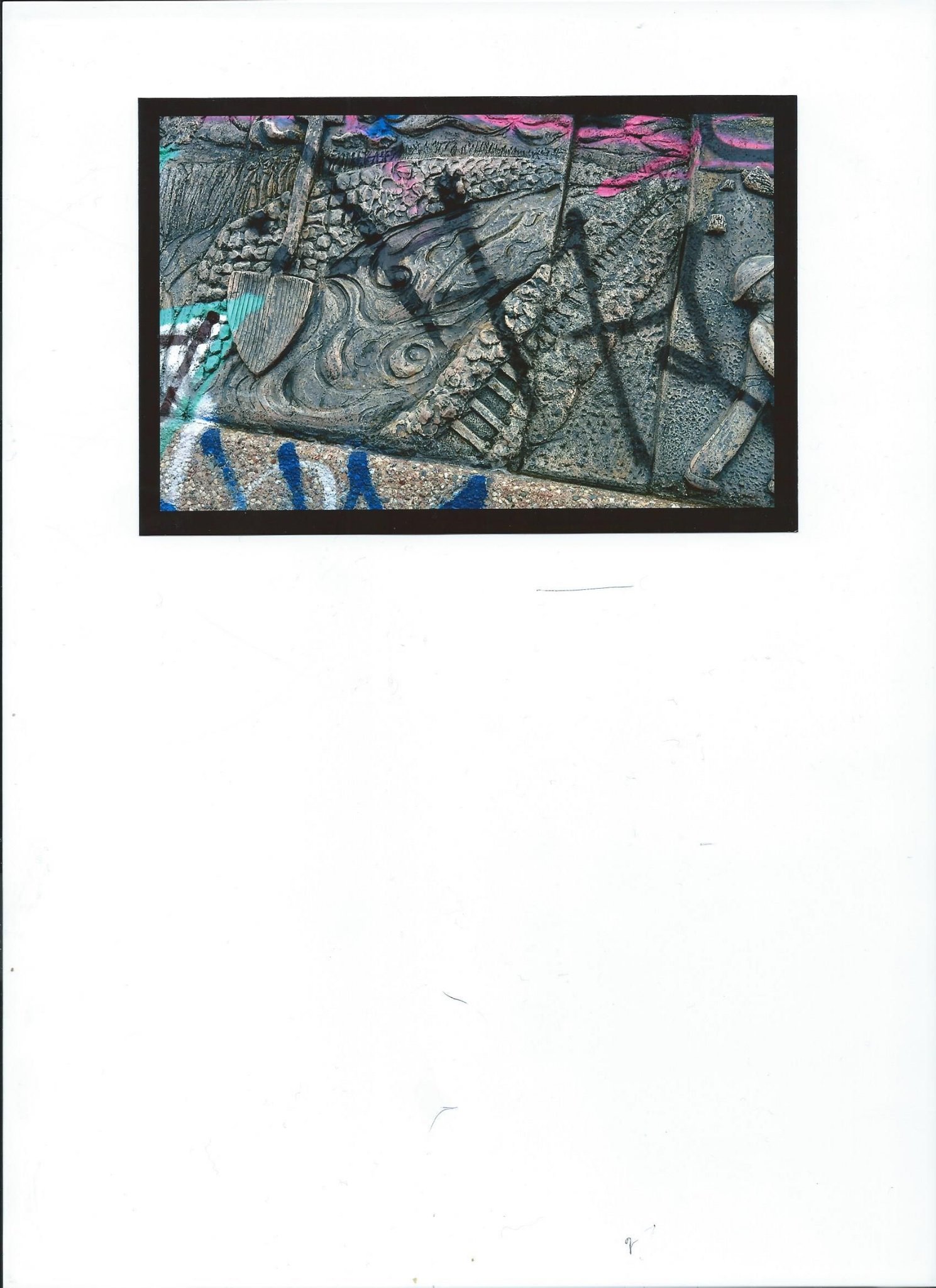
Concrete Frieze. Canal and Railroad

Concrete Frieze
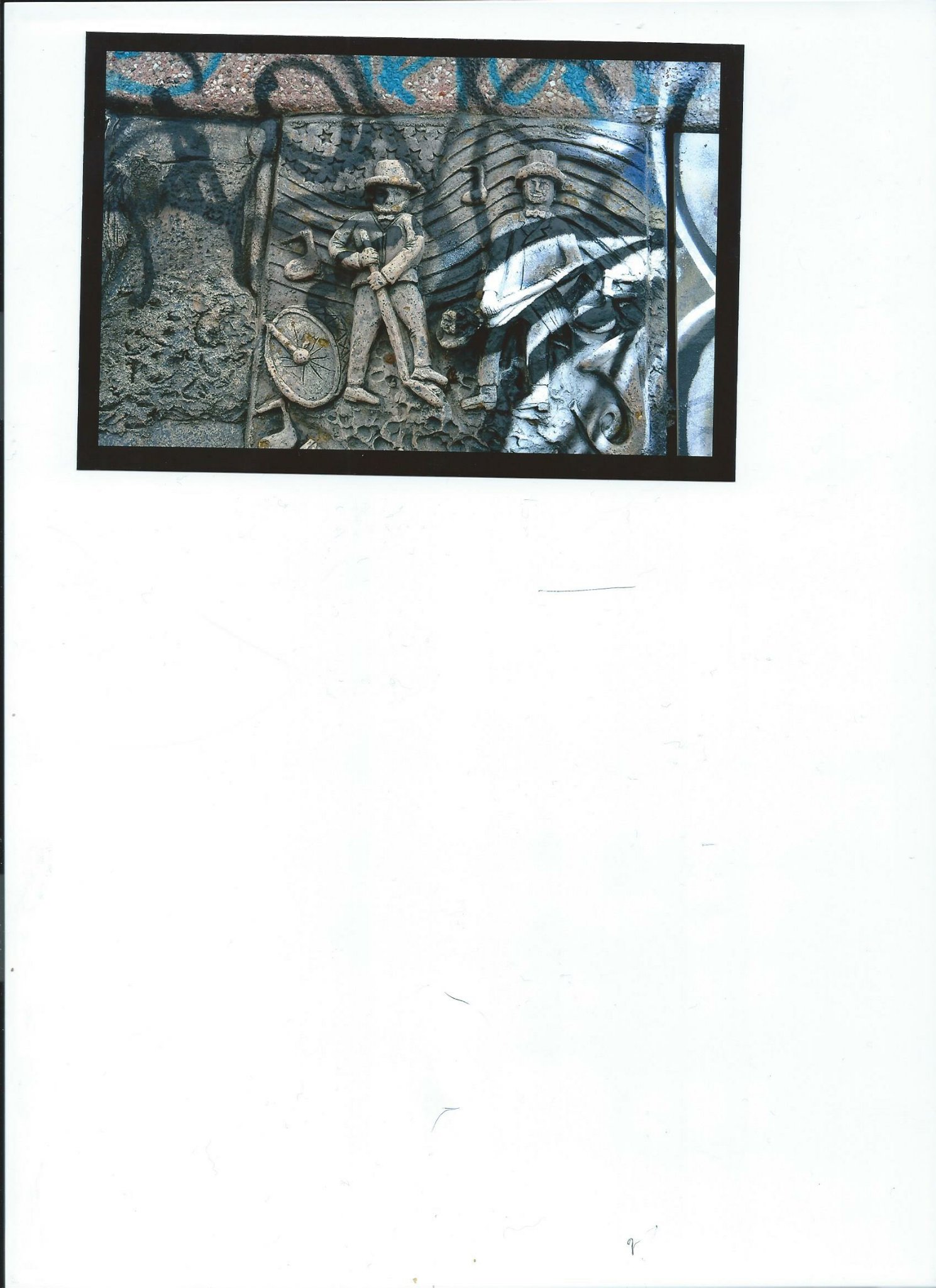
Concrete Frieze. Canal Digger

Concrete Frieze. Damaged by graffiti
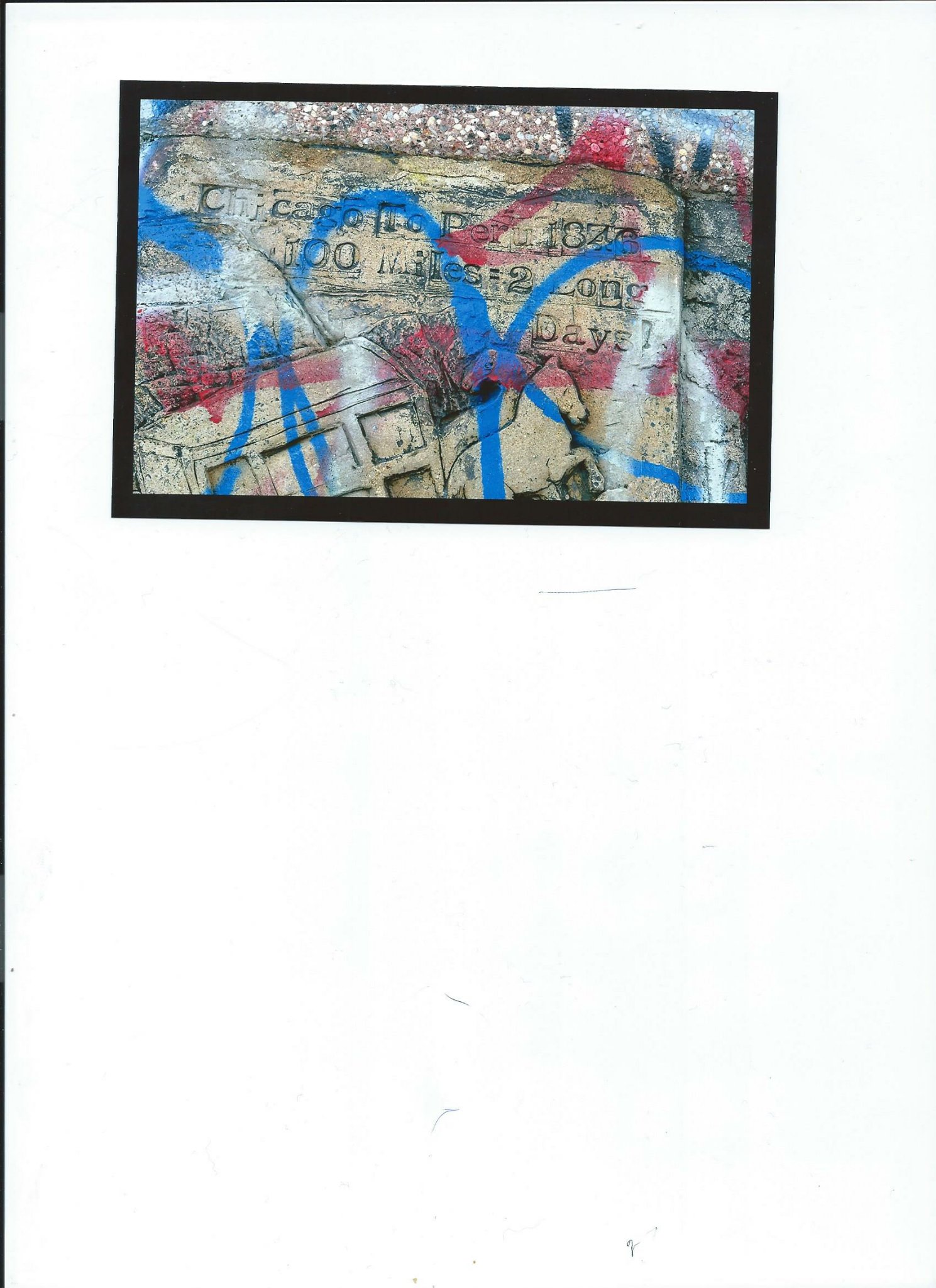
Concrete Frieze Chicago to Peru
In the front of the park, there are many photos and diagrams depicting the history of the area and the park.
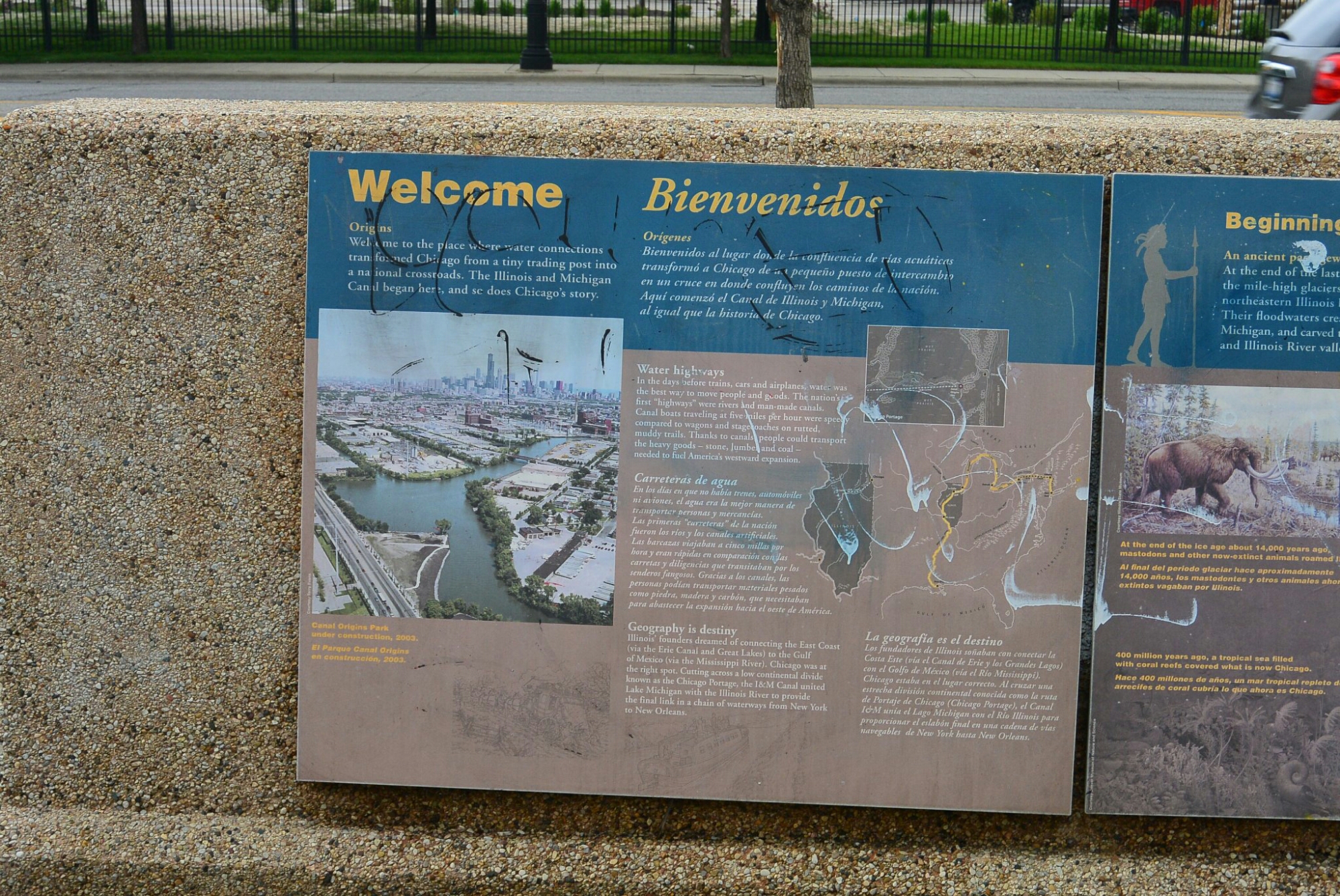
Presentation History
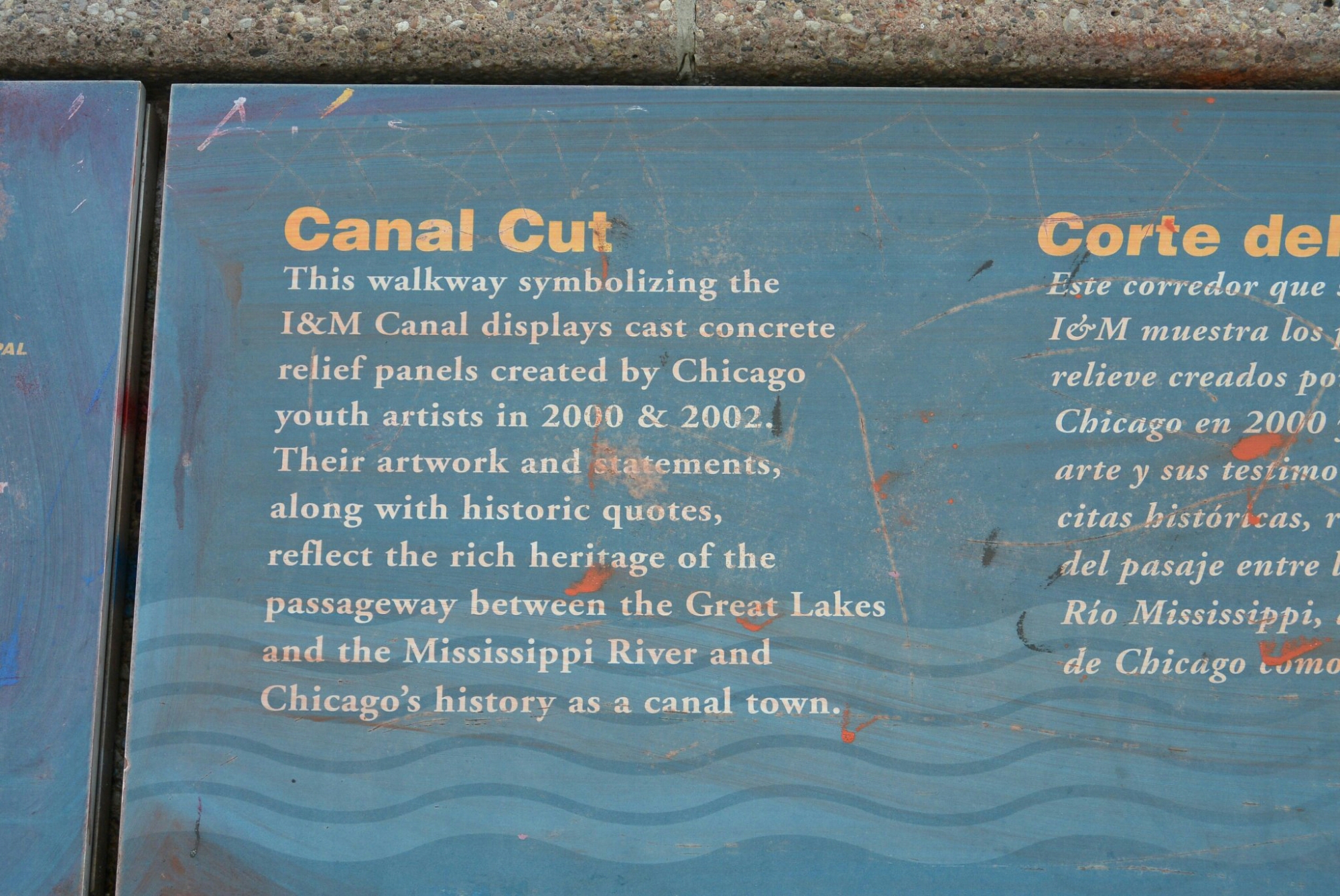
Explanation of the sunken walkway

Acknowledgement of Contrbuters
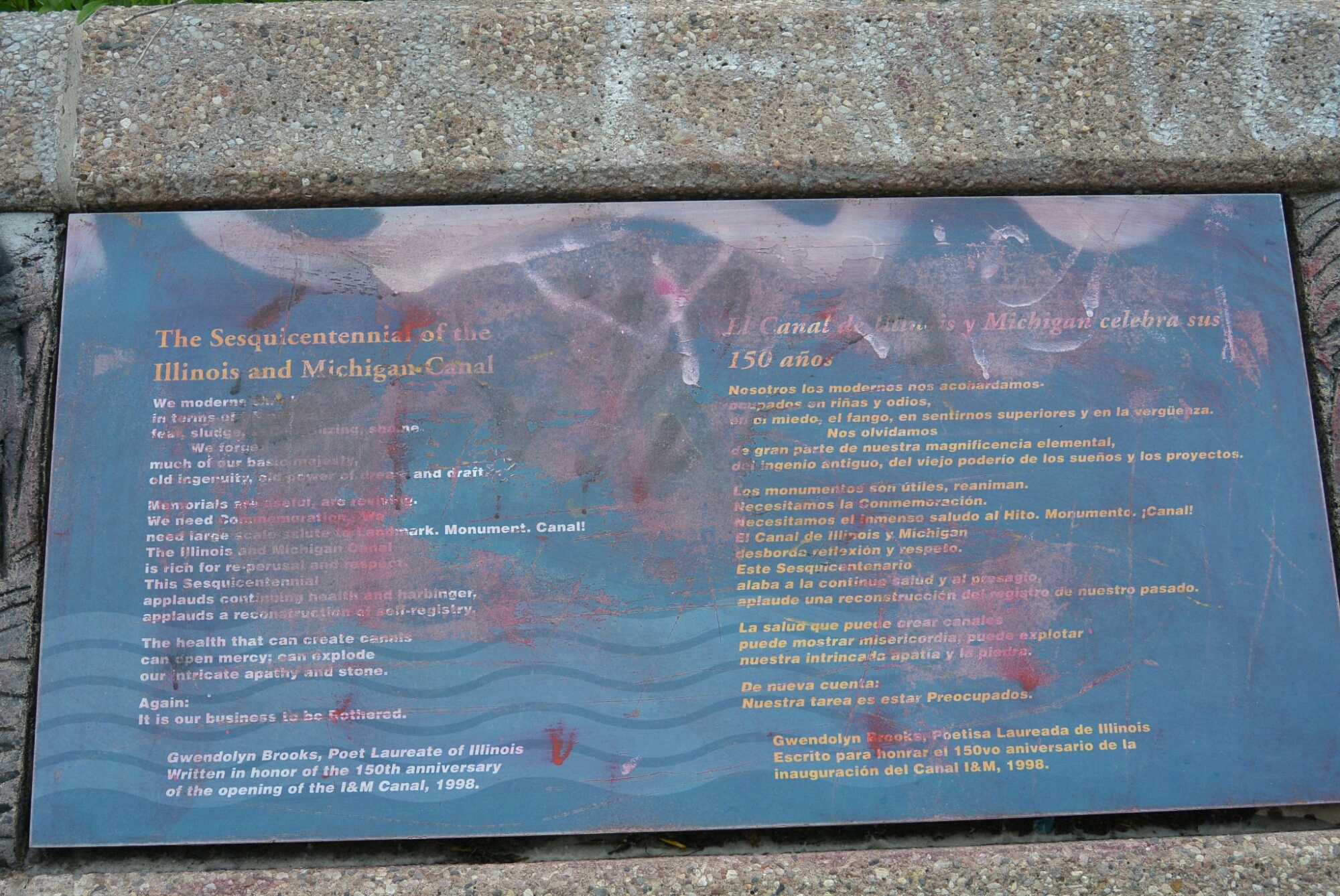
150 year anniversary canal
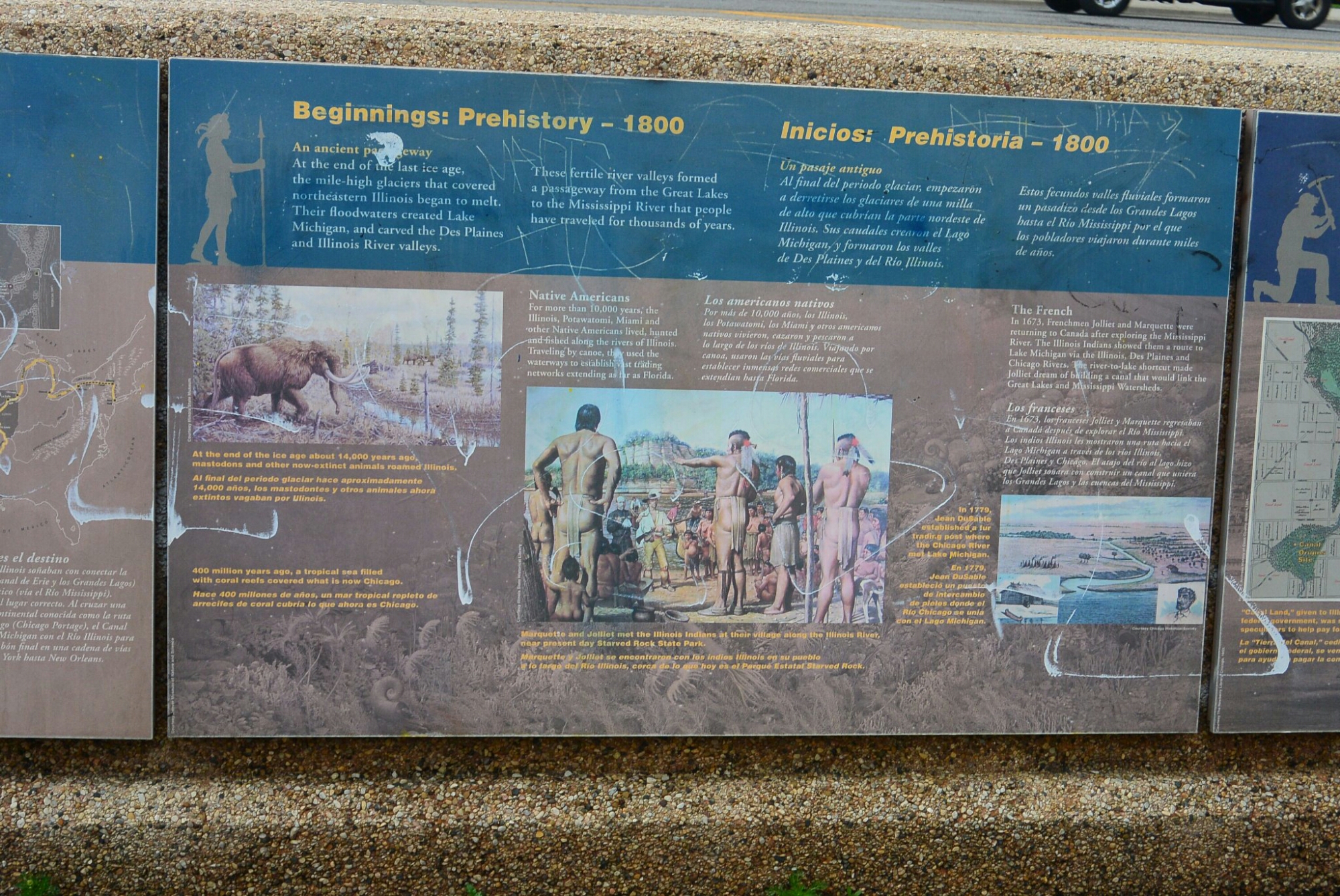
Pre history
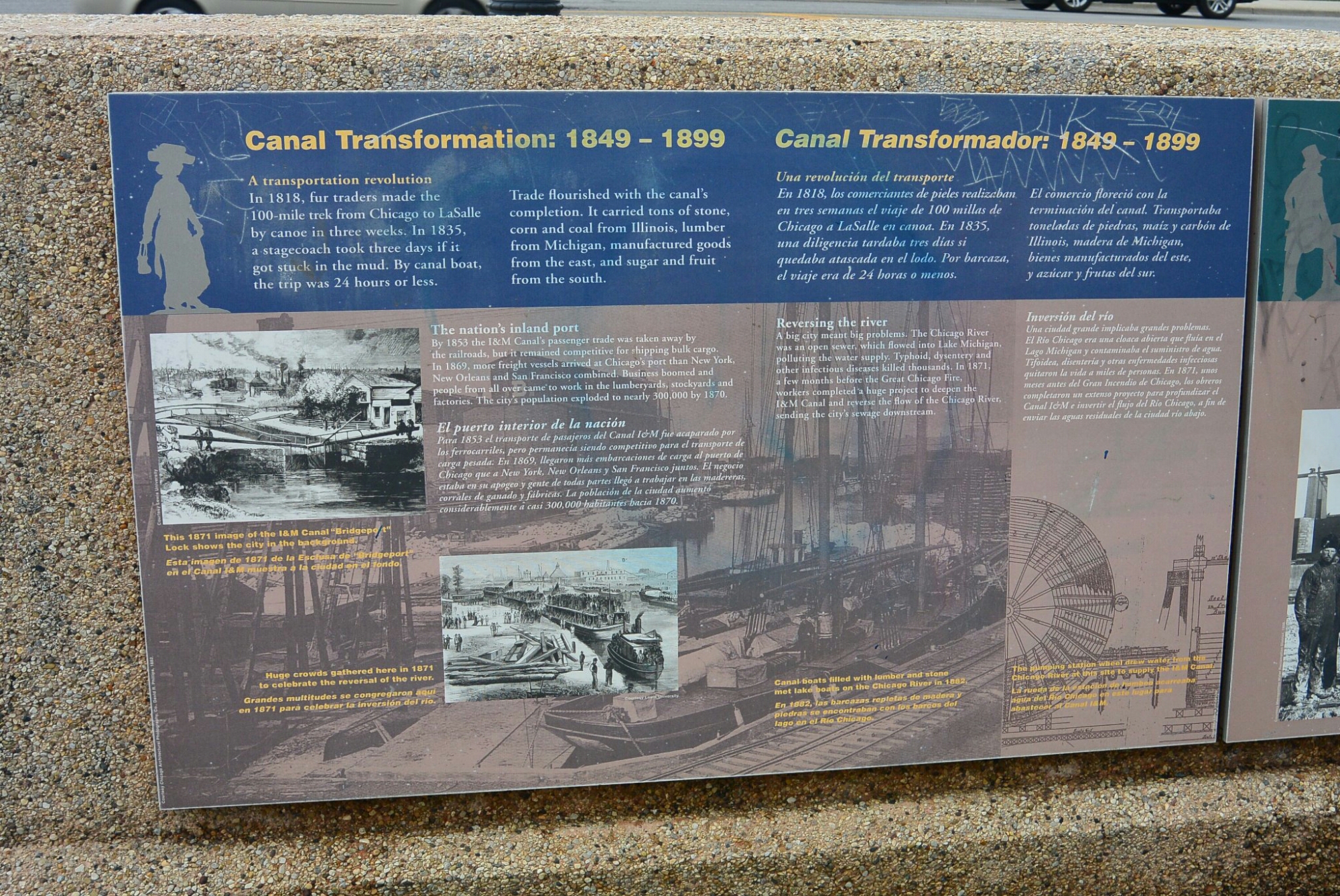
Canal Transformatio
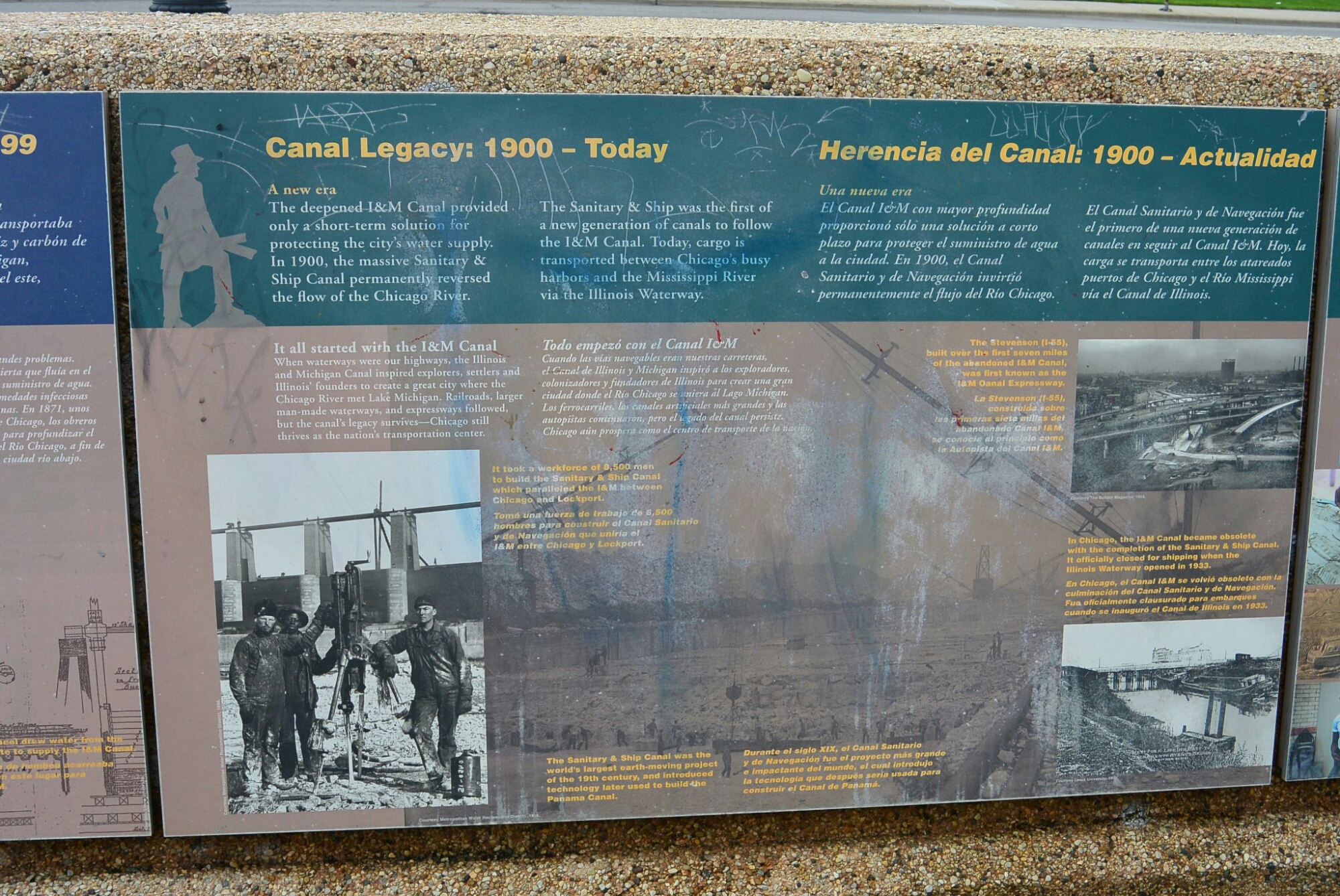

Front Wall Park

Front WallPark
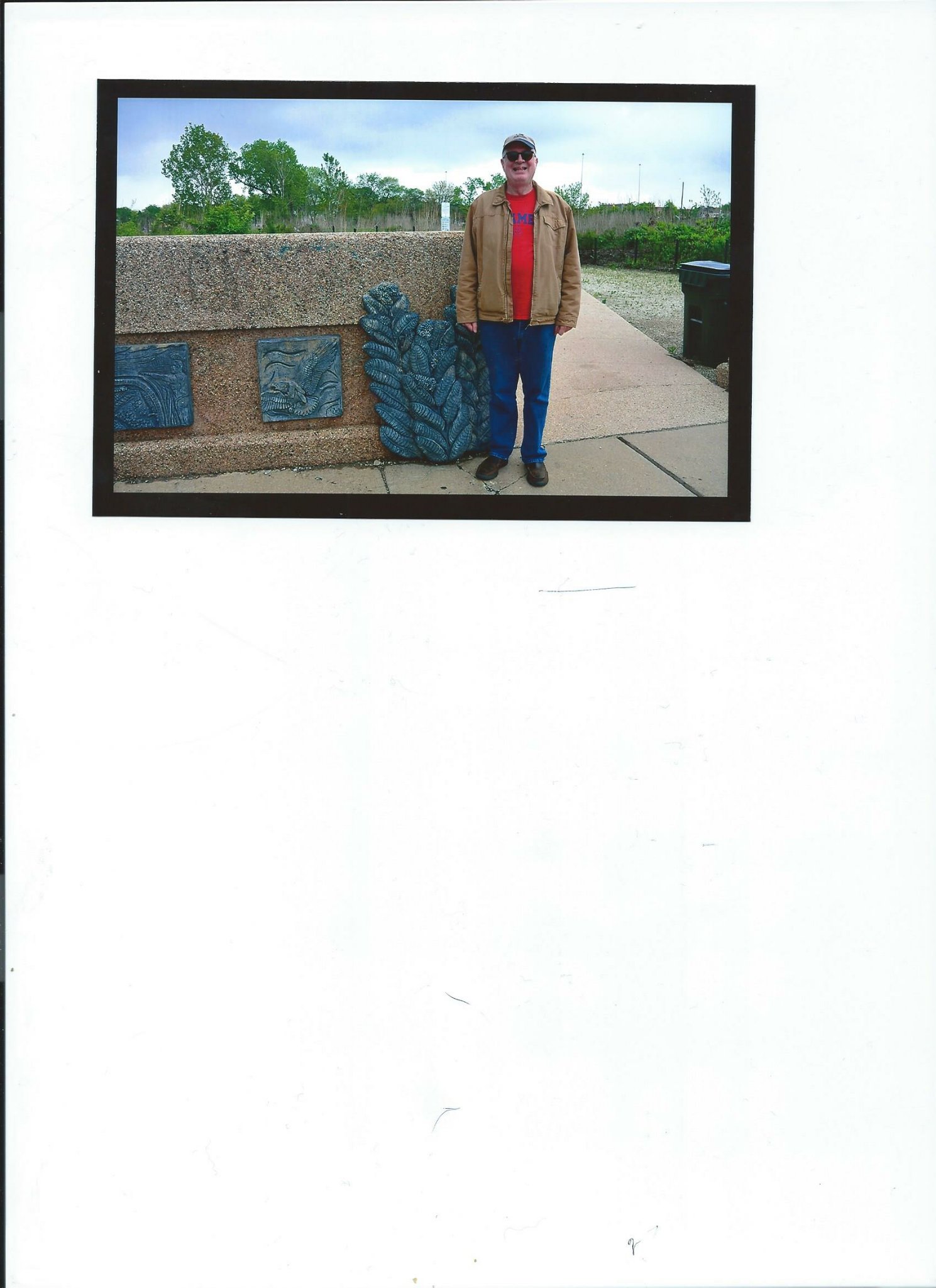
Front Wall
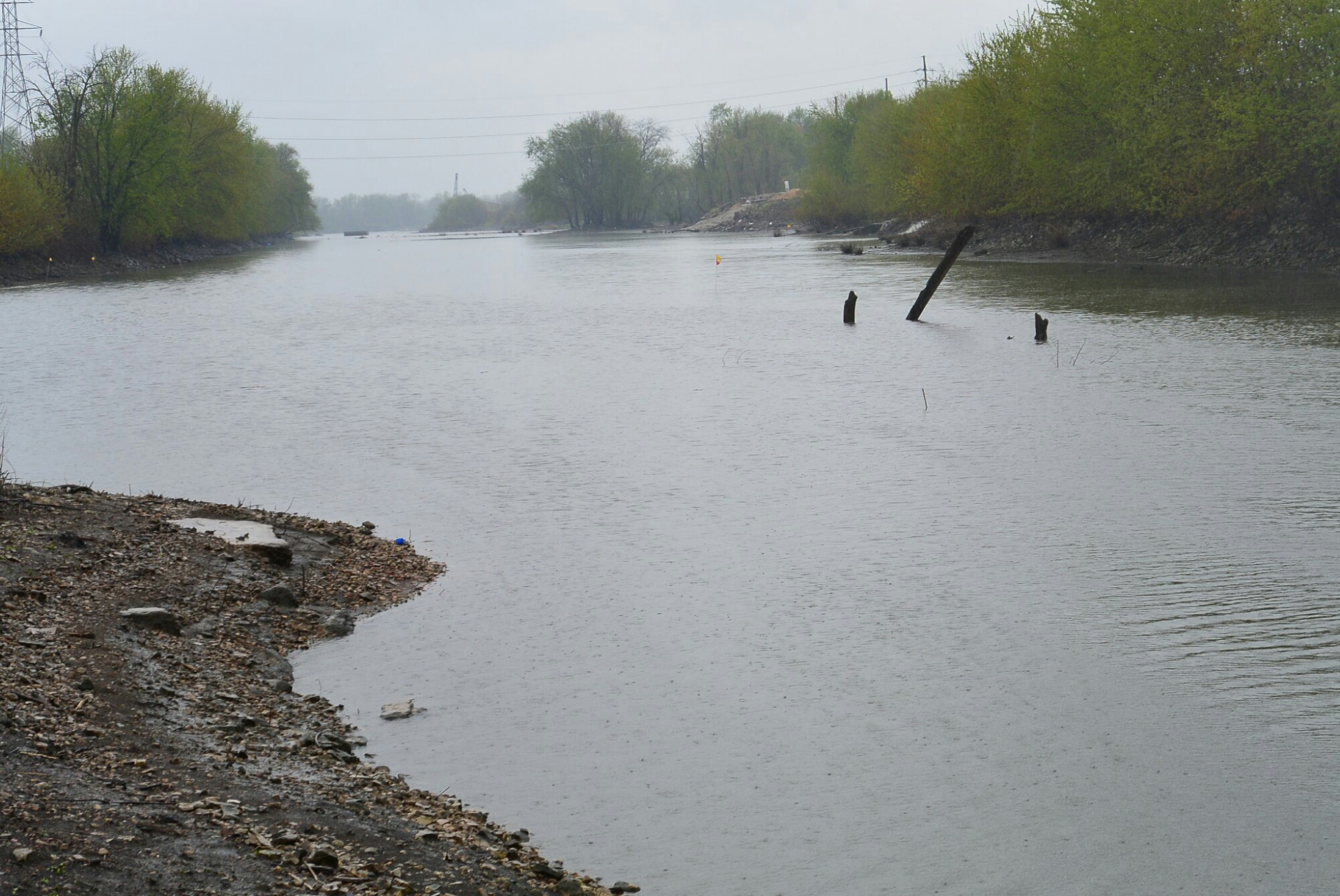
As mentioned previously, the park is bordered on the east by water including the Sanitary and Ship Canal, the south branch of the Chicago River, the canal turning basin, and the Bubbly Creek. The Creek received its name in the following manner. The waste from the Chicago Stock Yard was dumped into Bubbly Creek. The decaying of this garbage created a gas.
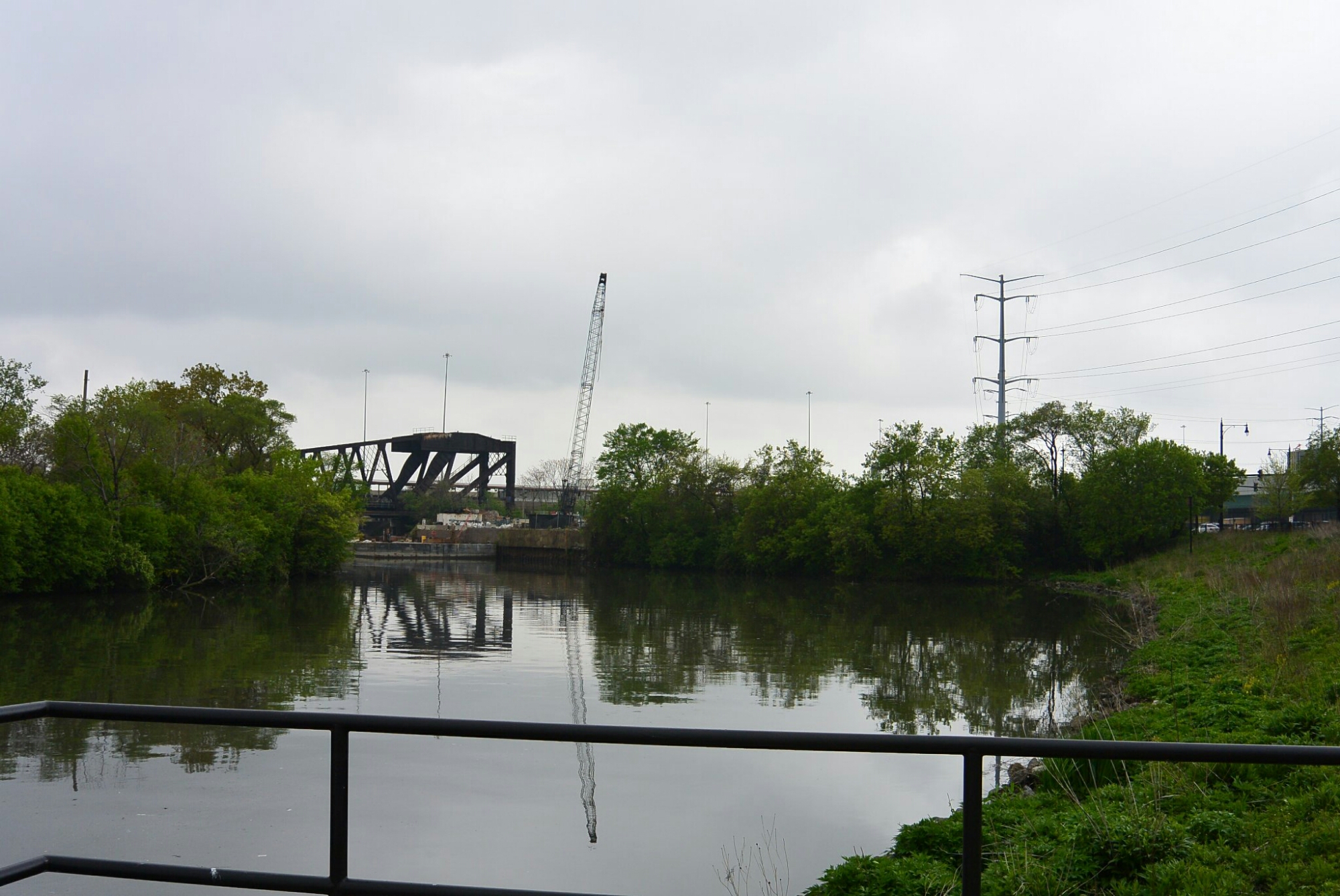
Water along east park
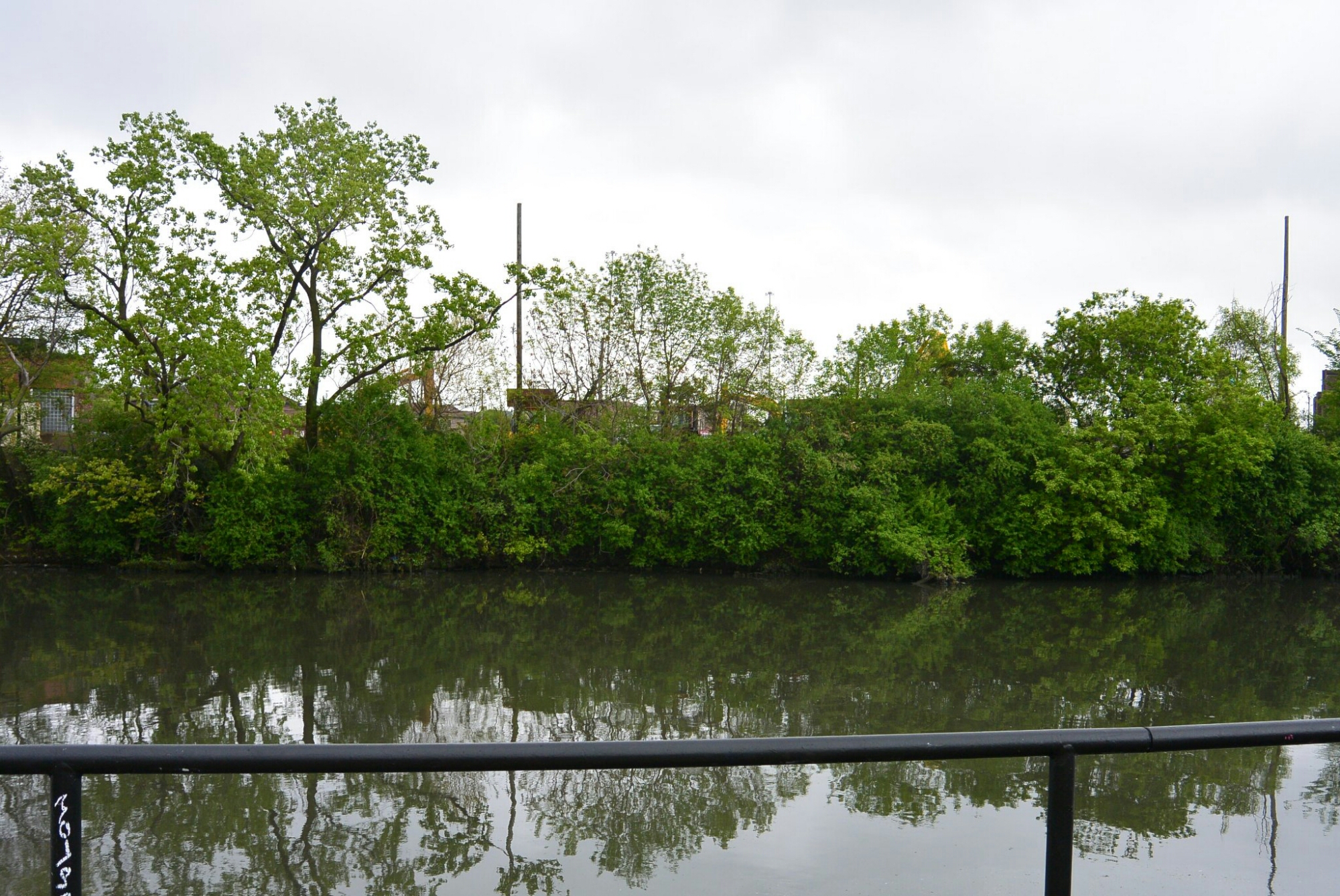
Water at the east side of the park
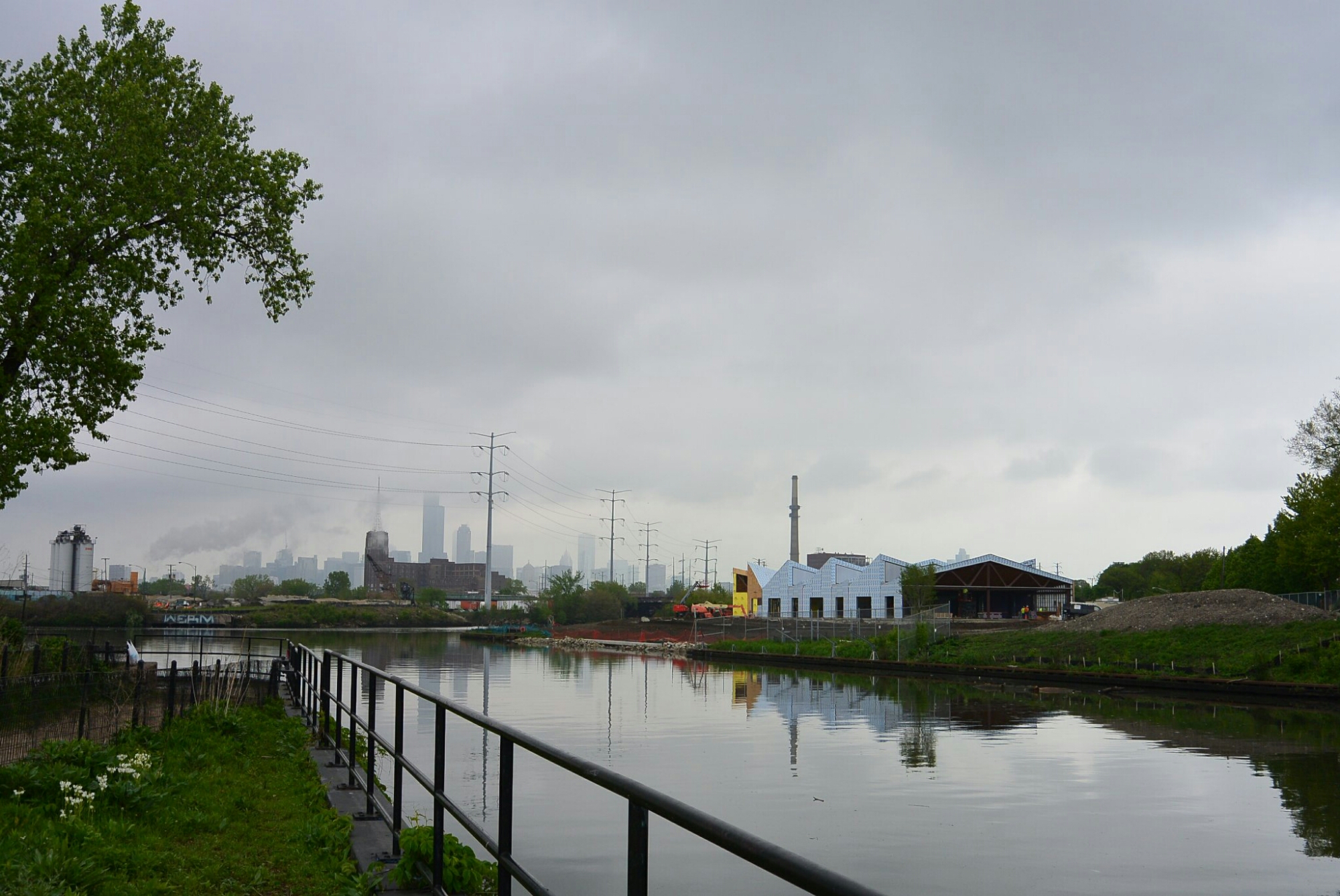
Water along the east side of the Park
This park is located at 2701 South Ashland Avenue. West of the park is the former Sun Times Building. North of the park on Ashland is the bridge over the Sanitary and Ship Canal.
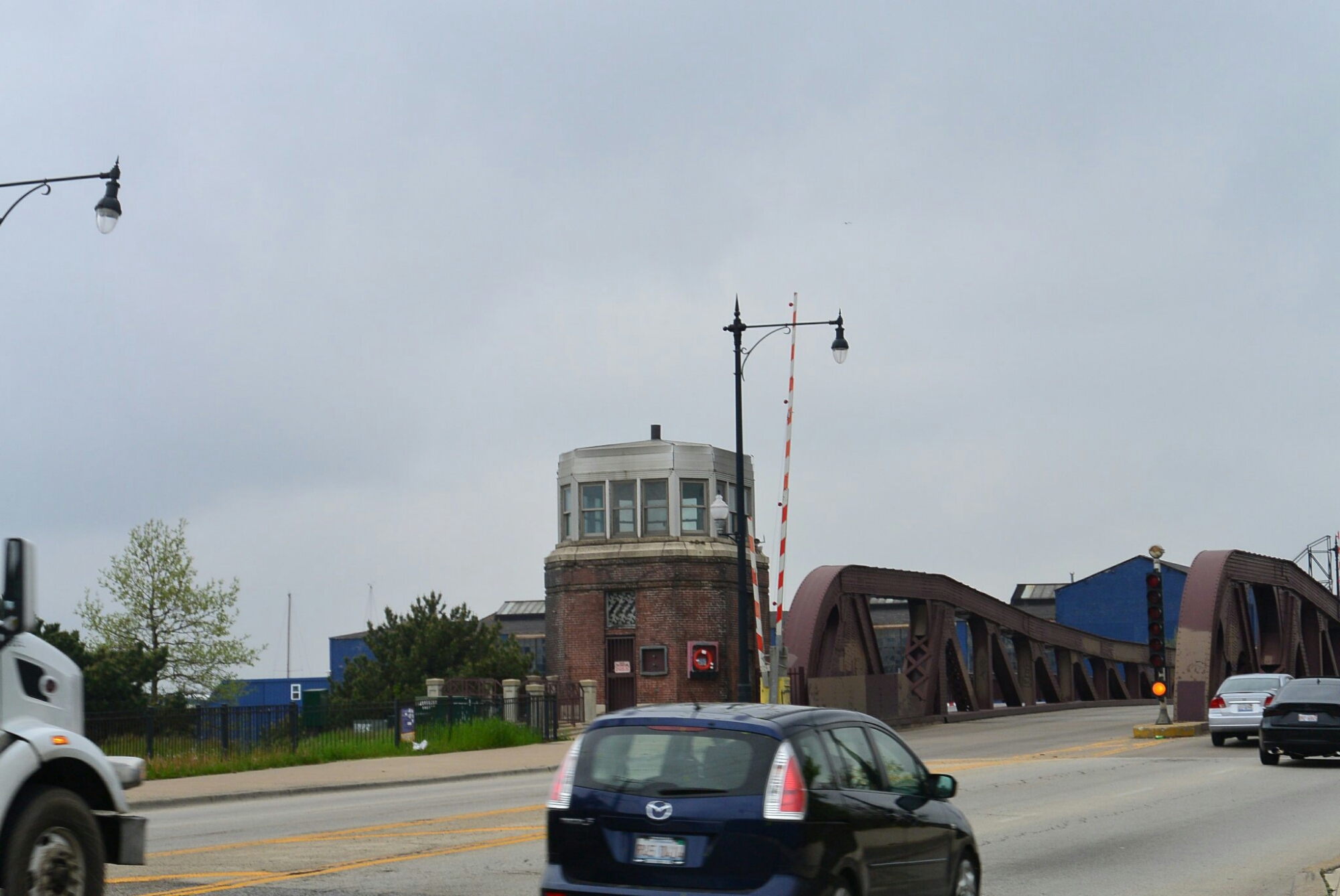 [/captio
Bridge over Sanitary and Ship Canal
Bridge over the Sanitary and Ship Canal
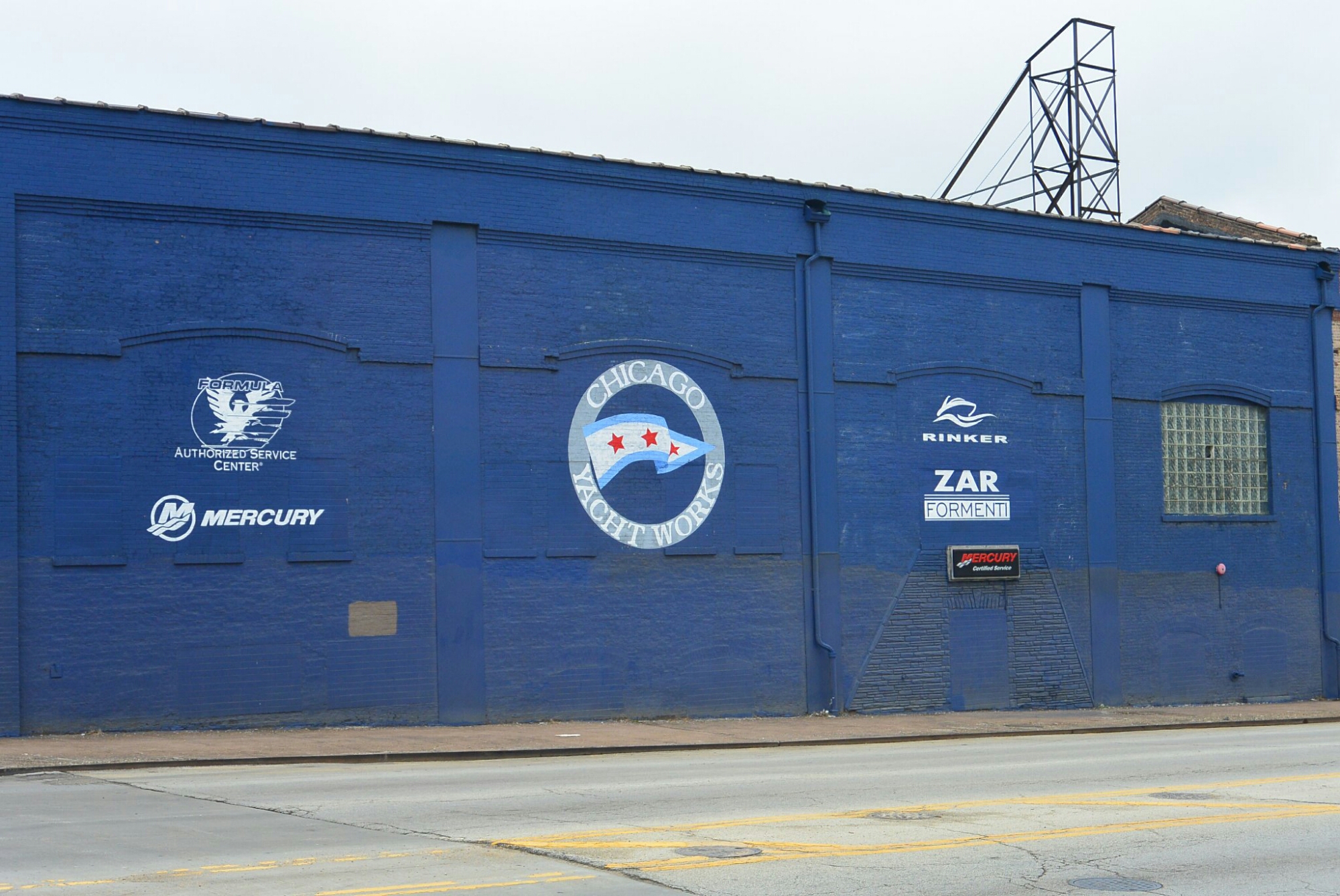
My personal reflections. I applaud the efforts of the multiple agencies involved in the acquisition and development of this park. They have preserved a site of canal history.
It is disappointing that they have been unable to protect this area from the ravages of vandalism