This blog has been dedicated to the Illinois Michigan Canal and it’s influence on the development of Chicago and the Illinois Valley. Occasionally, we investigate subjects not directly related to the canal. This is one of these times. Our subject is the Radium Dial Company. This is undoubtedly is one of the darker episodes in the history of Ottawa, Illinois.
Radium is a naturally occurring radioactive element. It was discovered by Marie Curie in 1898. It’s discovery was greeted with unbridled enthusiasm. Many thought it was a magic bullet providing cures for everything from arthritis to cancer. Some also used it in the form of an oral tonic. Unfortunately, this enthusiasm was not backed with scientific research. The safety of this radioactive element was not evaluated before these various uses.
In the early 1900’s two brothers Joseph and James Flannery from Pittsburgh developed an interest in the marketing of radium. They traveled to Europe to explore the usefulness of this element. Subsequently, the brothers established the Standard Chemical Company in 1911. Their headquarters were in Orange, New Jersey. They became the first large scale radium producer in the United States. Their first product using radium was Undark (mixture of radium and and zinc sulfate). This product was applied to several products using small brushes. During World War 1, a U.S. government contract was awarded to the Standard Chemical Company to manufacture military watches and instrument dials using the radium paint mixture on the numbers. This allowed for easier reading of these instruments. More subsidiaries were established in Long Island, New York and Waterbury, Connecticut to complete these contracts.
After the war ended, the contracts were cancelled. There was a reorganization. A subdivision called the Radium Dial Company was created. Its only product was to be painting watches, alarm clocks, and wrist watches with radium paint (glow in the dark).
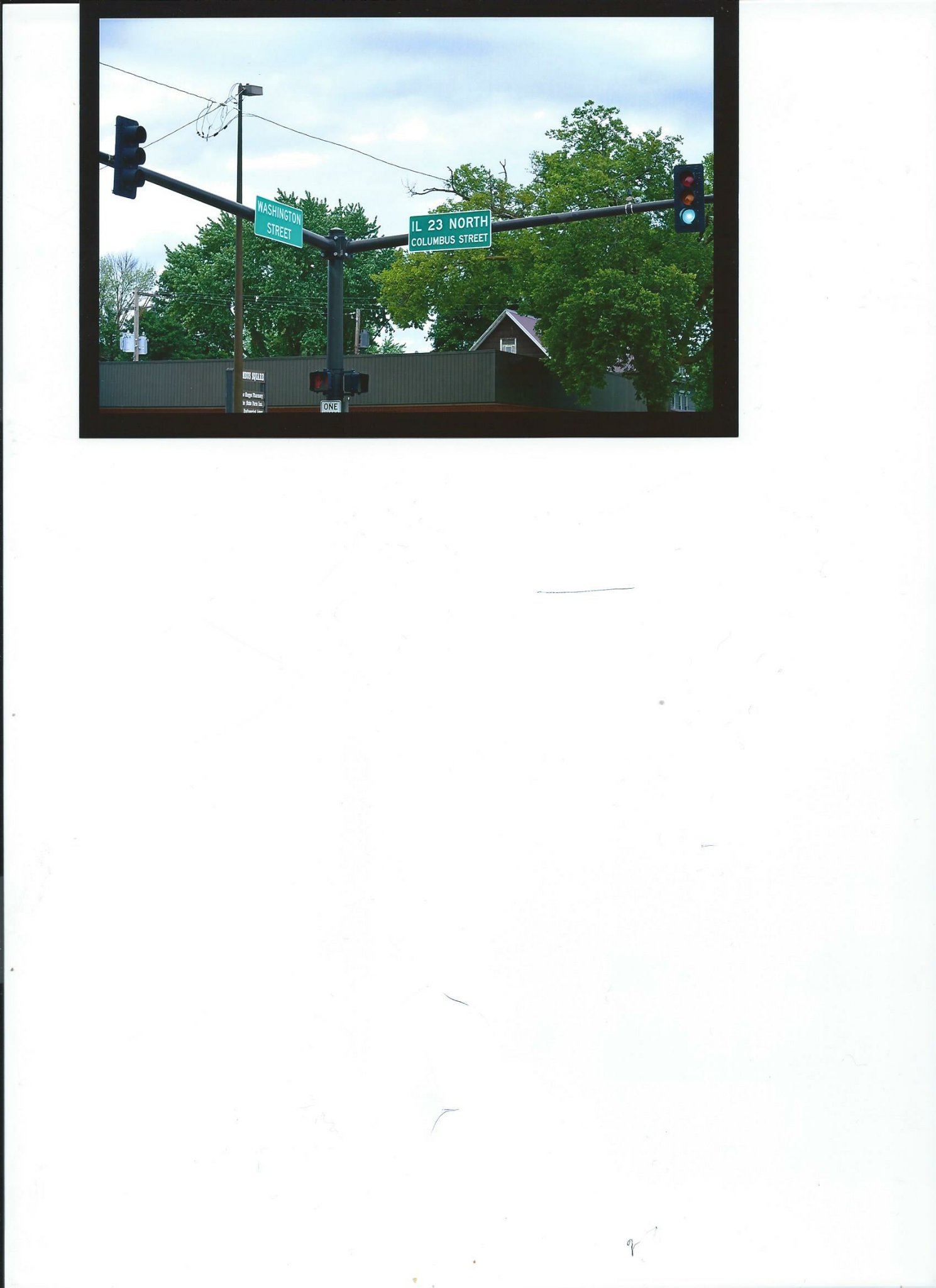
In 1917, a Radium Dial Company was started in Chicago. It was in full production in 1918. There is not much information about the Chicago plant and its employees. Some of its larger customers at that time were the Elgin Watch Company, the Springfield Watch Company, and the Westclox Company. In 1920, the operation was moved to Peru, Illinois. This move took place so that the production site was near the Westclox factory. This was one of its largest customers. There apparently was some difficulty between Westclox and the Radium Dial Company. It was alleged that the Dial Company was luring employees from Westclox with promises of higher wages. As a result after one year, the company moved to Ottawa, Illinois to the unused Ottawa Township High School in 1922. It was on the corner of Washington and Columbus Street. This was kitty corner to Saint Columba Church. This was headed by Joseph A. Kelly, Sr. He was the son in law of the Flannery brothers (the founders of Standard Chemical Company)
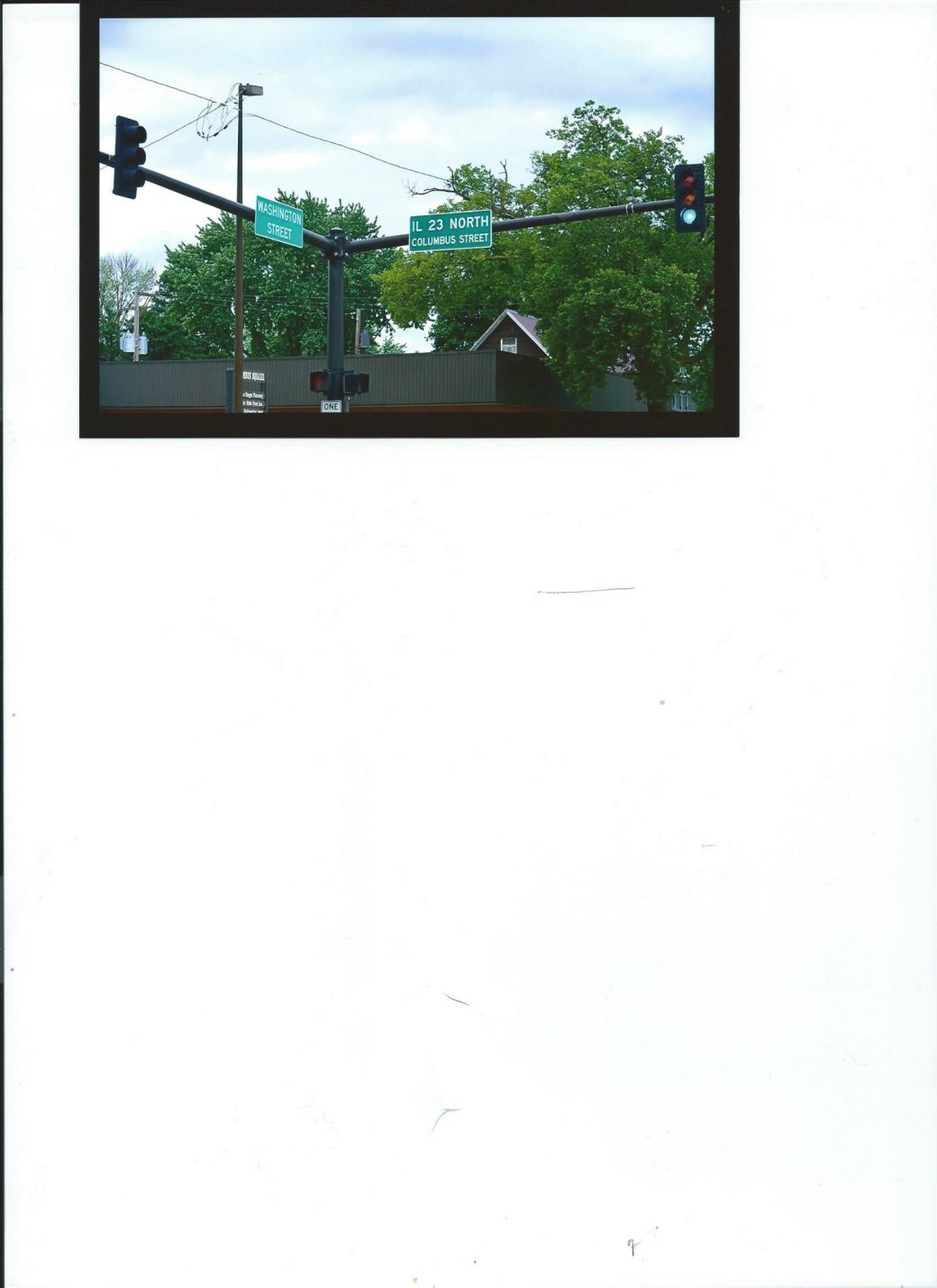 Former Site of the Radium Dial Co.
The company recruited young women to work in its Ottawa plant. They were paid a very handsome salary sometimes up to $18 per week. Their job consisted in painting the dials of watches with a radium based paint called Luna. They would apparently lick the brush before they would paint the numbers on the clock. At its high point of production, there were approximately 1000 employees who produced 4,300 watch dials a day. Initially, the employees were happy in their employment. For many, this was the most money that they had made in their lives.
The dial painters worked on the second and third floor of the old school. They worked either at old school desks or long tables. They mixed the paint with water. They only wore smocks. They were not issued protective gloves.
There were no established safety guide lines for the use of this radioactive paint product. Many of the employees used to play around with the product putting it on their teeth, cheeks and eyebrows.
Gradually, it became evident radium was not a totally save element. Madame Curie, its discoverer developed leukemia likely from her exposure. Sabin Von Sochocky (developer of a luminous paint formula containing radium) died from aplastic anemia. This was likely from his exposure to radium. Dial painters in Orange, New Jersey began developing various diseases including radium jaw and cancer likely related to their exposure to radium. For a short period of time, Radium Dial had a plant in Streator. The thought process was this. The company officials feared that the publicity from the New Jersey dial painters might scare Ottawa workers. Streator residents were less likely to read about something happening out east. As things turned out, the Streator plant was in operation for a short period of time. Workers continued at their jobs in Ottawa.
In Ottawa, workers began to develop symptoms. Many developed anemia, bone fractures and radium jaw (necrosis and osteoporosis), and some developed tumors. The company assured the women that the paint was safe and even said it had beneficial effects. By 1925, plant officials new the radioactive paint was not safe. They monitored employees for radioactivity but concealed the results of these exams. Physicians employed by the company also participated in this cover up. Some of the even lied about the cause of the symptoms attributing them to diptheria and syphilis. Company denied any culpability. Sick employees were dismissed.
One example is Peg Looney. She worked in the Ottawa plant. She apparently tested positive for radioactivity in 1925 and 1928. She developed radium jaw as well as tumors in this region. Her declining health forced her to leave Radium Dial in August, 1929. She died days later at the age of 24. Autopsy by a company physician listed diptheria as the cause of death. 20 years later, an autopsy performed by scientists at the Argonne Lab determined that there were 19,500 microcuries of radium in Looney’s bones. This was more than 1000 time the amount considered safe
 Radium Dial Hearings
 Radium Dial Hearings
Catherine Wolfe Donahue also sued the company in 1938. During the trial, it was determined that the company kept the results of testing from the employees. She died in the same year after winning a small settlement. Most of the sickened women never sued the company.
Experts now believe the cause of these many deaths were due to anemia, radiation poisoning and cancer.
In the 1930’s, the Radium Dial Company and Joseph Kelly parted ways. The company operated for a short period of time afterwards. In the mean time, Kelly opened the Luminous Processes, Inc. at Fulton and Jefferson Streets in Ottawa. This company performed the identical services as its predecessor. One of its largest costumers was Westclox of Peru. (coincidence?) The Radium Dial Company subsequently closed due to competition from Luminous Process and the threat of law suits
Considering the past history of sickness, illnesses, cancers and deaths, it would seem amazing that anyone would want to work at the new plant. However, we should remember that this was during the Depression and paying jobs were scarce. Furthermore, Mr. Kelly gave a newspaper interview in which he made assurances that the plant was safe.
So in essence Luminous Processes, Inc. was a replacement for Radium Dial Company. It was producing luminous watch and clock dials. It largest customer had been the largest customer of the Radium Dial Co. The same individual was the president of both companies.
During World War II, the company secured government contracts to produce luminous dials for clocks and instrument panels. It was also worked with reprocessed radium to produce polonium–an element component of the atomic bomb.
Gradually, because of the publicity of radiation sickness and death at many other sites, safety regulations began to be implemented. Unfortunately, these were too late for the many who died or were sickened.
In 1975, Luminous Processes switched to tritium in its luminous paints. The significance of this was that the plant now came under NRC guidelines An inspection in this same year demonstrated that the radiation levels were 1,666 greater than the allowable limits. The plant subsequently failed multiple additional inspections in 1976-1978. The plant was closed by the state of Illinois. Luminous Processes, Inc. was ordered to clean up the plant site and surrounding grounds of radioactive contamination. It never did this.
Additional interesting information. A Joseph Kelly, Jr. was brought into court to clean up radioactive contamination in his plants in Woodside, New York and Athens, Georgia. He also failed to do this. His father was Joseph Kelly, Sr.
There were numerous health issues at the Luminous Processes, Inc. In 1980, 10 employees had high rates of breast and ovarian cancer. There were 64 deaths among dial painters that worked in the plant since the 1960’s.
Survey of the area of Ottawa found 14 sites of radioactive contamination. The majority were in residential areas. Others were located in the business district. Few were located in un-incorporated areas. The main radioactive contaminant was radium 226.
At first glance, this distribution of radioactive contamination would appear unusual. However,one must remember there were many workers at these plants and for years no safety measures. There was obvious contamination of their hands, arms, faces and clothes. This was transferred to their homes and places of business that they frequented. There were also many issues about the delivery and storage of radium products at both plants.
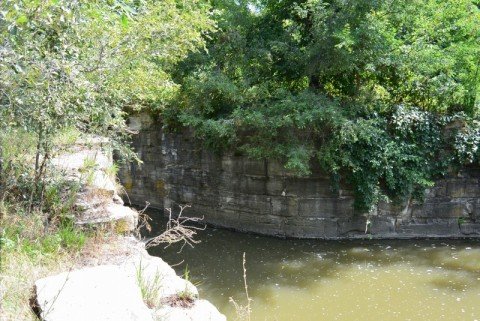
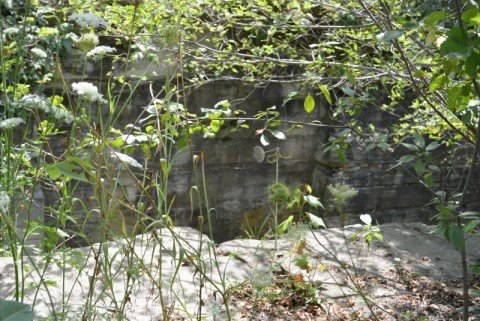
A large amount of the contamination resulted from the mishandling of the original Radium Dial Company plant in Ottawa. This was in use from 1918–1937. However, after the company closed, the building was in use for many years for other purposes. There was a meat locker in the basement. This supplied the Ottawa area. Many who worked there died of cancer. After this the building was in use as a farmers co-op. It was not until 1968 that it was demolished. Many residents took mementos from the plant such as desks, tables and lights. These were placed in their homes. Bricks from the plant were used in construction of new homes and streets The building remains were used in land fill in and around Ottawa. These included an area adjacent to the Marquette High School athletic field, near Buffalo Rock State Park, and along Canal Road between Ottawa and Marseilles. All of these represented potential sites of radioactive contamination.
The whole history of the Radium Dial Company/Luminous Processes, Inc was a tragedy. To begin with, when radium was discovered by Madame Curie, it was used in many products without any serious safety studies. As years went by, there began to be reports of illness, cancers, and deaths associated with its use. Even Madame Curie developed leukemia likely related to her exposure. Unfortunately, these reports were either ignored or covered up. As in the case of the Radium Dial Company/Luminous Processes companies, when employees exhibited signs of illness, they were either fired or ignored. The company continued to insist the the radioactive pant was safe. Results of radiation monitoring were kept secret. In court cases, the company denied any responsibility. The Luminous Processes Company was not closed until after it failed multiple inspections. Comprehensive radiation safety programs were never completely implemented. To compound the tragedy, many in the community of Ottawa did not support the sickened employees. They were blamed for job losses in the area. When the areas of radioactive contamination were later discovered, local government official were not accepting of the results and actually down played them. In a documentary Radium City (1986), the mayor at the time downplayed any danger of the radioactive sites. Mr. Kelly and son accepted no responsibility for the clean up of the areas contaminated with radioactivity in Ottawa. To add insult to injury, Mr. Kelly,Jr was also MIA for clean up of contaminated plants in New York and Georgia. The bulk of the clean up was paid by tax payers.
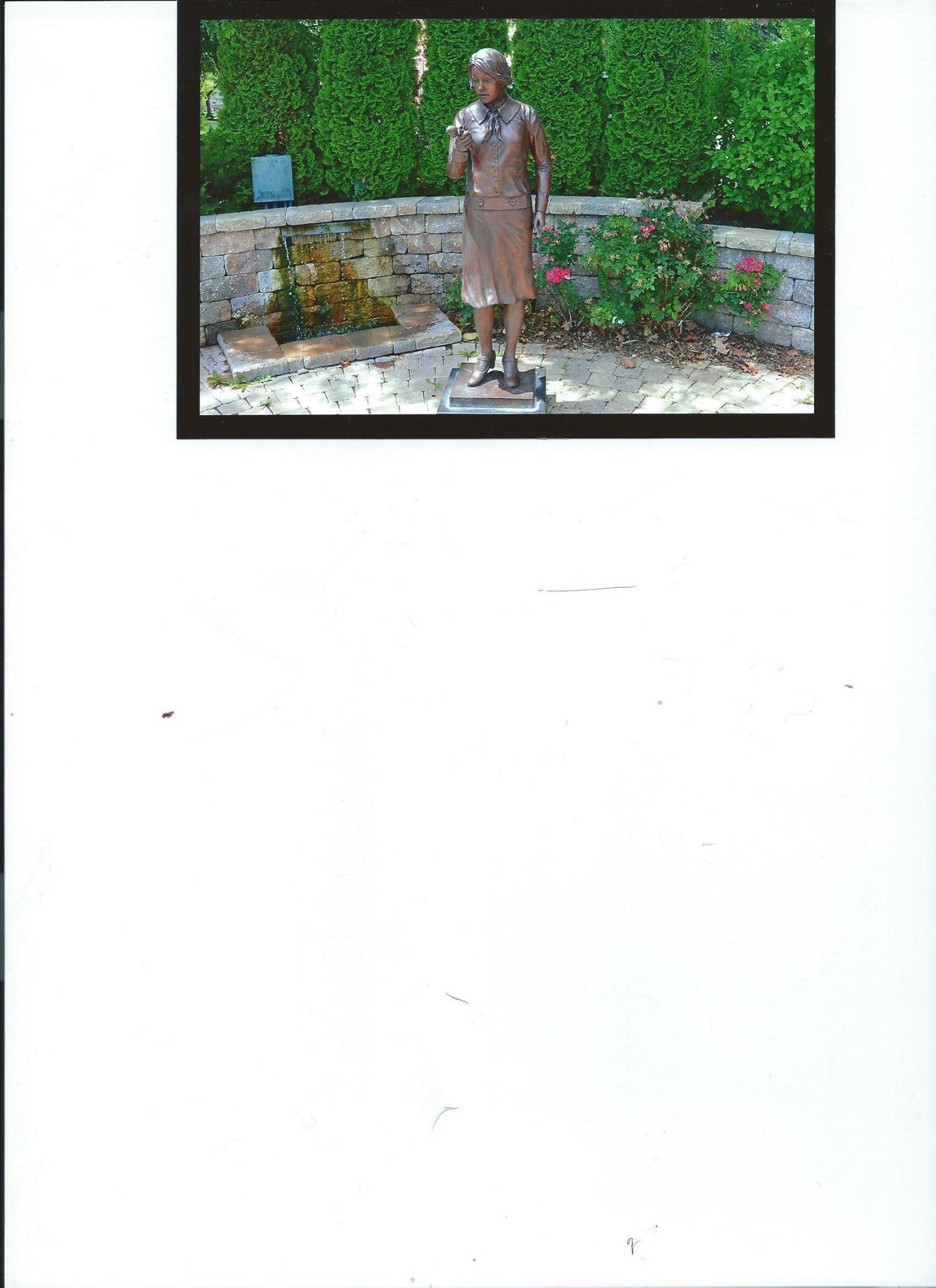
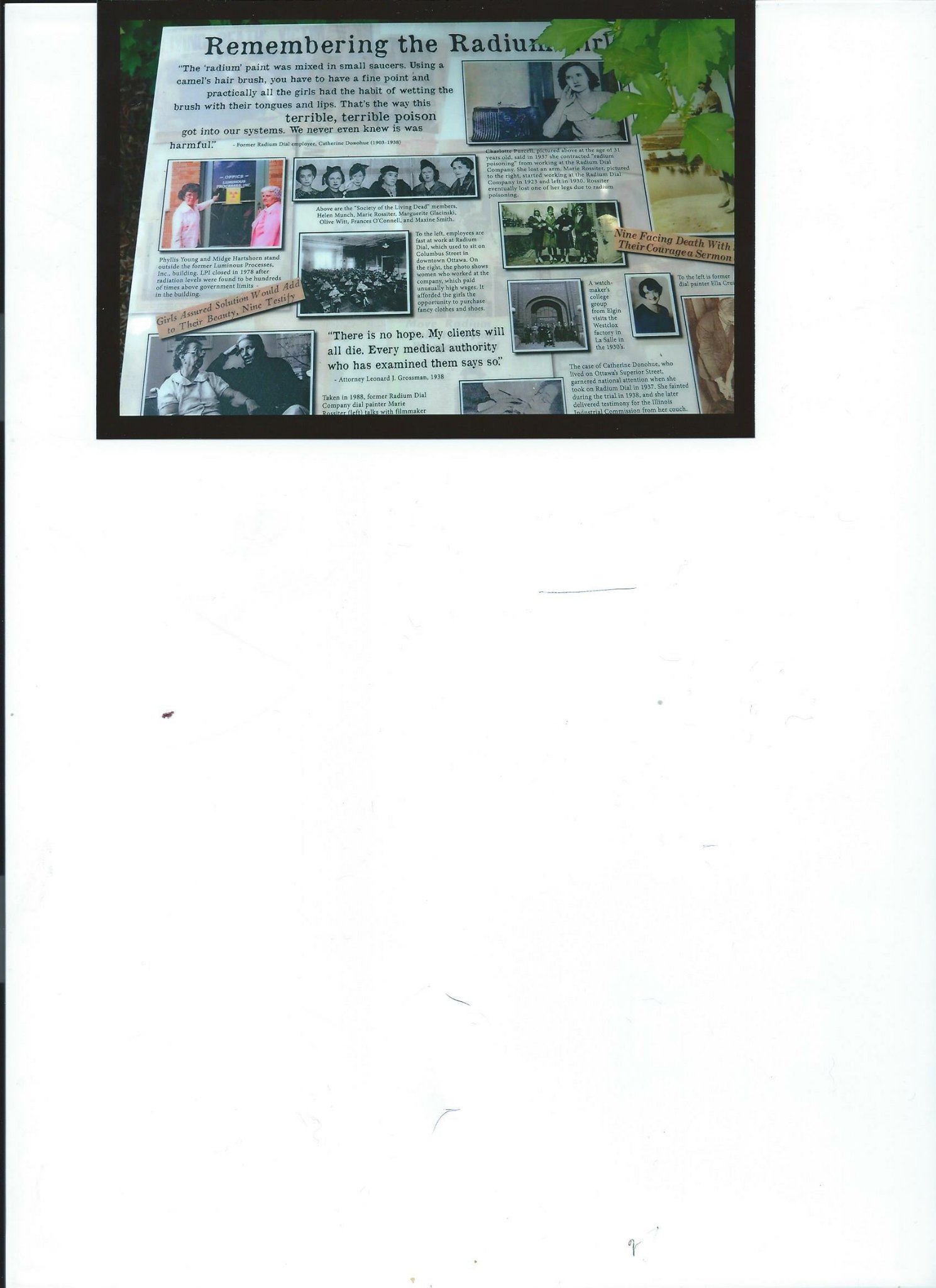
An 8th grade student from rural Ottawa named Madeline Piller found out the story of the group of young women who had worked at the Radium Dial Factory in the 1920s and 1930s. Almost single-handed, she spent many years raising money for a permanent memorial to the Radium Dial painters of Ottawa. Finally, in 2011 a bronze statue commemorating these women was created by her father. It was placed at the former site of the Luminous Processes Plant. Dedication was on Labor Day, 2011.
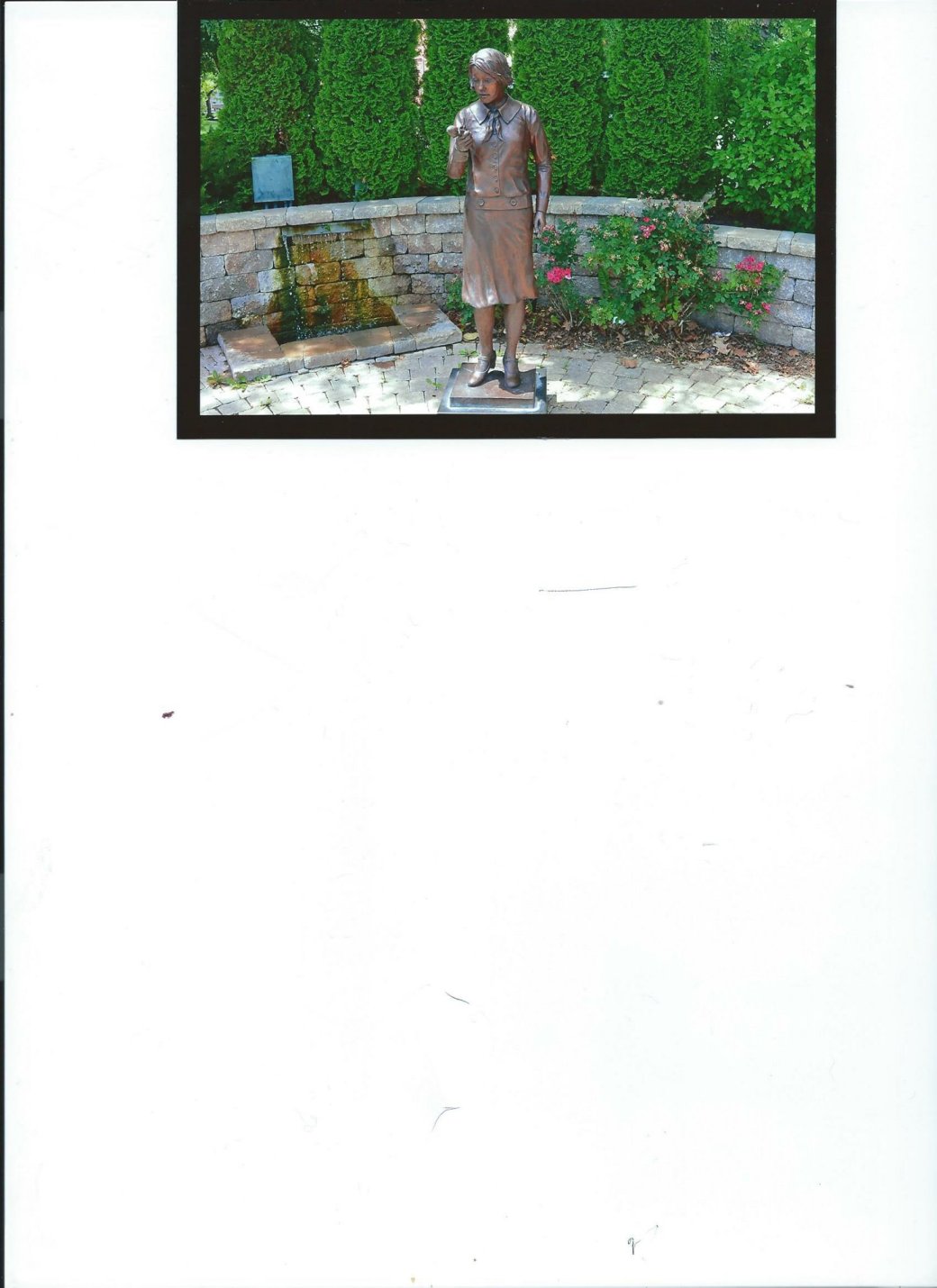
Radium Dial Painter Memorial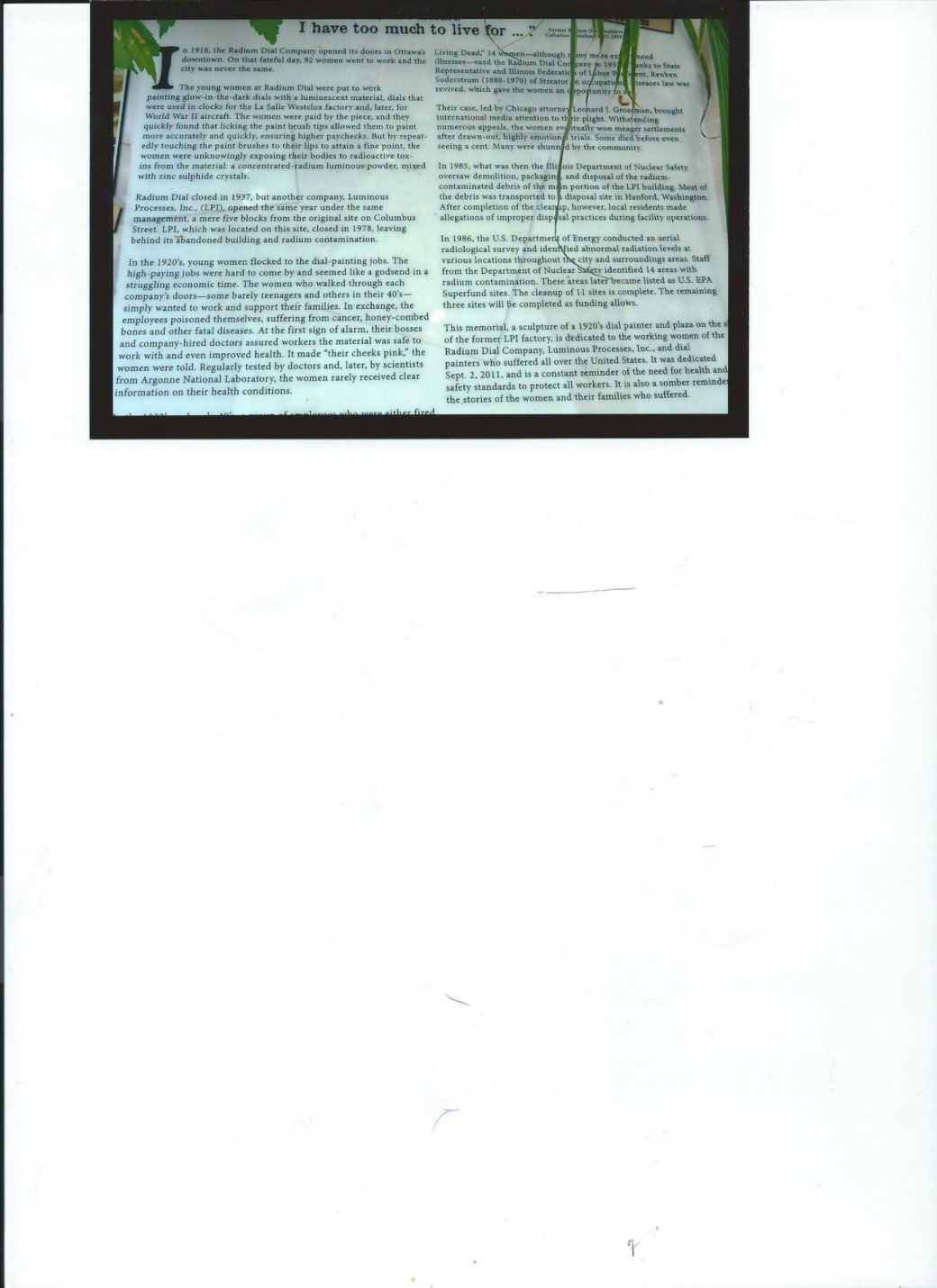
Radium Dial Painter Memorial 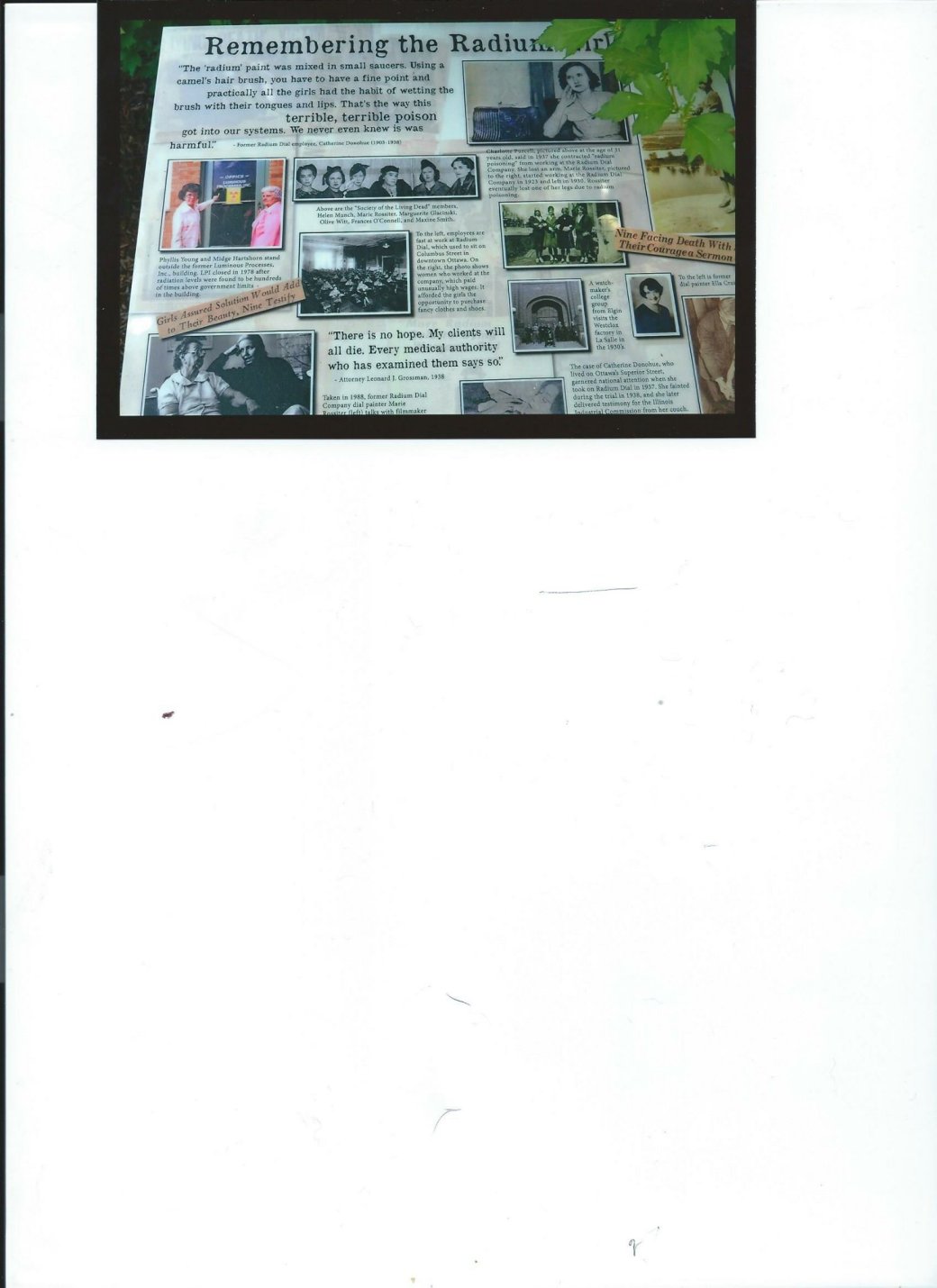
In 1986, Carol Langer completed a documentary film entitled Radium City. This was the story of the women working at the Radium Dial Plant in Ottawa. This film incorporated many devices to tell this story. I found particularly interesting the segment in which an individual went to different areas of Ottawa with a Geiger counter to document radioactive contamination. He had himself filmed to establish what he had done. This film was presented to the mayor and the city council. The response of the mayor was amazing. He denied the reality of the situation by denying the authenticity of the radioactive monitoring. Although overall a dark film, I recommend it to anyone interested in the history of the Radium Dial Company.
In May 11–28, 2000, the play Radium Girls was first produced at Playwrights Theater of New Jersey. The author was D.W. Gregory. It concerned the radium dial painters of Orange, New Jersey. between 1918–1928. The women in this play suffered many of the same ailments as the Ottawa dial painters. They developed anemia, jaw and bone necrosis, tumors and many subsequently died. As in Ottawa, the plant owners denied responsibility, failed to disclose the results of testing and recruited local physicians to literally lie about the exact nature of the dial painters illnesses. When the case finally ended in court, the company asked and many times received delays in the proceedings. Many of the workers died before a settlement was reached. There was an eerie similarity to the situation in Ottawa.

As a sign that many have put aside the disturbing history of the Radium Dial Company in Ottawa, recently a group of business men founded a local brewery in the town. They named it the Radium City Brewery. They dedicated it the to the women that worked in the plant.