
Kirkwood City Hall Missouri
Kirkwood City Hall Missouri

Grand Avenue Water Tower
This tower was built in 1871. The architect was George Barnett. The structure is in the form of a Corinthian order column with brick, stone and cast iron trim. Height is 154 feet.

Grand Avenue Water Tower
Inside was a stand pipe 5 feet in diameter. It was designed to hold water for fire fighting. It also used to regulate water pressure.
The tower was decommissioned in 1912. The stand pipe and stair case were removed. A vertical ladder replaced the stair case.

Top of Grand Avenue Water Tower
In 1998, the water was restored and light floodlights added.
The white tower is the tallest free standing Corinthian one in.the world.
It is located at.the intersection of East Grand Boulevard and 20th Street Saint Louis
It was listed in the National Register of Historic Places on April 20, 1970.

Valley Park Rail Road Bridge
Valley Park Rail Road Bridge
Same as above

Valey Park Rail Road Bridge

Valley Park Rail Road Bridge
This is a Baltimore through truss bridge. It cross the Meramec River in Valley Park, Missouri. The bridge length is 500 feet. It currently carries one track, but has space for a second. It was built for the Saint Louis -San Francisco Railroad. It currently is used by BNSF Railroad. The substrate is concrete and stone masonary. It was built in 1923. It is a replacement of a prior bridge.It was constructed by the American Bridge of New York.

Historic Kirkwood Train Station

Kirkwood Railroad Station

Same as above

Same as sbove

Same as above
The original station in Kirkwood was built in 1863. It was wood frame. It lasted only til 1893.
In 1893, the Missouri Pacific Railroad hired Douglas Donovan to build a replacement station made of stone. Its exterior is made of random Ashlar light colored stone.
It features porte cochere and a main entrance set within a large round arch. There is a curved bay facing the tracks. This is topped by a turrett.with a conical roof.
In the early 2000s, the station was briefly closed.
There is an atm, no elevators, pay phones, no vending machines.
The building is currently undergoing a renovation
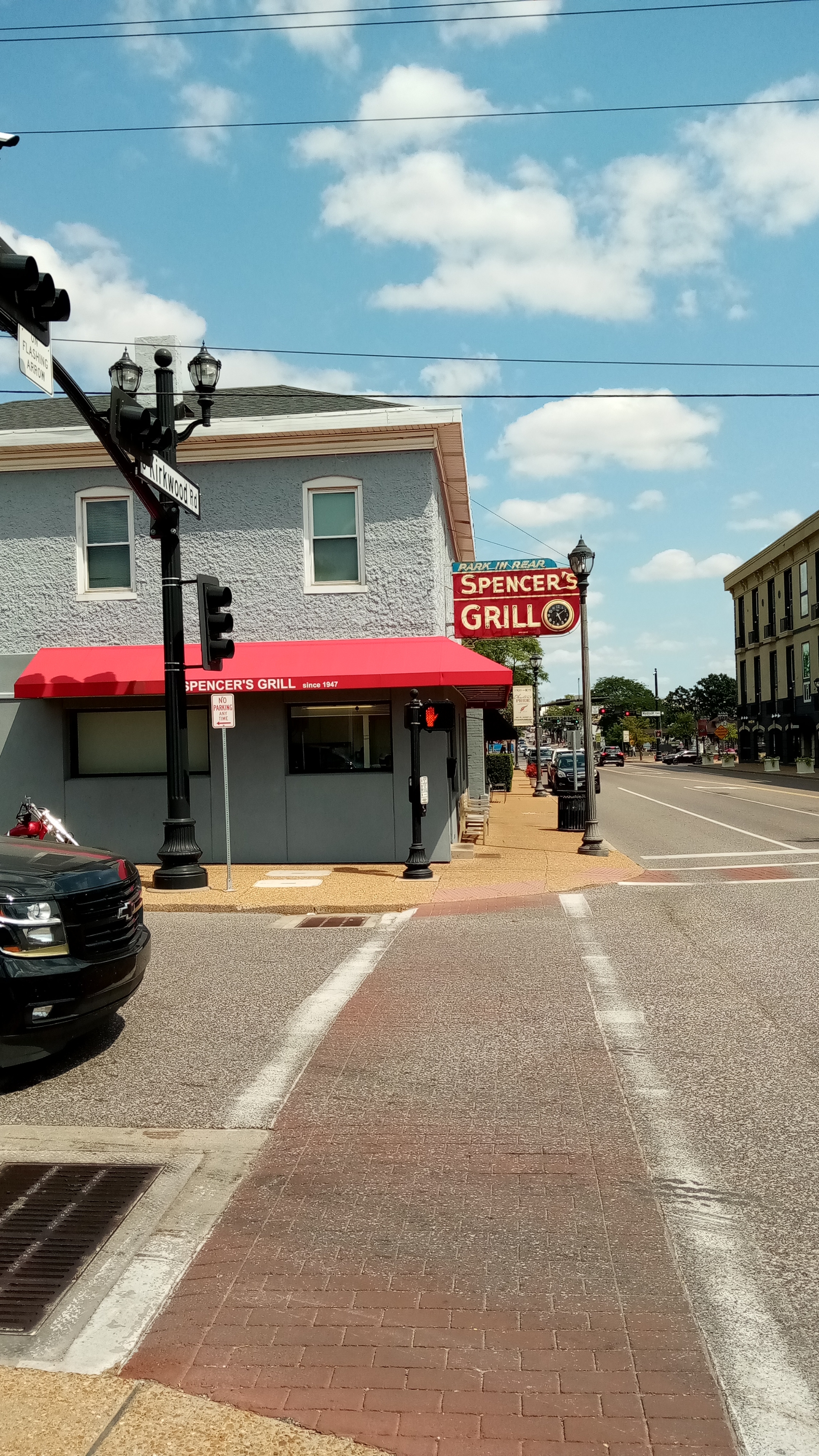
Spencers Grill Kirkwood, Missouri
Bill Spencer moved from Arkansas to Saint Louis during the Depression. He was looking for work. He met his wife Irene Harlow when they were bith working atthe same restaurant. They married in 1941. They purchased an.existing restaurant. Lee Grill at 303 South Kirkwood Road. They renamed it Spencer’s. The restaurant at this location operated only 2 years.

Same as above
In 1947, they reopened Spencer’s at a new location–223 Kirkwood Road. Their aim was to capture business from Route 66. Initially, they were opened 24 hours. Bill maintained ownership of the building until 1980. This was the time of his retirement.
Subsequently, the restaurant had six owners. Currently, the owners are Mike and Meredith Chadwick.

Monument of the Naked Truth
The Naked Truth Monument is located at 1938–1998 Grand Avenue in Saint Louis. It is in Compton Hill Reservoir Park. This was not the original site. It was moved in 1969 to make way for a new interstate
The monument was created in 1914. The sculptor was William Wandschneider. One the major donors was Augustus Busch. The pedestal is 19 feet 10 inches.
The monument was created to honor three great German American editors of the Saint Louis Westlice Post.– Carl Schurz, Doctor Emil Preetorius and Carl Daenzer.
The statute was controversial beginning with its debut because the woman depictet is naked. The revealing statute seemed appropriate because it was a symbol of truth. The two torches symbolize enlightment

Pond, Monument of the Naked Truth, Water Tower

Monument of the Naked Truth

Signage Monument of the Naked Truth

Monument of the Naked Truth

Monument of the Naked Truth

Karpeles Manuscript Library Museum
The original use of the building at 3524 Russell Avenue , Saint Louis was as the Third Church of Christ Scientist. The building was constructed in 1912. Its style is Greek.Revival. It is a 6 column brick and stone church building with.arching stained glass windows.

Same as above
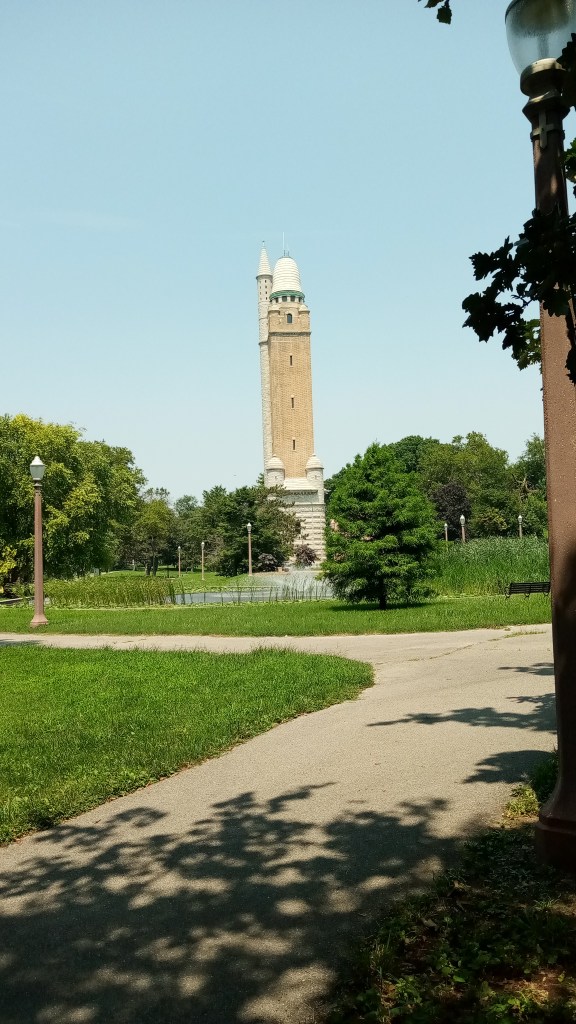
Compton Hill Water Tower
Same as above

Same as above

Same as above
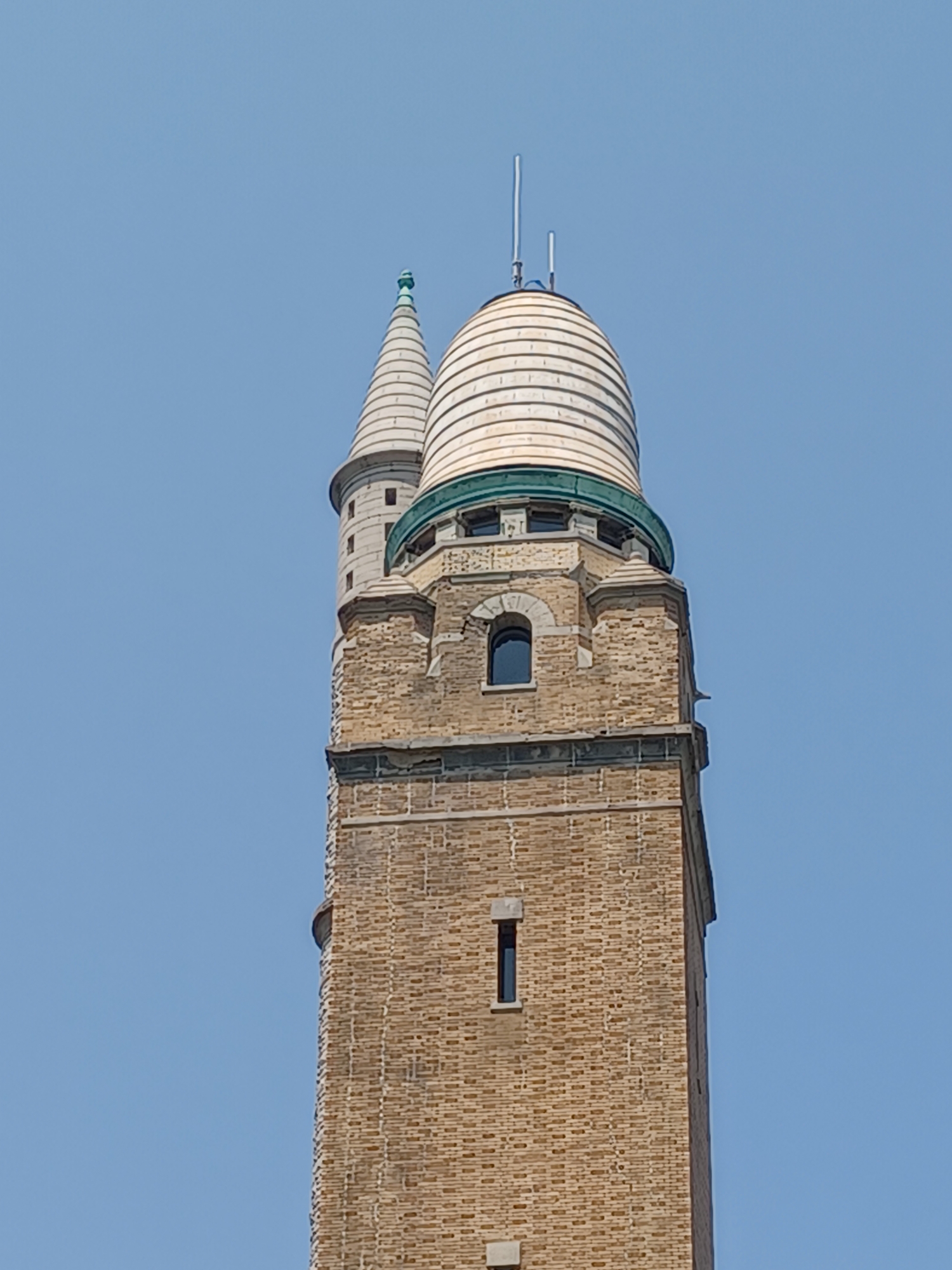
Compton Hill Water Tower

Compton Hill Water Tower


Devos Restaurant
Bevo Mill was built by Augustus Busch, Sr in 1917.It was located halfway between Grants Farm and the Augustus Brewery. Its address was 4749 Gravois Avenue in Saint Louis. He wished to recreate a European Beer Garden where drinks would be served in an outdoor atmosphere of music and dance.

Devos Restaurant

Out side Restaurant
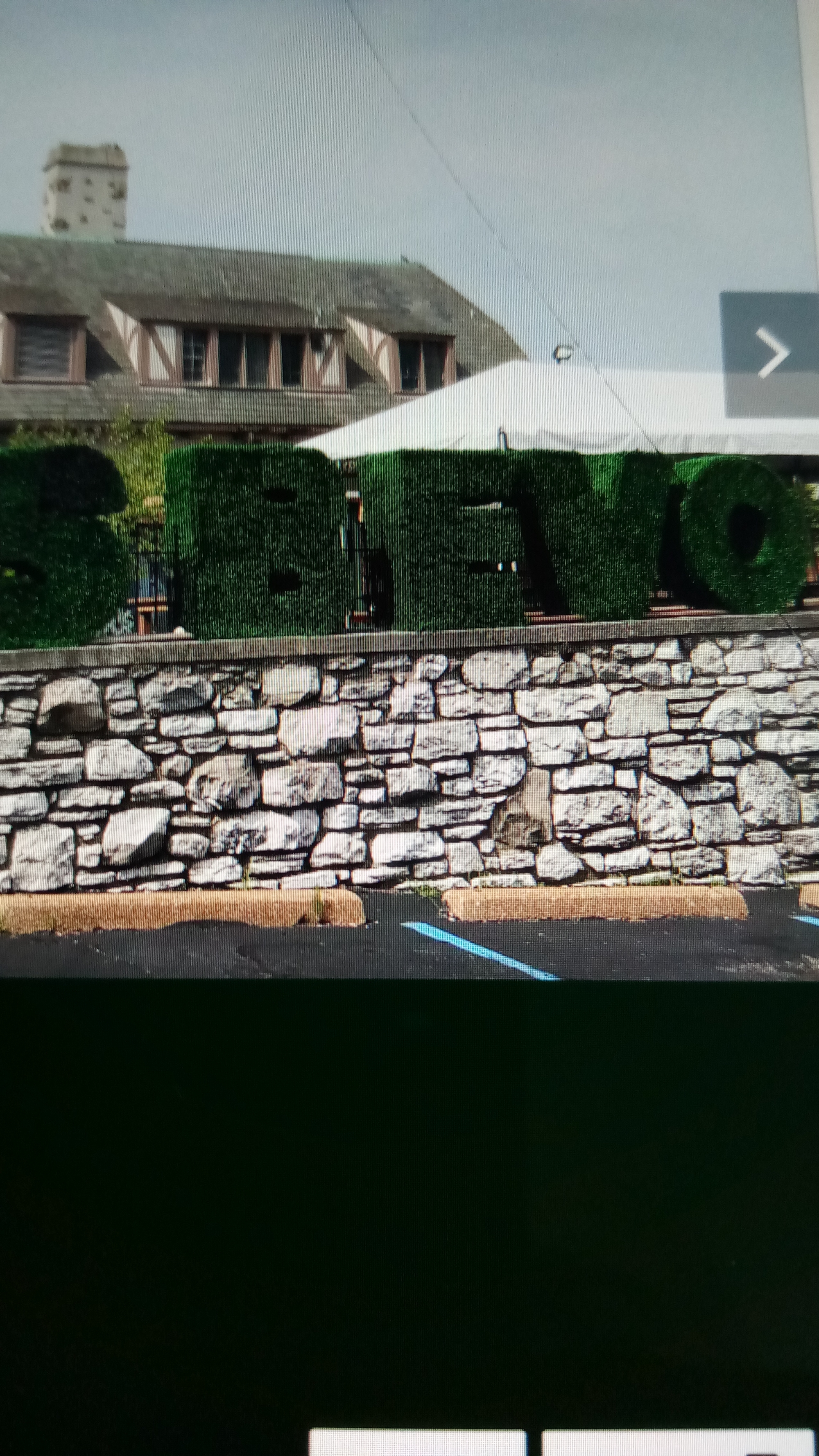
Outside Restaurant
These grain silos are located at 2860 S.Damen Avenue Chicago. They are located adjacent to the Sanitary and Ship Canal. They were constructed for the Topeka and Santa Fe Railroad in 1906. The architect was John Metcalf.

Photo of Damen Avenue Silos. Note the location adjacent to the Sanitary and Ship Canal. Downtown Chicago can be seen in the background
In 2022, the state of Illinois placed the Damen Silos up for sale at auction. The highest bidder was Michael A. Tadin, , Jr of Matt Asphalt. His winning bid was 6.5 million dollars. His plan for the property has not been revealed. The only n thing that is certain is that the historic silos would be demolished. It appears that another piece of Chicago History will be lost by unregulated development.

 raddoc1947