One of the lesser railroads in the Illinois Valley was the Illinois Central. It was known as the main line of mid America. This train stopped en route to either Cairo in southern Illinois or Dubuque, Iowa.
In 1850, President Millard Fillmore signed a land grant to build the railroad. This was the first land grant railroad in the United States. The Illinois Central Railroad was chartered by the Illinois State Assembly in 1851. An investment of 27 million dollars from European investors was needed to begin construction. The line between Cairo and Galena was completed in 1856.
A branch line between Centralia and Chicago was completed in 1855. In 1867, lines were extended into Iowa. In the 1860’s and 1870’s, the Illinois Central acquired and expanded into the south. It’s coverage went to New Orleans in the south and Louisville in the east. In 1880’s, northern lines were built to Dodgeville, Wisconsin; Sioux Falls, South Dakota; and Omaha, Nebraska.
In 1972, the IC merged with the GMO to form the Illinois Central Gulf. In the 1980’s, the combined line operated 13,532 miles of track. Later in the 1980’s, the railroad spun off most of its EW lines and many of its redundant North South Lines.
In 1988, it’s name was changed back to the Illinois Central Railroad. In February, 1998, the Illinois Central was purchased by the Canadian National Railroad.
The major passenger lines were: Chicago to New Orleans; Chicago to St.Louis; and Chicago to Omaha.
Uncategorized
Chicago, Alton & Saint Louis Railroad.
The era of the packet boat passenger service on the Illinois Michigan Canal lasted between 1848 to 1854. It was replaced by rail service in the Illinois Valley. Rail service was more rapid and ran year round. One of the earliest rail lines was Chicago, Alton & Saint Louis.
The Alton & Sangamon Railroad was chartered by the State of Illinois in February of 1847. It was to be a connection between the agricultural area near Springfield, Illinois and Alton on the east bank of the Mississippi River. It was completed in 1851. Subsequently, it was extended north through Bloomington to Joliet. It was renamed the Saint Louis, Alton & Chicago Railroad. The Chicago & Alton Railroad was organized in 1861 to purchase the Saint Louis, Alton & Chicago Railroad. In 1864, the C & A leased the Joliet and Chicago Railroad. This provided an access to the Chicago area. A Mr. Timothy Blackstone (president of the J &C) also became the president of the C & A. In 1870, the C & A leased the Louisiana Missouri River Railroad (Louisiana, Missouri to the north bank of the Missouri River opposite Jefferson City) and in 1878, it leased Kansas City, Saint Louis & Chicago Railroad (Mexico, Missouri–Kansas City). This resulted in the shortest Chicago–Kansas City Route.
Toward the end of the the 19th century, there was active interest by many parties to purchase the Chicago & Alton Railroad. E.H. Harriman
was able to form a syndicate of railroad financiers that successfully arranged the sale. The C & A Railroad became reincorporated as the C & A Railway on April 2, 1900; this was done to arrange a take over of a line from Springfield to Peoria. The following day it leased the C & A Railroad. Ultimately, the two lines were consolidated as the C & A Railroad in1906.
In 1904 control passed to the Union Pacific Railroad and the Rock Island, and in 1907 to the Toledo, Saint Louis & Western Railroad (part of the Nickel Plate). Beginning in 1912, the C & A began multiple years of deficits. In 1922, it entered receivership. It was purchased and operated by the B & O until 1943. It ultimately became part of the G, M & O in 1947. It operated under this arrangement until 1972. In 1971, passenger service was taken over by Amtrak. From 1972–1987, Alton merged into Illinois Central Gulf. In 1987 Alton Joliet–St. Louis was sold to the Chicago Missouri and Western. In 1989, CM & W acquired by UP. In1990, St.Louis ( & Springfield) to KC sold to Gateway Western Railroad. 1998 Canadian National purchases Joliet–Chicago portion of old Alton. Passenger service operated by Metra. In 1997, KCS obtains St. Louis–KC line from Gateway Western.
The C& A was one of the primary trunk railroads for travel inside and beyond the canal corridor. It’s route paralleled the I and M canal between Chicago and Joliet. It passed the coal fields south of Joliet before heading onto Saint Louis. It’s passenger service improved in the 1880’s and 1890’s. There were 4 daily trains in each direction between Chicago and Joliet in 1881. 5 in each direction in 1884. 6 outbound and 8 inbound in the 1890′ s. Stops included Sag Bridge, Lemont, Mount Forest, 23rd Street (Chicago), Bridgeport (Chicago), Brighton Park (Chicago), Summit, Willow Springs, Lockport, Coal City, Joliet. Trunk lines provided service to Saint Louis and Kansas City.
Chicago, Ottawa and Peoria Railway
Running along the Illinois Valley between Joliet and Princeton was the Chicago, Ottawa and Peoria Railway. It was one of the largest interurban electric lines in the state of Illinois. It was also unique in that it was an isolated section of the Illinois Traction System. It was originally intended to be a part of the proposed Chicago–Peoria–Saint Louis system.
This rail system was incorporated in 1902 as the Illinois Valley Traction Company. It was acquired in 1904 by the Illinois Valley Railway Co. It was acquired in 1909 by Western Railway and Light Co. as a subsidiary Chicago Chicago, Ottawa and Peoria Railway Co. In 1913 it became a subsidiary of Illinois Traction Co. In 1924, a subsidiary Illinois Power and Light Co. was formed to operate the railway.
The railway was constructed in stages. The first section was constructed in 1904 from Ladd through Peru and LaSalle to Ottawa. An extension from Ottawa to Marseilles was completed later in 1904. Two years later, the line was extended west from Marquette to Princeton and east from Marseilles to Seneca. Eastward construction reached Morris in 1909; Joliet in 1912. Here it connected with the Chicago and Joliet Electric Railway. A branch to Streator was built in 1908.
In 1924, the cars were modernized from wood to lightweight steel coaches. The line was predominately a passenger service with little freight. Beginning in the late 1920’s to the 1930’s there was a gradual discontinuation of service.
Service Joliet–Morris discontinued 1934.
Service Morris–Seneca discontinued 1934.
Service Seneca–Marseilles discontinued 1934
Service Marseilles–Spring Valley discontinued 1934
Service Spring Valley–Ladd discontinued 1924
Service Spring Valley–Depue discontinued 1934
Service DePue–Princeton discontinued 1929
Service Ottawa–Streator discontinued 1929.
Chicago & Joliet Electric Railway
The Chicago and Joliet Electric Railway was an electric interurban railway between Chicago and Joliet. It was the only interurban between these cities. This provided a link between the streetcar network in Chicago and the cities along the Des Plaines River Valley in north central Illinois. This was serviced by the Illinois Valley Division of the Illinois Traction System.
This is the history of the system. In 1885, Joliet Street Railway Co. introduced horse car service. In 1892, the first electric streetcar service was operated by the Joliet Street Railway Co. In 1896, Joliet Railway Co . incorporated, acquiring Joliet Street Railway Co. In 1898, Joliet Railroad Co. incorporated, acquiring Joliet Railway Co.
In 1901, Chicago and Joliet Electric Railway Co. incorporated, as a consolidation of the Joliet Railroad Co., the Chicago and Joliet Rapid Transit Co.,and the Chicago and Des Plaines Valley Electric Railway Co.,and completing interurban line to Cicero Avenue in Chicago. The Chicago and Joliet Electric Railway Co. was a subsidiary of American Railways Co. In1924, Chicago and Joliet Electric Railway Co. sold to Middle West Utilities ( Sam Insull). In 1933 there was the beginning of rail service cancellation.
Main service lines were between Joliet and Archer Avenue in Chicago; Lemont and Sag Bridge Cemetery.
One interesting anecdote concerns an amusement park in Lockport. This was built in July 4, 1905. The Chicago and Joliet Electric Railway Co. built this park to promote ridership on the line. The cost was approximately $300,000. It operated for 25 years.
Next Chicago Ottawa and Peoria Railway.

Interurban electric lines
During the 1890’s and the early 1900’s, several electric lines covered the area of the I and M canal. This first blog will briefly described some of the smaller companies. Any discussion is complicated by the many name changes that occur in the history of the companies.
The Joliet and the Southern Traction was constructed between Six Corners region in Joliet to Aurora. In 1907, the line was purchased by the Joliet and Southern. A second route was constructed between Joliet and Chicago Heights in 1909. The railroad line was then known as the Joliet and Elgin; it was subsequently abandoned in 1923.
There was a small electric line The Fox and Illinois Union Railroad. It traveled between Morris and Yorkville. It ran from 1911–1931.
There was a small electric line the Chicago and Des Plaines Valley Electric Railway between Lemont and the Sag Bridge Cemetery. Not much information is available about this line. There is a mention of the the Chicago and Des Plaines Valley Electric Line as one of many lines consolidated in 1901 to form Chicago and Joliet Electric Railway. This consolidated railroad was sold to Middle West Utilities (Samuel Insull) in 1924 in an attempt save it from failure. However, this was not successful and its lines began shutting down in 1933.
In Ottawa, Illinois there was institution of trolley service in 1889 by the Ottawa Electric Street Railway Co. This was in service until 1899. The Ottawa, Railway, Light and Power Company purchased 8 miles of track from Ottawa Electric Street Railway Co in 1899. This company served Ottawa until 1910.
Finally, there is the electric line in LaSalle. City Electric Network ran in LaSalle from 1891–1902. This became part of the Illinois Traction Company from 1902–1904. Then the Illinois Valley Railway 1904–1909. It was was acquired by the Western Railway and Light as a subsidiary of the Chicago, Ottawa and Peoria Railway Company in 1909-1913. It was subsequently transferred to the Chicago Ottawa and Peoria–Illinois Traction Company1913 to 1923. It was run by Illinois Power and Light from 1923–1926. Service was discontinued in 1927.
Next Chicago and Joliet Electric Railway Company.
Fox River Aqueduct
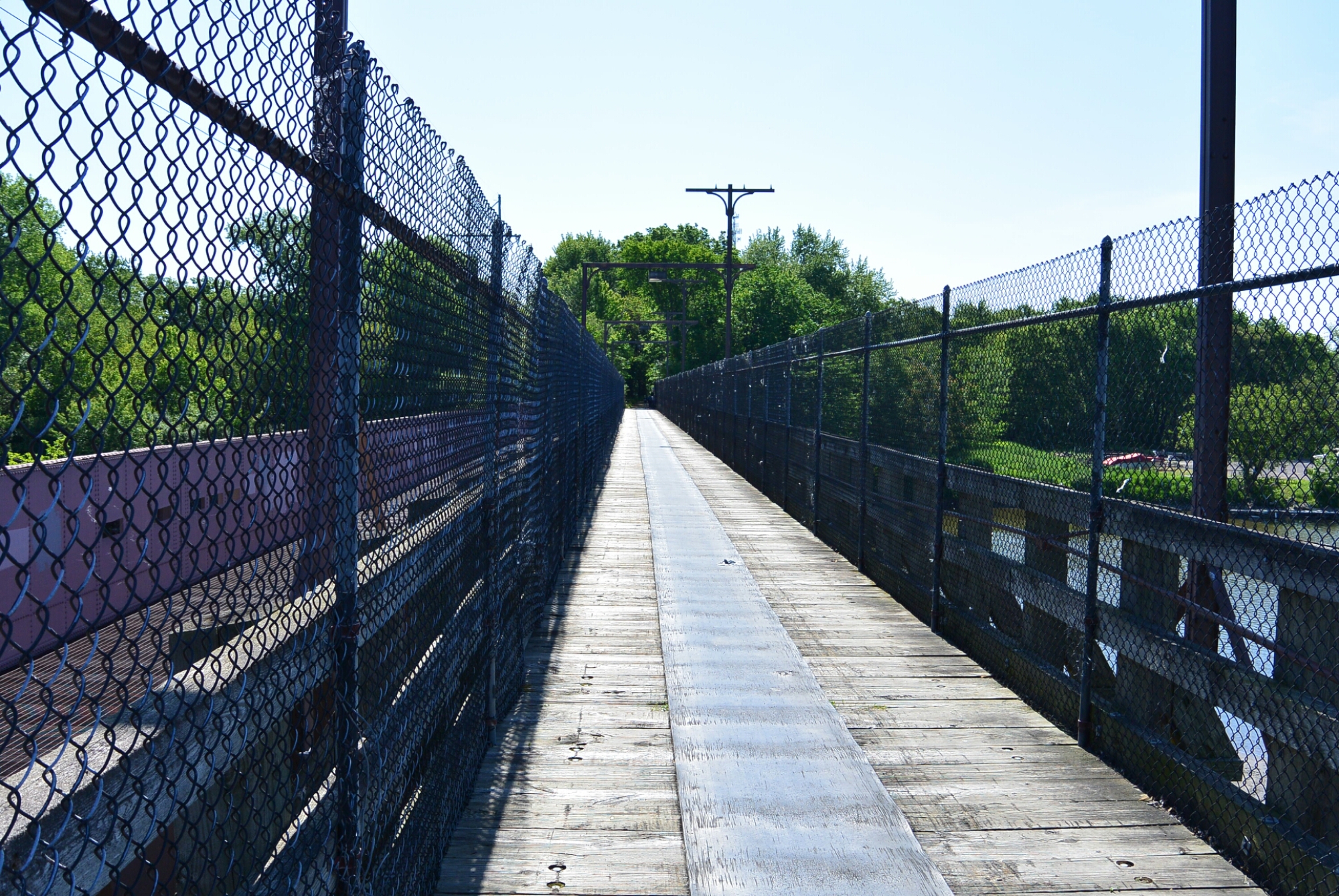
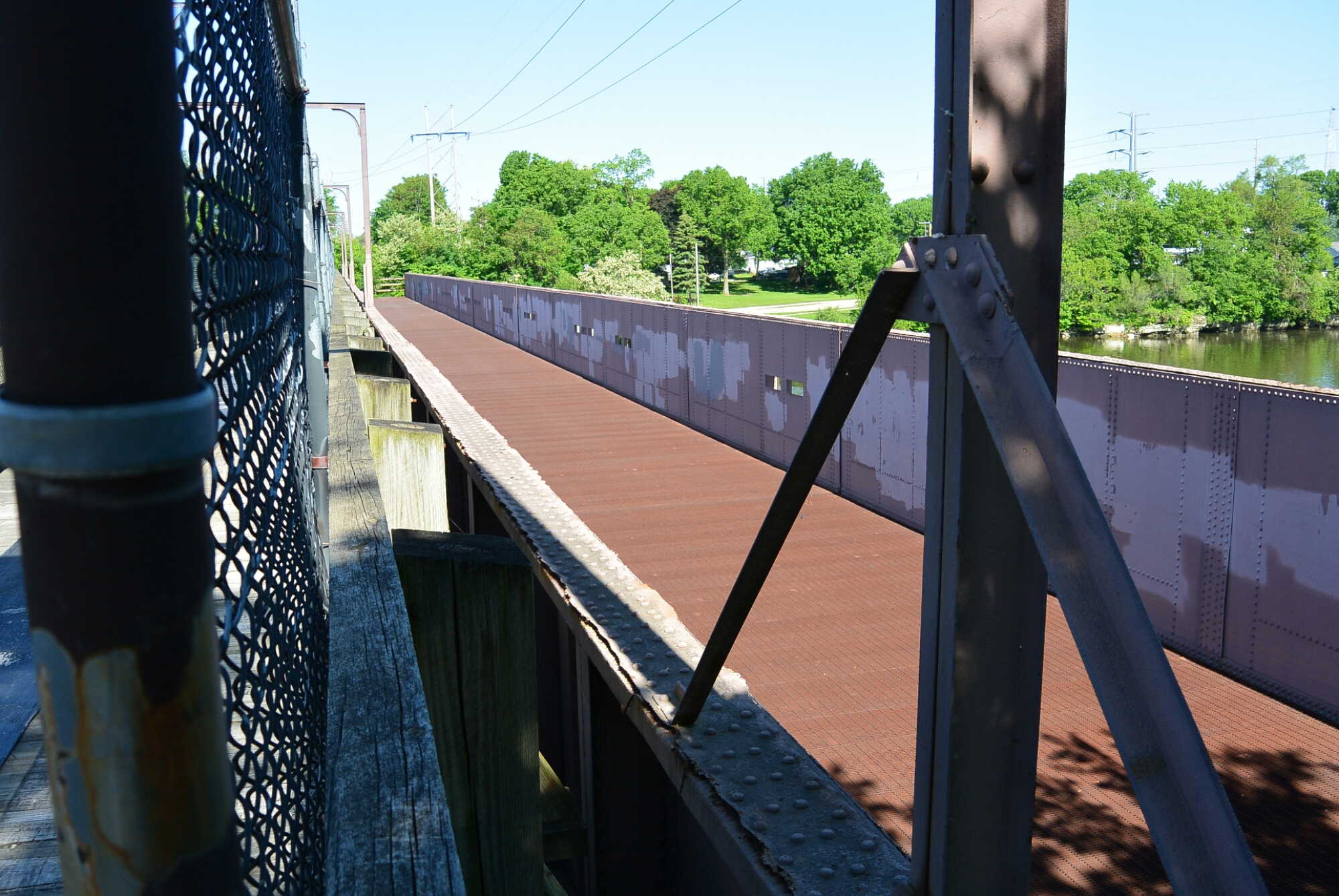
The Fox River Aqueduct is the largest of the I and M Canal aqueducts. It is located in Ottawa, Illinois on Champlain St. The aqueduct is 464 feet in length. It was built by the Sanger family. Construction began in 1838 and was completed in the 1840’s. Construction cost was $100,000. The support piers were made of limestone and were seven in number.
Several modifications were made over the years. A plate girder bridge was added for the Chicago, Ottawa, and Peoria interurban electric line. The line was in service from 1903–1934. This subsequently was converted to a pedestrian bridge. There was a wagon bridge adjacent to the aqueduct from 1882–1929. The wood superstructure of the aqueduct was replaced by an iron structure in the 1940’s. The limestone piers underwent repairs in 1996.
The actual aqueduct was been dry for many years.
Revenue to build the I M Canal
Finances were always a difficult matter in the construction of the I M Canal. The original federal grant provided the land for the canal plus 90 feet on both sides. Timber in this area could be sold to raise money. However this was not found to be adequate. A new federal bill of 1827 provided large tracts of land that could be sold to raise money. Once again this did not provide adequate funding. The state was require to issue bonds at various times to finance the canal project. These bonds eventually had to be paid off with interest. Funds were obtained from further land sales, land and water power rents, interest from savings, sales of lumbar, stone, and used machinery. Once the canal was finished in 1848, revenue was generated from tolls. There were originally toll houses in Chicago, Lockport, Ottawa, and LaSalle. The only remaining house is in Ottawa. The Canal loans were paid off at a reported cost of 6.5 million dollars in 1871. However, a more accurate estimate of total debt was nearer to 8 million.
LOCK 9 Marseilles, Illinois.
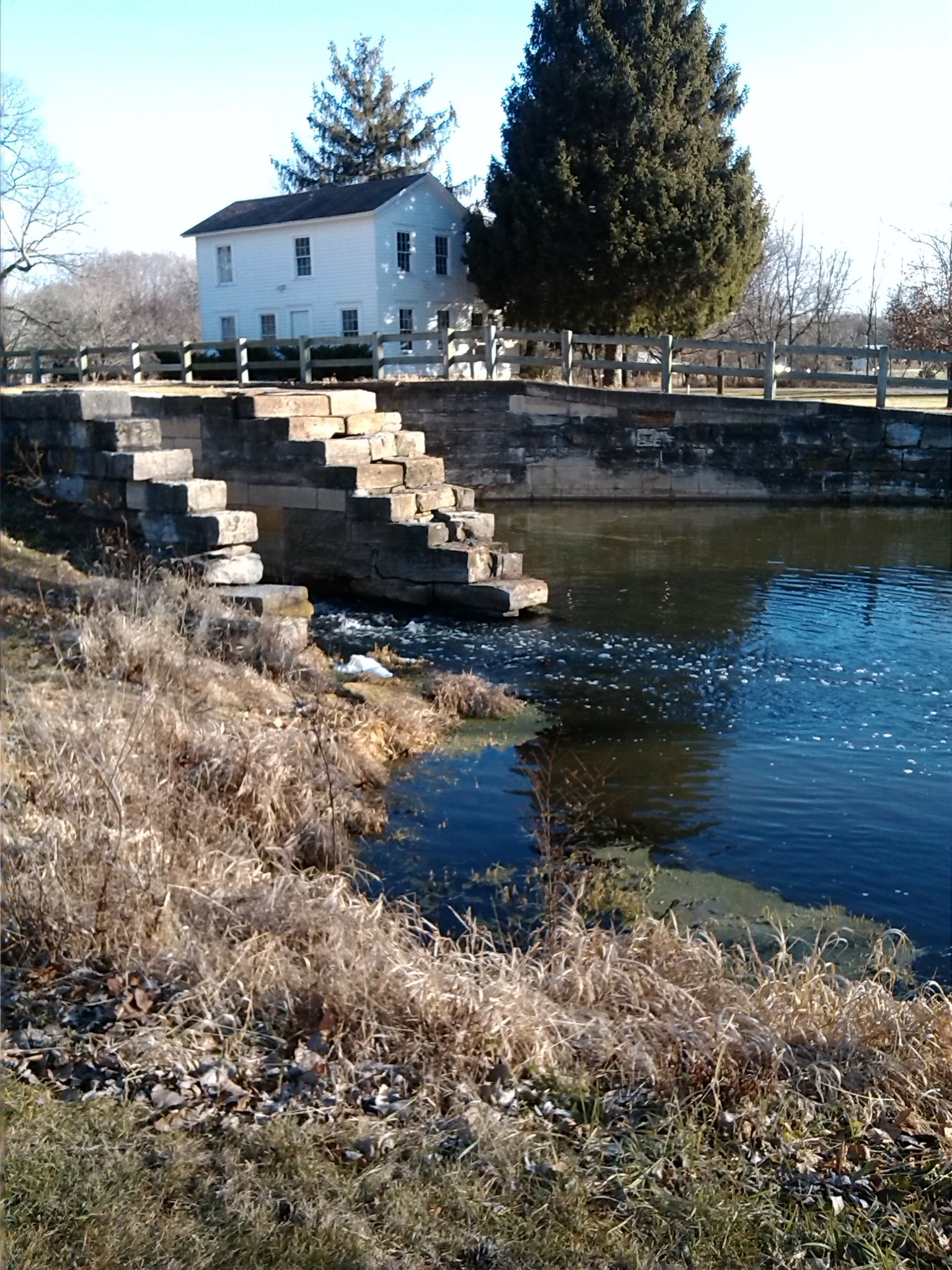
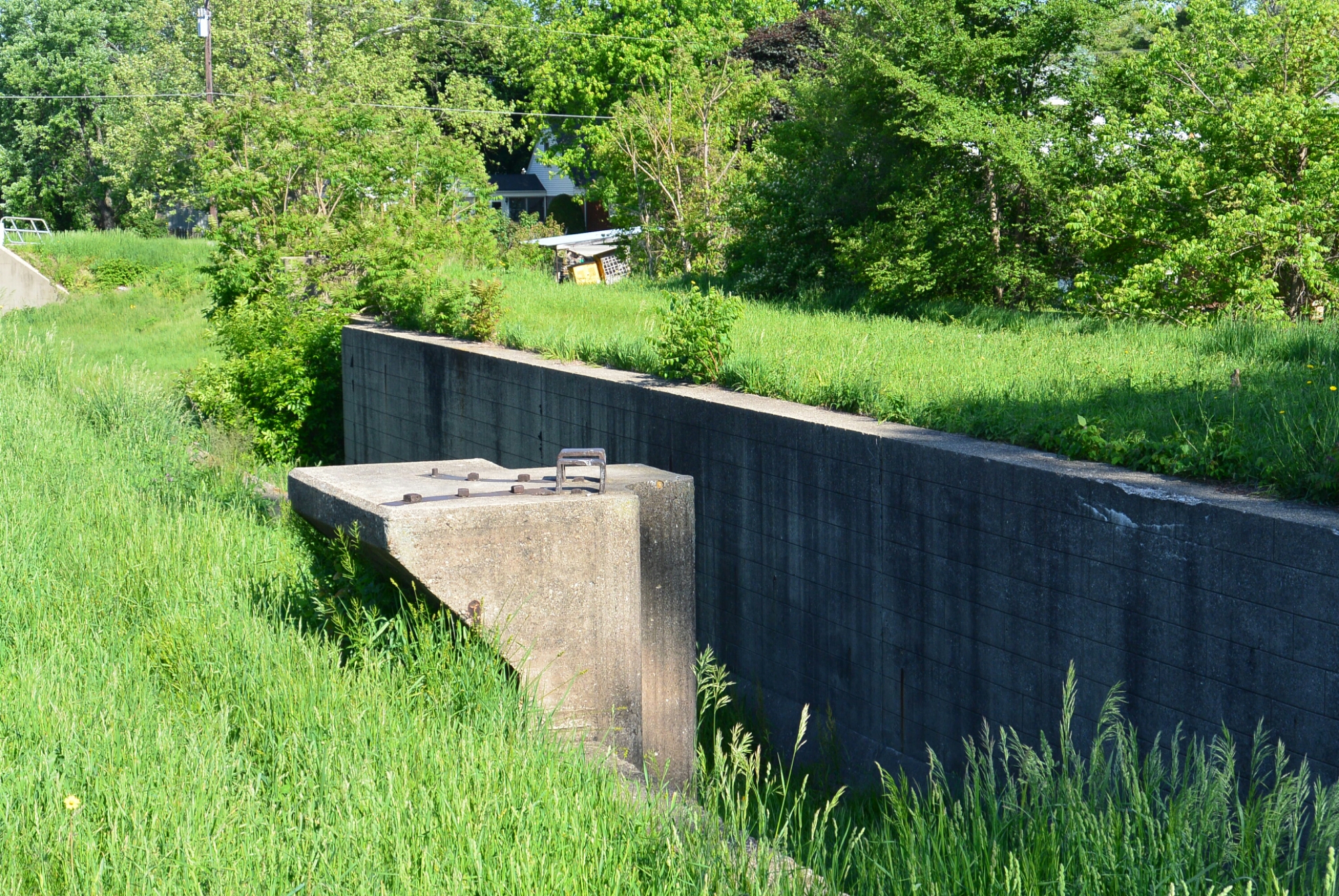
One of the most distinctive features of the Illinois Michigan Canal was a series of multiple locks between Chicago and LaSalle. The locks were needed because of the 140 feet height difference between Lake Michigan and the Illinois River. The total number of locks varied. Originally there were 17. In the 1870’s, two locks were eliminated.
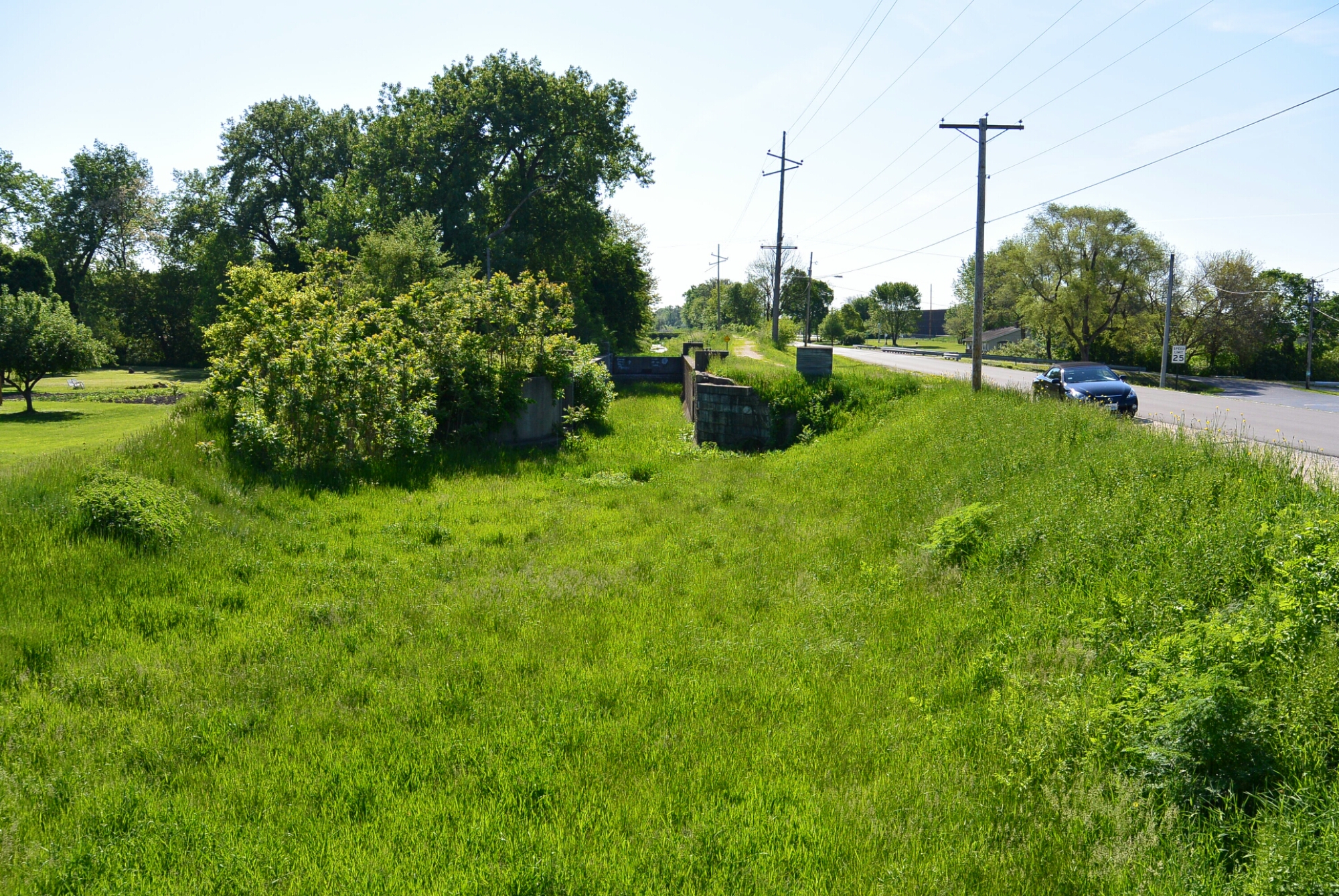
The images included are of Lock 9 in Marseilles. This is the one feature that helps to identify this area as part or a canal.
Illinois Michigan Canal in Marseilles
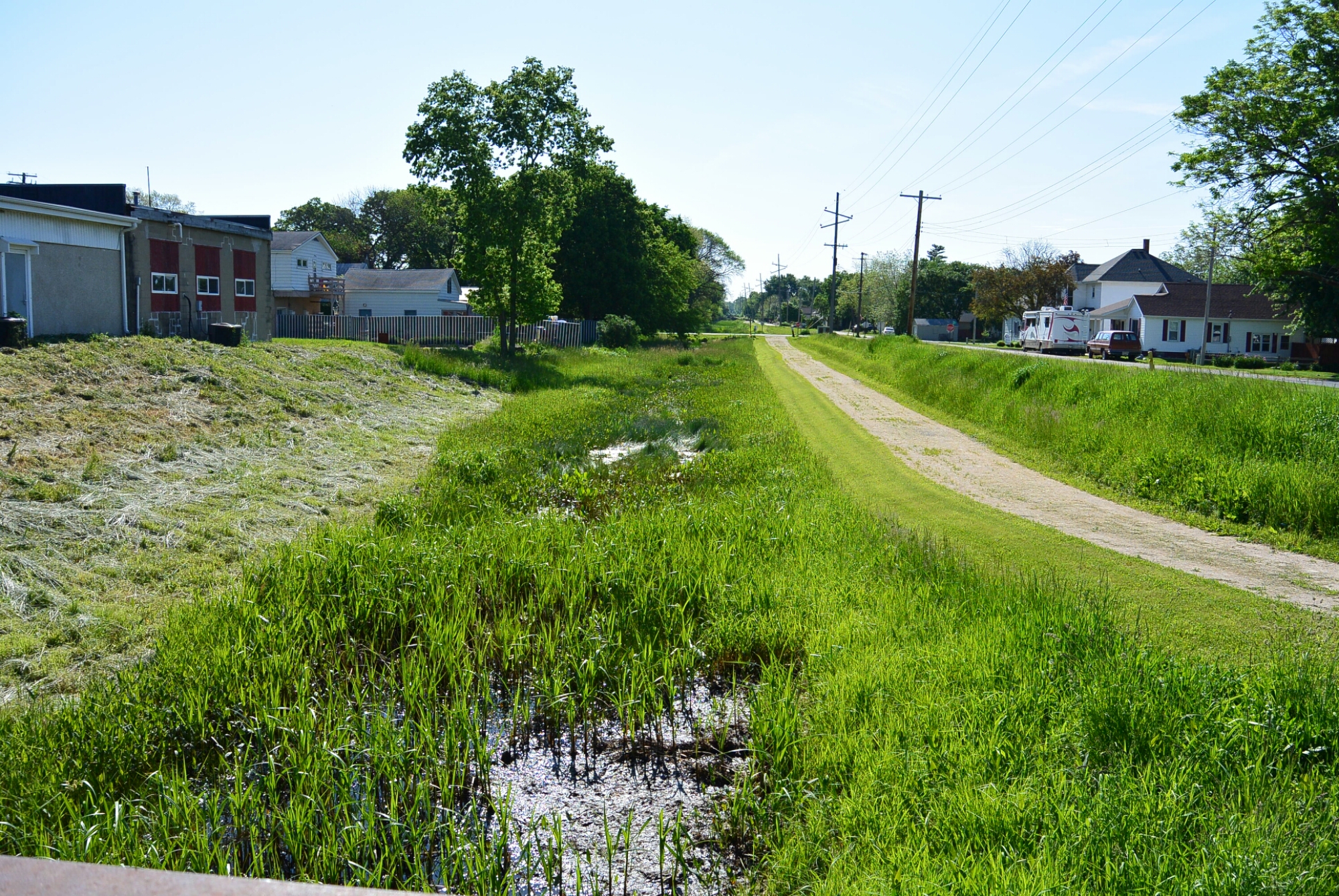
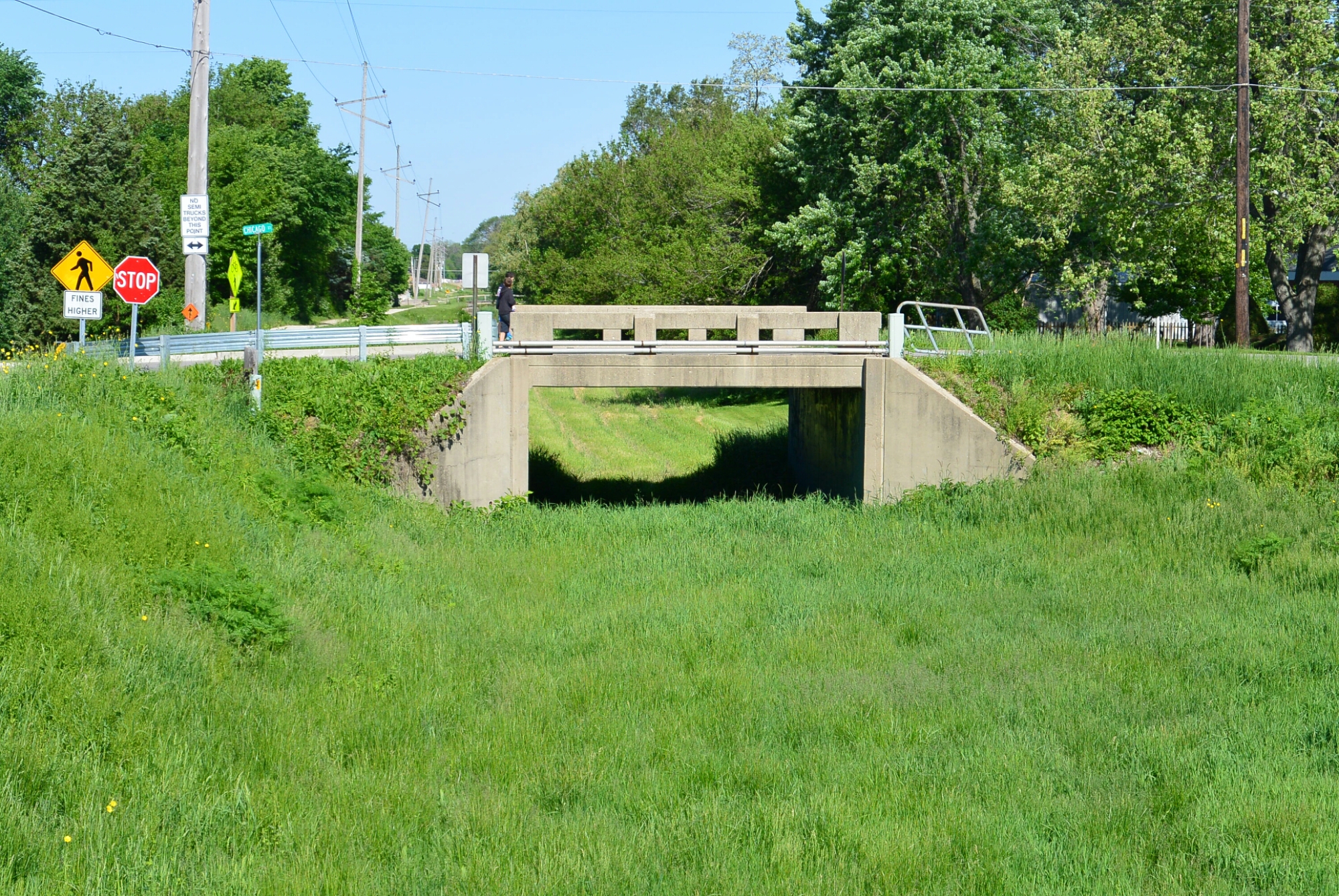
One of the canal towns along the course of the Illinois Michigan Canal is Marseilles. Unfortunately, there is little water in the canal in this area. It is difficult to even recognize this region as having been a significant waterway in the latter half of the 19th century. To reach the canal site, travel west on highway 6. Make a left (south turn) on Chicago Street. Travel 3 to 4 blocks and you will reach the canal.
Brewing in the Illinois Valley
After the completion of the Illinois Michigan Canal in 1848, there was fairly rapid growth of the canal towns. Breweries appeared in Peru, LaSalle, Ottawa, Morris, and Joliet. By the 1850’s, most canal towns had at least one brewery. Their number grew and peaked in 1875. The local brewers faced no competition until the 1880’s. Larger brewers sought to gain a national market. The development of pasteurization ,refrigeration and depots allowed the shipment of beer by the railroad to most of the town’s along the canal from breweries in larger metropolitan areas.
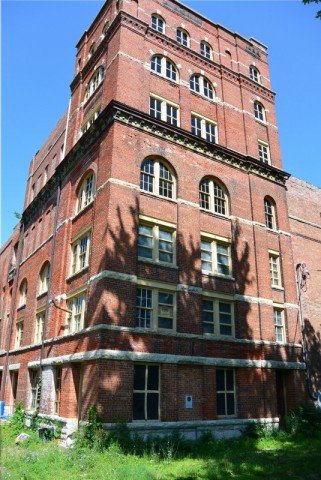
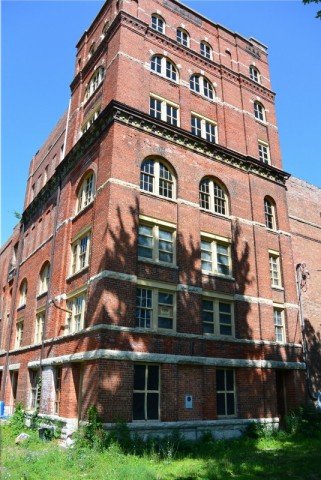
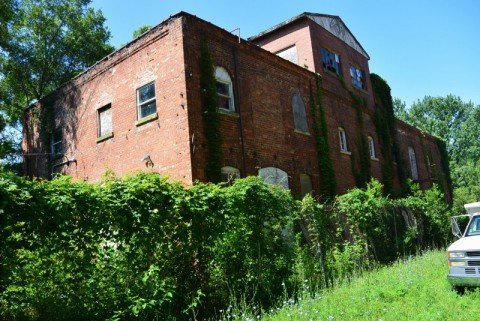
One of the most successful local brewery was Gebhard Brewing Company in Morris, Illinois. This was founded by a German immigrant Louis Gebhard 1866. The brewery building was constructed in 1880. Their products became well known because of their quality. Hops, malt and barley used in the brewing process were transported on the I M Canal. The brewery closed in 1919 due to Prohibition. Later on the brew house was used as a flour mill. Currently there are 2 remaining empty buildings–Bottling Plant and the Brew House.