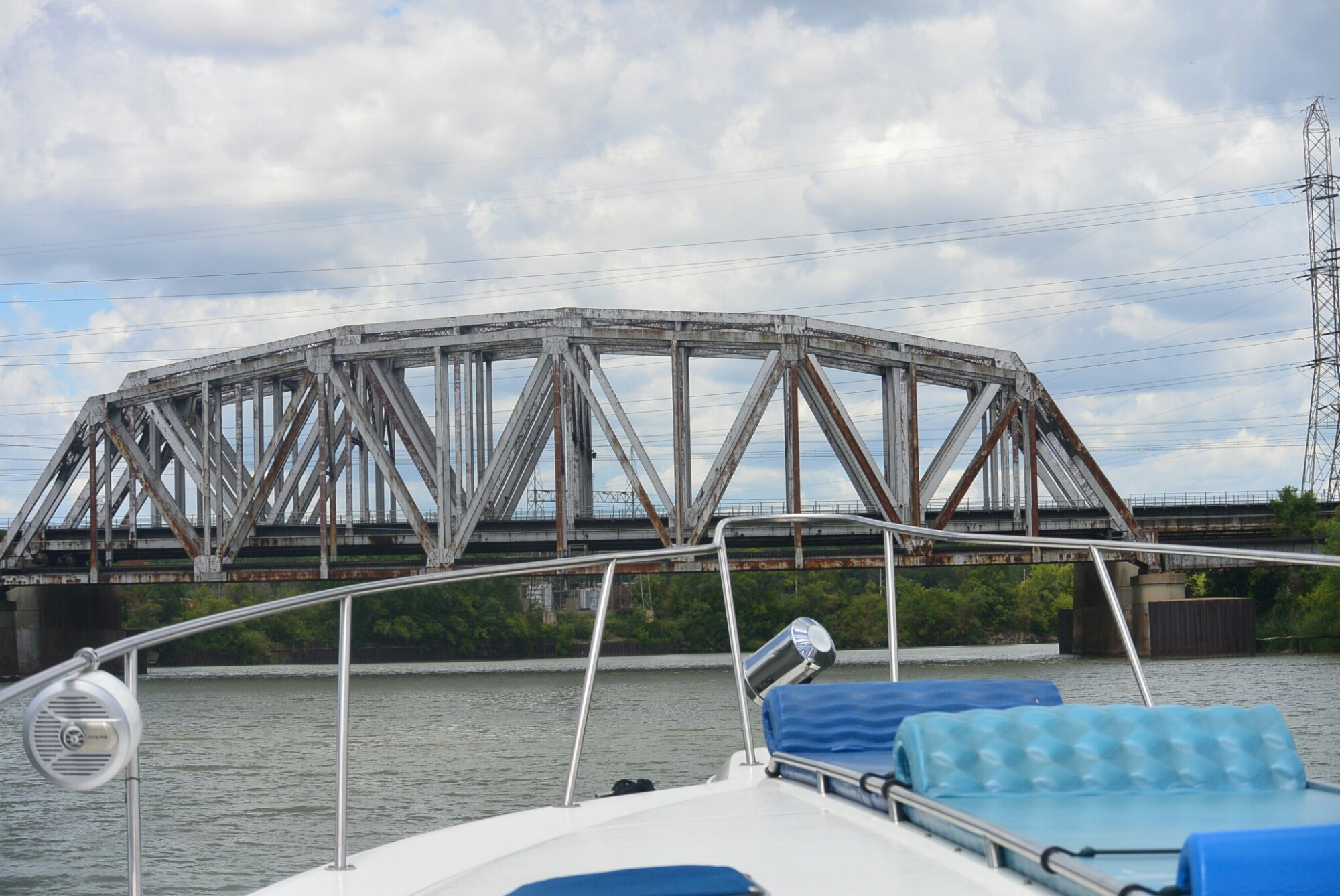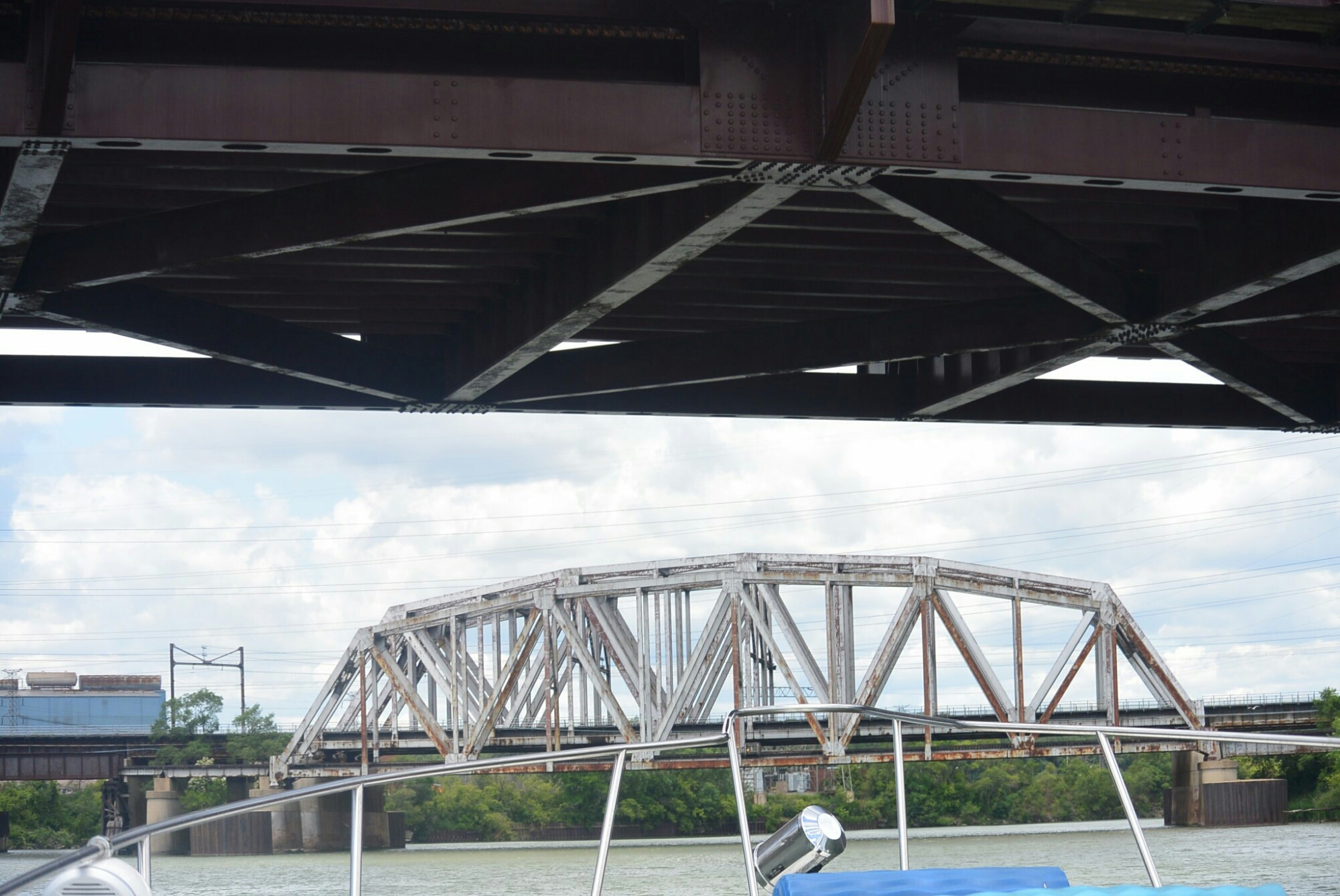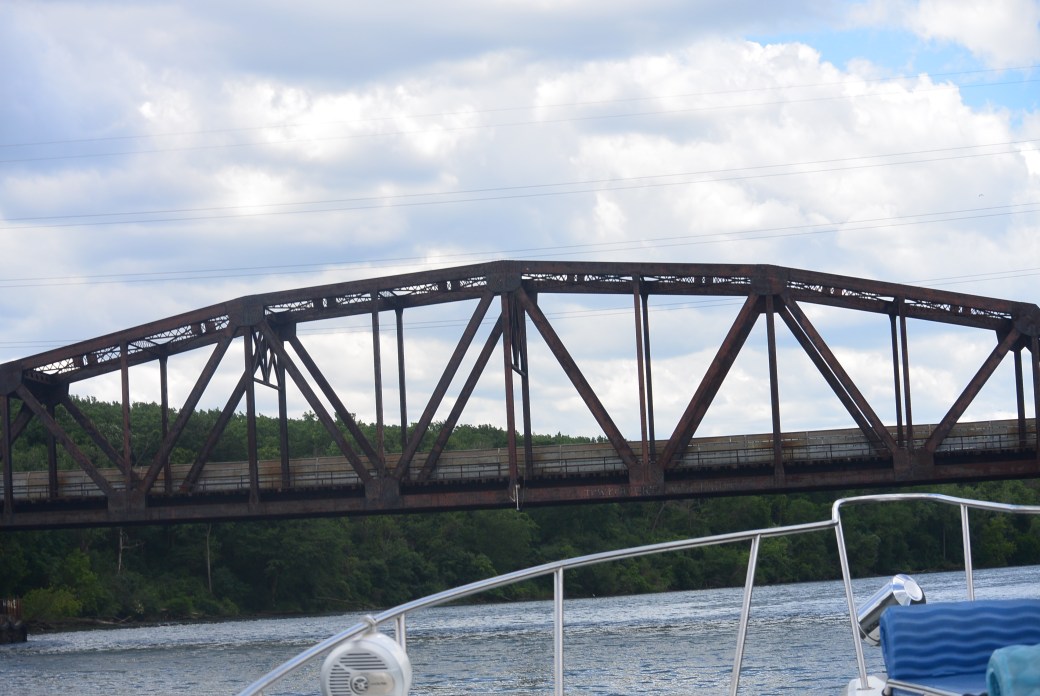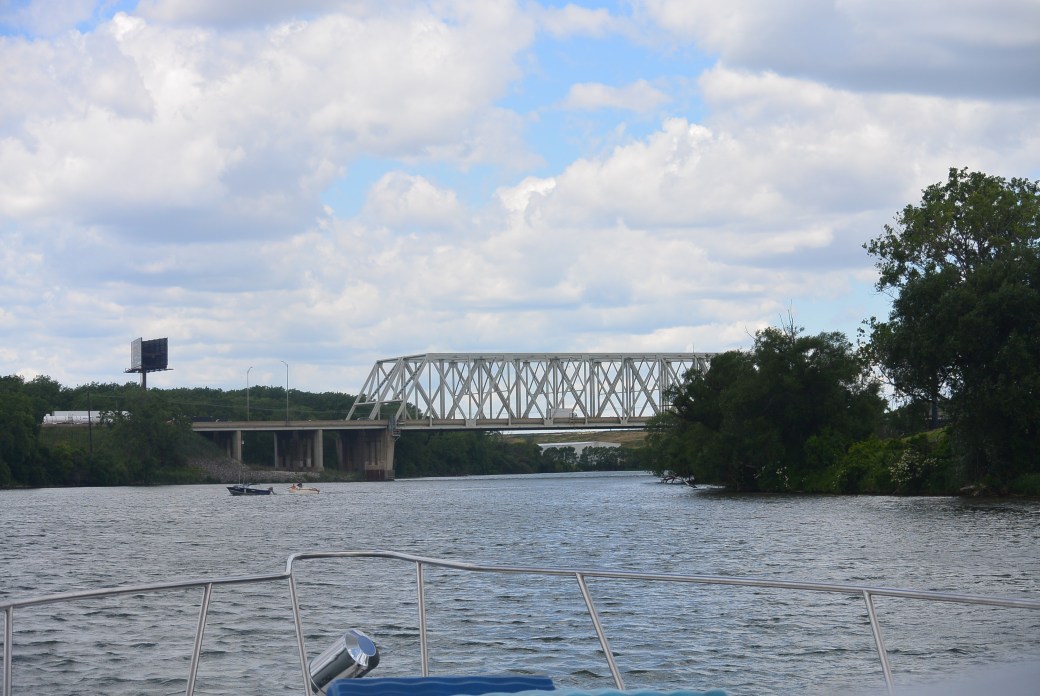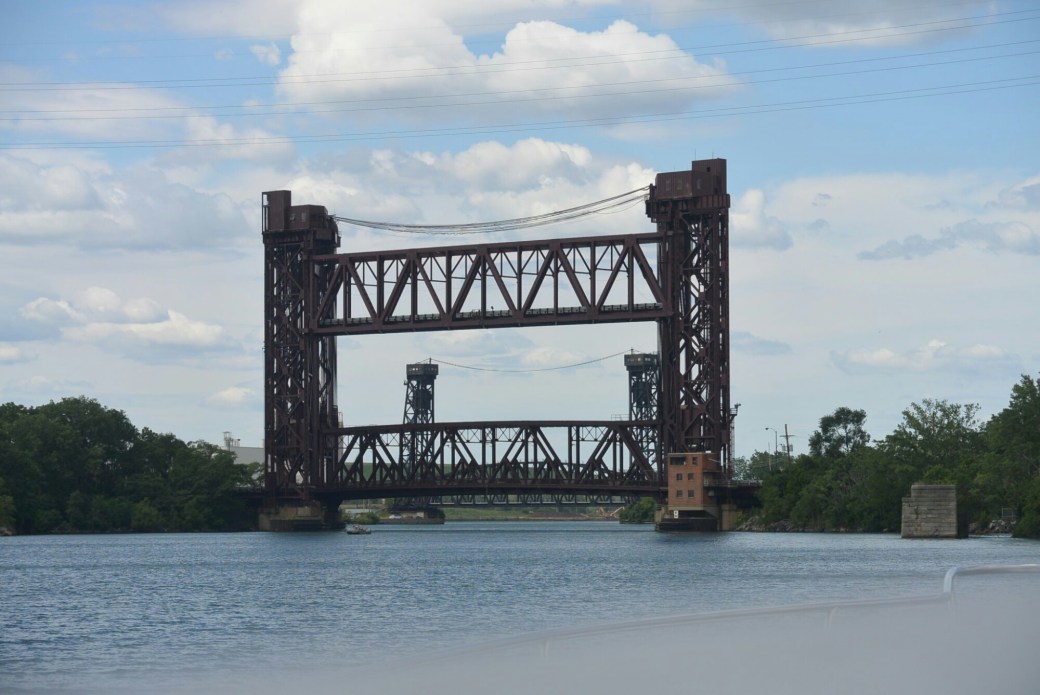
Illinois Central Swing Bridge

DSC_1760

Kedzie Ave RR Bridge

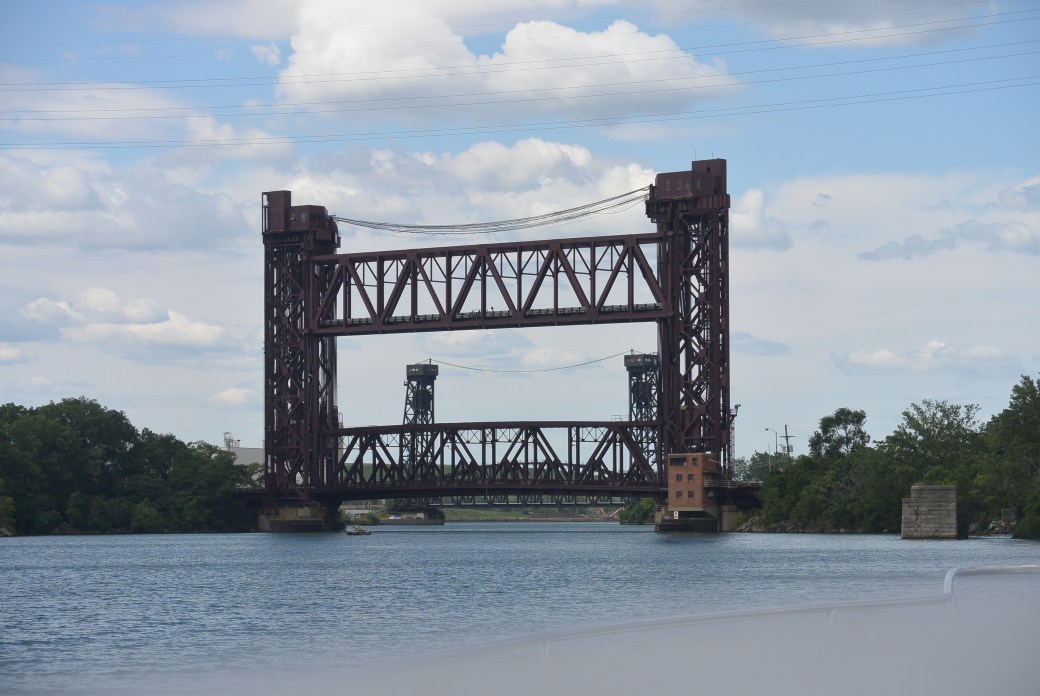
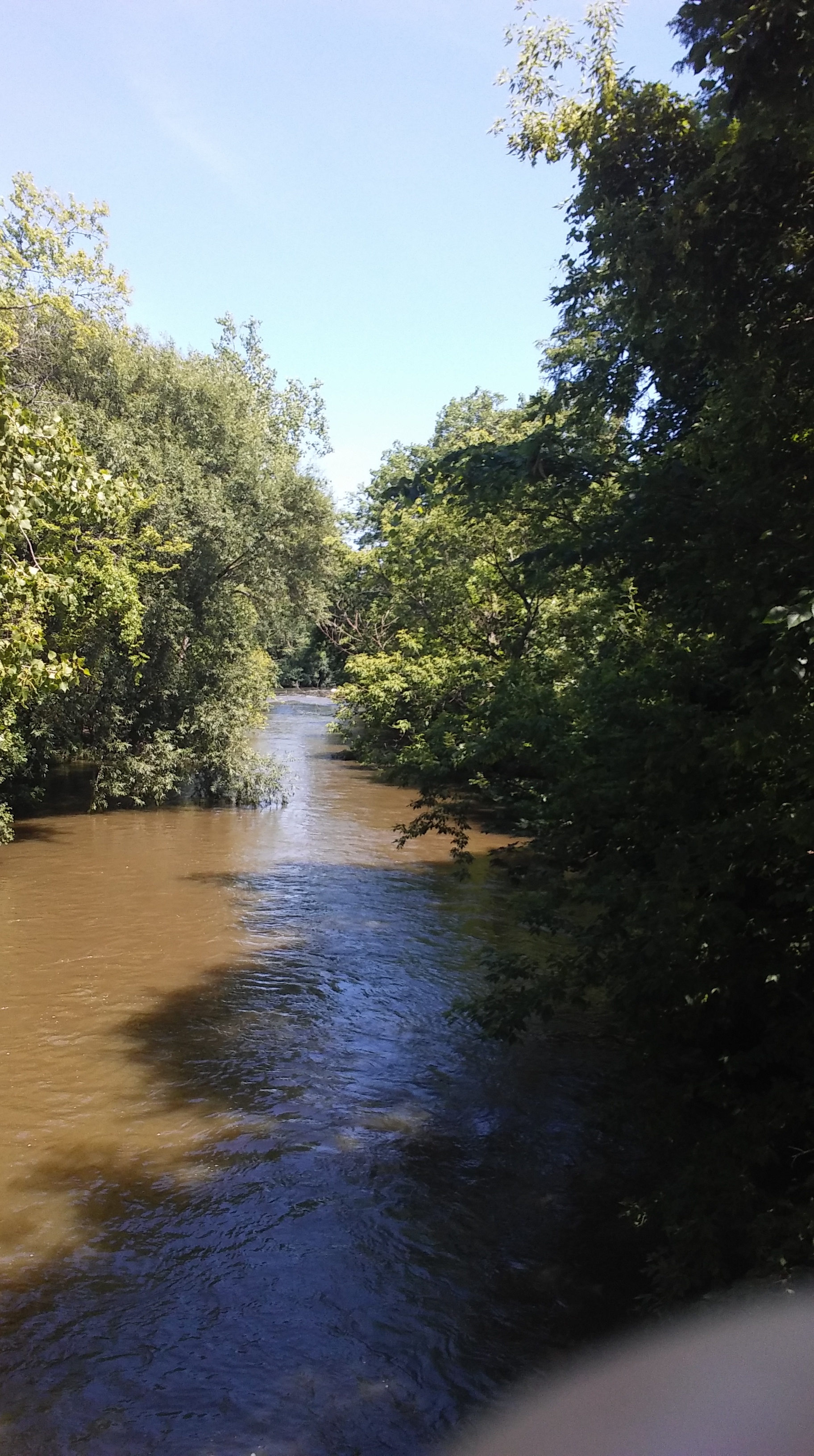
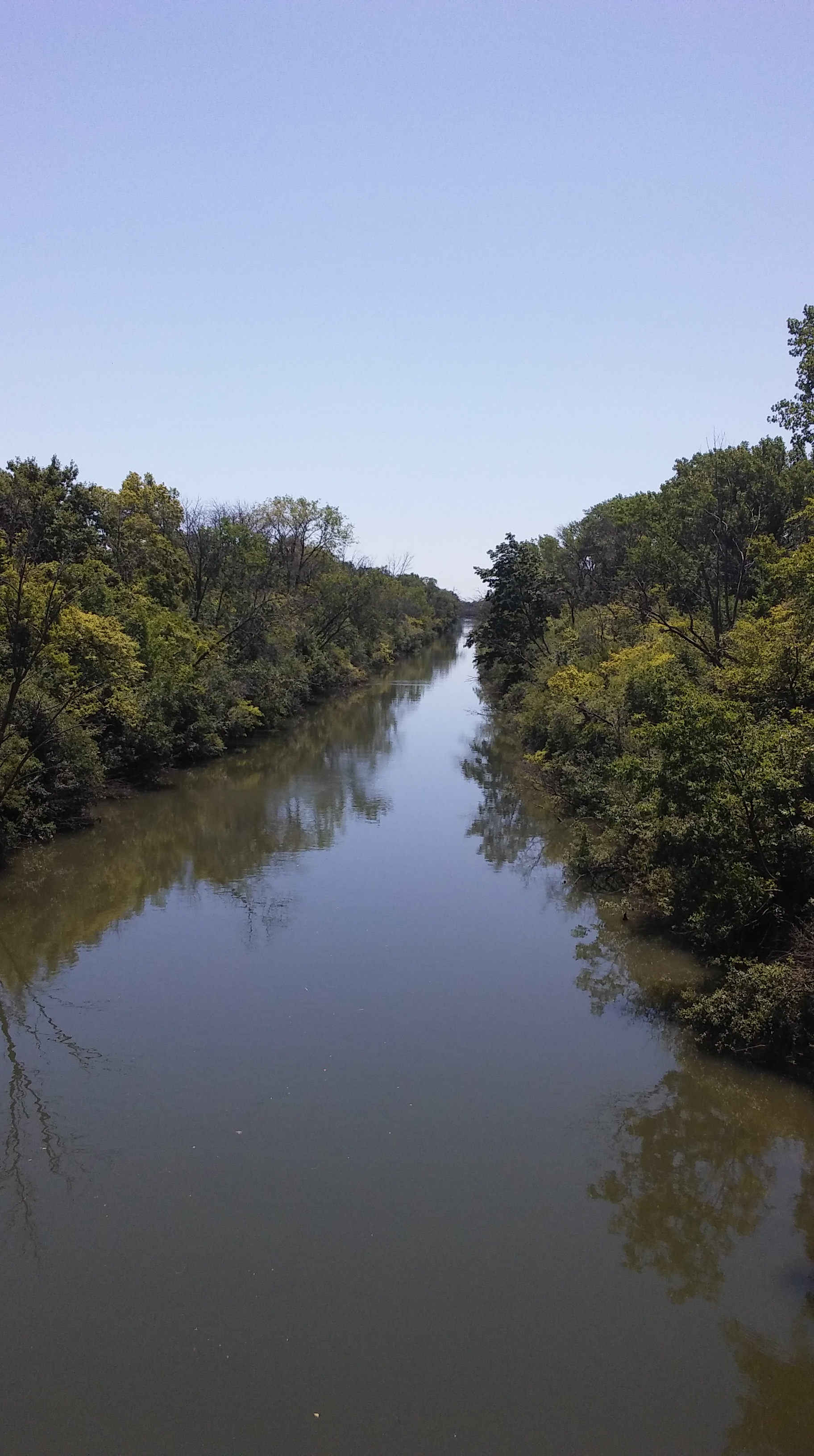
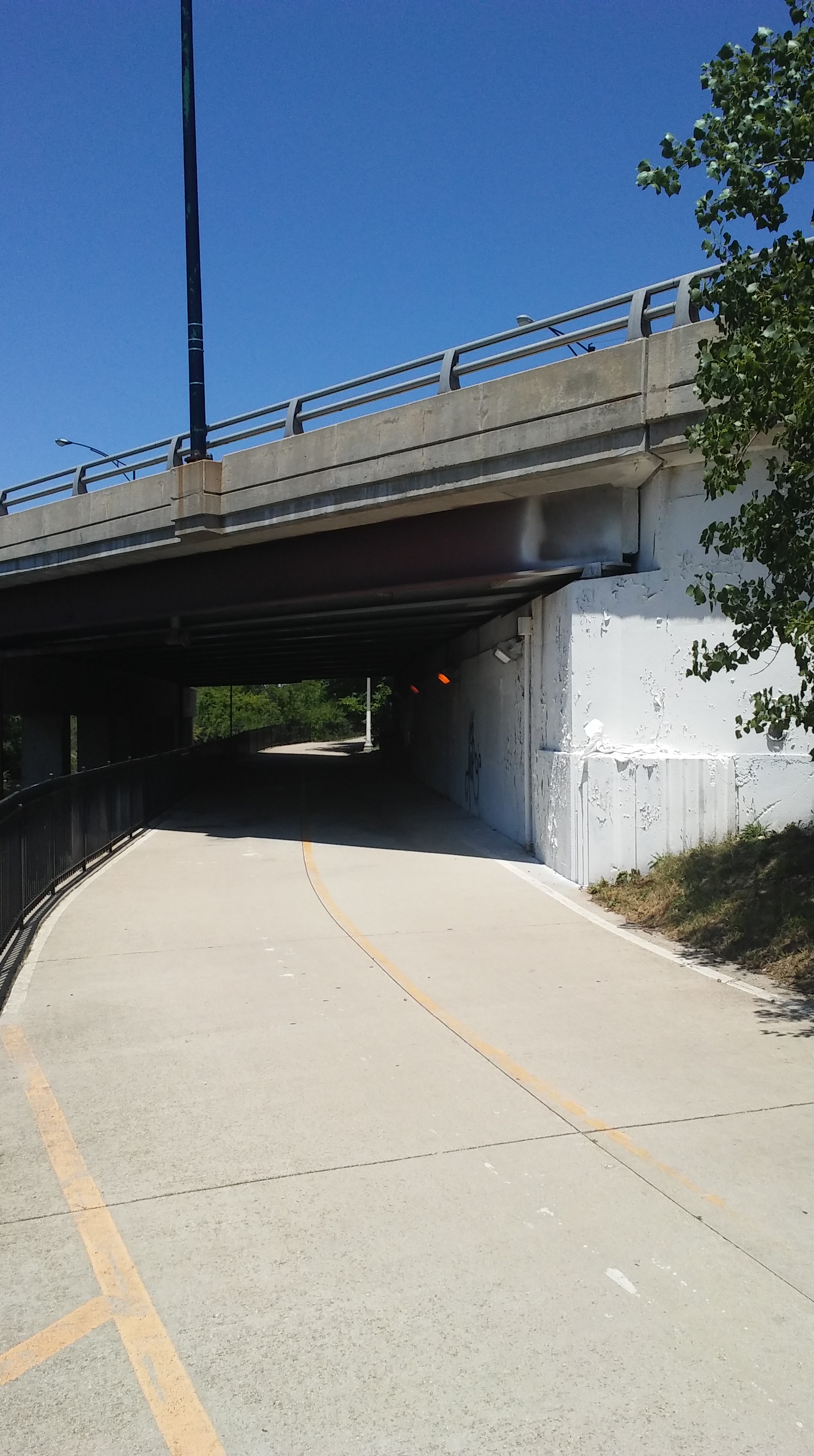
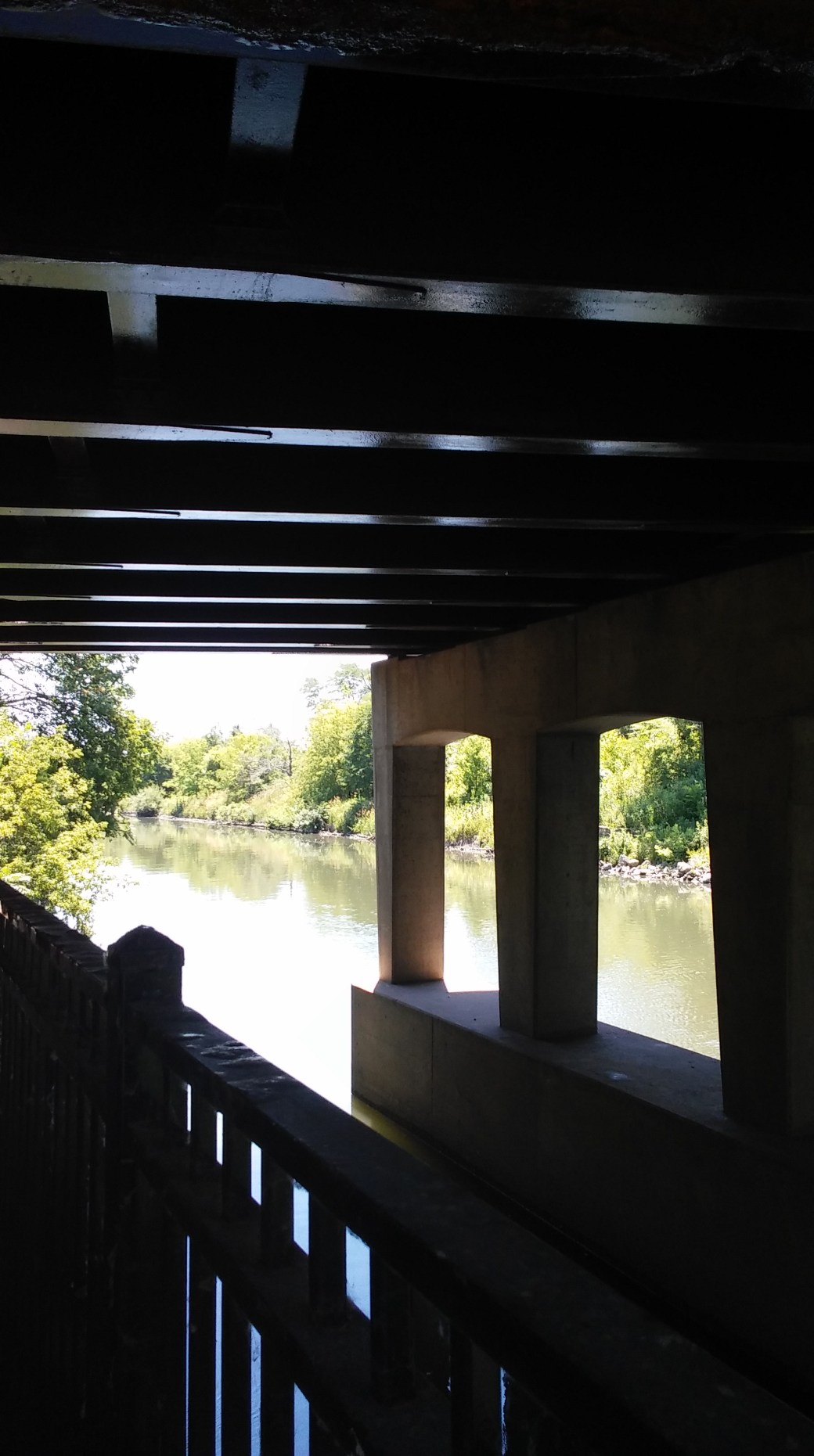
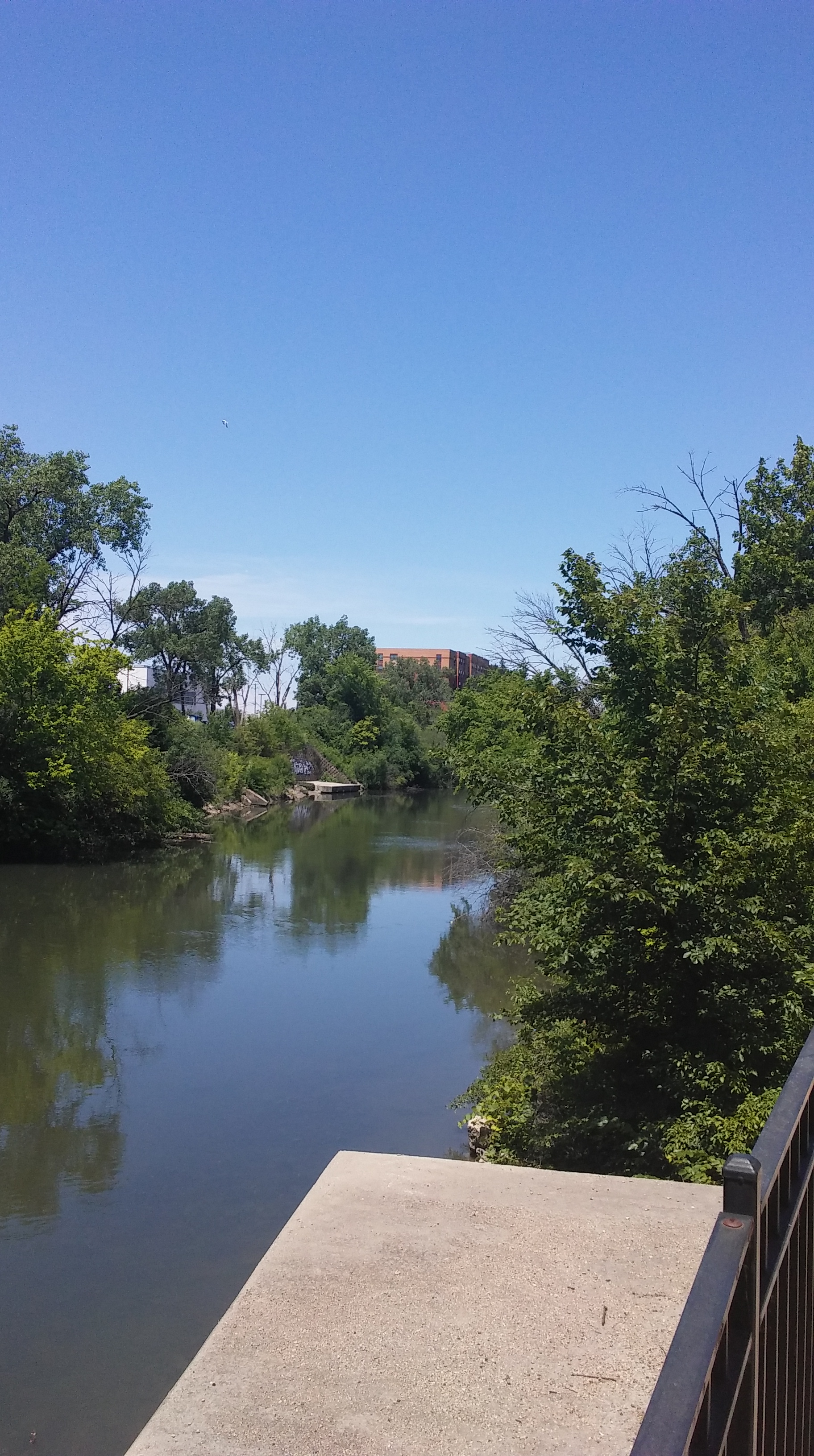
This is a swing bridge between Kedzie Avenue and Pulaski Road.   Date of construction is estimated to be about 1897.  The substructure contractors were the Mc Arthur Brothers and Winston and Company.  Carnegie Steel Company was the superstructure contractor.  Estimated cost of the bridge was $64,961.97.  Estimated weight of the structure was 1,519, 183 pounds.

This is a singe span bridge.  It has two tracks.   Its length  is 322.7 feet.  The total structure length is 327.7 feet.  The bridge rests on limestone abutments on the ebankments.  Center pier is concrete and limestone. The bridge rotated on the center pier. It is currently fixed and locked in position.

The bridge originally was built for short line Illinois Northern Railroad (part of the Santa Fe System).  It is currently used by the Illinois Central.

Chicago Harbor Lock

DSC_1728

Chicago Harbor Lock

This lock is located between the waters of Lake Michigan and the Chicago River.   It was part of the project to reverse the course of the River.    This was built by the Metropolitan Water Reclamation District of Greater Chicago.  It was built between 1936 and 1938.  It was originally built to prevent contamination of Lake Michigan water by the polluted water of the Chicago River.  Currently it separates Chicago River Storm water from the Lake.   It also regulates the amount of Lake water entering the River.  In 1984, the operation and maintenance of the lock was transferred to the Army Corps of Engineers.

The lock is 600 feet long and 80 feet wide.  It is 22 feet deep.  Filling and emptying the lock occurs through a partially opened gate.  The lock maintains a 2 to 5 foot water height differential between the Lake and the River.

The control house was replaced in 2007.  The lock gates were renovated in 2011.  The lock is operated 24 hours a day.

Chicago Madison and Northern Railroad Bridge

DSC_1755.JPG

Chicago Madison and Northern RR Bridge over the Sanitary and Ship Canal

DSC_1757

Chicago Madison and Northern RR

DSC_1756

Chicago Madison and Northern RR.

This is a swing  bridge over the Sanitary and Ship Canal. It is the longest on the  ship canal.  It is located between Kedzie Avenue and California Avenue in Cicero, Illinois.   It is also known as the Illinois Central Swing Bridge # 2.  It was built in  1899.  Its design is Pratt through truss.   The sub structure contractors were the McArthur Brothers and Winston and Company.  The superstructure contractor was the Toledo Bridge Company.  It’s cost was $110,644.  The completed bridge was 2,511,140 pounds. It rested on a central pier.  The bridge pivoted on this pier to create navigable channels on either side.

Its length is 479 feet.   Railroads having used the bridge include CN, Chicago Madison and Northern RR., and the Illinois Central Railroad.

18th Street Railroad Bridge

DSC_1737

18th Street Railroad Bridge

DSC_1736

18th Street Railroad Bridge

The 18th street railroad bridge is actually 2 bridges.  One is called the Saint Charles Air Line Bridge.    This is currently owned by the CN railroad.  It is the southern most of the two bridges.  It was originally 260 feet in length.  It was  built in 1919.  It was designed to be modified when the Chicago River straightening project was completed.

The bridge was was designed by the Strauss Bascule Bridge Company.  It was fabricated by the American Bridge Company.  It was a double track structure.  It was assembled in its original location by the Ferro Construction Company.    The original substructure was built by the Foundation Company of New York.

When the river straightening project was completed, the bridge was moved and shortened in 1930.  E.J. Albrecht Company built the relocation substructure.  The Stroebel Steel Construction Company dismantled and and re-erected the superstructure in its location.  The bridge was shortened to 220 feet.  This  bridge  is still operational.

The adjacent bridge was commissioned  by the Baltimore and Ohio Railroad.   It was constructed by the American Bridge Company.    It contained two tracks.  It is a single leaf Strauss trunnion bascule bridge.  It measures 186 feet in length.  Its supports are concrete.

DSC_2399

18th Street R.R. Bridge

DSC_2400

18th Street R.R. Bridge

DSC_2401

Counter Weight 18th Street Bridge

DSC_2412

18th Street Bridge

DSC_2413

18th Street R.R. Bridge

DSC_2414

18th Street R.R. Bridge

Archer Avenue Bridge Cal Sag Canal

G6Epfxxlq00mB829sElGYLEin9H9k-O3aGHWwXKrSDApX92IB

View of Cal Sag Canal from Archer Avenue Bridge


11736405070-CommerceProduct-7182-83-83

Archer Avenue Bridge over Cal Sag Canal

11736405070-CommerceProduct-7182-84-84

View of Cal Sag Canal  from Archer Avenue Bridge

11736405070-CommerceProduct-7182-86-86

Archer Avenue Bridge over Cal Sag Canal

11736405070-CommerceProduct-7182-79-79

View of Archer Avenue Bridge from Sag Quarries

wp-1497186374381.jpg

Taken at the confluence  The first bridge seen is the CN, the second is the Archer Avenue Bridge

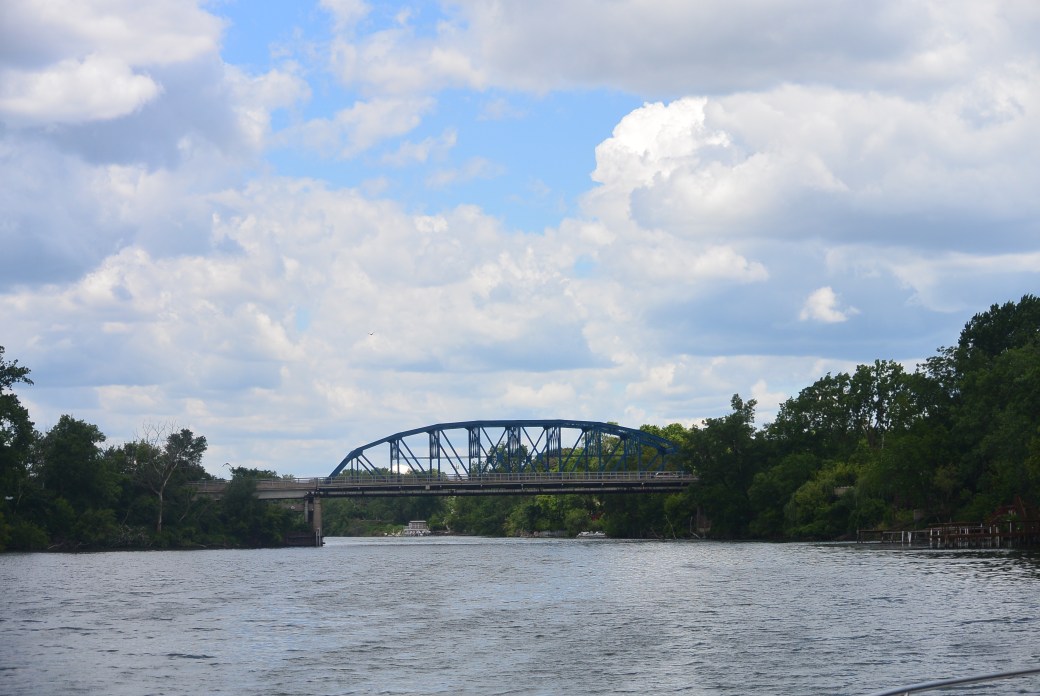
The second bridge over the Cal Sag Canal is the Archer Avenue Bridge.  This is located in Lemont.  It is a Pennsylvania Truss Bridge with a west side pedestrian walk.  It was built in 1934.  It is 507 feet in length and 43.9 feet in width.  It was renovated in 1997.  It is currently painted blue.

Archer Avenue Bridge in the distance


Archer Avenue Avenue Bridge


Photos added 4/9/2018

Cal Sag CN Bridge

Cal Sag CN Bridge

This is a view of this bridge from the Archer Avenue Bridge.


Cal Sag CN Bridge

This is a view of this bridge from a boat at the junction of the Sanitary and Ship Canal and the Cal Sag Canal.

This is the first bridge across the Cal Sag Canal traveling from west to east.  It is currently being used by the CN railroad.  Other railroads using this bridge include  Amtrak and Metra.   The builder is unknown.  Date of construction is unknown.   It is 395 feet in length.  Its design is typical of railroad bridges on the Cal Sag Canal.  It is riveted metal truss technology.

Eight Track Ralroad Bridge Over Sanitary and Ship Canal

     This unusual bridge crosses the Sanitary and Ship Canal west of the south Western Avenue Traffic Bridge.  It was constructed in 1901 and 1909-1910. The construction was done in 1901 by the Scherzer Rolling Lift Bridge Company.   The 1909-1910 construction was done by the Chicago Bridge and Iron Works.

Eight Track Railroad Bridge

Eight Track Railroad Bridge

     The original contract was awarded to Scherzer.  Its design was four parallel double tracked, double leaf bridges.  This was to accommodate multiple railroad lines that crossed the Ship Canal at this site.

     In 1908, Chicago Bridge and Iron Works was awarded a contract to erect a new bridge using existing approach spans and piers.  The new piers were placed adjacent to the old ones.

    The bridges are four parallel single-leaf Scherzer Rolling Lift Bascule bridges.  Each bridge has two sets of tracks.  The lift bridges are 140 feet in length.  The original lines using the bridges were Pittsburgh, Cincinnati, Chicago and Saint Louis Railroad,the Illinois Stock Yards and Transit Railroad, Chicago and Northern Pacific Railroad.  The supporting piers are limestone covered with concrete.

     Other railroads that have used these bridges include Baltimore and Ohio Terminal Railroad, CSX Railroad, CN Railroad, Chicago Junction Railroad, Norfolk Southern Railroad..

     The two western spans are no longer operational.

Pennsylvania Railroad Bridge South Branch Chicago River

Pennsylvania Railroad Bridge

Pennsylvania Railroad Bridge

This railroad lift bridge is the only remaining one on the Chicago River.  It was originally built for the Pennsylvania Railroad.  It is located near Canal St.

It was constructed in 1915.  It replaced an existing bridge. It is now operated and maintained by Amtrak.

The bridge was designed by Waddell and Harrington.  Pennsylvania Steel Company fabricated the main span.  This weighed 1500 tons.  It contained two tracks.  It was 272 feet.  The two lift towers were 195 feet in height.  They rested on concrete piers.  The original bridge tender cabin rested on the top of the main spam.  The bridge is now controlled from a location near the base of the bridge.

Much of the information was found in HAER IL–112

DSC_2406

Amtrack Bridge

DSC_2406

Amtrack Bridge

Chicago River and the Sanitary and Ship Canal


DSC_1735

Amtrack Yard Vintage Cars south branch of Chicago River

DSC_1734

Same as above

DSC_1736

18th Street Railroad Bridge  south branch Chicago River

DSC_1737

Same as above


DSC_1739

Canal Street Railroad Bridge south branch of Chicago River

DSC_1740

same as above

DSC_1742

Ashland Avenue Bridge at the junction of the south branch of the Chicago River and the Sanitary and Ship Canal

DSC_1743

Damen Ave Bridge

DSC_1744

Canal Origins Park

DSC_1746

Santa Fe Grain Elevators  south branch of Chicago River

DSC_1749

Same as above

DSC_1801

Same as above

DSC_1751

South Western Avenue Bridge Sanitary and Ship Canal

DSC_1752

Eight track railroad bridge west of Western Avenue

DSC_1753

Same as above

DSC_1754

California Avenue Bridge over Sanitary and Ship Canal

DSC_1756

Chicago, Madison and Northern Railroad


DSC_1760

Kedzie Avenue Bridge


DSC_1770

Santa Fe Bridge

DSC_1756

Santa Fe Bridge


DSC_1765

Harlem Avenue Bridge and Santa Fe bridge

DSC_1766

Sanitary and ship canal

DSC_1767

sanitary and ship canal

DSC_1772

Stevenson Expressway Bridge

DSC_1779

Stevenson Expressway

DSC_1774

Same as above

DSC_1781

South LaGrange Road

DSC_1776

Indiana Harbor Belt RR

DSC_1775

Same as above

DSC_1778

LaGrange Rd

DSC_1779

TriState Toll Road

DSC_1784

Near the Junction of the Cal Sag and the Sanitary and Ship Canal

DSC_1785

Junction Area

DSC_1786

Junction Area

DSC_1787

Cal Sag Canal  Archer Ave Bridge

DSC_1790

Sanitary and Ship Canal